Tag: India

  • India’s Black Friday 2025 Decoded: Discount Analysis and Brand Performance Across Major E-commerce Platforms

    India’s Black Friday 2025 Decoded: Discount Analysis and Brand Performance Across Major E-commerce Platforms

    Black Friday has evolved from a purely Western retail phenomenon into a global shopping event. India is no exception. While the country celebrates its own mega sale events like the Great Indian Festival and Big Billion Days, Black Friday has carved out its own space in the Indian retail calendar. E-commerce in India is expected to reach $325 billion by 2030, with festive shopping seasons driving significant portions of that growth.

    So how did Indian retailers and brands navigate Black Friday 2025? At DataWeave, we analyzed pricing trends across four major categories: Consumer Electronics, Home & Furniture, Health & Beauty, and Apparel. Our AI-powered retail intelligence platform tracked nearly 128,000 SKUs across leading platforms including Amazon India, Flipkart, Myntra, and others, revealing how the Indian market approached discounting and brand visibility during this high-stakes shopping period.

    Our Methodology

    DataWeave monitored average discount percentages across major Indian e-commerce platforms during two distinct periods:

    • Pre-Black Friday: Up to November 23, 2025 – capturing early promotional activity and baseline pricing
    • Black Friday Week: November 24 – December 1,2025 – spanning Thanksgiving week through Black Friday (November 28) and Cyber Monday (December 1)

    We analyzed top-ranked products across subcategories on major retail sites, alongside Share of Search data, a metric that measures brand visibility by tracking which brand names appear in the top 20 search results for high-intent keywords.

    Here’s a quick look at the overall discounts this Black Friday in India:

    Black Friday discounts snapshot India

    Consumer Electronics

    Consumer electronics remain a cornerstone of Black Friday shopping in India, with smartphones and laptops driving significant online sales. Our analysis of 20,439 SKUs reveals distinctive discount patterns across subcategories.

    Subcategory Discount Analysis

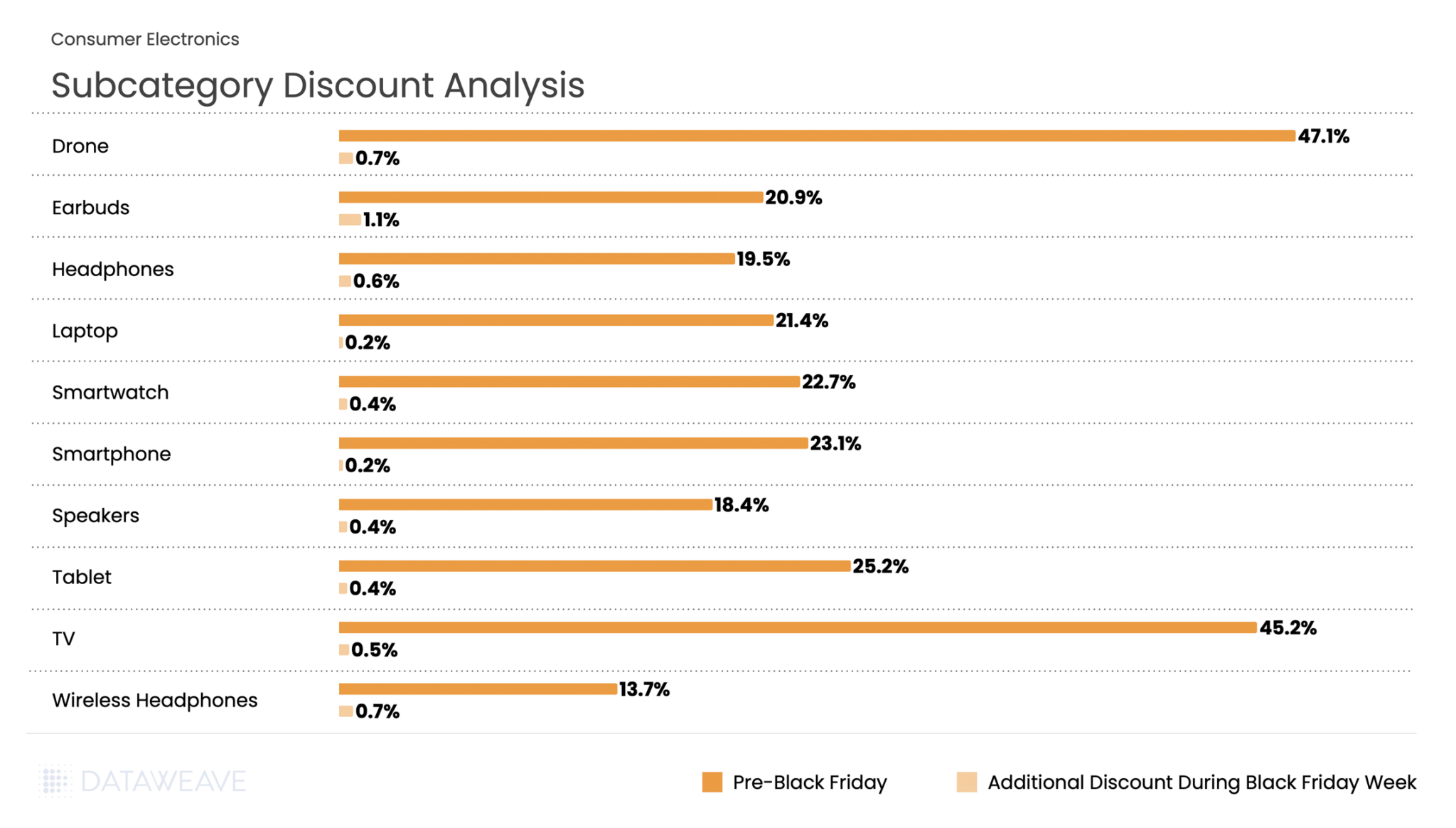
    Subcategory level discounts across consumer electronics in India this Black Friday

    The category averaged 23.2% pre-Black Friday discounts with an additional 0.5% during Black Friday Week. Drones and TVs led pre-sale discounting at 47.1% and 45.2% respectively, suggesting retailers wanted to clear high-ticket inventory ahead of the main event. Tablets (25.2%) also saw aggressive pre-sale pricing. During Black Friday Week, Earbuds saw the most substantial additional discounts at 1.1%, while categories like Laptops and Smartphones, already heavily discounted, had minimal incremental price cuts at 0.2%.

    Share of Search: Brand Visibility Trends

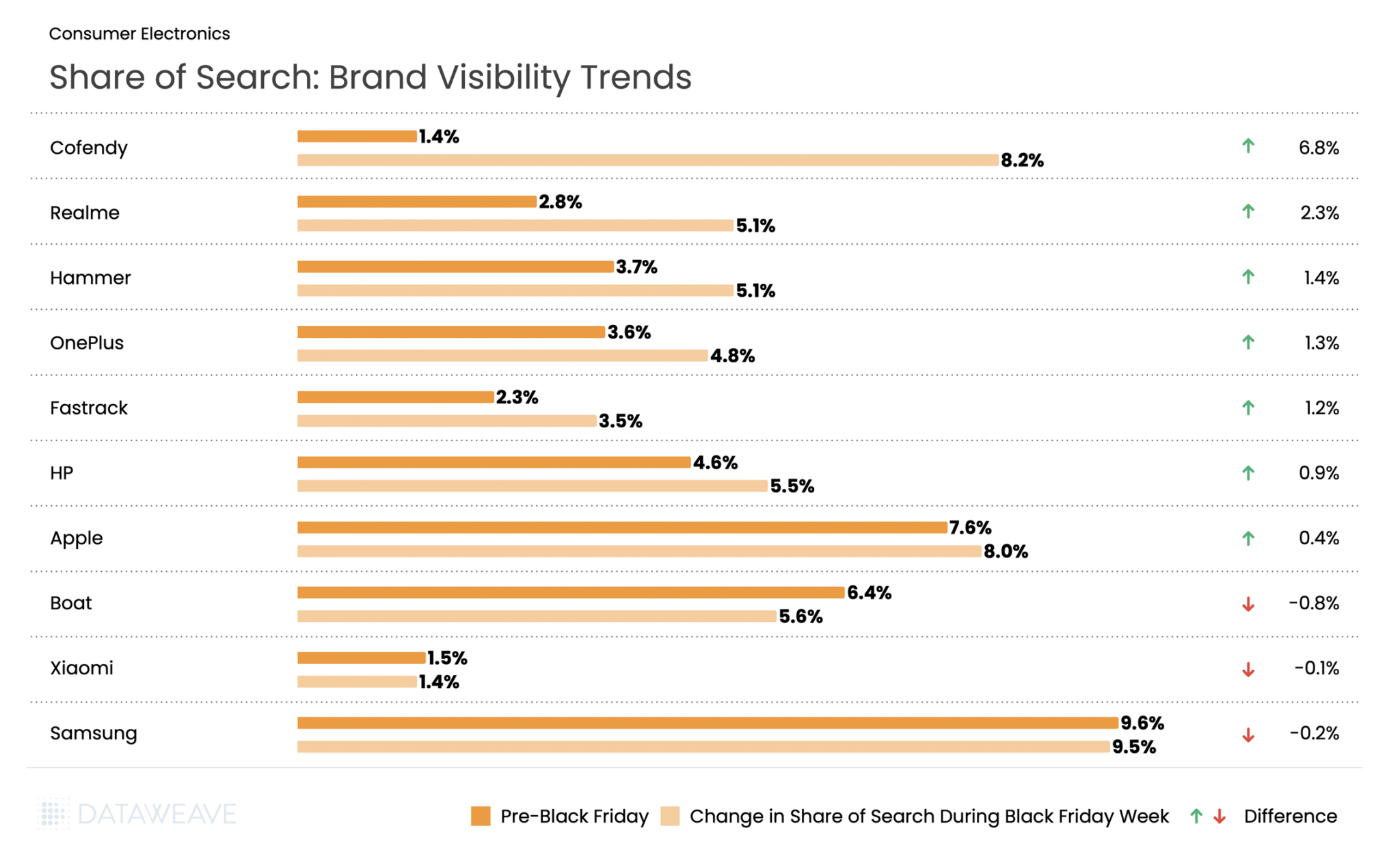
    Brand visibility trends in the consumer electronics category this Black Friday Cyber Monday, India

    The most notable is Cofendy, electronics accessories and speaker brand, that saw the share of search rise from 1.4% pre Black Friday to 8.2% during the event. Realme followed with a solid 2.3% gain, reinforcing its position as a rising smartphone brand. Smart gadget brand Hammer also saw visibility increase by 1.4% at par with OnePlus, Fastrack, HP and Asus.

    Samsung saw the highest brand visibility with share of search at 9.6% pre-event and 9.5% during Black Friday week, despite seeing a small drop in visibility. Audio brand Boat saw a visibility drop by 0.8%, while Xiaomi saw the share of search drop by 0.1%. This shift suggests that Indian consumers were drawn to newer brands and compelling deals across computing and mobile devices during the sale period.

    Health & Beauty

    The Indian beauty and personal care market is experiencing rapid growth, expected to reach $30 billion by 2027. Black Friday has become an important sales window for beauty brands and retailers. Our analysis of 19,854 SKUs reveals distinct patterns.

    Subcategory Discount Analysis

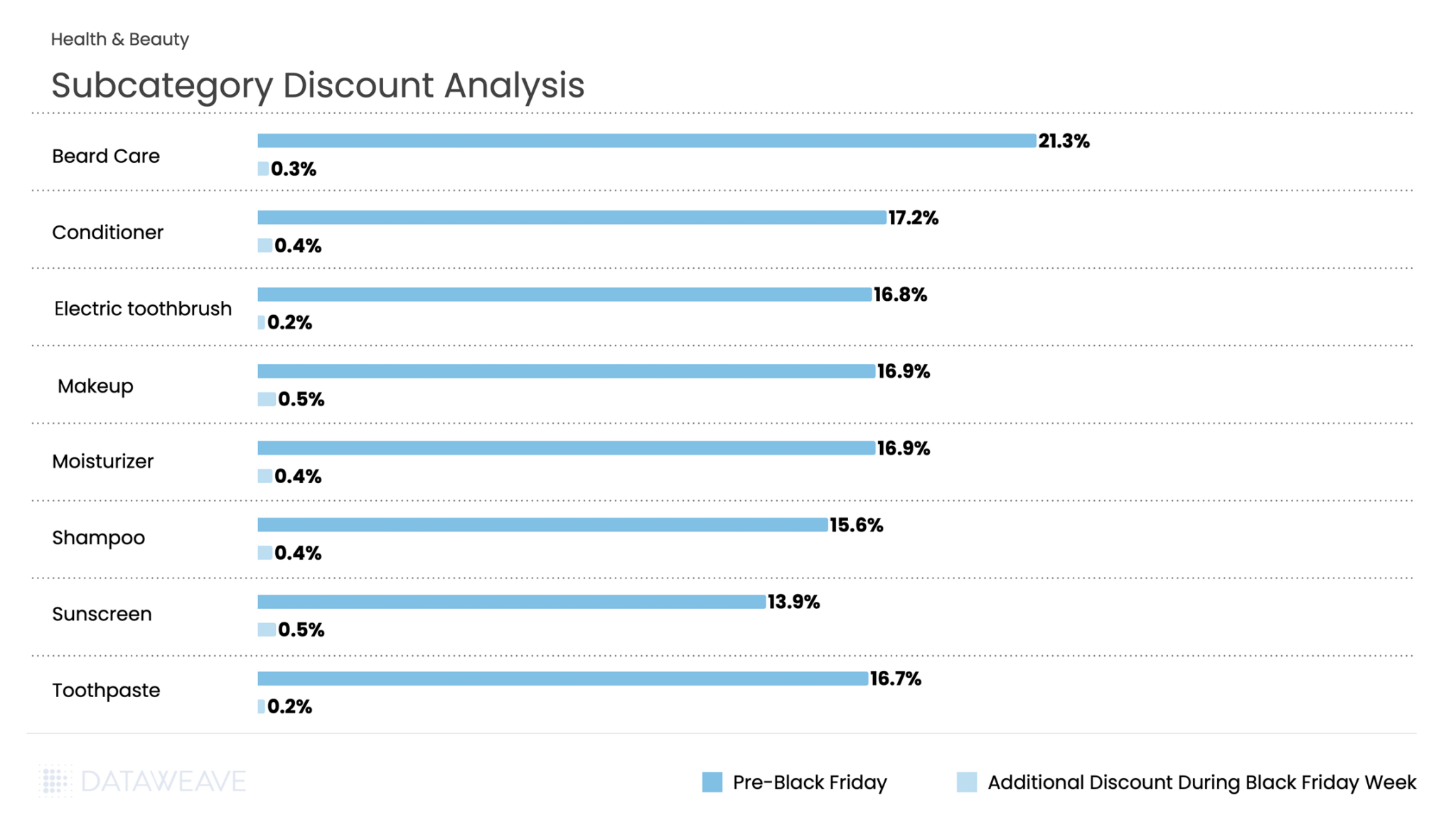
    Subcategory level discounts across health and beauty in India this Black Friday

    The category averaged 17% pre-Black Friday discounts with an additional 0.4% during Black Friday Week. Beard Care led early discounting at 21.3%, reflecting strong pre-sale positioning in men’s grooming. Conditioner (17.2%), Makeup (16.9%), and Moisturizer (16.9%) also saw solid baseline promotions. During Black Friday Week, Makeup and Sunscreen saw the highest additional discounts at 0.5% each, while Electric Toothbrush and Toothpaste maintained modest incremental discounts at 0.2%.

    Share of Search: Brand Visibility Trends

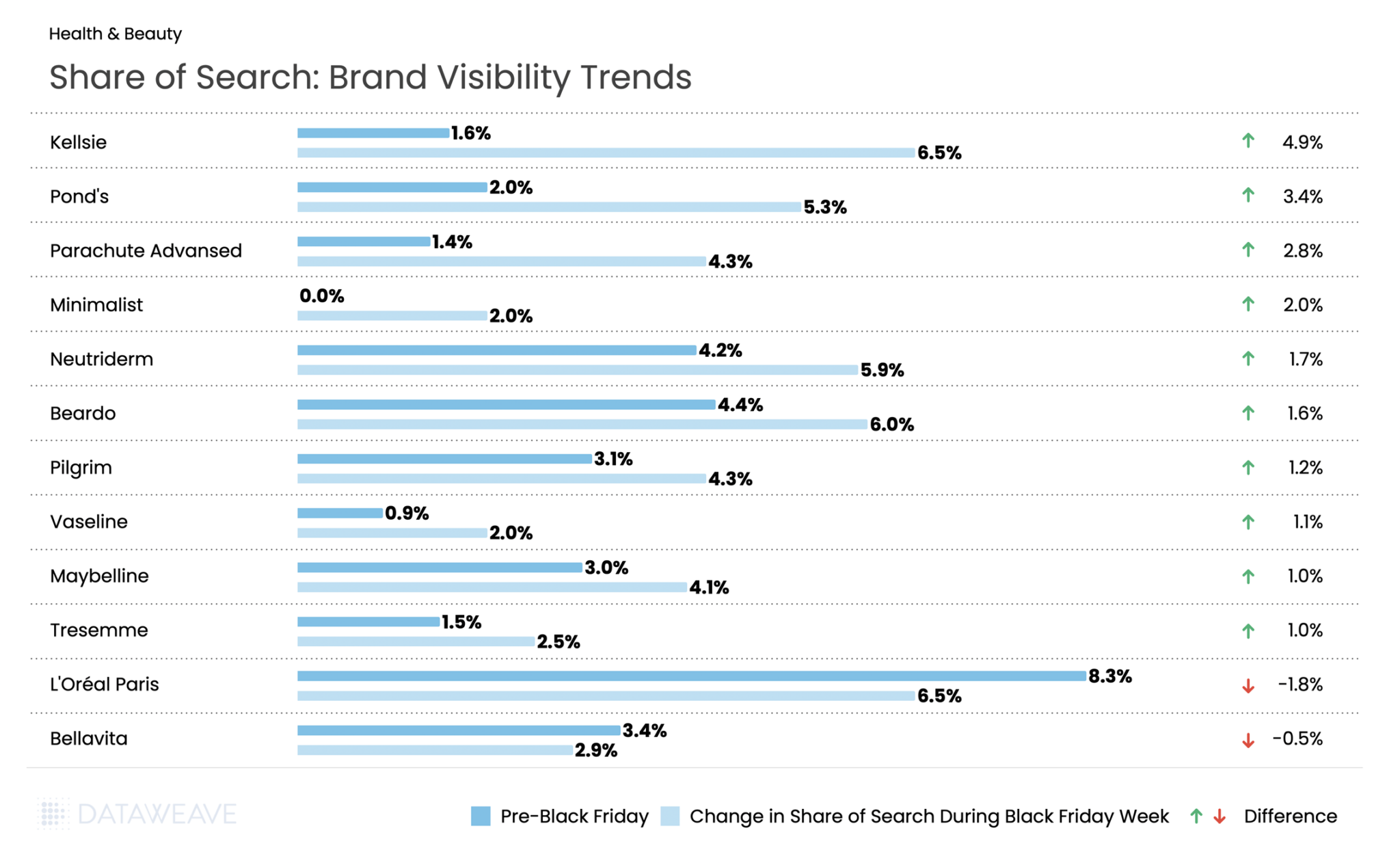
    Brand visibility trends in the beauty and health category this Black Friday Cyber Monday, India

    Affordable and emerging beauty brands dominated during Black Friday in India. Kellsie (beauty tools brand) surged from 1.6% to 6.5%. Classic mass-market brands like Pond’s (+3.4%) and Parachute Advanced (+2.8%) also performed strongly, alongside men’s grooming favorite Beardo (+1.6%). Other popular brands like Maybelline, Tresemme, Vaseline, all saw share of search and visibility increase during Black Friday.

    Skincare brand Minimalist made a notable entry, jumping from 0% to 2.0% visibility. The flip side? Premium international brand L’Oréal Paris dropped from 8.3% to 6.5%, losing visibility during Black Friday.

    Apparel

    Our analysis of 57,537 SKUs reveals interesting discount dynamics.

    Subcategory Discount Analysis

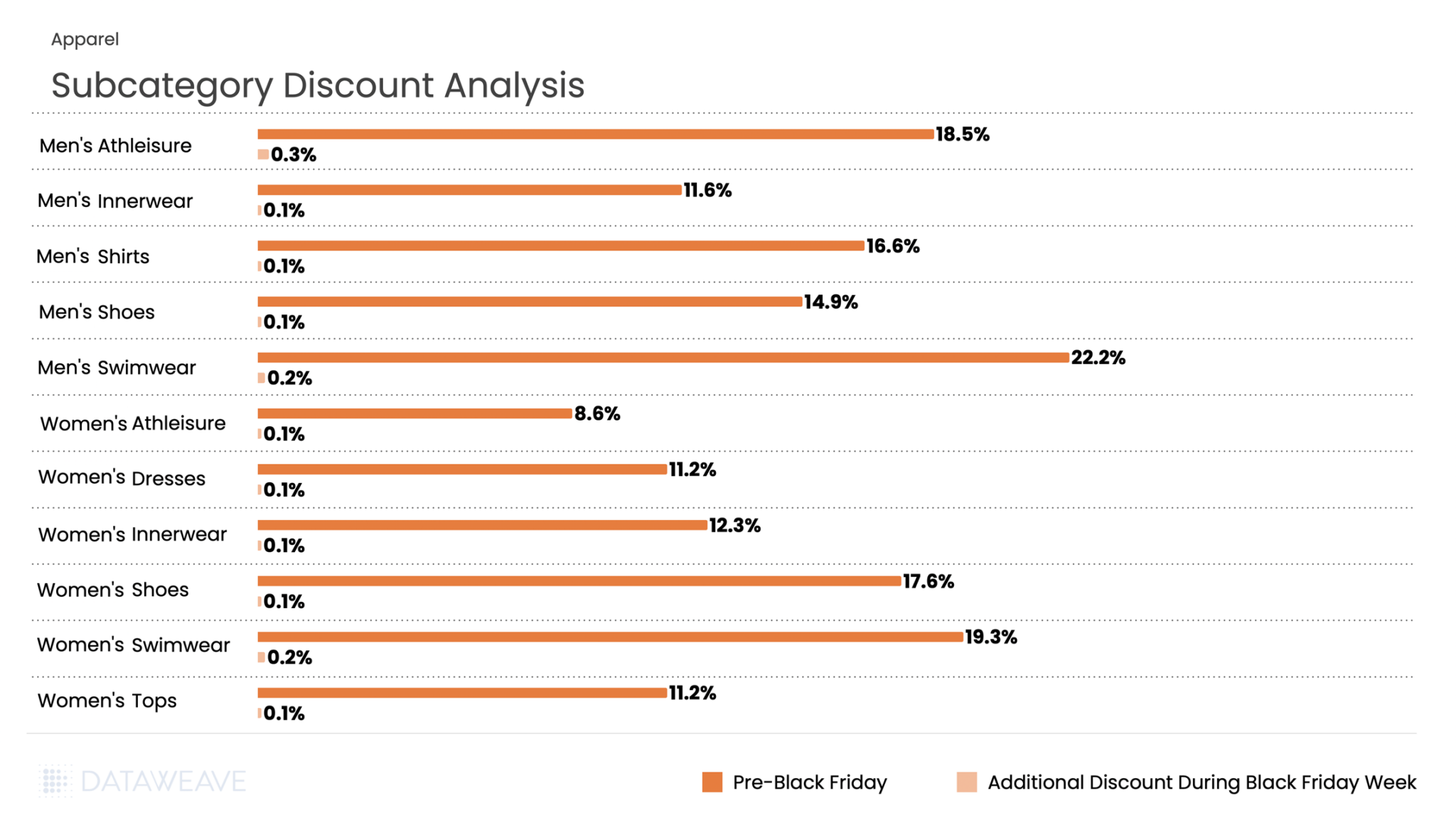
    Subcategory level discounts across apparel and fashion in India this Black Friday

    The category averaged 14.3% pre-Black Friday discounts with an additional 0.1% during Black Friday Week. Men’s Swimwear and Men’s Athleisure led pre-sale promotions at 22.2% and 18.5% respectively, while Women’s Swimwear and Women’s Shoes also saw strong pre event discounts at 19.3% and 17.6%.

    Black Friday Week saw minimal incremental discounting across all subcategories, with most adding just 0.1-0.3%. The relatively subdued incremental discounting indicates that early birds captured the best deals, or that margins were already stretched from pre-sale promotions.

    Share of Search: Brand Visibility Trends

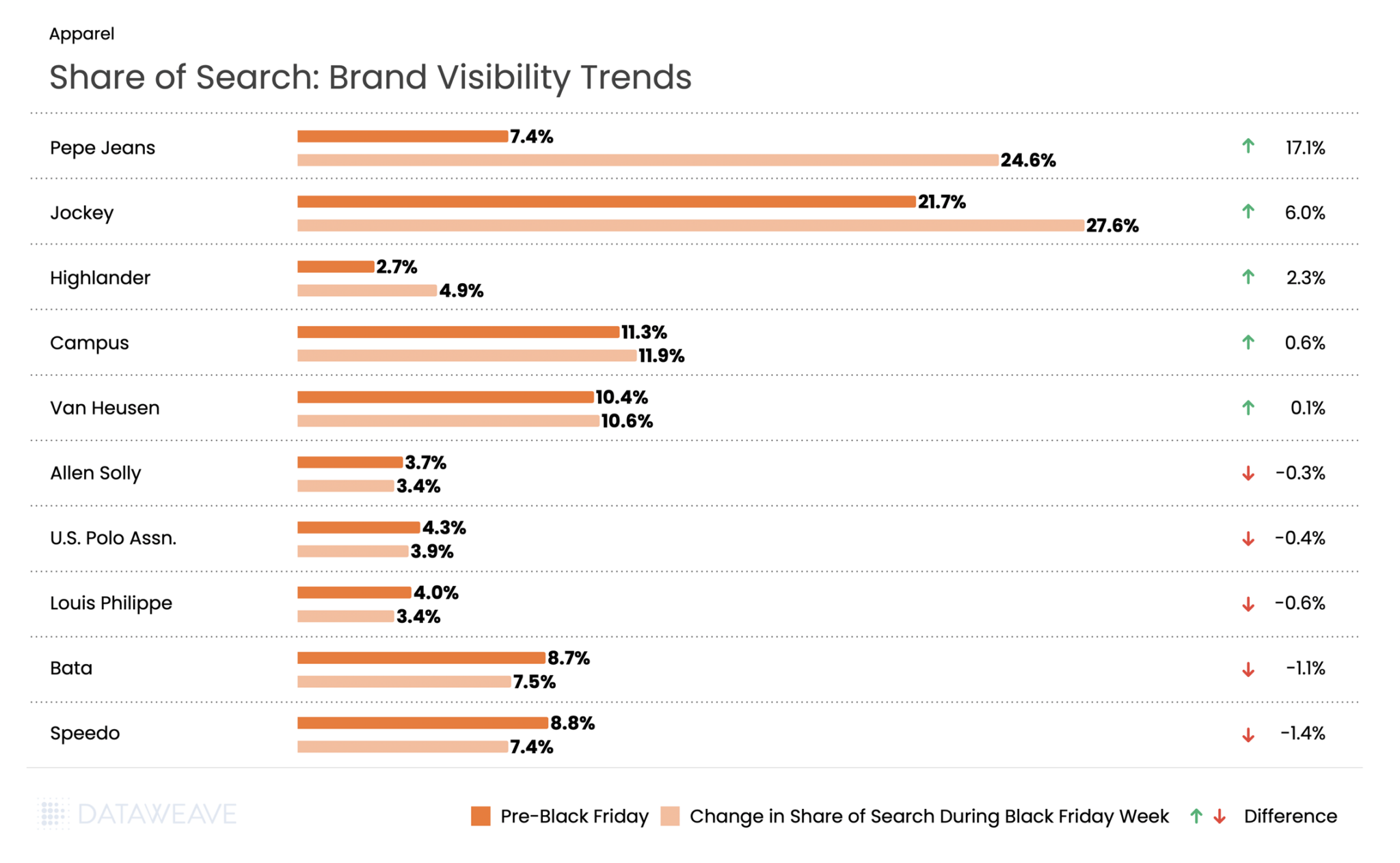
    Brand visibility trends in the apparel and fashion category this Black Friday Cyber Monday, India

    Pepe Jeans dominated visibility, surging from 7.4% to 24.6%, a staggering gain that represents the largest visibility increase across all categories. Jockey also performed strongly with a 6% gain, solidifying its position in innerwear.

    On the flip side, athletic and footwear stalwarts faced headwinds: Speedo dropped 1.4% and Bata fell 1.1%. This data suggests that during Black Friday 2025 in India, denim and lifestyle fashion brands invested heavily in promotional visibility, capturing massive mindshare at the expense of traditional athletic and footwear brands.


    For brands and retailers navigating India’s increasingly competitive e-commerce landscape, the 2025 Black Friday data reveals a critical insight: pre-sale positioning matters more than Black Friday Week discounting. Early promotional investment and visibility campaigns delivered far greater returns than late-stage price drops, fundamentally reshaping how brands should approach this shopping event.

    Want to understand how DataWeave’s retail intelligence platform can help your business make data-driven decisions during peak sales events? Contact us to learn more about competitive insights, price intelligence, assortment analytics, content analytics, and digital shelf analytics.

    Check out our analysis on Black Friday 2025 Pricing and Discount trends in the USA, Canada, UK, and Germany. Follow our blog for more insights on retail pricing trends, brand visibility analysis, and data-driven commerce intelligence.

  • Own Your Product Matches: Gain The Power of Accuracy and Control at Your Fingertips

    Own Your Product Matches: Gain The Power of Accuracy and Control at Your Fingertips

    AI-powered product matching is the backbone of competitive pricing intelligence. Accurate matches help you compare prices correctly, identify meaningful assortment gaps, and optimize product content. Inaccurate matches distort every one of these insights. In some categories, a single mismatch can cause millions of dollars of lost revenue.

    Retailers and brands know this problem well. Product catalogs are vast. Competitor assortments shift daily. Titles are inconsistent. Product codes are missing. Images vary by region or packaging. Basically, context matters, and AI alone often misses that context.

    This is why a human-in-the-loop approach is essential. It allows product matches to be verified consistently, at scale, and with the context that only people can provide. Many retailers have also told us they want to take this a step further. They want the ability to control and define their own product matches.

    Sometimes that is because they need to fix inevitable errors quickly. Other times, it is because their teams have deeper category knowledge and can make the right judgment calls when AI falls short.

    To make that possible, DataWeave introduced User-Led Match Management. It combines the scale of AI with the judgment of experts within retail organizations. The platform does not just suggest matches. It gives your teams the tools to approve, reject, or refine them. This ensures your competitive intelligence reflects both machine precision and your unique business logic.

    Why AI Matching Alone Falls Short

    AI has changed the speed and scale of product matching. Algorithms can process millions of SKUs quickly. They can detect similarities in text, images, and metadata. But in retail, the stakes are too high to rely on AI alone.

    Here is where AI sometimes falls short:

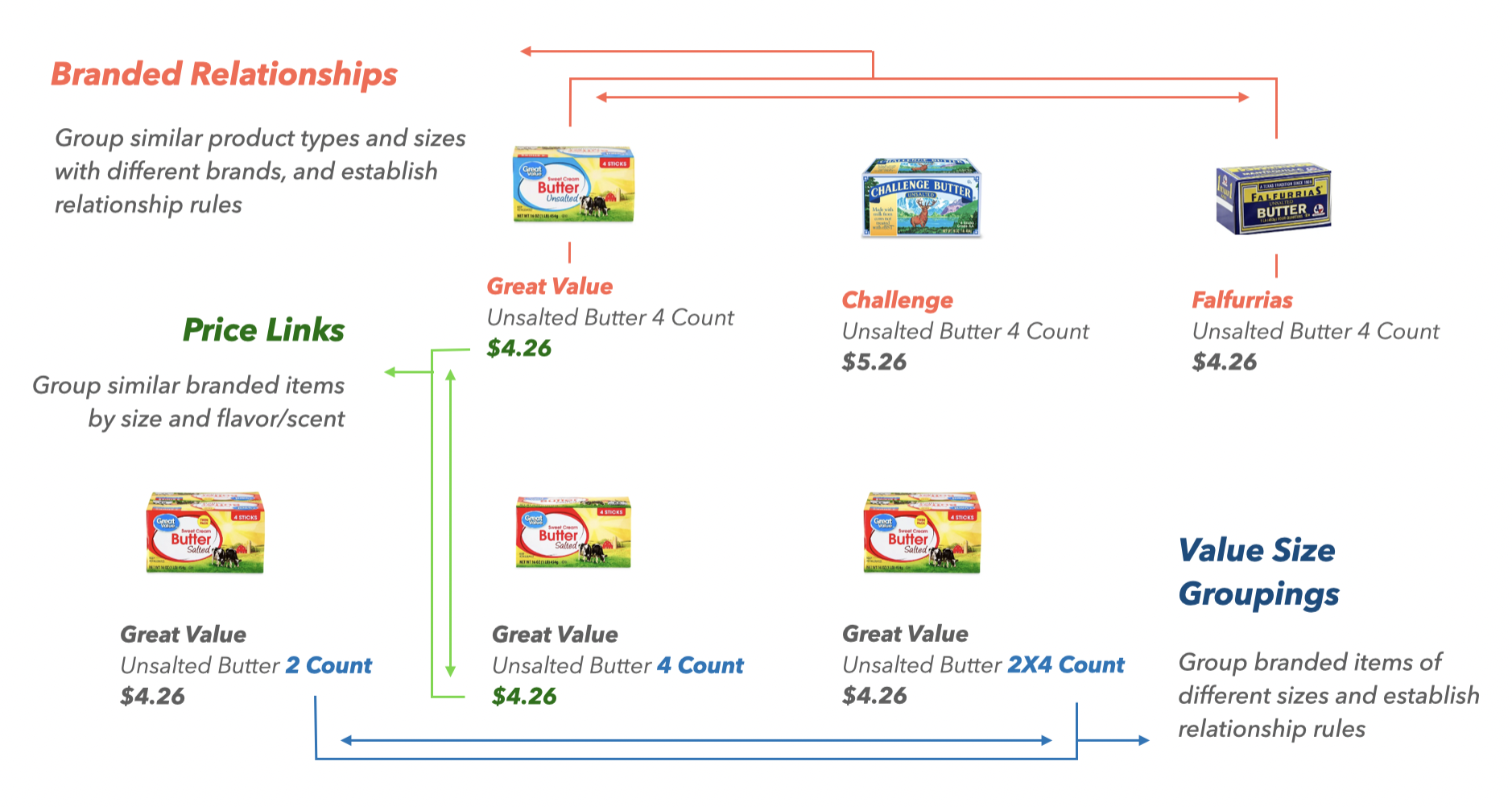
    • Category complexity: Matching rules that work in electronics may fail in fashion or grocery. An electronics SKU may depend on a model number. A fashion SKU may depend on seasonality. A grocery SKU may depend on pack size or whether it is a private label.
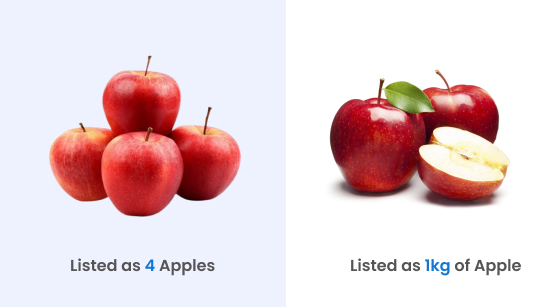
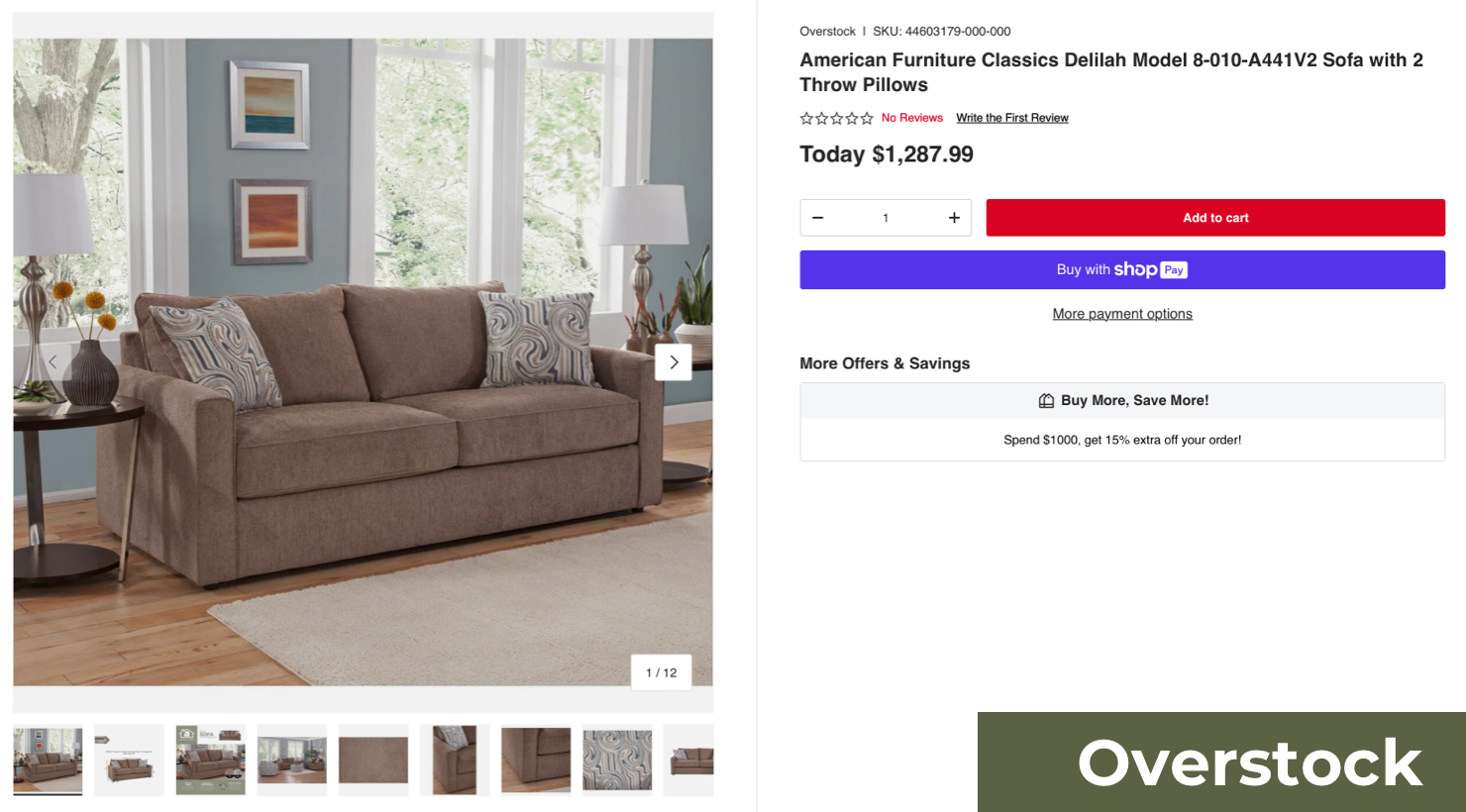
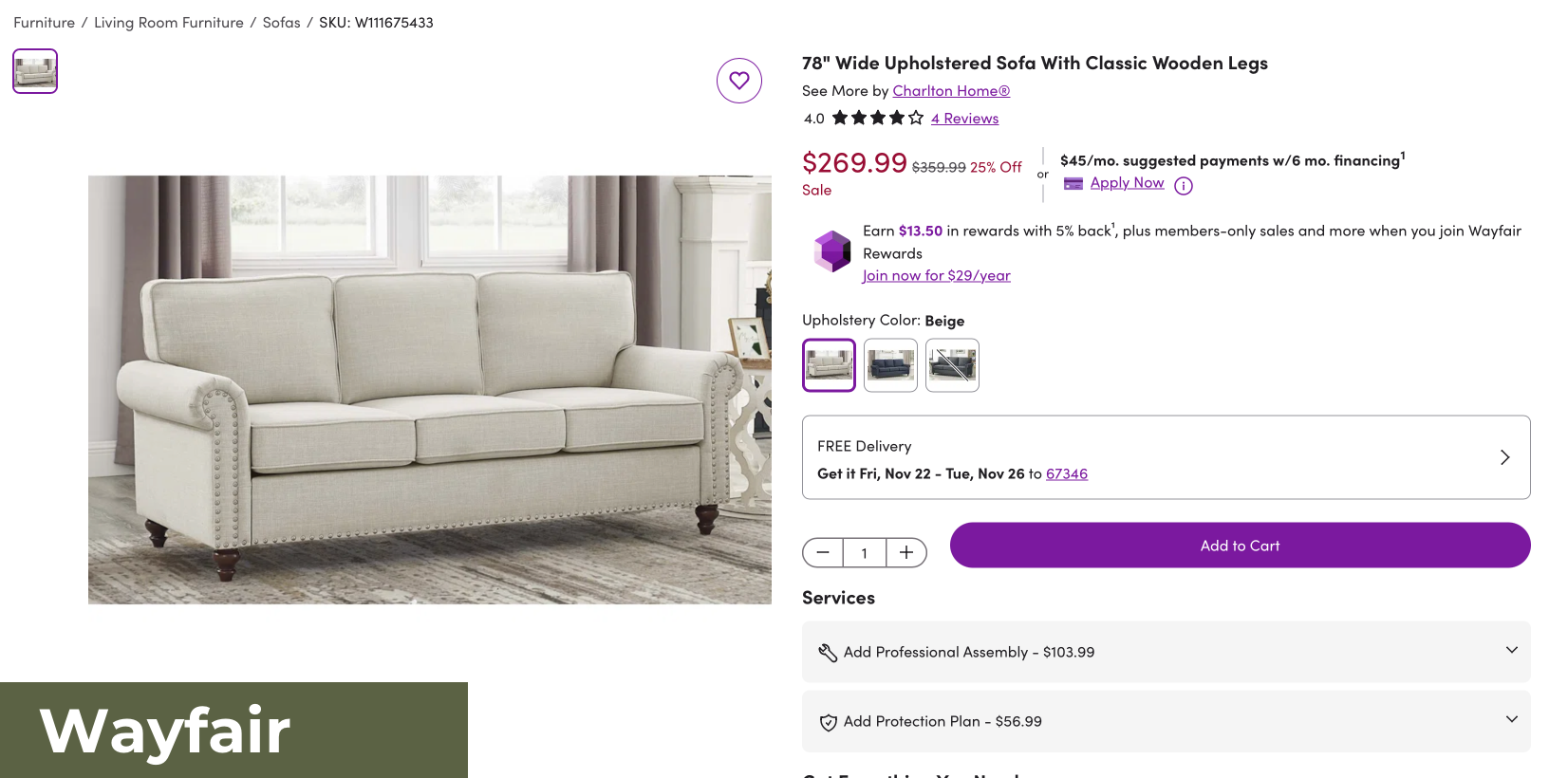
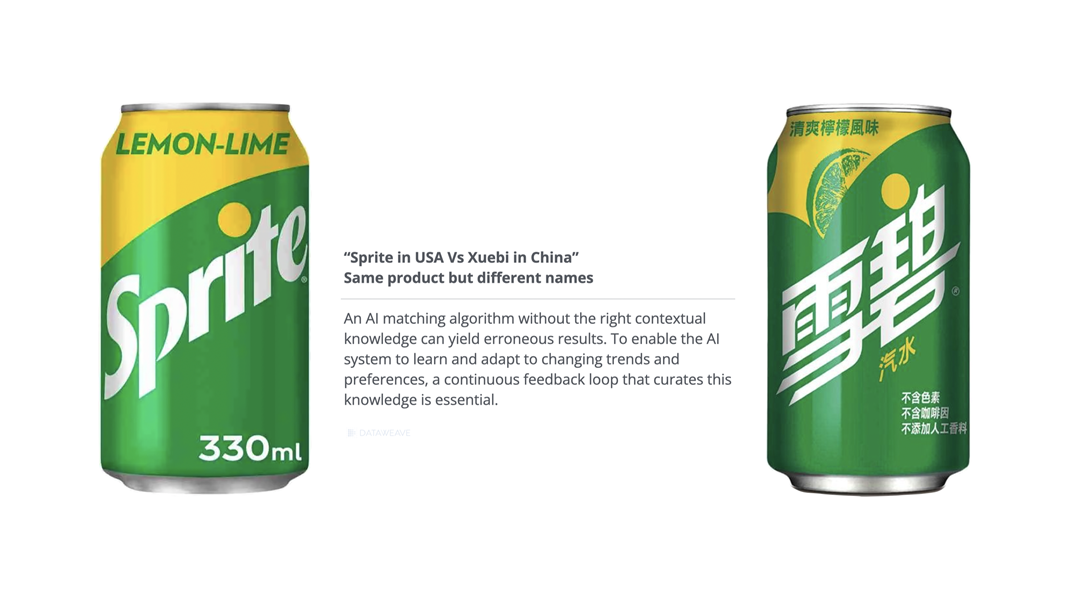
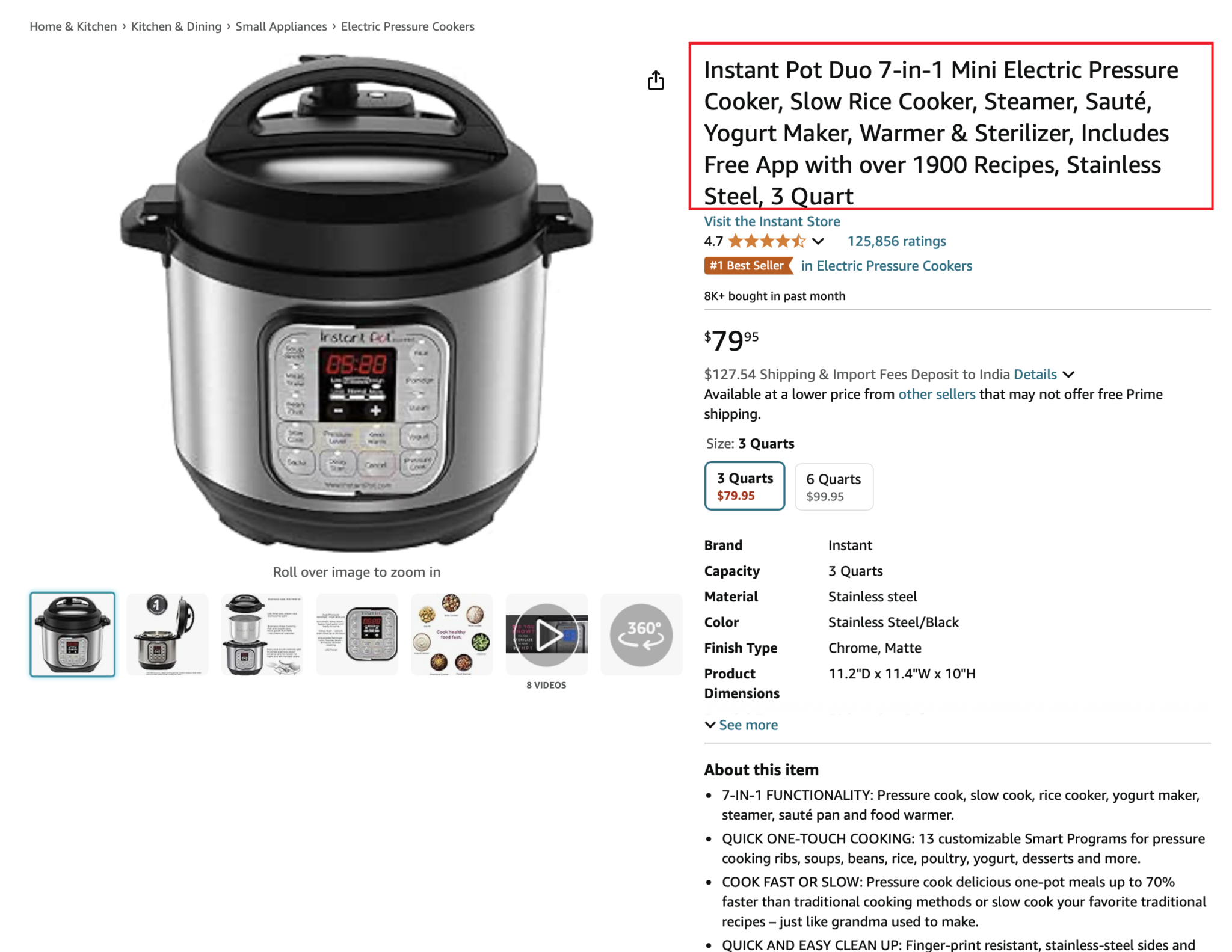
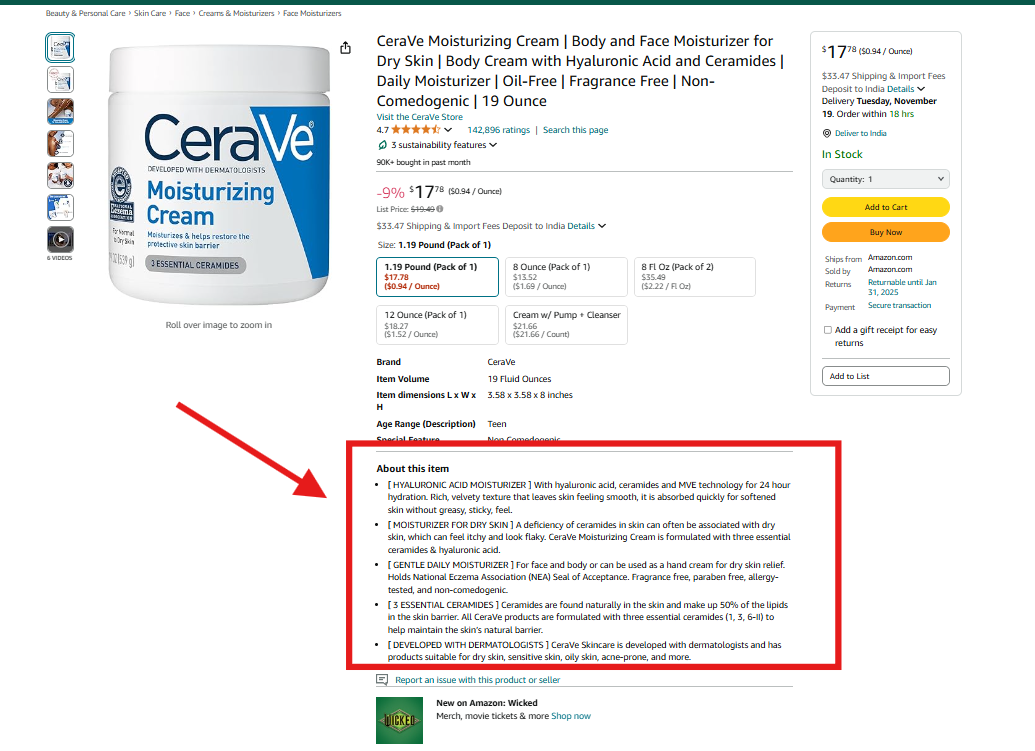
    Product descriptions differ from region to region
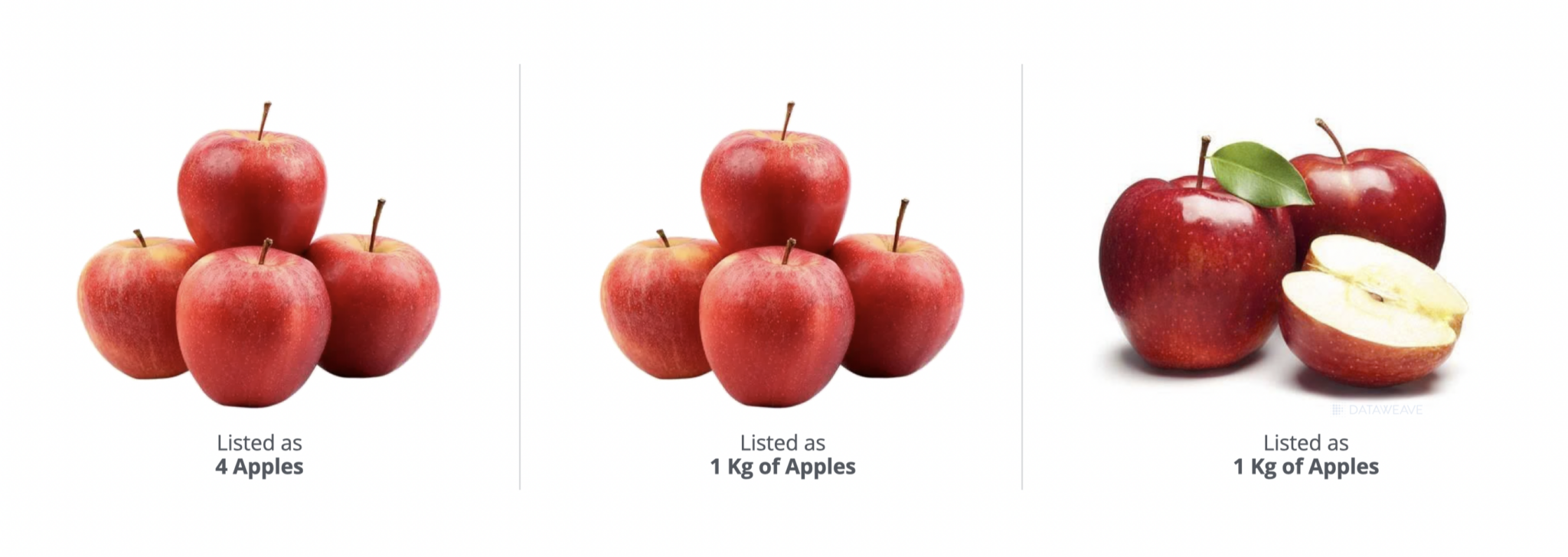
    Product pack sizes may be listed differently across marketplaces, regions
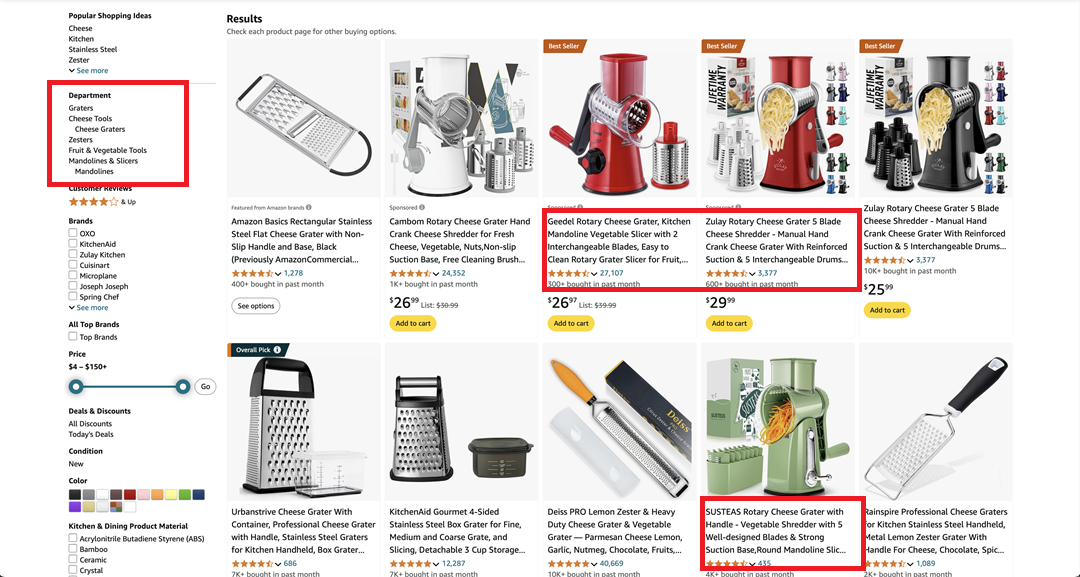
    • Data inconsistency: Titles vary. Images differ across regions. These gaps, when large, trip up algorithms.
    • Business context: Should a premium product ever be compared against a budget line? Should seasonal products match year-round items? AI may not know these boundaries.
    • Scale vs. accuracy: Automated systems optimize for coverage. That speed often limits accuracy for a small set of SKUs. Even a 1% error rate across millions of SKUs creates thousands of bad comparisons.

    AI is critical for scale. But accuracy requires human input. DataWeave’s human-in-the-loop framework addresses this by allowing expert reviewers to validate and improve AI outputs. Our user-led match management takes this further by putting control directly into the hands of your business teams.

    What DataWeave’s User-Led Match Management Delivers

    With User-Led Match Management, your team is not a passive reviewer. They become active participants in shaping the accuracy of your competitive intelligence.

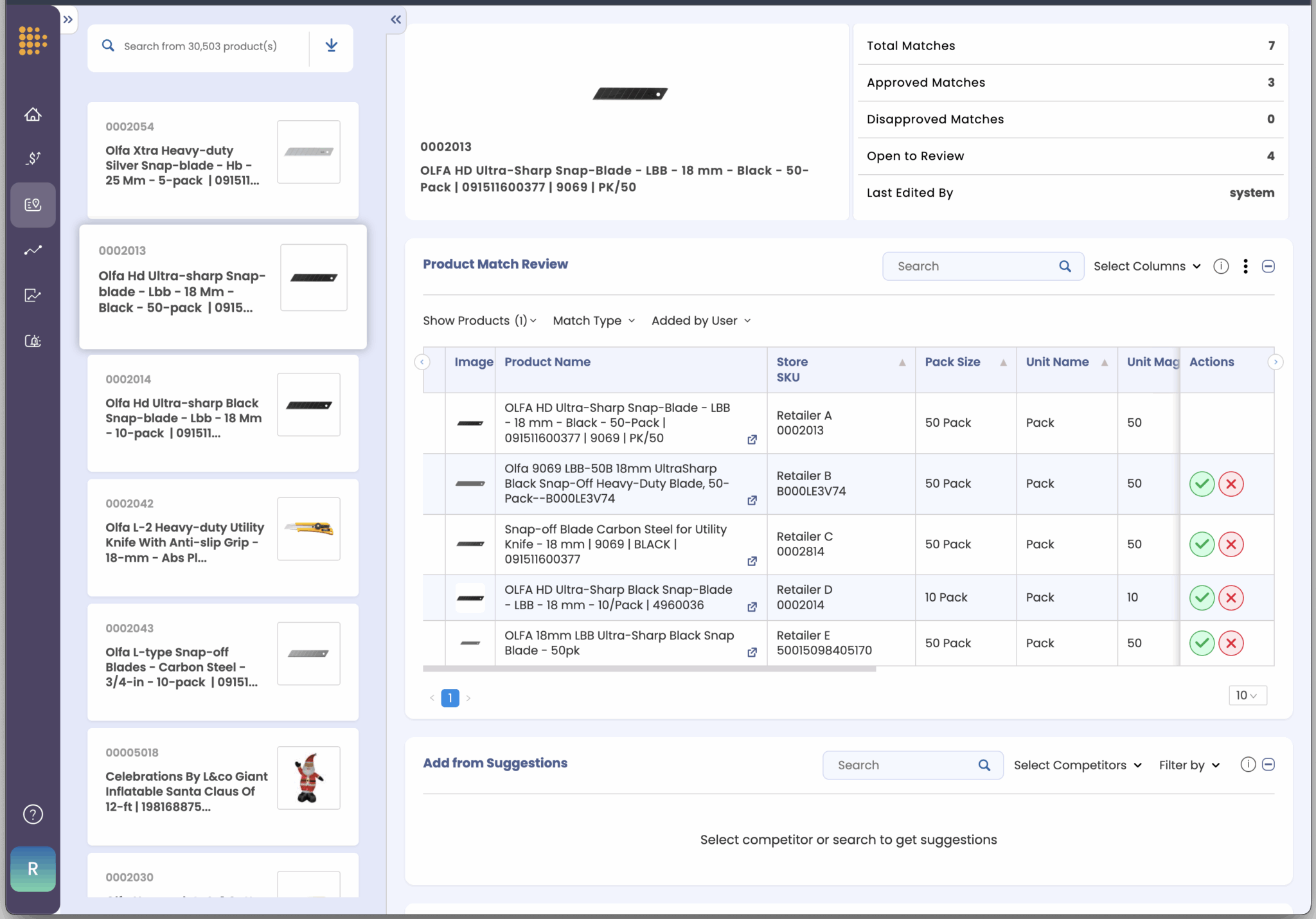
    DataWeave's User Led Match Management lets you own your product matches

    Your teams can:

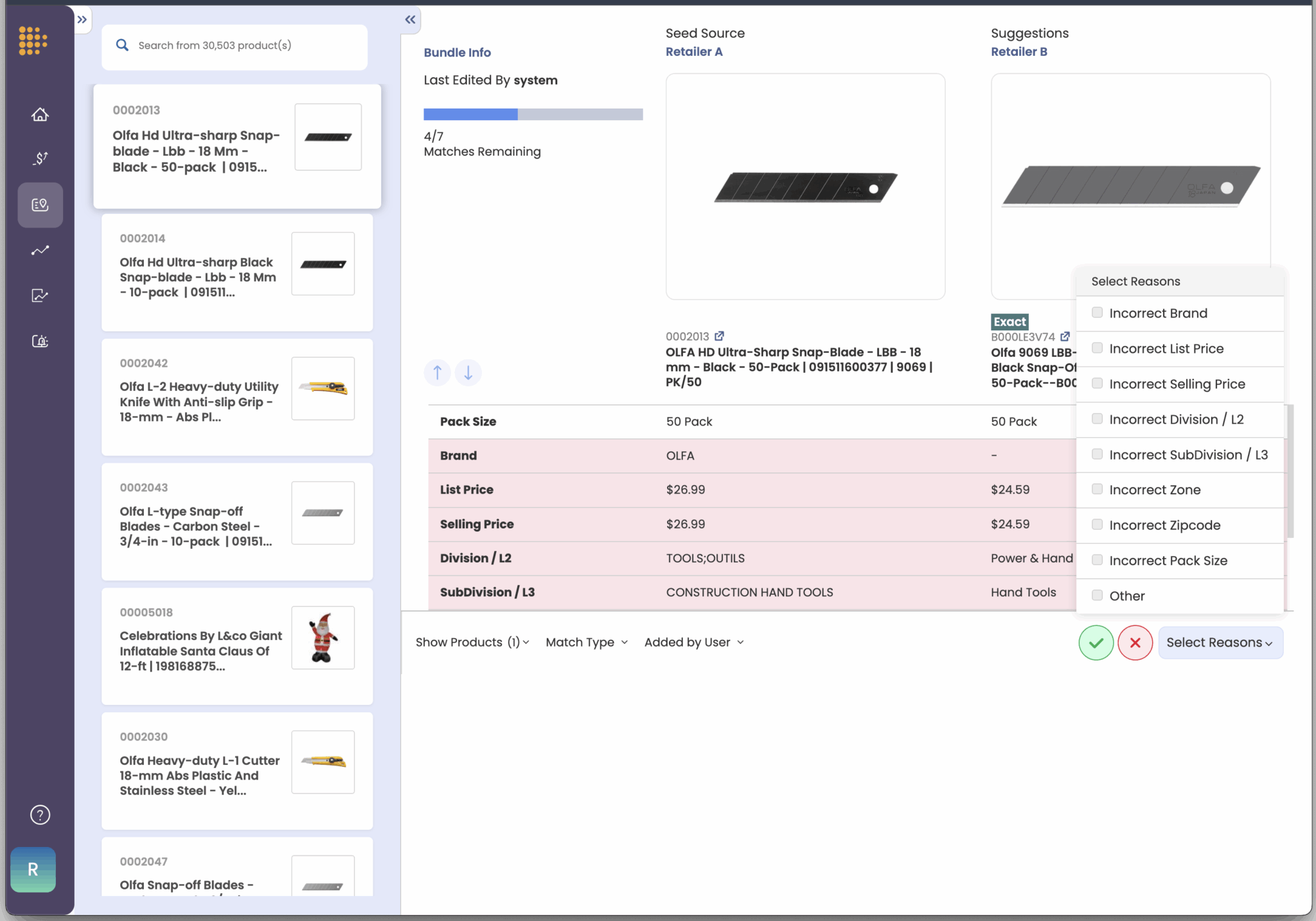
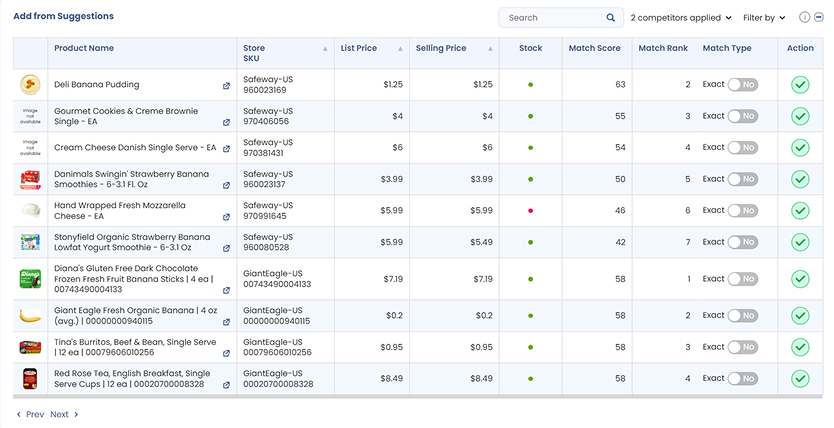
    • Approve, reject, or flag AI-suggested matches. Every suggestion comes with full visibility into why it was made. Your team can validate matches quickly, fix errors, and improve the dataset in real time.
    Approve or reject product matches based on your criteria and business goals
    • Define what “similar” means for your business. A retailer may want to compare multipacks against single packs. A brand may only care about comparing premium products to other premium products. With User-Led Match Management, your team sets tolerance levels that match your strategy.
    • Manually add or refine matches. When AI misses edge cases, your team can add them. This ensures coverage is complete and reflects the true competitive landscape.

    This approach creates a loop where AI, complemented by DataWeave’s human-in-the-loop framework does the heavy lifting, and your teams can fine-tune the results. The outcome is both scale and accuracy.

    Key Features

    DataWeave designed User-Led Match Management to be simple, intuitive, and scalable:

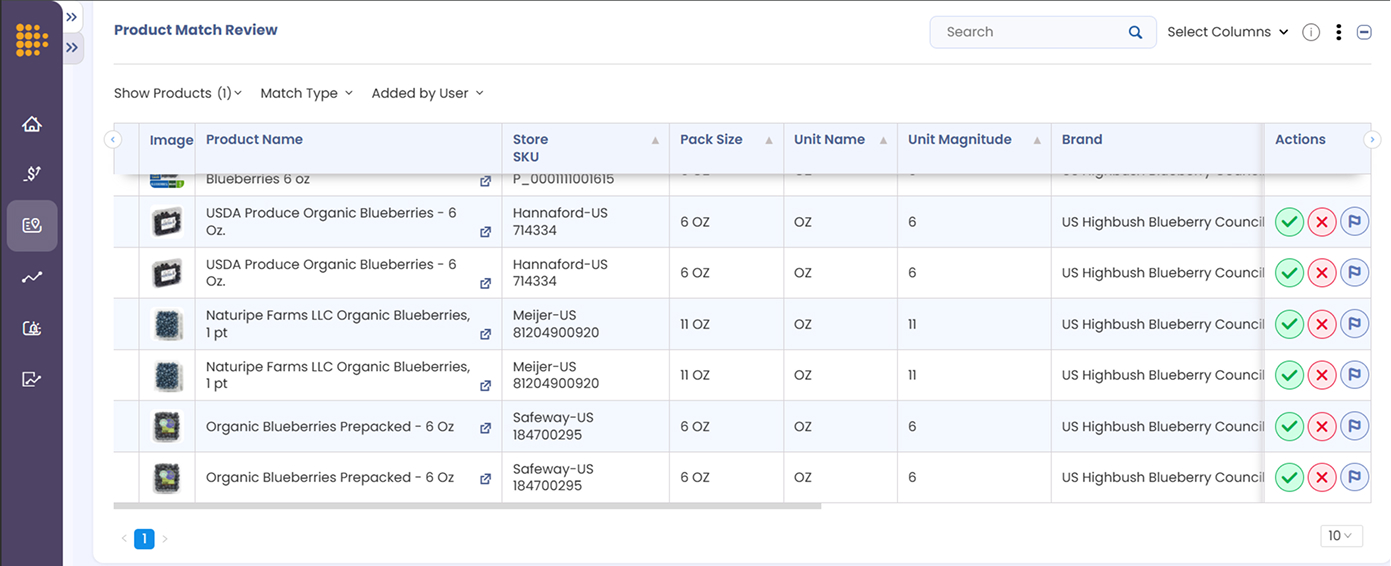
    • Expert-Led Decision Making forms the heart of the system. Rather than trusting AI suggestions blindly, teams gain full visibility into matching logic and can leverage their contextual knowledge of products, categories, and retailers. When the system suggests matching a premium product against a basic alternative, human experts can reject the match and flag it for different criteria. This expertise is particularly valuable for new product launches, seasonal items, or products with complex positioning strategies.
    You can verify matches based on specific attributes like size, type, and more
    • Business Logic Integration: Teams can define matching parameters that reflect their specific strategic needs. A premium brand might establish rules that prevent matches against budget alternatives, while a value retailer might specifically seek those comparisons. Category managers can create different matching criteria for different product lines, ensuring that seasonal items, limited editions, and promotional products are handled appropriately.
    Ensure that your products are matched according to business goals for accurate competitive intelligence
    • Transparent Decision Making: Every match decision creates an audit trail capturing who made the decision, when it occurred, and the reasoning behind it. This transparency is crucial for enterprise environments where pricing decisions need to be defensible and strategies need to be consistent across teams and time periods.
    Review and audit actions to ensure transsparency
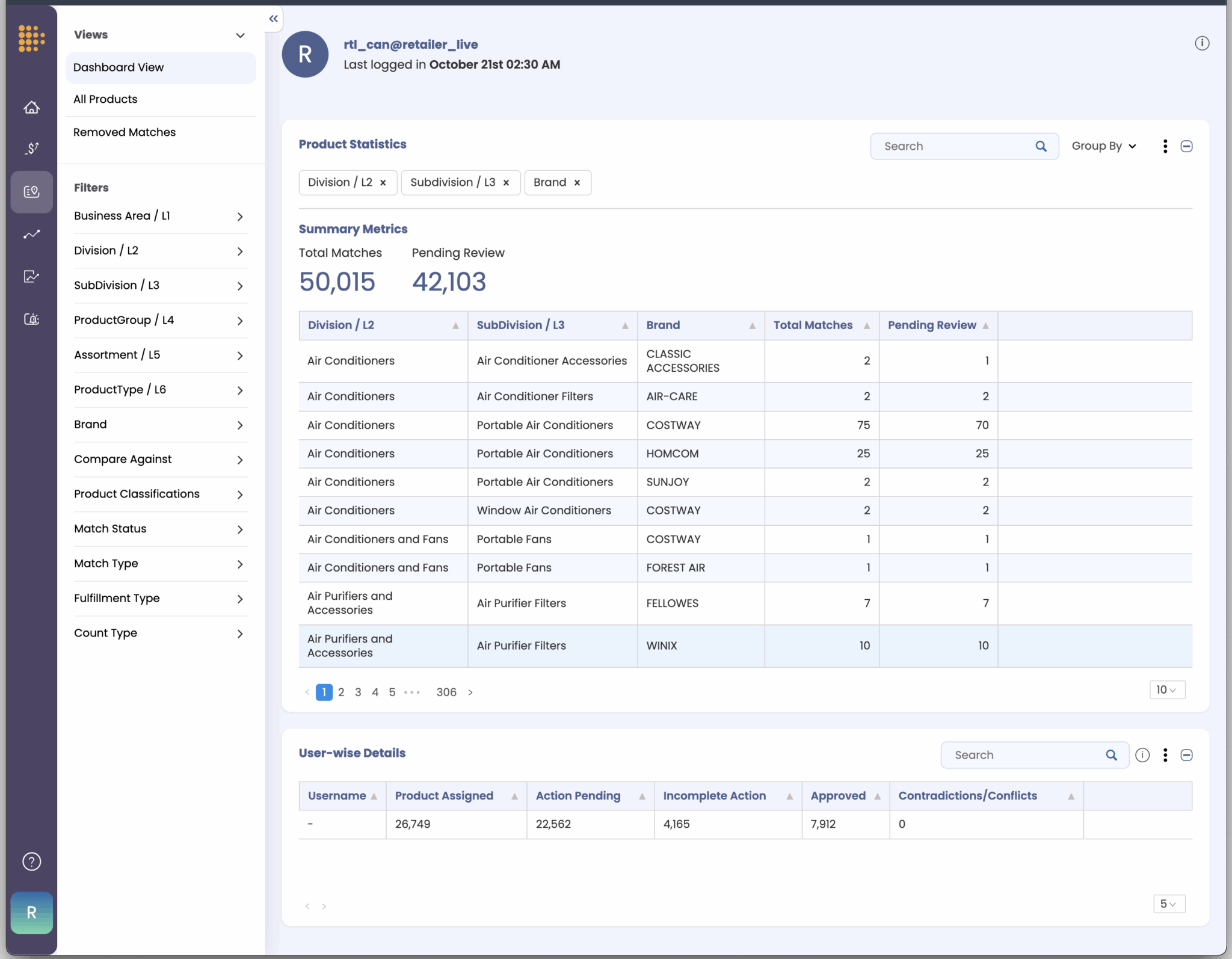
    • Scalable Validation: User-Led systems provide bulk operations for efficiency while maintaining oversight. Teams can upload thousands of matches for validation, use filtered views to focus on high-priority items, and leverage automated alerts for matches that fall outside established tolerance levels.
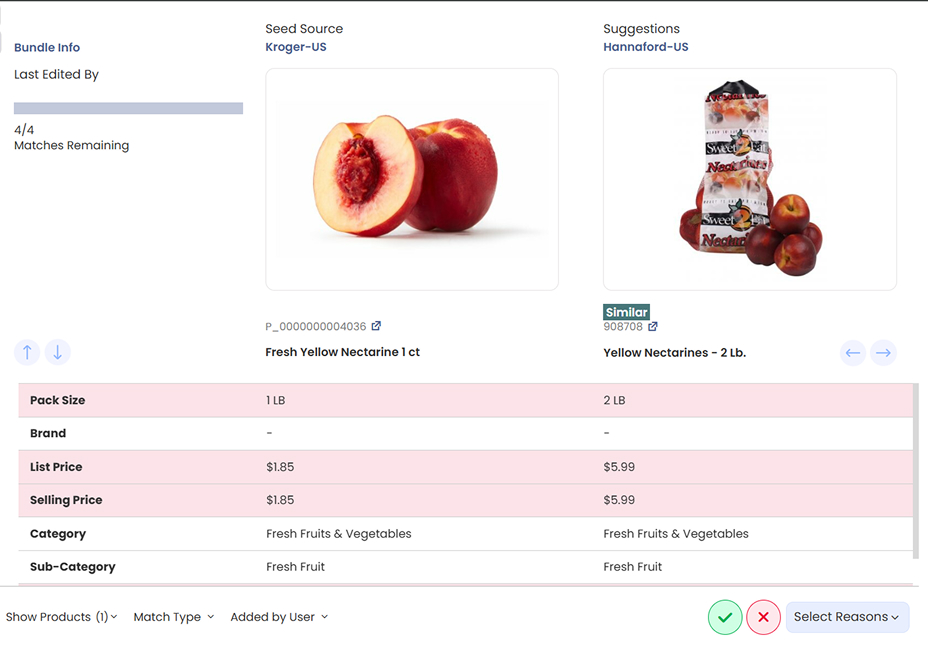
    Review product matches at scale across categories, subcategories.

    Each of these features reduces the friction between AI outputs and business-ready insights.

    Technical Foundation

    The AI foundation behind User-Led Match Management is built for precision and scale.

    1. It uses multimodal AI that combines text, image, and metadata analysis to identify matches even when products are described or displayed differently across retailers.
    2. Domain heuristics apply retail-specific logic, recognizing that “Large” means something different in apparel than in beverages, and that seasonal items require unique treatment.
    3. Knowledge graphs link products across brands, categories, and regions to reveal true relationships even when surface attributes vary.
    4. Through continuous learning, every human correction improves future AI suggestions, making the system smarter and more accurate over time.

    For more information, download our whitepaper here!

    Why This Matters

    Pricing Intelligence

    With DataWeave, accurate and reliable product matching is the standard. Advanced algorithms and built-in quality checks deliver consistently high accuracy, reducing the risk of mismatched products and unreliable insights.

    In the few cases where a match needs review, User-Led Match Management gives your team the ability to validate it quickly and easily. You get full visibility and control, while DataWeave ensures the integrity of the overall matching framework.

    The outcome is true apples-to-apples price comparisons that protect margins, strengthen pricing strategies, and build trust in every decision.

    Assortment Analytics

    Gaps and overlaps only matter when matches are accurate. To understand your true competitive landscape, you need to eliminate false gaps and phantom overlaps that distort assortment insights.

    DataWeave’s advanced Match Management ensures precise product alignment across retailers, categories, and regions, giving you a clear view of your position in the market. At the same time, user-led oversight adds transparent validation, allowing your teams to confirm or refine matches based on their category knowledge.

    The result is a complete and trustworthy view of category coverage that reflects reality, not noise. It helps you identify real opportunities to expand assortments, close gaps, and respond quickly to market changes.

    Content Optimization

    Digital shelf audits only deliver value when the comparisons are accurate. DataWeave ensures that every product is benchmarked against its true competitors so that your insights reflect the real dynamics of your category. For example, a luxury serum is never compared to a basic moisturizer, and a premium electronic device is never matched with an entry-level model.

    With user-led control, your teams have transparent oversight of every match. They can review, validate, or adjust comparisons to make sure each audit aligns with your business standards. The result is a more reliable and actionable view of your digital shelf performance, helping you fine-tune content, optimize visibility, and strengthen conversion across channels.

    Trust and Accountability

    Leadership teams need complete confidence in the data they use to make decisions. User-Led Match Management delivers that confidence by combining the scale of AI with the assurance of human validation. Every match decision is transparent and traceable, giving teams clear visibility into how and why a product was matched.

    This approach builds trust across departments, from analysts to executives. It ensures that every pricing, assortment, and content decision is backed by data that is both accurate and accountable.

    Your Market, Your Rules, Your Insights

    Retailers and brands today need more than fast data. They need data they can trust, shape, and act on with confidence. User-Led Match Management gives them that control. It turns product matching from a static, automated process into a dynamic, collaborative workflow that adapts to how real teams operate.

    Category managers can fine-tune match rules instead of waiting on system updates. Pricing teams can validate critical SKUs in minutes, not days. Digital shelf teams can ensure their audits reflect real competitors, not algorithmic guesses. Executives gain visibility into decisions they can stand behind, supported by transparent data trails and measurable accuracy.

    In short, User-Led Match Management puts control back where it belongs – in your hands. It helps every team move faster, compete smarter, and make decisions powered by data they can truly believe in.

    Reach out to us to learn more!

  • Fueling Agentic Commerce: Introducing DataWeave’s Data Collection API

    Fueling Agentic Commerce: Introducing DataWeave’s Data Collection API

    Commerce Is Entering Its Next Chapter

    Every major shift in commerce has been driven by data. A century ago, shopkeepers relied on ledgers to track sales. In the supermarket era, loyalty cards and barcodes turned transactions into insights. With the rise of eCommerce, clickstream data and online analytics reshaped how products were merchandised and sold.

    Now, we are entering the next chapter: agentic commerce.

    In this new paradigm, autonomous AI agents will handle the tasks that once required teams of analysts, merchandisers, and pricing specialists. Imagine an agent that monitors competitor prices across dozens of retailers, recommends adjustments, and pushes updates to a dynamic pricing engine, all in real time. Picture a shopper’s digital assistant scanning marketplaces for the right mix of price, delivery time, and customer reviews before making a purchase on their behalf.

    These aren’t distant scenarios. They’re unfolding now. Industry analysts estimate the enterprise AI market at $24 billion in 2024, projected to grow to $155 billion by 2030 at nearly 38% CAGR . Meanwhile, 65% of organizations already use web data for AI and machine learning projects, and 93% plan to increase their budgets for it in 2024. The trajectory is undeniable: the next era of commerce will be built on AI-driven decision-making.

    And what fuels those AI-driven decisions? Data. Reliable, structured, timely, and compliant data.

    The Data Problem No One Can Ignore

    Here’s the paradox: just as data has become most critical, it has also become harder to acquire.

    For data and engineering leaders, the challenges are painfully familiar:

    • Old school scrapers that collapse whenever a site changes its HTML or introduces new interactivity.
    • Constant maintenance cycles, with engineering teams spending 20-40 hours a week debugging, rerunning, and patching scripts.
    • Low success rates, with in-house approaches succeeding just 60-70% of the time.
    • Complex infrastructure, from managing proxies to retry logic, pulls attention away from higher-value work.

    But the costs go far beyond engineering frustration.

    For retailers, broken pipelines mean competitive blind spots. A pricing team without reliable visibility into competitor moves can’t respond fast enough, risking lost margin or missed sales. Merchandising teams trying to optimize assortments are left with incomplete data, making poor stocking decisions inevitable.

    For brands, unreliable data disrupts visibility into the digital shelf. Products might be misplaced in search rankings, content could be outdated or incomplete, and reviews could signal issues, but without continuous monitoring, those signals are missed until it’s too late.

    For AI and ML teams, poor-quality training data means underperforming models. Without clean, consistent, and large-scale inputs, even the most sophisticated algorithms produce flawed predictions.

    Finally for consulting firms and research providers, fragile collection systems can compromise credibility. Clients expect robust, evidence-backed recommendations. Data gaps erode trust.

    The reality is stark: fragile pipelines don’t just waste engineering hours. They undermine competitive agility, customer experience, and business growth.

    Enter the Data Collection API

    DataWeave’s Data Collection API is a self-serve, enterprise-scale platform designed to deliver the data foundation today’s enterprises need, and tomorrow’s agentic AI systems will demand.

    Data Collection API Dashboard_DataWeave

    At its core, the API replaces brittle scrapers and ad hoc tools with a resilient, adaptive, and compliant data acquisition layer. It combines enterprise reliability with retail-specific intelligence to ensure that structured data is always available, accurate, and ready to power critical workflows.

    Here’s what makes it different:

    • Enterprise-scale throughput: The API can process thousands of URLs in a single batch or handle continuous, high-frequency scrape. Whether you need daily pulses or near real-time monitoring, it scales with you.
    • Flexible access modes: Technical teams can integrate directly into internal workflows via API, while business users can configure jobs through a no-code interface. Everyone gets what they need without bottlenecks.
    • Adaptive resilience: As websites evolve, the API adapts automatically. No frantic patching, no firefighting.
    • Structured outputs, your way: Clean JSON, CSV, or WARC formats are delivered directly into your environment – AWS S3, Snowflake, GCP, or wherever your data stack lives.
    DataWeave's Data Collection API provides output in your preferred format
    • Built-in monitoring and self-healing: Automated retries, real-time logs, and usage dashboards keep teams in control without manual oversight.
    • Compliance by design: WARC-based archiving and SOC2 alignment ensure data pipelines are auditable, trustworthy, and enterprise-ready.

    This isn’t about scraping pages. It’s about creating a reliable data utility, a system that transforms raw web inputs into structured, actionable data streams that enterprises can trust and scale on.

    Who It’s Built For (And How They Use It)

    The Data Collection API isn’t limited to one role or industry. It’s been designed with multiple stakeholders in mind, each of whom can apply it to solve pressing challenges:

    Retailers and Consumer Brands

    Retailers live and die by competitive awareness. With the API, pricing teams can monitor SKU-level prices and promotions across channels, ensuring they don’t leave margin on the table. Merchandising leaders can track assortment coverage, identifying gaps relative to competitors. Digital shelf teams can measure search rankings, share of voice, and content completeness. The result is faster responses, stronger category performance, and fewer blind spots in shopper experience.

    Data Collection can be customised and scaled with our API

    AI & Machine Learning Teams

    AI teams depend on data at scale. Whether training a natural language model to understand product descriptions or a computer vision system to analyze images, the Data Collection API delivers the structured, high-quality inputs they need. Reviews, ratings, attributes, and product images can all be captured and delivered at scale. For teams building predictive models, from demand forecasting to personalization, the difference between mediocre and world-class often comes down to input quality. This API ensures AI systems are always learning from the best data available.

    Receive updates for your data collections

    Retail Intelligence & Pricing Platforms

    Technology providers serving retailers and brands face unforgiving client expectations. Missed SLAs on data delivery can mean churn. By using the Data Collection API as their acquisition layer, platform providers gain enterprise reliability without rebuilding infrastructure from scratch. They can scale seamlessly with client needs while maintaining the integrity of the insights their customers rely on.

    Marketing & Advertising Teams

    For marketing leaders, competition is visible every time a shopper searches. The API enables teams to track keyword rankings, ad placements, and competitor promotions with consistency. Instead of anecdotal data or partial coverage, marketers get a full picture of their brand’s digital presence and the strategies competitors are using to capture share of voice.

    Consulting Firms & Research Providers

    Consultancies and market research agencies deliver strategy. But a strategy without evidence is just opinion. The API allows these firms to back every recommendation with structured, large-scale data. Whether advising on pricing, benchmarking performance, or publishing analyst research, firms can deliver trustworthy insights without taking on the cost or distraction of building fragile data pipelines.

    The diversity of these use cases demonstrates why the API is a platform for collaboration across industries, ensuring every stakeholder, from engineers to strategists, has the reliable data foundation they need.

    Why DataWeave, Why It Matters

    Many vendors claim to deliver web data. Few can deliver it at enterprise scale, with commerce-specific expertise, and with proven ROI.

    What sets DataWeave apart isn’t just that we provide data; it’s the way we do it, and the outcomes we enable.

    • Commerce expertise baked in: With 14+ years of experience powering the world’s leading retailers and brands, DataWeave brings domain-specific intelligence that generic scraping vendors simply can’t. Our schemas are designed for commerce. Our defaults are smarter because they’re informed by retail realities.
    • Adaptability without firefighting: Most tools break when websites evolve. Our API adapts automatically, minimizing the need for engineering intervention. Teams stay focused on innovation, not maintenance.
    • Accessible to everyone: Whether you’re a senior data engineer automating workflows or a business analyst configuring a quick scrape, the API meets you where you are with both API and no-code interfaces.
    • Enterprise-grade trust: Reliability and compliance are built in, not bolted on. With SLA-backed delivery, SOC2 alignment, and audit-ready archiving, the API is trusted by enterprises that can’t afford uncertainty.

    This combination makes the Data Collection API not just a technical solution but a strategic partner for enterprises preparing for the age of agentic commerce.

    A Foundation for the Future

    The Data Collection API is more than an answer to today’s frustrating data problems. It represents a strategic foundation for tomorrow’s growth, designed to scale alongside the increasingly complex demands of commerce in the AI era.

    At the heart of DataWeave’s vision is the Unified Commerce Intelligence Cloud, a layered ecosystem that transforms raw digital signals into strategic insights. The Data Collection API is the entry point, the essential first layer that ensures enterprises have a reliable supply of the most important raw material of the digital economy: data.

    • Collection: Enterprise-grade acquisition of web data at scale. From product pages and search results to reviews and promotions, enterprises can finally count on continuous, structured inputs without worrying about fragility or failure.
    • Processing: Once collected, data is normalized, enriched, and matched across sources. What was once noisy and inconsistent becomes clean, comparable, and immediately actionable.
    • Intelligence: On top of this foundation sits advanced analytics, solutions for pricing optimization, assortment planning, promotion tracking, and digital shelf visibility, enabling sharper decisions at the speed of the market.

    This progression means enterprises don’t have to transform overnight. Many start small, solving urgent challenges like competitive price tracking or digital shelf monitoring. From there, they can expand naturally into richer intelligence capabilities, knowing that their data foundation is already strong enough to support more ambitious use cases.

    And as agentic AI systems begin to take on a larger share of decision-making, the importance of that foundation grows exponentially. These autonomous systems cannot operate effectively without clean, continuous, and contextual data. Without it, even the most sophisticated AI will falter, making poor predictions or incomplete recommendations. With it, they can operate at full capacity, powering dynamic pricing, real-time demand forecasting, and personalized shopping experiences at scale.

    The Data Collection API isn’t just about reducing engineering pain today. It’s about preparing enterprises to compete and win in an AI-driven marketplace that never sleeps.

    Getting Started

    For teams tired of fragile scrapers, this is a chance to reset. For enterprises preparing for the next era of commerce, it’s a chance to build a foundation that can scale with them.

    If your teams are still struggling with generic and inflexible data scrapers, request a demo now to see the DataWeave’s Data Collection API in action.

  • From the Leaders’ Table: Key Insights from DataWeave’s GCC Executive Roundtable

    From the Leaders’ Table: Key Insights from DataWeave’s GCC Executive Roundtable

    The retail landscape has reached a point where traditional strategies are no longer enough. Tariff shocks are driving up costs in categories like electronics and apparel, while freight disruptions are extending lead times. Retail executives are now operating in an environment of unprecedented complexity.

    In response, many of the world’s largest retailers and brands are shifting critical operations to Global Capability Centers (GCCs) in regions such as India, East Asia, and Africa. Once focused on back-office support, GCCs are rapidly evolving into strategic intelligence hubs powering high-impact decisions on pricing, assortment, content, analytics, and more. These decisions consistently influence both top-line growth and bottom-line performance for multibillion-dollar enterprises.

    At DataWeave, we’ve been working closely with GCCs to help them achieve technical, tactical, and strategic advantages through actionable market intelligence. To further engage with the community and exchange ideas, we recently hosted our first GCC VIP Roundtable in Bengaluru. Leaders from organizations including JC Penney, Lowe’s, Kenvue, and ARKO joined us for a series of candid and insightful discussions on retail’s most pressing challenges and the evolving role of GCCs in driving leadership amid disruption.

    In this article, we share the key themes, challenges, and solutions that emerged from these conversations.

    Where GCCs Are Facing the Biggest Challenges

    The Adoption Lag Challenge

    A recurring concern among GCC leaders at the roundtable was the delay in translating insights into action. As one leader noted, “We have the data and insights at our fingertips, but it can take our internal teams an entire quarter to respond.” Others agreed with this sentiment, recognizing that such adoption lags create a competitive risk.

    The pattern is consistent across organizations, while GCCs excel at generating insights, real-time responsiveness at the store level remains aspirational due to change management challenges and operational inertia.

    The Integration Imperative

    Our discussion with GCC leaders coincided with creeping evidence for the impact of tariffs across retail categories. Managing competitive intelligence is a difficult enough challenge. Now, pricing strategies must account for not just competitive positioning, but also rapid cost structure changes that vary dramatically by product origin and category.

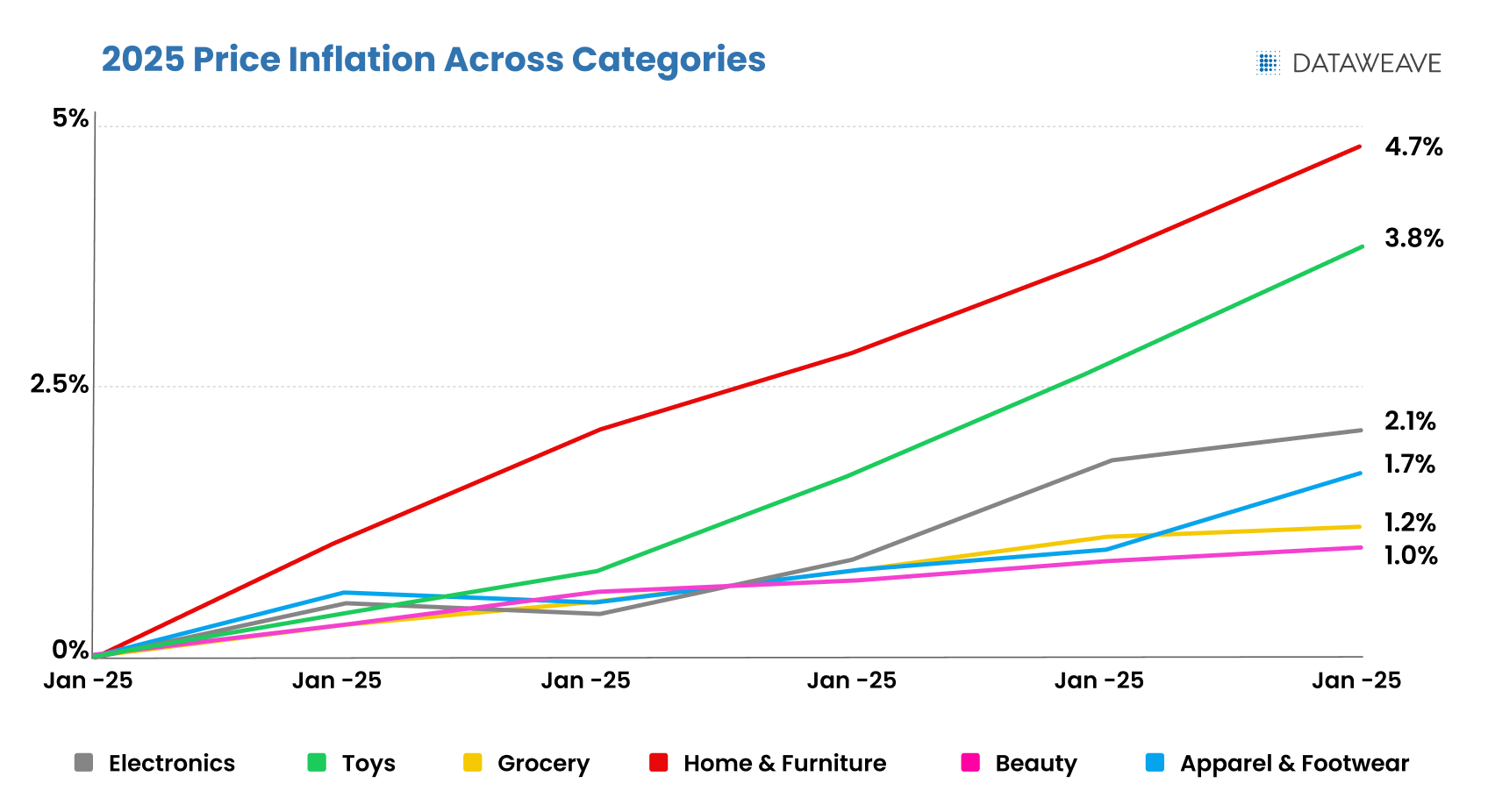
    Price Increases across key Categories 2024 Vs. 2025_Price Inflation
    • Home & Furniture categories are experiencing the steepest price inflation trajectory, with increases reaching 4.7% by mid-2025.
    • Toys and Electronics follow closely at 3.8% and 2.1% respectively, both heavily dependent on international supply chains.

    The Strategic Intelligence Evolution

    Leading GCCs are responding by reimagining their role around critical capabilities:

    Beyond Traditional Competitive Intelligence

    Pricing and content strategies now require integration of multiple variables:

    • Category-specific trends
    • Tariff impacts
    • Competitive positioning
    • Broader macroeconomic factors

    Traditional pricing models that worked in stable environments are proving inadequate for this new reality.

    Real-Time Responsiveness as a Competitive Edge

    The shift from periodic reporting to always-on intelligence systems emerged as a critical theme. GCC leaders discussed the need for:

    • Technical Infrastructure: Moving from batch processing to streaming data architectures, handling millions of SKUs daily
    • Analytical Capability: AI-driven data refinement, including computer vision and natural language processing
    • Organizational Agility: Breaking down silos between marketing, merchandising, and operations

    Regional Complexity Management

    The group highlighted a key gap in the competitive intelligence data they receive. Insights often overlook region-specific nuances such as local competitive landscapes, regulatory requirements, and consumer preferences. They stressed that effective pricing strategies must go beyond base pricing to also factor in card-linked offers, loyalty programs, and delivery options.

    Operational Challenges

    Several technical and operational issues emerged during discussions:

    • Data Quality and Accessibility: Questions around whether platforms provide pre-refined data or raw dumps, and the availability of implementation layers for easy visualization
    • Change Management: The persistent challenge of translating insights into action at operational levels

    The Path Forward: Building Intelligence-Driven GCCs

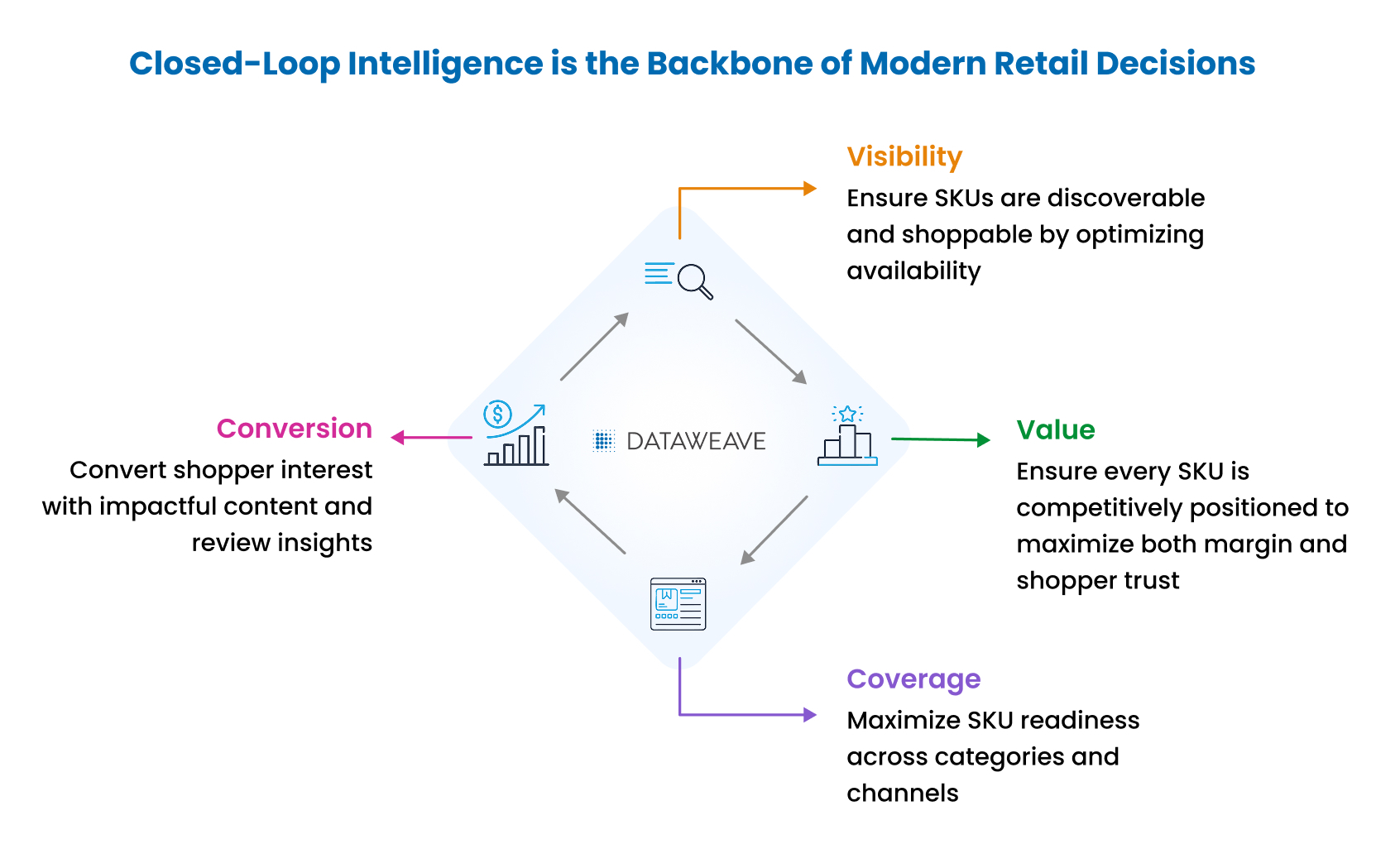
    The most successful GCCs of the future will deliver what our attendees called “closed-loop intelligence.” These insights will not only inform decisions but also continuously improve through feedback and results tracking.

    This is something that DataWeave excels in.

    AI-POWERED COMMERCE INTELLIGENCE FOR END-TO-END ECOMMERCE OPTIMIZATION

    This requires investment in three core areas:

    1. Data Acquisition: Comprehensive, timely product and pricing data collection across retail platforms
    2. Intelligence Refinement: AI-powered transformation of raw data into meaningful relationships across retailers, brands, categories, and competitive landscapes
    3. Insight Delivery: Flexible output capabilities serving everything from executive dashboards to automated pricing systems

    Key Takeaways for GCC Leaders

    Our roundtable revealed that successful GCCs share common characteristics:

    • Proactive Decision-Making: Moving beyond reactive responses to anticipate market changes
    • Integrated Intelligence Systems: Combining traditional competitive data with modern digital signals, including social media trends
    • Cross-Functional Impact: Establishing strategic partnerships with business units rather than transactional service relationships
    • Measurable ROI: Proving value through pricing strategies that demonstrably improve margins

    The retail industry will likely become more complex, not less, in the coming years. The GCCs that invest in sophisticated competitive intelligence capabilities today will be the ones helping their organizations not just navigate this complexity, but thrive within it.

    The depth of insight and openness in the discussions during the event underscored the value of bringing this community together. As we continue to strengthen our connections with GCC leaders, we look forward to hosting more such forums.

    If you’d like to be part of the conversation, reach out to us today!

  • Turning Headwinds Into Wins: How Brands Can Navigate Price, Share, and Visibility Amid Tariff Disruption

    Turning Headwinds Into Wins: How Brands Can Navigate Price, Share, and Visibility Amid Tariff Disruption

    Disruption Is Now the Baseline

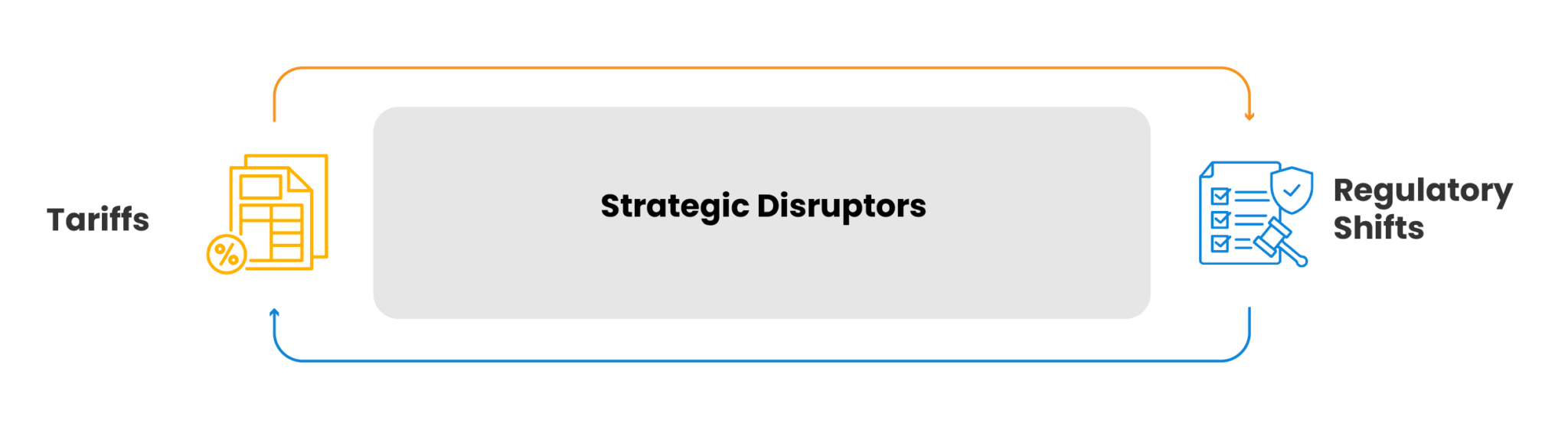
    Tariffs can spike landed costs overnight, regulations rewrite labelling rules, and competitors slash prices before your team finishes its daily stand-up. And yet, some consumer brands thrive.

    The winning brands see changes early, decide quickly, and execute flawlessly across the digital shelf. This post blends three decades of pricing and merchandising expertise with timely digital shelf insights from DataWeave, offering a clear path forward for brands navigating today’s volatile retail environment.

    From Cost Shock to Chronic Uncertainty

    Tariffs are no longer just one-off headlines; they’ve become an unpredictable, ongoing variable in the global marketplace. The true challenge isn’t always the duty rate itself, but the constant whiplash of not knowing if, when, or how much that duty will change. This pervasive uncertainty is having a tangible impact:

    • Market Uncertainty: Tariff talk alone disrupts planning and fuels market instability.
    • Operational cost inflation: Shifting trade rules raise expenses across sourcing, freight, and distribution.
    • Compromised SKU-level Margin: The profitability of individual products is under constant threat.
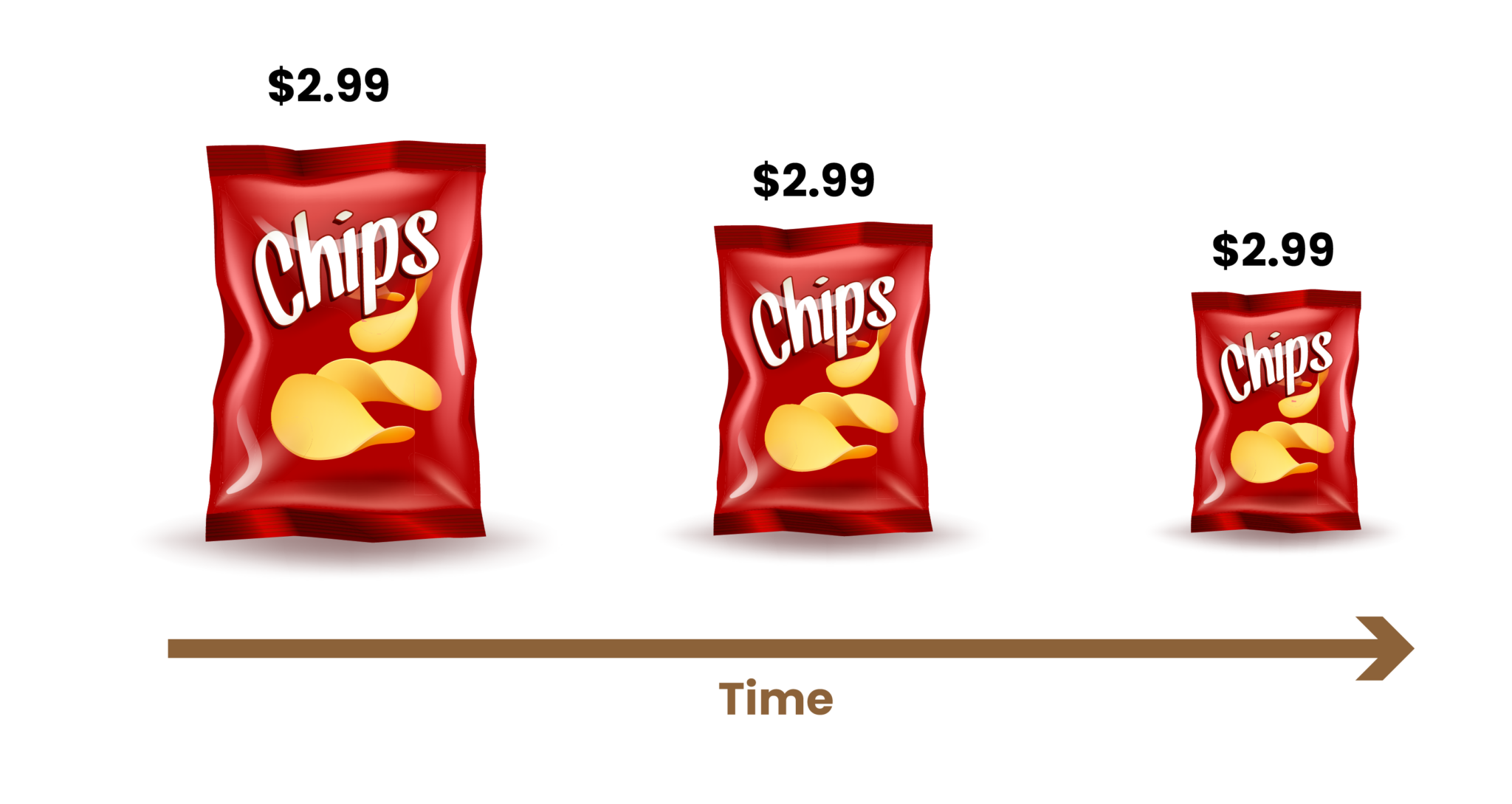
    • Shrinkflation: Brands shrink product quantities to mask rising costs, risking consumer trust.

    Unpredictable Competitive Response: Delaying price moves while watching competitors can erode margins as much as tariffs.

    To stay ahead, pricing decisions must be stress-tested against multiple tariff scenarios and aligned with likely competitor reactions. Timing matters as much as accuracy, move too soon or too late, and margins suffer either way.

    The Tariff Math No One Can Afford to Get Wrong

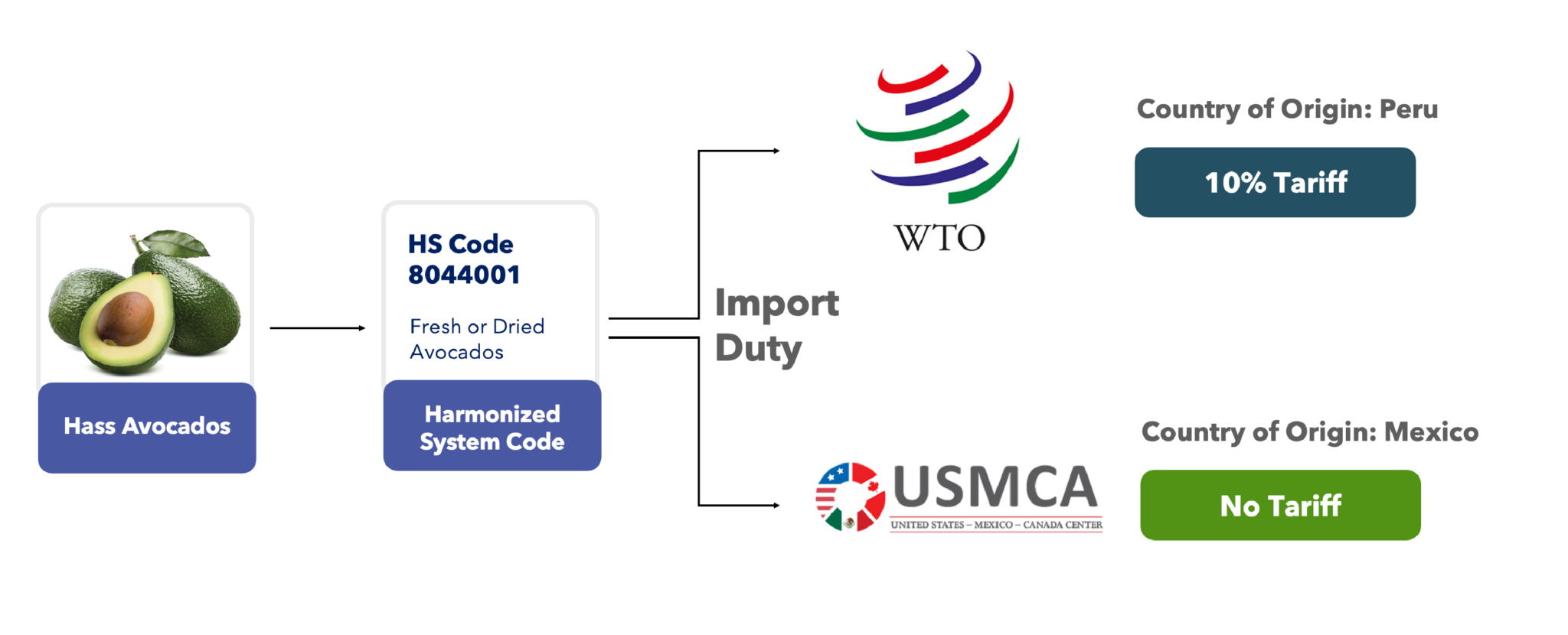
    When it comes to tariff disruption, the difference between profit and loss often hinges on a precise understanding of a three-step process. Get any part of this chain wrong, and the financial ripple effect can undermine pricing and promotions. The duty you pay, therefore, is the direct result of the following three critical steps:

    Step 1: Harmonized System (HS) Code

    • What it is: A six- to ten-digit classifier that drills down to product sub-types.
    • Why it matters: A single digit change can shift an item into a higher-tariff bracket.

    Step 2: Country of Origin

    • What it is: The nation in which the imported item was made.
    • Why it matters: Mis-tagging the origin can lead to mis-pricing and inaccurate margin calculations.

    Step 3: Trade-Agreement Overlay

    • What it is: Differentiation between the World Trade Organization (WTO) baseline tariffs and special trade agreements (e.g., USMCAUnited States-Mexico-Canada Agreement).
    • Why it matters: The same HS code can result in significantly different duties, up to a 10% swing, depending on the originating country (see the example below).

    This isn’t just about paying the correct duty; it’s about safeguarding your bottom line in a global marketplace where every digit and every designation carries substantial weight.

    The wrong origin, the wrong rule, the wrong margin.

    Hard Numbers: Where Prices Are Already Climbing

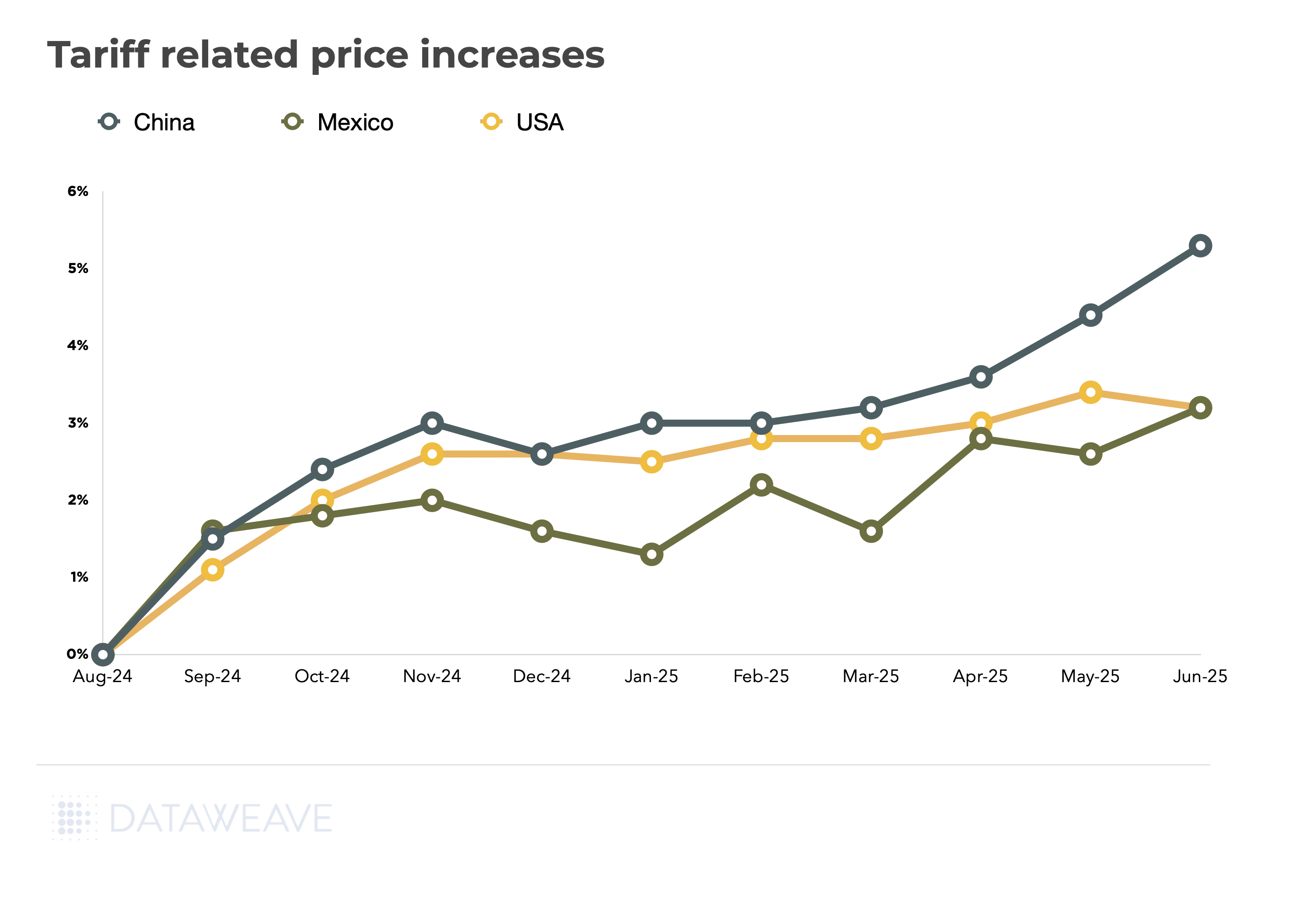
    DataWeave’s latest digital shelf analysis shows import-driven price inflation diverging sharply by source country.

    The intricate dance of HS codes, country of origin, and trade agreements directly translates into the prices consumers see. And the data doesn’t lie. Below, we delve into the hard numbers: where prices are already climbing, as illuminated by DataWeave’s latest digital shelf monitoring, showing significant import-driven price inflation by source country.

    • China: Products sourced from China are up 5%. This is largely attributable to the numerous tariffs currently imposed on Chinese goods.
    • Mexico: Prices for products from Mexico have risen by 3%.
    • United States: Interestingly, even U.S.-sourced products show a 3% increase.
    tariff price increases

    This rise in U.S. product prices might seem counterintuitive if tariffs are solely focused on imports. However, the reality lies in the global supply chain for many products.

    Consider guacamole as an example: While the final product might be “Made in the USA,” its components often come from various international sources. Avocados might be imported from Mexico, lime juice from Central America, and seasonings from India or China. Even packaging could originate in Asia. Each of these imported components can be subject to tariffs. Therefore, even if an item is assembled in the U.S., the tariffs on its constituent parts contribute to an overall price increase, explaining the rising rates for U.S.-sourced goods.

    Action step: Map tariff exposure at both finished-goods and component-level to avoid “Made in USA” blind spots.

    Timing Is a Competitive Weapon

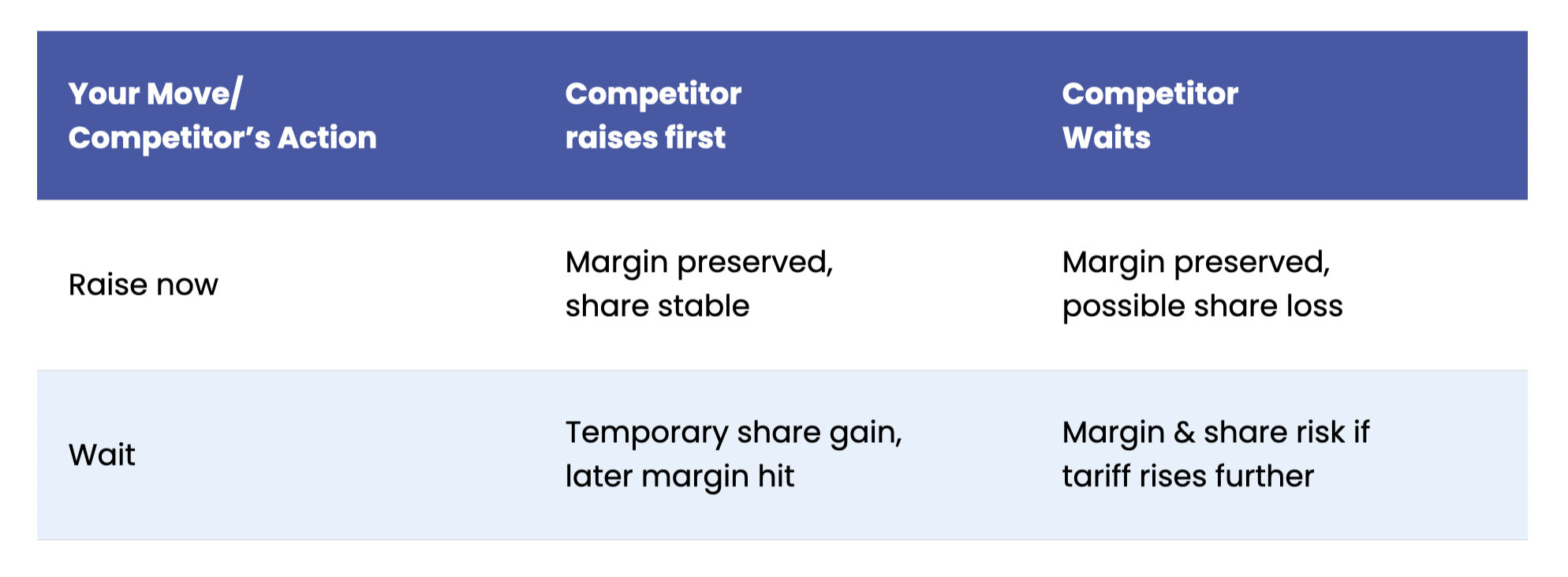
    With duty tables and competitor reactions changing fast, the question is: move first or follow? Early movers recoup cost fastest but risk overshooting if tariffs ease; laggards may enjoy a brief price advantage but suffer sudden margin compression.

    The Strategic Dilemma

    The table below illustrates this strategic choice and its potential outcomes:

    Shrinkflation: Margin Patch or Trust Erosion?

    Beyond direct price adjustments, many brands are turning to shrinkflation to manage tariff-driven cost pressure, shaving net weight instead of hiking prices. DataWeave’s analysis reveals an average package reduction of 5 – 6%, with extreme cases reaching 15 – 25%, sometimes even coupled with a shelf-price increase.

    While this can cushion immediate margin, it comes at a significant cost: brand credibility. Savvy shoppers quickly spot these changes, sharing “before-and-after” photos online and fueling consumer frustration. What begins as a margin patch can rapidly erode trust and damage long-term loyalty.

    Ultimately, navigating this volatile environment requires dynamic intelligence and a holistic pricing strategy that balances profitability with market share and, crucially, consumer trust.

    Price Hikes May be Inevitable, But You Can Still Run Your Digital Shelf

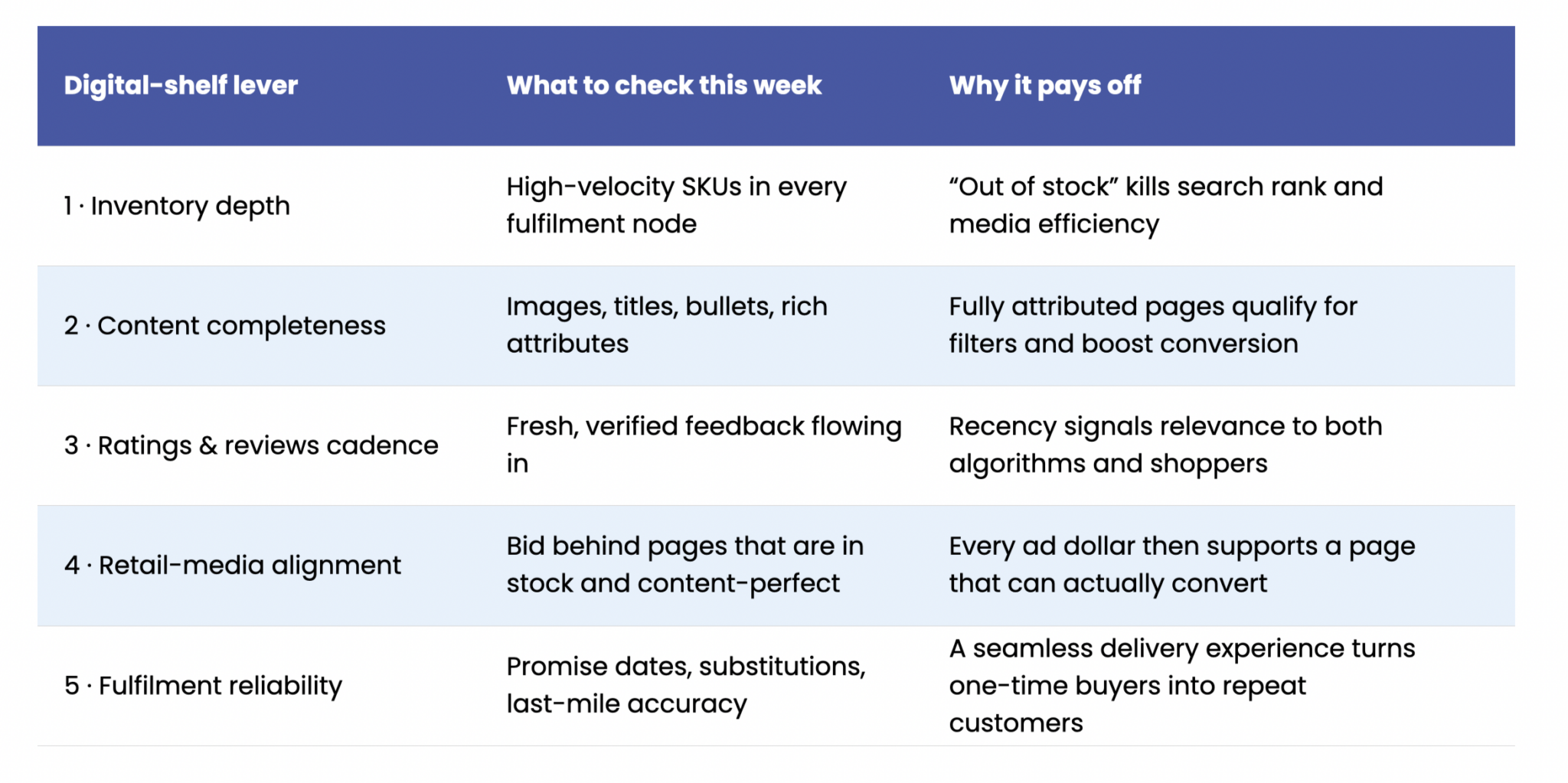
    Tariff‑driven cost pressure can force list‑price increases, but it does not dictate how well your products show up, sell through, or satisfy shoppers online. Those outcomes still hinge on five levers that live entirely inside your control. Master them and you cushion margin hits while protecting (or even expanding) share.

    The Five Levers of Digital‑Shelf Control

    • Inventory Depth – Maintain online in‑stock rates above 95 percent for high‑velocity SKUs and flag substitute logic when unavoidable out‑of‑stocks occur.
    • Content Quality & Accuracy – Keep titles keyword‑rich, imagery crisp, and attributes complete so search filters never bury you.
    • Ratings & Reviews Cadence – Proactively request fresh reviews to earn retailer search boosts and reassure value‑conscious shoppers.
    • Retail‑Media Precision – Bid where pages are healthy and in‑stock; pause spend on broken listings that leak conversion and ROAS.
    • Fulfillment Excellence – Monitor pick‑pack accuracy, on‑time delivery, and substitution rates; each one influences retailer algorithmic visibility.

    Content Hygiene Keeps You Visible, Compliant, and Conversion-Ready

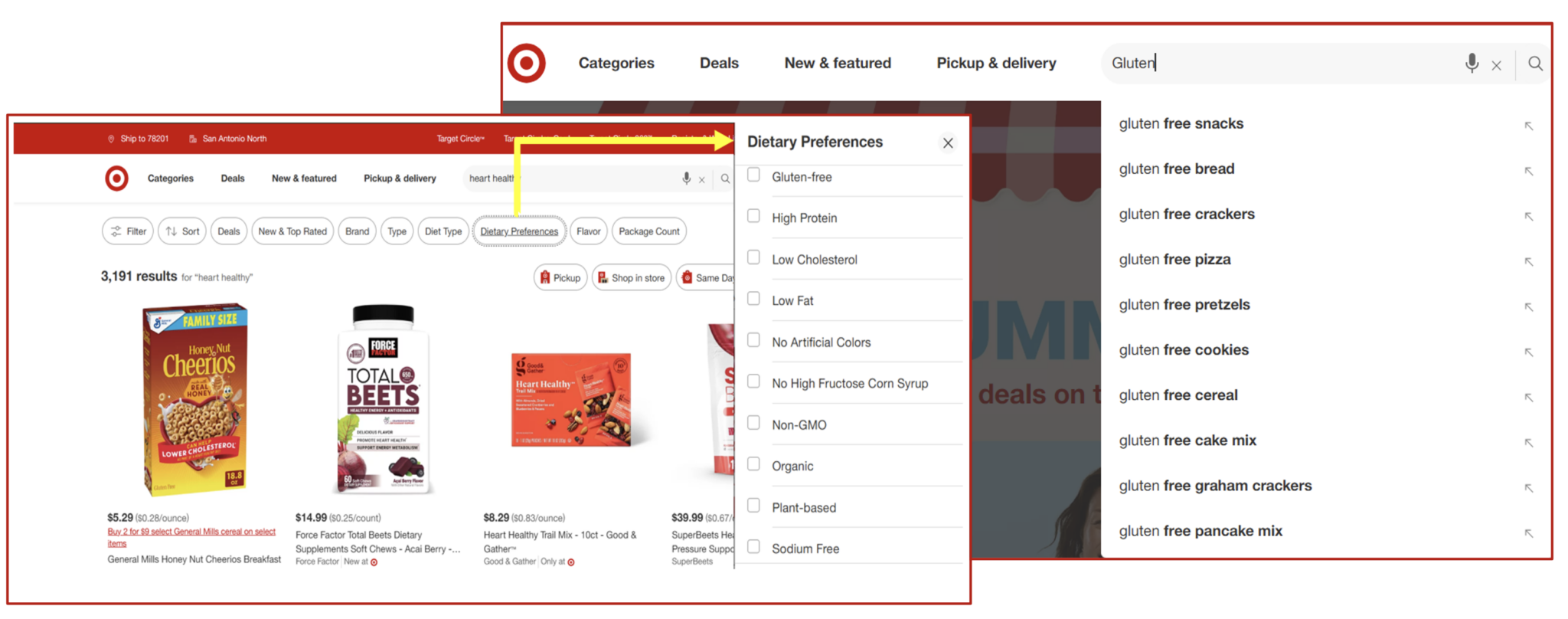
    Missing or incorrect product attributes (e.g., “gluten-free,” “caffeine content”) can swiftly jeopardize both regulatory compliance and your product’s fundamental search visibility. Simply put, if it’s not labeled right, it won’t be found.

    This impact plays out in two crucial areas:

    1. Retailer Search Visibility: Filter logic on major e-commerce platforms like Target.com, Walmart.com, and Instacart is increasingly driven by precise attribute tags (e.g., “gluten-free,” “BPA-free,” “0g added sugar”). Fail to provide or correctly format these claims, and your product will simply never appear when shoppers apply these critical search filters. You become invisible to a motivated audience.
    2. Regulatory Compliance: Global regulatory bodies, including the U.S. FDA and EU authorities, now treat online product detail pages as officially regulated labeling space. This means that a single missing allergen statement or an inaccurate nutritional claim can trigger severe consequences, from product takedowns and hefty fines to a devastating “straight-to-zero” share of search. Non-compliance isn’t just a legal risk; it’s a direct threat to your market presence (see example below).

    The Hygiene Playbook: Audit → Score → Fix → Grow

    Your Product Detail Pages (PDPs) are your digital storefronts, and they need to be impeccable. Modern content-intelligence tools are like vigilant auditors, constantly scanning, structuring, and scoring every PDP across your retail network.

    Tools like DataWeave do the heavy lifting by:

    • Surfacing critical gaps: They’ll pinpoint issues like blurry images, inaccurate titles, or missing nutrition information.
    • Optimizing for search: They ensure your product attributes align with live search filters, turning claims into clicks.
    • Flagging compliance risks: You’ll know about potential issues before regulators or retail partners ever do.
    • Quantifying your impact: Get a clear Content Quality Score that your teams can own and improve, week after week.

    When you execute this well, it’s not just about tidying up; it’s a powerful growth engine. This proactive approach fuels every step of the digital customer journey – from getting found, to winning the click, converting the cart, and ultimately, capturing reviews that boost your search rankings.

    A Case Study: Bush’s Beans Converts Visibility into Revenue

    Before Bush’s Beans achieved rapid success with their “audit → scorecard → rapid-fix” approach, they confronted a significant hurdle. Here’s how they overcame it to drive impressive revenue growth.

    The Challenge

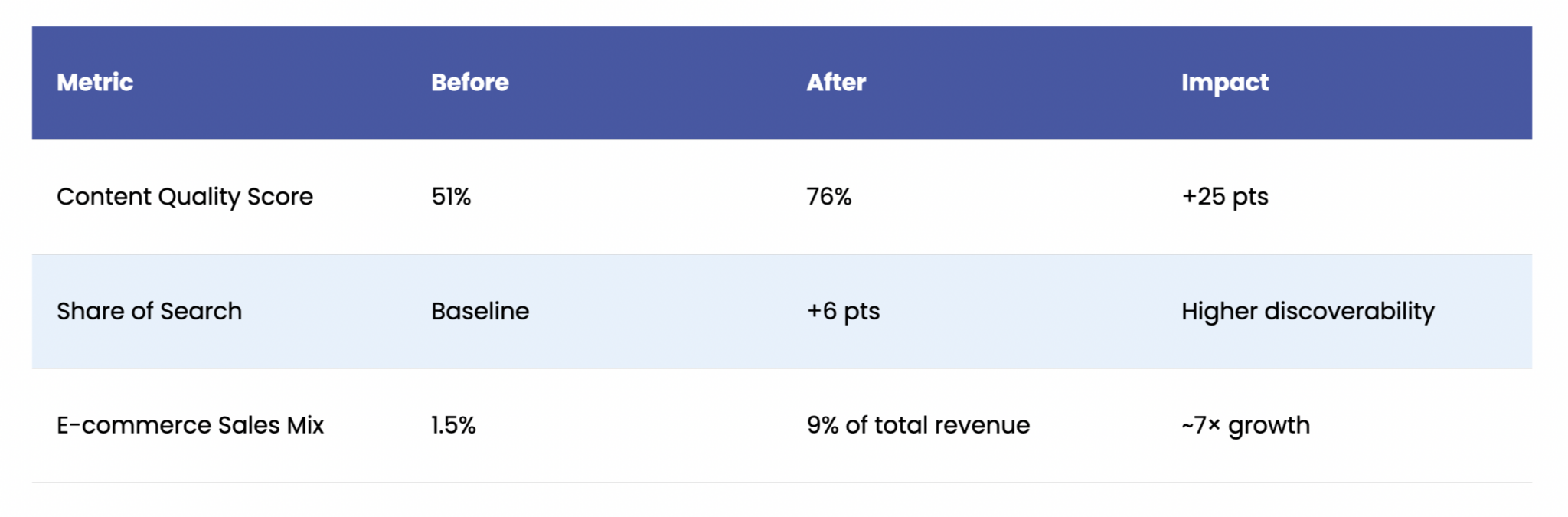
    Bush’s Beans saw its e-commerce contribution stall at just 1.5 percent while competition in canned goods intensified. A quick audit revealed three root causes:

    1. Dipping online sales that signalled slipping visibility and conversion.
    2. Fragmented product content across major retailer sites as images, titles, and claims were inconsistent or missing altogether.
    3. Heavier category competition  making it harder to hold first-page search positions.

    The Fix

    The brand adopted DataWeave’s Digital Shelf Analytics to create a single source of truth for every PDP. A lean internal team then:

    • Ran content audits across priority retailers to surface incomplete or non-compliant attributes.
    • Prioritized quick wins focusing on high-velocity SKUs where simple edits (e.g., adding pack-size keywords or allergy statements) would unlock search filters.
    • Tracked progress weekly using an automated scorecard to keep everyone focused on the next set of fixes.

    The Win

    Twelve months later the numbers told the story:

    Bush’s Beans transformed their product data into a strategic asset, significantly improving online visibility, safeguarding brand reputation, and driving sustained revenue growth. Accurate and complete product pages ensured compliance and boosted search rankings, directly increasing sales. While you can’t control external factors like tariffs, you can control the quality and compliance of your product pages and that control directly translates margin pressure into market share gains.

    Unified Insight: Turning Signals into Sustained Advantage

    Imagine one living dashboard where every digital shelf signal like timely price moves, share-of-search shifts, retail media spend, on-shelf availability gaps, compliance flags, MAP breaches, plus content and review health flows together. With that single lens, the “whose numbers are right?” debate disappears and cross-functional teams can act in minutes rather than days.

    A consolidated feed lets you:

    • Build market awareness: Spot competitor price changes as they happen, understand who owns first-page search, and measure the true lift of retail media campaigns.
    • Mitigate emerging risks: Surface impending out-of-stocks before rank erodes, catch claim or label errors ahead of audits, and receive instant alerts when a seller breaks MAP.
    • Activate growth levers: Prioritize content edits that open search filters and use ratings and reviews trends to fine-tune messaging and assortment.

    Brands that weave these signals into one workflow move faster than the disruption. That’s the connective tissue highlighted in our recent post on pairing Digital Shelf Analytics with Marketing-Mix Modelling: when granular shelf data sits beside strategic performance metrics, smarter decisions follow.

    A platform like DataWeave brings the pieces together quietly ingesting millions of price checks, availability reads, and PDP audits each day, then presenting only the next best actions. The payoff is simple: sharper market awareness, lower operational risk, and growth that compounds with every iteration.

    Keep Moving, Keep Winning

    Tariffs, evolving regulations, and agile competitors are no longer storms; they are the climate. Brands that pair a clear, shared insight stream with rapid execution turn volatility into durable advantage. Keep your data united, keep iterating on the five digital-shelf levers, and every new headwind becomes another step ahead.

  • Standard Reporting vs. Competitive Intelligence: What Retail Leaders Need to Know

    Standard Reporting vs. Competitive Intelligence: What Retail Leaders Need to Know

    Back in the day, pricing strategies were a lot easier. These days, not only do teams need to have robust standard price reporting workflows, but they also need to have the know-how and tools to gain and act on competitive intelligence. Retail leaders should prioritize automation and strategic thinking and ensure their teams have the tools, processes, and methodologies required to monitor the competition at scale and over the long term.

    Retail leaders who recognize the distinction between standard reporting and competitive intelligence are more likely to gain team buy-in, especially when developing pricing strategies that drive results. You can’t be everywhere at once, but you can optimize pricing strategies to stay ahead of the competition.

    This article has everything you need to know about the differences between standard reporting and competitive intelligence and how to use both to make your teams more effective than ever!

    Understanding the Distinction

    Standard price reporting is much like checking the weather to see if it’s stormy before grabbing a raincoat or sunhat. You need to do it to make essential, everyday choices, but it will not help you predict when the next storm is coming. Standard price reporting deals more with the short-term and immediate actions needed as opposed to long-term strategy.

    Don’t get us wrong, standard price reporting is still an essential responsibility of a pricing team’s function—but there’s more to it. It is also lower-tech than a competitive intelligence strategy and can rely on route heuristics.

    Think of it as data-in, data-out. It deals with pricing operations like:

    • Weekly price movements: Seeing which competitors, product categories, and individual items had pricing shifts in the short-term
    • Basic price indices: Outlining benchmarks to watch how your own, and your competitors’, products are trending in the market
    • Price competitiveness metrics: Setting thresholds that show whether your products are priced below, above, or equal to your competition for general trend reporting

    Standard price reporting is fundamental for operational teams that manage price adjustments in the short term. It can also help teams remain agile and reactive to market condition changes.

    It’s likely that your team already has standard reporting strategies or tools to help them with tactical execution. But are they harnessing competitive intelligence correctly with your help?

    Characteristics of Competitive Intelligence

    While standard price reporting is like checking the weather, competitive intelligence is like being a meteorologist who measures atmospheric changes, predicts storms, and scientifically analyzes weather patterns to keep everyone informed and in the know.

    Competitive intelligence goes well beyond simply tracking price movements and benchmarking them against a single set of standards. Competitive intelligence helps steer teams in a strategic direction based on insights from the market. It can drive long-term business success and is one of your best tools to ‘steer the ship’ as a retail leader.

    Here are some of the essential elements of competitive intelligence:

    • Strategic insights: Including but not limited to understanding your competitors’ pricing strategy, promotions, and product positioning
    • Market-wide patterns: Identifying trends based on geography, product category, or individual SKU across retailers to inform broader strategies
    • Long-term trends: Taking historical market and competitor data and combining it with real-time retail data to predict future price movements as shifts in consumer behavior to inform pricing strategies

    The pricing team serves as a critical strategic partner to senior leadership, delivering the cross-functional insights and market analysis needed to inform C-suite decision-making. By equipping executives with a holistic view of the competitive landscape, pricing gaps, and emerging trends, the team empowers leadership to align pricing strategies with broader business objectives.

    This partnership enables senior leaders to guide day-to-day pricing operations with confidence—ensuring tactical execution aligns with corporate goals, monitoring strategy effectiveness, and maintaining competitive agility. Through ongoing market intelligence and scenario modeling, the pricing function helps leadership proactively position the brand, capitalize on untapped opportunities, and future-proof revenue streams.

    Different Audiences, Different Needs

    As mentioned, there is a place for both standard price reporting and competitive intelligence. They have different roles to play, and different teams find them valuable. Since standard reporting mainly focuses on day-to-day shifts and being able to react to real-time changes, operational teams find it most useful.

    On the other hand, competitive intelligence is a tool that leadership can use to shape overarching pricing strategies. The insights from competitive intelligence drive operational activities over months and quarters, whereas standard reporting drives actions daily.

    To succeed in pricing, you need to rely on a combination of tactical standard reporting and competitive intelligence for long-term planning. With both, you can successfully navigate the ever-fluctuating retail market.

    Price Reporting for Operational Teams

    Your operational team is responsible for making pricing adjustments that directly impact sales volume. Automated data aggregation and AI-powered analytics can make this process faster and more accurate by eliminating the need for manual intervention.

    Instead of spending hours identifying changes, standard reporting tools surface the most critical areas that need attention and recommend adjustments. This helps operational teams react fast to shifting market conditions.

    Key functions of standard price reporting include:

    • Daily/weekly pricing decisions: Frequent price adjustments based on market trends will help your company remain competitive across entire product categories. With automated, real-time dashboards, your pricing team can monitor broad category-level pricing shifts and make necessary adjustments accordingly.
    • Individual SKU management: Not all pricing changes happen at the category level. Standard reporting also allows teams to view price and promotion changes on individual SKUs down to the zip code. It’s important to have targeted, granular insights when a change occurs even on a single SKU, especially because these individual changes are easy to miss. Advanced product matching algorithms can tie together exact products across retailers to monitor items conjointly. By incorporating similar product matching technologies beyond standard reporting, your teams can monitor individual price changes on comparable products.
    • Immediate action items: The best standard reporting tools alert pricing teams when there has been a change in competitor pricing and give them recommendations for what to change. If a competitor launches a flash sale or an aggressive discount program, your team should know as fast as possible which product to adjust. Without this functionality, teams can miss important changes or experience a delay in action that results in lost sales or customer perception.

    Competitive Intelligence for Leadership

    For Senior Retail Executives, Category Directors, and Pricing Strategy Leaders, pricing cannot only be about reacting to individual competitor price changes. Instead, you must proactively think about your market positioning and brand perception. Doing this without a complete competitive intelligence strategy can feel like throwing darts while blindfolded. Sometimes, you’ll hit the target, but mostly, you’ll miss or only come close. Competitive intelligence tools can help you hit that target every time. They leverage big data, artificial intelligence (AI), and predictive modeling to help you derive holistic insights to understand your current positioning relative to the current and future pricing landscape.

    Core strategic functions of competitive intelligence include:

    • Strategic planning: Competitive intelligence tools can help you forecast competitor behavior, economic shifts, and category-specific patterns you’d otherwise overlook (ex, price drops before new releases, subscription or bundling trends, or seasonable price cycles). Instead of reacting to a change, your team can already have made changes or at least know what playbook to implement.
    • Market positioning: Geographic pricing intelligence built into competitive intelligence tools can help you understand variations across locations and optimize multiple channels simultaneously. This can be the foundation of regional pricing strategies that factor in local economies and consumer perception.
    • Long-term decision-making: You can use competitive intelligence technology to align your pricing strategy with upcoming seasonal trends isolated using historical data, predicted economic shifts, and changes in customer purchasing behavior. This aggregate view of the pricing landscape will help you step out of the weeds and make better company decisions.

    From Data to Strategy – Transforming Basic Price Data

    Shifting your focus from isolated, reactive data to broader market trends is the key to going from basic price reporting to real competitive intelligence. Never forget the importance of real-time data, but know it’s your responsibility as a leader to bring a broader viewpoint to operations.

    Transforming from basic price data to competitive intelligence involves:

    1. Harnessing the data
      • Pattern recognition: Your solution should help you identify repeat pricing behaviors and competitor strategies
    2. Figuring out what to do with the data
      • Strategic implications: It should help you understand how your pricing changes will affect customer perception of your brand
    3. Doing something with the insights from your data
      • Action planning: The solution should help you create proactive strategies that position you as a market leader, leaving your competition to try to keep up with you instead of vice versa

    Leveraging Technology for Competitive Intelligence

    Technology is at the heart of leveling up your standard price reporting game. If you want industry-leading competitive intelligence, you can leverage DataWeave’s comprehensive pricing intelligence solution with built-in competitive intelligence capabilities and features for your operational teams.

    You can also uncover gaps and stay competitive in the dynamic world of eCommerce. It provides brands with the competitive intelligence they need to promptly adapt to market demand and competitors’ pricing. Stay ahead of market shifts by configuring your own alerts for price fluctuations on important SKUs, categories, or brands, all time-stamped and down to the zip.

    And since our platform relies on human-backed AI technology, you can have complete confidence in your data’s accuracy at any scale. If you want to bring a new strategic mindset to your pricing team, consider adding competitive intelligence to your tech stack. If you want to learn more, connect with our team at DataWeave today.

  • Preparing for Tariff Impact: A Retailer’s Guide to Price Intelligence

    Preparing for Tariff Impact: A Retailer’s Guide to Price Intelligence

    The power to impose tariffs on foreign countries is one of the most impactful measures a government has at their disposal. The government can use this power for various reasons: to punish rivals, equalize trade, give domestic products a comparative advantage, or collect more funds for the federal government.

    Whatever the reason, tariffs have real-world impacts on brands and retailers selling in a global economy. They effectively make products more expensive for some and comparatively cheaper for others. Since tariffs can be added or removed at the drop of a hat, retail executives, category managers, and pricing teams trying to keep up have their work cut out for them.

    You’ve come to the right place if you’re wondering how to prepare for and respond to potential tariffs. The answer lies in technology that will make you flexible when you need to react to policy changes. Establishing workflows and processes embedded with pricing intelligence can help you stay competitive even when global politics intercepts your business.

    Understanding Tariff Impact

    Before diving into tariffs’ implications on pricing strategies, we need to understand how tariffs work and the current economic environment. Tariffs are a government’s tax on products a foreign country sells to domestic buyers. You might remember President Trump’s expanded tariff policy in September 2018. It placed a 10% tax on $200 billion worth of Chinese imports for three months before raising to a rate of 25% in January 2019. At that time, an American buyer would pay the original price of the goods plus the tax to the American government. Many additional tariffs and counter-tariffs by other countries were enacted during Trump’s first term in office, including the European Union, Canada, Mexico, Brazil, and Argentina, resulting in a trade war.

    Announcements of when, where, and on what new tariffs will be imposed are unpredictable. The only predictable thing is that this type of market volatility is here to stay. Pricing teams should adjust their mindsets to assume that volatility may always be on the horizon. This is because tariffs have many cost implications. Besides the flat rate imposed by the government on a certain product, tariffs have historically raised the price of all goods.

    In economic terms, tariffs create a multiplier effect. Consider a tariff placed on gasoline imported from Canada. This measure may encourage American drilling but will have immediate ripple effects throughout the economy. Everything that relies on ground transportation will increase in price, at least in the short term.

    This means that a fashion brand that sources and manufactures its entire line domestically will incur more costs since transportation will be more expensive. If fashion companies act like most companies, they will pass that added tax burden on to the consumer through higher prices. The company will make this decision based on how sensitive its consumers are to price increases, i.e., the elasticity of demand. These interwoven relationships extend across industries and products, affecting most retailers somehow.

    Of course, category exposure varies by industry and sector. Tariffs are known to impact specific industries more than others. For example, steel, electronics, and agriculture products are at risk of price fluctuations based on their reliance on imported components. These have high category exposure. Some industries reliant on domestic production with stable input costs are less prone to category exposure. These include domestic power grids, natural gas, real estate, and handmade goods. No matter which industry you’re in, however, expect some spill over.

    Preparation Strategies

    Strategies to battle disruption in retail

    Forward-thinking leaders can help position their teams for success in the face of pricing volatility brought on by tariffs. The key is to enable teams to sense disruptions quickly and provide a way to take corrective action that doesn’t diminish sales. Here are three strategies you can implement ahead of time that will help keep you competitive during tariff disruption.

    Cost Monitoring

    Start by getting a firm handle on internal and external costs. Understand and analyze fluctuations in the cost of raw materials, production, and supply chain for your business to operate. Make sure that your products are priced with pre-defined logic so changes in price on one SKU don’t create confusion with another. For example, faux leather costs rise while genuine leather stays the same. In that case, a leather version of a product should be raised to reflect the price increase in the pleather variation, not to devalue the perception of luxury.

    Next, you will want to understand historical pricing trends as well as pricing indexes across your categories. These insights can help your teams anticipate cost fluctuations before they even arise and mitigate the risk that economic shifts create, even unexpected tariffs.

    Competition Tracking

    Tracking your competition is likely already a strategy you have in mind. But how well are your teams executing this important task? If they’re trying to watch for market shifts and adjust pricing in real time without the help of technology, things are likely slipping through the cracks.

    Competitive intelligence solutions help retailers discover all competitive SKUs across the e-commerce market, monitor for real-time pricing shifts, and take action to mitigate risk. You need an “always-on” competitive pricing strategy now so that the second a tariff is announced, you can see how it’s affecting your market. This way, you can maintain price competitiveness and avoid margin erosion when competitors’ pricing changes in response to a tariff or other market shift.

    Consumer Impact Assessment

    The multiplier effect is felt throughout the supply chain when tariffs are implemented. The effect can affect consumers in a number of ways and cause them to become spending averse in certain areas. Often, during times of economic hardship, grocery items remain relatively inelastic. This is because consumers continue to purchase essentials regardless of price changes. Conversely, the price of eating out or home delivery becomes more elastic since consumers cut back on dining expenses when costs rise across their shopping basket.

    You need to establish clear visibility into the results of your pricing changes. The goal should be to monitor progress and measure the ROI on specific and broad pricing changes across your assortment. Conducting market share impact analysis will also help you determine if you are losing out on potential customers or whether a decline in sales is being felt across your competition. Impact analysis tools can help your company check actual deployed price changes in real time.

    Response Framework

    Tariff response action plan for retailers

    Once you’ve prepared your team with strategies and technologies to set them up for success, it’s time to think about what to do once a tariff is announced or implemented. Here are three real-time decision-making strategies you should consider before your feet are to the fire. Having these in your back pocket will help you avoid financial disruption.

    Price Adjustment Strategies

    Think about how you strategically adjust prices. These could include percentage increases, flat rate increases, or absorbed via other strategies like bundling. You should also determine a cost increase threshold that you’re willing to absorb before raising prices. Think about the importance of remaining price attractive to consumers and weigh the risk of increasing prices past consumers’ ability or willingness to pay.

    Promotion Planning

    Folding increased costs into value-added offerings for consumers can be a good way to retain customer sentiment and sales volume without negatively affecting profit margins. You can leverage discounts, promotions, or bundling options to sell more of an item to a customer at a lower per-unit cost.

    What you don’t want to do is panic-adjust prices in response to tariffs of competitor moves. Instead, you can use a tool competitor intelligence solutions to watch if your competition is holding prices steady or adjusting. With full information about pricing at your disposal, you can make better decisions on your promotional strategy and not undercut yourself or lose customer loyalty.

    Alternative Sourcing

    Let’s face it: putting all your eggs in one basket is bad for business. Instead of relying solely on a single supplier for production, you should have a diverse set of suppliers ready and able to shift production when tariffs are announced. If a tariff impacts Chinese exports, having a backup supplier in Vietnam can prevent added costs entirely. You can also consider strategies like bulk pricing, set pricing, or shifting entirely to domestic suppliers.

    Forward Buying

    Proactively stockpile inventory by purchasing large quantities of at-risk products before tariffs take effect. This strategy locks in lower costs and ensures supply continuity during disruptions. However, balance this with careful demand forecasting to avoid overstocking, which ties up cash flow and incurs storage costs. Use historical sales data and tariff implementation timelines to optimize order volumes—this is especially effective for products with stable demand or long shelf lives.

    Market Intelligence Requirements

    Preparing your pricing teams and giving them a framework upon which to act when tariffs are announced doesn’t have to be complicated. You can get access to the right data on costs, competitors, and consumer behavior with DataWeave’s pricing intelligence capability.

    We provide retailers with insights on pricing trends, category exposure, and competitor adjustments. Our AI-powered competitor intelligence solutions allow you to get timely alerts whenever a significant change happens. This can include changes to competitor pricing and category-level shifts that you’d otherwise react to when it’s too late.

    These automated insights can also help you track historical pricing trends, elasticity, and margin impact to construct a clear response framework in an emergency. Additionally, our analytics capabilities can help you identify patterns to power pre-emptive pricing and promotional strategies.

    Getting the right pricing intelligence strategy in place now can prevent disaster later. Think through your preparedness strategy and how you want your teams to respond in the event of a new tariff, and consider how much easier reacting accurately would be with all the data needed at your fingertips. Reach out to us to know more.

  • Beyond MAP Pricing: Strategic Approaches for Brands and Retailers

    Beyond MAP Pricing: Strategic Approaches for Brands and Retailers

    Many retailers view minimum advertised pricing (MAP) policies as a necessary evil since they present several challenges for competitive positioning. In an idealistic free market, there wouldn’t be a need for MAP policies, and healthy competition would do the work of setting the final advertised price.

    However, MAP policies aren’t beneficial only for brands; they also greatly benefit retailers. This article will examine why MAP pricing can be a strategic advantage for both brands and retailers. We’ll also look at ways brand managers and retail pricing teams can navigate MAP requirements to maintain profitability and safeguard customer trust.

    Understanding MAP Fundamentals

    Minimum Advertised Price (MAP) is a policy set by brands that requires their sales channels to price the brand’s products at a minimum dollar value. Retailers are free to price the items higher, but the advertised price is never to exceed the minimum threshold.

    This agreement is established at the outset of a relationship or new product launch and can change at the brand’s discretion. Consumers typically see only the minimum advertised price when they search for a product across competing retailers. This means retailers need to find other ways to differentiate themselves beyond offering the lowest price.

    But a retailer can still effectively price the product at a lower cost to win sales away from the competition. This comes in the form of discounts applied at checkout, bundled deals, or other promotions that affect the final cart but not the advertised price. Only the advertised price must remain within MAP guidelines. This gives retailers a way to set themselves apart from the competition while still protecting the brand.

    A minimum advertised price has three central values: one for the brand, one for the retailer, and one for both.

    1. Brand or manufacturer: A MAP policy protects the brand’s value and prevents price erosion. If a retailer consistently undercuts a product’s price to make it more competitive, customers may begin to perceive the brand as lower in value over time. It can cause the brand to appear less premium than if prices hold steady. If a customer pays full price one day and then sees the same item advertised at a lower base price the next, it can weaken brand loyalty and cause dissatisfaction.
    2. Retailer: Minimum advertised pricing policies prevent retailers from engaging in a pricing war with one another, driving the price of an item down and hurting margins. This race to the bottom is bad for business. Apart from reducing profits, it discourages sellers from investing in marketing and other activities that drive sales. It also means that smaller retailers can compete with larger retailers, effectively leveling the playing field across the market.
    3. All parties: The issue of counterfeit and unauthorized sellers on the grey market plagues retailers and brands. One of the most straightforward ways to identify these sellers that undercut prices and damage brand perception is to track who is pricing products outside of agreements. Unauthorized or counterfeit sellers can be identified by establishing a MAP policy and monitoring who sells at the wrong price. Then, official legal action can be taken to prevent those merchants from selling the product.

    Brand Perspective

    Developing a clear and precise MAP policy is an important option for brands looking to stay competitive. Make sure you outline the minimum advertised price for each product for each sales channel and do so by geography. Write clear instructions on how discounts, promotions, and sales can be applied to the advertised price to avoid misunderstandings later. Ensure you work with your legal team to fill in any gaps before presenting them to retailers.

    If you find sellers acting outside the MAP policy, you must act swiftly to enforce your MAP policy. Cease and desist orders are the most common enforcement strategy a brand can use on unauthorized sellers and counterfeiters. But there are legal considerations for authorized sellers, too. You may need to fine the retailer for damages, restrict inventory replenishment until prices have been adjusted, remove seller authorization by terminating the relationship entirely, or escalate to your legal team.

    Open communication between the brand and retailer is in everyone’s best interest to ensure minimum pricing is being used. Have explanatory documents available for your retailers’ non-legal teams to reference while they set prices. These can take the form of checklists, video explainers, or even well-informed brand representatives working closely with retail pricing teams. It’s likely that some MAP violations will occur from time to time. The importance your retail partners place on fixing those errors will help you determine how much goodwill you will give them in the future.

    Brands can consider rewarding retailers that consistently adhere to minimum advertised price policies. Rewards often take the form of more lenient promotion policies, especially during major holidays like Christmas, Prime Day, or Black Friday. However, it’s never advisable to relax the actual MAP policy to allow one retailer to advertise a lower price year-round.

    Retailer Strategies

    A retailer can take several approaches to complying with a brand’s MAP policy while still maximizing sales. First, you need a dedicated compliance process spearheaded by compliance specialists or, better yet, enabled by technology. Embedding a process that checks for MAP violations into daily or weekly operations will prevent problems before brands become aware.

    Automated price tracking tools can help discover discrepancies so that you don’t accidentally violate a MAP agreement. Make sure MAP training extends beyond your pricing team and includes marketing. Anyone who participates in promotions or events should be made aware of the agreements made with specific brands. Determine if there are alternative promotion methods available to attract customers. You could offer free shipping on certain items, bundle giveaways, or apply cart-wide discounts at checkout.

    Monitoring your competition in real time will also help you stay ahead. If you discover a competitor undercutting your prices, bring this to the attention of your brand representative. This can build loyalty with the brand and help prevent lost sales due to market share loss.

    Digital Implementation for MAP Compliance

    Pricing teams at brands and retailers manually attempting to manage MAP pricing will lag behind the competition without help. They must discover, monitor, and enforce MAP compliance simply and effectively.

    Over the past several years, there has been a seemingly exponential proliferation of online sellers, complicating the industry and making it nearly impossible to find and discover all instances of every product you sell. It’s further complicated by marketplaces like Amazon, Walmart, and eBay, which are full of individual unauthorized sellers and resellers.

    Implementing a digital tool is the first step to effectively discovering and monitoring MAP compliance, even across these marketplaces. This tool should monitor all competition for you and discover imbalances in pricing parity.

    DataWeave’s MAP Violations Merchant Analytics solution has AI-backed software that scours the web for your products. It uses identifiers like UPCs and product titles and compares imagery to find where the product is sold. Our AI-powered image recognition capabilities are especially helpful in identifying inauthentic listings that may be counterfeit products or unauthorized sellers. It also has built-in geographic and channel-specific MAP monitoring capabilities to help with localized enforcement.

    The tool can aggregate all this data and present dashboard views of your own and competitors’ pricing that are easy to digest and act on. After all, retailers need to monitor their own MAP compliance as well as the competition’s. Brands can also track competitor sellers’ networks to explore potential new retail partnerships and grow their network reach.

    The MAP Violations Merchant Analytics solution has automated violation alerts and advanced reporting built into it. This means you can get real-time alerts instead of pouring through dashboards searching for exceptions each week. For deeper insights, the dashboards provide time-stamped proof of which sellers are undercutting MAP minimums, so you have all the information you need to make a case against them. Discovering repeat offenders is easy with historical trends dashboards that show which sellers have a history of violations.

    With all this information on who is violating what—and when—enforcement becomes much more manageable. Send cease and desist orders to unauthorized sellers and start having conversations with authorized sellers acting outside of your agreement. Acting quickly will help prevent hits to your brand’s reputation, price erosion, and lost sales.

    DataWeave’s MAP solution gives you the competitive edge to effectively discover MAP violations, monitor market activity, and act quickly when an issue is discovered.

    Make MAP Compliance a Strategic Advantage

    Basic MAP compliance and enforcement isn’t simply about setting pricing policies anymore. These policies are foundational to brand strategies, maintaining good relationships with retailers, and establishing long-term profitability for your business.

    When you let MAP violations go unchecked, it can erode your margins, damage how your customers perceive your brand, and create confusion across channels. Discovering, monitoring, and acting on MAP violations is much easier with the help of tools like DataWeave’s AI-enabled MAP Violations Merchant Analytics.

    Ready to take control of MAP pricing at your company? Request a MAP policy assessment from DataWeave today!

  • Portfolio Enhancement Through Price Relationship Management: Building Coherent Pricing Across Product Lines

    Portfolio Enhancement Through Price Relationship Management: Building Coherent Pricing Across Product Lines

    Do you remember when the movie Super Size Me came out? If you missed it, it was about the harmful effects of eating fast food too often. One aspect of the film that stands out is McDonald’s clever use of pricing to encourage consumers to buy bigger—and therefore more expensive—meals.

    Hungry patrons could upgrade their meal to a Super Size version for only a few cents more. In doing so, McDonald’s was able to capitalize on perceived value, i.e., getting more product for an apparent lower total price for the volume. It encouraged restaurant-goers to spend a little more while feeling like they got a great deal. It was a smart use of strategic pricing.

    There are hundreds of pricing relationship types like this one that pricing leaders need to be aware of and can use to their advantage when creating their team’s pricing strategy and workflows. You need to maintain profitable and logical price relationships across your entire product portfolio while keeping up with the competition. After all, the gimmick to Super Size would never have worked if the upgrade had been of less value than just buying another burger, for example.

    In this article, we’ll examine more real-world examples of pricing challenges so you can consider the best ways to manage complex price relationships. We’ll examine things like package sizes, brands, and product lines and how they’re intertwined in systematic price relationship management. Read on to learn how to prevent margin erosion, improve customer perception of your brand, and keep your pricing consistent and competitive.

    The Price Relationship Challenge

    Pricing is one of the most challenging aspects of managing a retail brand. This is especially true if you are dealing with a large assortment of products, including private label items, the same products of differing sizes, and hundreds, or even thousands, of competing products to link. Inconsistencies in your price relationship management can confuse customers, erode trust, and harm your bottom line.

    Let’s take a look at a few common pitfalls in portfolio pricing that you might run into in real life to better understand the impact on customer perception, trust, and sales.

    Pricing Relationship Challenges Retailers Need to Account For

    Private Label vs. Premium Product Pricing

    Let’s consider a nuanced scenario where price relationships between a retailer’s private label and premium branded products create an unexpected customer perception. Imagine you’re in a supermarket, comparing prices on peanut butter. You’ve always opted for the store’s private-label brand, “Best Choice,” because it’s typically the more affordable option. Here’s what you find:

    • Best Choice (Private Label) 16 oz – $3.50
    • Jif (National Brand) 16 oz – $3.25

    At first glance, this pricing feels off—shouldn’t the private label be the cheaper option? If a customer has been conditioned to expect savings with private-label products, seeing a national brand undercut that price could make them pause.
    This kind of pricing misalignment can erode trust in private-label value and even push customers toward the national brand. When price relationships don’t follow consumer expectations, they create friction in the shopping experience and may lead to lost sales for the retailer’s own brand.

    Value Size Relationships

    A strong value-size relationship ensures that customers receive logical pricing as they move between different sizes of the same product. When this relationship is misaligned, customers may feel confused or misled, which can lead to lost sales and eroded trust.

    Let’s look at a real-world example using a well-known branded product—salad dressing. Imagine you’re shopping for Hidden Valley Ranch (HVR) dressing and see the following pricing on the shelf:

    • HVR 16 oz – $3.99
    • HVR 24 oz – $6.49
    • HVR 36 oz – $8.99

    At first glance, you might assume that buying a larger size offers better value. However, a quick calculation shows that the price per ounce actually increases with size:

    • 16 oz = $0.25 per ounce
    • 24 oz = $0.27 per ounce
    • 36 oz = $0.25 per ounce

    Customers expecting a discount for buying in bulk may feel misled or frustrated when they realize the mid-size option (24 oz) is actually the most expensive per ounce. This mispricing could drive shoppers to purchase the smallest size instead of the intended larger, more profitable unit—or worse, lead them to a competitor with clearer pricing structures.

    Retailers must maintain logical price progression by ensuring that price per unit decreases as the product size increases. This not only improves customer trust but also encourages higher-volume purchases, driving profitability while maintaining a fair value perception.

    Price Link Relationships

    A well-structured price link relationship ensures customers can easily compare similar offerings of the same product and size. When the pricing across different versions or variations of the same item isn’t clear or consistent, it can confuse customers and damage trust, ultimately leading to missed sales and a negative brand perception.

    Let’s break this down with an example of a popular product—coffee. Imagine you’re shopping for a bag of Starbucks coffee and you see the following pricing on the shelf:

    • Starbucks Classic Coffee, 12 oz – $7.99
    • Starbucks Coffee, Mocha, 12 oz – $9.99
    • Starbucks Ground Coffee, Pumpkin Spice, 12 oz – $12.99

    At first glance, the product is the same size (12 oz) across all options, but the prices vary significantly. One might assume that the price difference is due to differences in quality or features, but what if there’s no clear indication of why the different flavors are priced higher than the standard?

    After investigating, you may realize that the only differences are related to different variants—like “Mocha” or “Pumpkin Spice” rather than any significant changes in the product’s core attributes. When customers realize they’re paying a premium for just different flavors, without any tangible difference in product quality, it can lead to feelings of confusion and frustration.

    Retailers must ensure that price links between similar offerings are justifiable by clearly communicating what differentiates each product. This avoids the perception that customers are being charged extra for little added value, building trust and encouraging repeat purchases. By maintaining transparent price link relationships, businesses can foster customer loyalty, increase sales, and drive better overall satisfaction.

    What is the Foundational Process to Tackle the Price Relationship Challenge?

    Now that we’ve reviewed several challenges brands face when pricing their products, what can be done about them?

    If you’re a pricing leader, you must create a robust pricing strategy that considers customer expectations, competitive data, sizing, and the overall value progressions of your product assortment. These are the three foundational steps to solve your price relationship challenges.

    1. First, you need to group products together accurately.
    2. Second, you need to establish price management rules around the group of related items.
    3. Third, you should set in place a process to review your assortment each week to see if anything is out of tolerance.

    This process is difficult, if not impossible, to manage manually. To effectively set up and execute these steps, you’ll need the help of an advanced pricing intelligence system.

    Implementation Strategy

    Want to know how to roll out a price relationship management strategy? Follow this implementation strategy for a practical way to get started.

    1. Set up price relationship rules: Determine which of your products go together, such as same products with different sizes or color options. Assign different product assortment groups and determine tolerances for scaling prices based on volume or unit counts.
    2. Monitoring and maintenance: Establish rules to alert the appropriate party when something is out of tolerance or a price change has been discovered with a competitive product.
    3. Exception management: Only spend time actioning the exceptions instead of pouring through clean data each week, looking for discrepancies. This will save your team time and help address the most significant opportunities first.
    4. Change management considerations: Think about the current processes you have in place. How will this affect the individuals on your team who have managed pricing operations? Establish a methodology for rolling this new strategy and technology out over select product assortments or brands one at a time to build trust with internal players.

    DataWeave offers features specifically built to help pricing teams manage pricing strategies. These applications can help you optimize profit margins and improve your overall market positioning for long-term success. A concerted effort to create brand hierarchies within your own product assortment from the get-go, followed by routine monitoring and real-time updates, can make all the difference in your pricing efforts.

    Within DataWeave, you can create price links between your products (value sizing) and those of the competition. These will alert you to exceptions when discrepancies are discovered outside your established tolerance levels. If a linked set of your products in different sizes shows inconsistent pricing based on scaled volumes, your team can quickly know how to make changes. If a competitor’s price drops significantly, you can react to that change before you lose sales.

    DataWeave even offers AI-driven similar product matching capabilities, which can help you manage pricing for private label products by finding and analyzing similar products across the market.

    If you want to learn more about price relationship management, connect with our team at DataWeave today.

  • Maximizing Competitive Match Rates: The Foundation of Effective Price Intelligence

    Maximizing Competitive Match Rates: The Foundation of Effective Price Intelligence

    Merchants make countless pricing decisions every day. Whether you’re a brand selling online, a traditional brick-and-mortar retailer, or another seller attempting to navigate the vast world of commerce, figuring out the most effective price intelligence strategy is essential. Having your plan in place will help you price your products in the sweet spot that enhances your price image and maximizes profits.

    For the best chance of success, your overall pricing strategy must include competitive intelligence.

    Many retailers focus their efforts on just collecting the data. But that’s only a portion of the puzzle. The real value lies in match accuracy and knowing exactly which competitor products to compare against. In this article, we will dive deeper into cutting-edge approaches that combine the traditional matching techniques you already leverage with AI to improve your match rates dramatically.

    If you’re a pricing director, category manager, commercial leader, or anyone else who deals with pricing intelligence, this article will help you understand why competitive match rates matter and how you can improve yours.

    Change your mindset from tactical to strategic and see the benefits in your bottom line.

    The Match Rate Challenge

    To the layman, tracking and comparing prices against the competition seems easy. Just match up two products and see which ones are the same! In reality, it’s much more challenging. There are thousands of products to discover, analyze, compare, and derive subjective comparisons from. Not only that, product catalogs across the market are constantly evolving and growing, so keeping up becomes a race of attrition with your competitors.

    Let’s put it into focus. Imagine you’re trying to price a 12-pack of Coca-Cola. This is a well-known product that, hypothetically, should be easy to identify across the web. However, every retailer uses their own description in their listing. Some examples include:

    How product names differ on websites - Amazon Example
    Why matching products is a challenge - Naming conventions on Target
    Match Rate Challenge - how product names differ on retailers - Wamlart
    • Retailer A lists it as “Coca-Cola 12 Fl. Oz 12 Pack”
    • Retailer B shows “Coca Cola Classic Soda Pop Fridge Pack, 12 Fl. Oz Cans, 12-Pack”
    • Retailer C has “Coca-Cola Soda – 12pk/12 fl oz Cans”

    While a human can easily deduce that these are the same product, the automated system you probably have in place right now is most likely struggling. It cannot tell the difference between the retailers’ unique naming conventions, including brand name, description, bundle, unit count, special characters, or sizing.

    This has real-world business impacts if your tools cannot accurately compare the price of a Coca-Cola 12-pack across the market.

    Why Match Rates Matter

    If your competitive match rates are poor, you aren’t seeing the whole picture and are either overcharging, undercharging, or reacting to market shifts too slowly.

    Overcharging can result in lost sales, while undercharging may result in out-of-stock due to spikes in demand you haven’t accounted for. Both are recipes to lose out on potential revenue, disappoint customers, and drive business to your competitors.

    What you need is a sophisticated matching capability that can handle the tracking of millions of competitive prices each week. It needs to be able to compare using hundreds of possible permutations, something that is impossible for pricing teams to do manually, especially at scale. With technology to make this connection, you aren’t missing out on essential competitive intelligence.

    The Business Impact

    Besides the bottom-line savings, accurately matching competitor products for pricing intelligence has other business impacts that can help your business. Adding technology to your workflow to improve match rates can help identify blind spots, improve decision quality, and improve operational efficiency.

    • Pricing Blind Spots
      • Missing competitor prices on key products
      • Inability to detect competitive threats
      • Delayed response to market changes
    • Decision Quality
      • Incomplete competitive coverage leads to suboptimal pricing
      • Risk of pricing decisions based on wrong product comparisons
    • Operational Efficiency
      • Manual verification costs
      • Time spent reconciling mismatched products
      • Resources needed to maintain price position

    Current Industry Challenges

    As mentioned, the #1 reason businesses like yours probably aren’t already finding the most accurate matches is that not all sites carry comparable product codes. If every listing had a consistent product code, it would be very easy to match that code to your code base. In fact, most retailers currently only achieve 60-70% match rates using their traditional methods.

    Different product naming conventions, constantly changing product catalogs, and regional product variations contribute to the industry challenges, not to mention the difficulty of finding brand equivalencies and private label comparisons across the competition. So, if you’re struggling, just know everyone else is as well. However, there is a significant opportunity to get ahead of your competition if you can improve your match rates with technology.

    The Matching Hierarchy

    • Direct Code Matching: There are a number of ways to start finding matches across the market. The base tier of the hierarchy of most accurate approaches is Direct Code matching. Most likely, your team already has a process in place that can compare UPC to UPC, for example. When no standard codes are listed, your team is left with a blind spot. This poses limitations in modern retail but is an essential first step to identifying the “low-hanging fruit” to start getting matches.
    • Non-Code-Based Matching: The next level of the hierarchy is implementing non-code-based matching strategies. This is when there are no UPCs, DPCIs, ASINs, or other known codes that make it easy to do one-to-one comparisons. These tools can analyze complex metrics like direct size comparisons, unique product descriptions, and features to find more accurate matches. They can look deep into the listing to extract data points beyond a code, even going as far as analyzing images and video content to help find matches. Advanced technologies for competitive matching can help pricing teams by adding different comparison metrics to their arsenal beyond code-based. 
    • Private Label Conversions: Up until this level of the hierarchy, comparisons relied on direct comparisons. Finding identical codes and features and naming similarities is excellent for figuring out one-to-one comparisons, but when there is no similar product to compare with for pricing intelligence, things get more complicated. This is the third tier of the matching hierarchy. It’s the ability to find similar product matches for ‘like’ products. This can be used for private label conversions and to create meaningful comparisons without direct matches.
    • Similar Size Mappings: This final rung on the matching hierarchy adds another layer of advanced calculations to the comparison capability. Often, retailers and merchants list a product with different sizing values. One may choose to bundle products, break apart packs to sell as single items or offer a special-sized product manufactured just for them. 
    Similar Size Mappings - product matching hierarchy - Walmart
    Similar Size Mappings - product matching hierarchy - Costco

    While at the end of the day, the actual product is the same, when there are unusual size permutations, it can be hard to identify the similarities. Technology can help with value size relationships, package variation handling, size equalization, and unit normalization.

    The AI Advantage

    AI is the natural solution for efficiently executing competitive product matching at scale. DataWeave offers solutions for pricing teams to help them reach over 95% product match accuracy. The tools leverage the most modern Natural Language Processing models for ingesting and analyzing product descriptions. Image recognition capabilities apply methods such as object detection, background removal, and image quality enhancement to focus on an individual product’s key features to improve match accuracy.

    Deep learning models have been trained on years of data to perform pattern recognition in product attributes and to learn from historical matches. All of these capabilities, and others, automate the attribute matching process, from code to image to feature description, to help pricing teams build the most accurate profile of products across the market for highly accurate pricing intelligence.

    Implementation Strategy

    We understand that moving away from manual product comparison methods can be challenging. Every organization is different, but some fundamental steps can be followed for success when leveling up your pricing teams’ workflow.

    1. First, conduct a baseline assessment. Figure out where you are on the Matching hierarchy. Are you still only doing direct code-based comparisons? Has your team branched out to compare other non-code-based identifiers?
    2. Next, establish clear match rate targets for yourself. If your current match rate is aligned with industry norms, strive to significantly improve it, aiming for a high alignment that supports maximizing the match rate. Break this down into achievable milestones across different stages of the implementation process.
    3. Work with your vendor on quality control processes. It may be worth running your current process in tandem to be able to calculate the improvements in real time. With a veteran technology provider like DataWeave, you can rely on the most cutting-edge technology combined with human-in-the-loop checks and balances and a team of knowledgeable support personnel. Additionally, for teams wanting direct control, DataWeave’s Approve/Disapprove Module lets your team review and validate match recommendations before they go live, maintaining full oversight of the matching process.
    4. The more data about your products it has, the better your match rates. DataWeave’s competitive intelligence tools also come with a built-in continuous improvement framework. Part of this is the human element that continually ensures high-quality matches, but another is the AI’s ‘learning’ capabilities. Every time the AI is exposed to a new scenario, it learns for the next time.
    5. The final step, ensure cross-functional alignment is achieved. Every one from the C-Suite down should be able to access the synthesized information useful for their role without complex data to sift through. Customized dashboards and reports can help with this process.

    Future-Proofing Match Rates

    The world of retail is constantly evolving. If you don’t keep up, you’re going to be left behind. There are emerging retail channels, like the TikTok shop, and new product identification methods to leverage, like image comparisons. As more products enter the market along with new retailers, figuring out how to scale needs to be taken into consideration. It’s impossible to keep up with manual processes. Instead, think about maximizing your match rates every week and not letting them degrade over time. A combination of scale, timely action, and highly accurate match rates will help you price your products the most competitively.

    Key Takeaways

    Match rates are the foundation of pricing intelligence. You can evaluate how advanced your match rate strategy is based on the matching hierarchy. If you’re still early in your journey, you’re likely still relying on code-to-code matches. However, using a mix of AI and traditional methods, you can achieve a 95% accuracy rate on product matching, leading to overall higher competitive match rates. As a result, with continuous improvement, you will stay ahead of the competition even as the goalposts change and new variables are introduced to the competitive landscape.

    Starting this process to add AI to your pricing strategy can be overwhelming. At DataWeave, we work with you to make the change easy. Talk to us today to know more.

  • Beyond Basic Price Monitoring: Advanced Applications of Competitive Intelligence

    Beyond Basic Price Monitoring: Advanced Applications of Competitive Intelligence

    It’s up to senior leadership, whether you’re a Chief Strategy Officer, Pricing Executive, or Commercial Director, to think big picture about your company’s competitive intelligence strategy. For more junior team members, it’s easy to get caught in the “this is how we’ve always done it” mindset and continue to go through the motions of price monitoring.

    You don’t have that luxury—it’s up to you to find and implement new ways to move beyond basic price monitoring and usher your company into an era of achieving actionable insights through competitive intelligence. There is much more to gain from competitive data than simple price monitoring.

    How can retailers leverage clean, competitive data to uncover strategic insights beyond basic price comparisons? This article will help you shift your mindset from tactical monitoring to strategic insight generation. We’ll see how sophisticated analysis of clean and refined competitive data can reveal competitor strategies, regional and geographic opportunities, and overall market trends.

    It’s time to shift away from standard reporting, which should be left for your pricing owners and end users, and towards gaining competitive intelligence to shape your holistic company pricing strategy. With the right tools, you can make this shift a reality.

    Regional Price Intelligence

    One significant opportunity you should take advantage of is a greater understanding of regional price intelligence. Understanding the nuances that shape how products, categories, and other retailers’ prices according to geographical differences can set your company up to win customer trust and dollars at checkout.

    Understanding geographic and regional pricing strategies

    Geographic price intelligence helps leaders leverage market opportunities based on where sales are happening. Variations in how products and categories are priced across regions often reflect competitor tactics, local demand, and cost structures.

    Let’s consider an example that impacts a broad geography, such as the entire continental United States – egg prices. Eggs are a staple grocery item and are frequently a loss leader in stores. This means they are products priced below their cost specifically to draw customers into stores.

    However, Avian Flu outbreaks affecting millions of birds have become more common recently. These outbreaks drive the cost of eggs higher as flocks must be culled to prevent the spread of the disease. This means that retailers must act to maintain acceptable margins or losses without frightening away customers or losing their trust.

    Avian Flu has been especially bad in Iowa and California. Retailers in these regions face tough decisions during outbreaks. They need to figure out how to balance the high prices required to cover the supply shortages with maintaining consumer trust that this staple product will not be perceived as ‘overpriced.’ Customers expect retailers to be fair even when supply chain issues make it challenging to keep prices stable.

    Another example impacting the broader USA is credit card defaults. Credit card defaults are reaching levels unseen since the financial crisis of 2008. $46 billion worth of credit card balances were written off in the first nine months of 2024 alone. This unprecedented figure highlights the fact that many Americans are struggling financially. Higher-income earners continue to do ok, but lower-income families are feeling the pressure more than ever.

    Understanding the differences between the geographies you sell in can help you construct your pricing strategies better. This is especially true as consumers brace themselves for more anticipated economic hardship.

    Retailers must set realistic financial targets without overpricing their catalogs. Otherwise, they risk losing customers who would otherwise have bought their products. Competitive intelligence can help retailers understand how economic disparities impact core consumer bases.

    Pricing leaders can leverage insights around geographic variations in supply, demand, and competitor pricing to help in situations like these. With how important eggs are, changes to their price can spill over into other categories. And with credit card defaults affecting hundreds of thousands of Americans, having a way to dive into these topics can help shape overarching strategies.

    Customer perception is a recurring theme in competitive intelligence. It’s not only about the actual value your brand offers but the perceived value based on historical context, current events, and competition.

    Leveraging Regional Price Differences for Strategic Advantage

    On the topic of customer perception, there are strategic ways to use customer perception to your advantage. One of these is detecting cross-market arbitrage opportunities using competitive intelligence and actioning them.

    But what is cross-market arbitrage? It’s the practice of exploiting the differences in price across different markets or regions. As a retailer, you can use cross-market arbitrage to your advantage by finding disparities in market conditions and strategically pricing your products to entice customers or offer more value. These opportunities can be in demand, supply, or competitive pricing. Acting quickly in markets where frequent disruptions happen can drive your business forward.

    DataWeave’s advanced competitive intelligence tools can analyze regional market trends to help you respond to real-time local demand fluctuations or cost pressures.

    Local Market Dynamics

    Pricing isn’t a one-size-fits-all operation. Where and what you’re pricing truly matters. Pricing teams should take price zones into account when constructing pricing strategies. This is because pricing isn’t equivalent across locations; it’s localized. Understanding this fact is critical for category-specific considerations at the macro and micro levels.

    This map shows a retailer’s regional price differentials on a breakfast basket. With the ability to access and refine your data, you can better construct maps like this one to track local market dynamics. Determine where you need to differentiate prices based on locality, understand the strategic stance of your competitors, and plan if you start to see changes in competitive price zones.

    Map shows a retailer's regional price differentials on a breakfast basket

    Competitor Strategy Detection

    As a retailer, you should continuously monitor your competitors, whether they’re succeeding or stagnating. One example of a major retailer that is seeing growth even during this challenging economic time is Costco. Costco is an interesting case because they do not have stores in every major city or even in every state.

    Costco has its brand strategy down, and it is tied to the pricing strategy. Costco has committed to its customers to provide quality items at competitive prices, and they’ve delivered even in a volatile economy. Costco has managed to maintain competitive prices on core merchandise and make strategic pricing adjustments on items that matter most to members. Their private label brand, Kirkland Signature, highlights their value-first approach. They continue to lead with price reductions like:

    • Organic Peanut Butter: $11.49 → $9.99
    • Chicken Stock: $9.99 → $8.99
    • Sauvignon Blanc: $7.49 → $6.99

    Costco has figured out how to balance premium offerings for cost-conscious consumers with standardly priced items filling the shopper’s basket. This demonstrates that they have a pricing strategy that relies on competitive intelligence and market trends.

    With the correct data and tools, any retailer can conduct research to discover more about their competitors and gain usable insights into their implemented pricing strategies. Once established, this can act as an early warning signal so you can take action.

    For example, understanding whether a retailer operates with a stable Everyday Low Price (EDLP) strategy or a more dynamic High/Low pricing approach is crucial when building and maintaining the integrity of your pricing strategy.

    Data should be able to show you things like:

    • When holiday price decreases start to accelerate
    • How quickly a retailer responds to cost increases (especially at the category or item level)
    • The cadence of seasonal campaigns and their impact on pricing behavior

    When we move beyond the numbers, these patterns tell a story about how to win in today’s competitive retail landscape. After all, pricing isn’t just a standard reporting tactic. In its truest form, it’s a strategy rooted in understanding the bigger picture of your consumers, competition, and the economy.

    Actionable Intelligence Framework

    With a practical system to turn insights into action, your company’s pricing strategy is much more likely to drive actual results. Merely collecting data and churning out out-of-date reports won’t cut it. Instead, begin to identify patterns and insights for accurate competitive intelligence. Use this simple framework to start setting up a comprehensive competitive intelligence process.

    • Setting up monitoring systems: Leverage technology to monitor and aggregate data on your competition, market trends, and consumer behavior. Ensure the system chosen can clean and refine the data along the way so it’s ready to be analyzed.
    • Creating action triggers: Define clear thresholds and triggers based on key insights. These can be things like price changes of a certain amount, competitor moves, assortment changes, or regional and geographic trends. These triggers should prompt specific, pre-planned actions for your team to capitalize on opportunities.
    • Response protocol development: Change management is easier with a plan. Work on building out and training your teams on protocols for specific triggers. When something arises, they know the protocol to take advantage of the opportunity or mitigate the challenge effectively.
    • Performance measurement: Measure the impact of your team’s protocol-based actions with the help of pre-determined KPIs and then hone your approach to competitive intelligence based on the results.

    Competitive Intelligence at Your Fingertips

    Shifting from a latent standard reporting and price monitoring mindset to a growth mindset centered around competitive intelligence doesn’t need to be a struggle. The key is to lean on the tools that will accelerate your company’s journey to finding the right insights and putting action behind them quickly.

    Start by conducting a competitive intelligence maturity assessment to evaluate your organization’s current state and identify areas for improvement. Then, create a capability development roadmap for your company to track efficacy and progress toward your goal.

    Want to talk to the experts in competitive pricing intelligence? Click here to speak with the DataWeave team!

  • From Raw Data to Retail Pricing Intelligence: Transforming Competitive Data into Strategic Assets

    From Raw Data to Retail Pricing Intelligence: Transforming Competitive Data into Strategic Assets

    Poor retail data is the bane of Chief Commercial Officers and VPs of Pricing. If you don’t have the correct inputs or enough of them in real time, you can’t make data-driven business decisions regarding pricing.

    Retail data isn’t limited to your product assortment. Price data from your competition is as important as understanding your brand hierarchies and value size progressions. However, the vast and expanding nature of e-commerce means new competitors are around every corner, creating more raw data for your teams.

    Think of competitive price data like crude oil. Crude or unrefined oil is an extremely valuable and sought-after commodity. But in its raw form, crude oil is relatively useless. Simply having it doesn’t benefit the owner. It must be transformed into refined oil before it can be used as fuel. This is the same for competitive data that hasn’t been transformed. Your competitive data needs to be refined into an accurate, consistent, and actionable form to power strategic insights.

    So, how can retailers transform vast amounts of competitive pricing data into actionable business intelligence? Read this article to find out.

    Poor Data Refinement vs. Good Refinement

    Let’s consider a new product launch as an example of poor price data refinement vs. good data refinement, which affects most sellers across industries.

    Retailer A

    Imagine you’re launching a limited-edition sneaker. Sneakerheads online have highly anticipated the launch, and you know your competitors are watching you closely as go-live looms.

    Now, imagine that your pricing data is outdated and unrefined when you go to price your new sneakers. You base your pricing assumptions on last year’s historical data and don’t have a way to account for real-time competitor movements. You price your new product the same as last year’s limited-edition sneaker.

    Your competitor, having learned from last year, anticipates your new product’s price and has a sale lined up to go live mid-launch that undercuts you. Your team discovers this a week later and reacts with a markdown on the new product, fearing demand will lessen without action.

    Customers who have already bought the much-anticipated sneakers feel like they’ve been overcharged now, and backlash on social media is swift. New buyers see the price reduction as proof that your sneakers aren’t popular, and demand decreases. This hurts your brand’s reputation, and the product launch is not deemed a success.

    Retailer B

    Imagine your company had refined competitive data to work with before launch. Your team can see trends in competitors’ promotional activity and can see that a line of sneakers at a major competitor is overdue for sale based on trends. Your team can anticipate that the competitor is planning to lower prices during your launch week in the hope of undercutting you.

    Instead of needing to react retroactively with a markdown, your team comes up with clever ways to bundle accessories with a ‘deal’ during launch week to create value beyond just the price. During launch week, your competitor’s sneakers look like the lesser option while your new sneakers look like the premium choice while still being a good value. Customer loyalty improves, and buzz on social media is positive.

    Here, we can see that refined data drives better decision-making and competitive advantage. It is the missing link in retail price intelligence and can set you ahead of the competition. However, turning raw competitive data into strategic insights is easier said than done. To achieve intelligence from truly refined competitive pricing data, pricing teams need to rely on technology.

    The Hidden Cost of Unrefined Data

    Technology is advancing rapidly, and more sellers are leveraging competitive pricing intelligence tools to make strategic pricing decisions. Retailers that continue to rely on old, manual pricing methods will soon be left behind.

    You might consider your competitive data process to be quite extensive. Perhaps you are successfully gathering vast data about your competitors. But simply having the raw data is just as ineffective as having access to crude oil and making no plan to refine it. Collection alone isn’t enough—you need to transform it into a usable state.

    Attempting to harmonize data using spreadsheets will waste time and give you only limited insights, which are often out of date by the time they’re discovered. Trying to crunch inflexible data will set your team up for failure and impact business decision quality.

    The Two Pillars of Data Refinement

    There are two foundational pillars in data refinement. Neither can truly be achieved manually, even with great effort.

    Competitive Matches

    There are always new sellers and new products being launched in the market. Competitive matching is the process of finding all these equivalent products across the web and tying them together with your products. It goes beyond matching UPCs to link identical products together. Instead, it involves matching products with similar features and characteristics, just as a shopper might decide to compare two similar products on the shelf. For instance private label brands are compared to legacy brands when consumers shop to discern value.

    A retailer using refined competitive matches can quickly and confidently adjust its prices during a promotional event, know where to increase prices in response to demand and availability and stay attractive to sensitive shoppers without undercutting margins.

    Internal Portfolio Matches

    Product matching is a combination of algorithmic and manual techniques that work to recognize and link identical products. This can even be done internally across your product portfolio. Retailers selling thousands or even hundreds of thousands of products know the challenge of consistently pricing items with varying levels of similarity or uniformity. If you must sell a 12oz bottle of shampoo for $3.00 based on its costs, then a 16oz bottle of the same product should not sell for $2.75, even if that aligns with the competition.

    Establishing a process for internal portfolio matching helps to eliminate inefficiencies caused by duplicated or misaligned product data. Instead of discovering discrepancies and having to fire-fight them one by one, an internal portfolio matching feature can help teams preempt this issue.

    Leveraging AI for Enhanced Match Rates

    As product SKUs proliferate and new sellers seem to enter the market at lightning speed, scaling is essential without hiring dozens more pricing experts. That’s where AI comes in. Not only can AI do the job of dozens of experts, but it also does it in a fraction of the time and at an improved match accuracy rate.

    DataWeave’s AI-powered pricing intelligence and price monitoring offerings help retailers uncover gaps and opportunities to stay competitive in the dynamic world of e-commerce. It can gather competitive data from across the market and accurately match competitor products with internal catalogs. It can also internally match your product portfolio, identifying product family trees and setting tolerances to avoid pricing mismatches. The AI synthesizes all this data and links products into a usable format. Teams can easily access reports and dashboards to get their questions answered without manually attempting to refine the data first.

    How AI helps convert raw data to pricing and assortment intelligence

    From Refinement to Business Value

    Refined competitive price data is your team’s foundation to execute these essential pricing functions: price management, price reporting, and competitive intelligence.

    Price Management

    Refined data is the core of accurate price management and product portfolio optimization. Imagine you’re an electronics seller offering a range of laptops and personal computing devices marketed toward college students. Without refined competitive data, you might fail to account for pricing differences based on regionality for similar products. Demand might be greater in one city than in another. By monitoring your competition, you can match your forecasted demand assumptions with competitor pricing trends to better manage your prices and even offer a greater assortment where there is more demand.

    Price Reporting

    Leadership is always looking for new and better market positioning opportunities. This often revolves around how products are priced, whether you’re making a profit, and where. To effectively communicate across departments and with leadership, pricing teams need a convenient way to report on pricing and make changes or updates as new ad hoc requests come through. Spending hours constructing a report on static data will feel like a waste when the C-Suite asks for it again next week but with current metrics. Refined, constantly updated price data nips this problem in the bud.

    Competitive Intelligence

    Unrefined data can’t be used to discover competitive intelligence accurately. You might miss a new player, fail to account for a new competitive product line, or be unable to extract insights quickly enough to be helpful. This can lead to missed opportunities and misinformed strategies. As a seller, your competitive intelligence should be able to fuel predictive scenario modeling. For example, you should be able to anticipate competitor price changes based on seasonal trends. Your outputs will be wrong without the correct inputs.

    Implementation Framework

    As a pricing leader, you can take these steps to begin evaluating your current process and improve your strategy.

    • Assess your current data quality: Determine whether your team is aggregating data across the entire competitive landscape. Ask yourself if all attributes, features, regionality, and other metrics are captured in a single usable format for your analysts to leverage.
    • Setting refinement objectives: If your competitive data isn’t refined, what are your objectives? Do you want to be able to match similar products or product families within your product portfolio?
    • Measuring success through KPIs: Establish a set of KPIs to keep you on track. Measure things like match rate accuracy, how quickly you can react to price changes, assortment overlaps, and price parity.
    • Building cross-functional alignment: Create dashboards and establish methods to build ad hoc reports for external departments. Start the conversation with data to build trust across teams and improve the business.

    What’s Next?

    The time is now to start evaluating your current data refinement process to improve your ability to capture and leverage competitive intelligence. Work with a specialized partner like DataWeave to refine your competitive pricing data using AI and dedicated human-in-the-loop support.

    Want help getting started refining your data fast? Talk to us to get a demo today!

  • How AI Can Drive Superior Data Quality and Coverage in Competitive Insights for Retailers and Brands

    How AI Can Drive Superior Data Quality and Coverage in Competitive Insights for Retailers and Brands

    Managing the endlessly growing competitive data from across your eCommerce landscape can feel like pushing a boulder uphill. The sheer volume can be overwhelming, and ensuring that data meets standards of high accuracy and quality, and the insights are actionable is a constant challenge.

    This article explores the challenges eCommerce companies face in having sustained access to high-quality competitive data and how AI-driven solutions like DataWeave empower brands and retailers with reliable, comprehensive, and timely market intelligence.

    The Data Quality Challenge for Retailers and Brands

    Brands and retailers make innumerable daily business decisions relying on accurate competitive and market data. Pricing changes, catalog expansion, development of new products, and where to go to market are just a few. However, these decisions are only as good as the insights derived from the data. If the data is made up of inaccurate or low-quality inputs, the outputs will also be low-quality.

    Managing eCommerce data at scale gets more complex every year. There are more market entrants, retailers, and copy-cats trying to sell similar or knock-off products. There are millions of SKUs from thousands of retailers in multiple markets. Not only that, the data is constantly changing. Amazon may add a new subcategory definition in an existing space, or Staples might decide to branch out into a new industry like “snack foods for the office”, an established brand might introduce new sizing options in their apparel, or shrinkflation might decrease the size of a product.

    Given this, it is imperative that conventional data collection and validation methods need to be revised. Teams that rely on spreadsheets and manual auditing processes can’t keep up with the scale and speed of change. An algorithm that once could match products easily needs to be updated when trends, categories, or terminology change.

    With SKU proliferation, visually matching product images against the competition becomes impossible. Knowing where to look for comprehensive data becomes impossible with so many new sellers in the market. Luckily, technology has advanced to a place where manual intervention isn’t the main course of action.

    Advanced AI capabilities, like DataWeave’s, tackle these challenges to help gather, categorize, and extract insights that drive impactful business decisions. It performs the millions of actions that your team can’t accomplish with greater accuracy and in near real-time.

    Improving the Accuracy of Product Matching

    Image Matching for Data Quality

    DataWeave’s product matching capabilities rely on an ensemble of text and image-based models with built-in loss functions to determine confidence levels in all insights. These loss functions measure precision and recall. They help in determining how accurate – both in terms of correctness and completeness – the results are so the system can learn and improve over time. The solution’s built-in scoring function provides a confidence metric that brands and retailers can rely on.

    The product matching engine is configurable based on the type of products that we are matching. It uses a “pipelined mode” that first focuses on recall or coverage by maximizing the search space for viable candidates, followed by mechanisms to improve the precision.

    How ‘Embeddings’ Enhance Scoring

    Embeddings are like digital fingerprints. They are dense vector representations that capture the essence of a product in a way that makes it easy to identify similar products. With embeddings, we can codify a more nuanced understanding of the varied relationships between different products. Techniques used to create good embeddings are generic and flexible and work well across product categories. This makes it easier to find similarities across products even with complex terminology, attributes, and semantics.

    These along with advanced scoring mechanisms used across DataWeave’s eCommerce offerings provide the foundation for:

    • Semantic Analysis: Embeddings identify subtle patterns and meanings in text and image data to better align with business contexts.
    • Multimodal Integration: A comprehensive representation of each SKU is created by incorporating embeddings from both text (product descriptions) and images or videos (product visuals)
    • Anomaly Detection: AI models leverage embeddings to identify outliers and inconsistencies to improve the overall score accuracy.
    DataWeave's AI Tech Stack

    Vector Databases for Enhanced Accuracy

    Vector databases play a central role in DataWeave’s AI ecosystem. These databases help with better storage, retrieval, and scoring of embeddings and serve to power real-time applications such as Verification. This process helps pinpoint the closest matches for products, attributes, or categories with the help of similarity algorithms. It can even operate when there is incomplete or noisy data. After identification, the system prioritizes data that exhibits high semantic alignment so that all recommendations are high-quality and relevant.

    Evolution of Embeddings and Scoring: A Multimodal Perspective

    Product listings undergo daily visual and text changes. DataWeave takes a multimodal approach in its AI to ensure that any content shown on a listing is accounted for, including visuals, videos, contextual signals, and text. DataWeave is continually evolving its embedding and scoring models to align with industry advancements and always works within an up-to-date context.

    DataWeave’s AI framework can:

    • Handle Diverse Data Types: The framework captures a holistic view of the digital shelf by integrating insights from multiple sources.
    • Improve Matching Precision: Sophisticated scoring methods refine the accuracy of matches so that brands and retailers can trust the competitive intelligence.
    • Scale Across Markets: Additional, expansive datasets are easy for DataWeave’s capabilities, meaning brands and retailers can scale across markets without pausing.

    Quantified Improvements: Model Accuracy and Stats

    • Since we deployed LLMs and CLIP Embeddings, Product Matching accuracy improved by > 15% from the previous baseline numbers in categories such as Home Improvement, Fashion, and CPG.
    • High precision in certain categories such as Electronics and Fashion. Upwards of 85%.
    • Close to 90% of matches are auto-processed (auto-verified or auto-rejected).
    • Attribute tagging accuracy > 75% and significant improvement for the top 5 categories.

    Business Use Case: Multimodal Matching for Price Leadership

    For example, if you’re a retailer selling consumer electronics, you probably want to maintain your price leadership across your key markets during peak times like Black Friday Cyber Monday. Doing so is a challenge, as all your competitors are changing prices several times a day to steal your sales. To get ahead of them, this retailer could use DataWeave’s multimodal embedding-based scoring framework to:

    • Detect Discrepancies: Isolate SKUs with price mismatches with your competition and take action before revenue is lost.
    • Optimize Coverage: Establish a process to capture complete data across the competition so you can avoid knowledge gaps.
    • Enable Timely Decisions: Address the ‘low-hanging fruit’ by prioritizing products that need pricing adjustments based on confidence scores on high-impact products. Leverage confidence metrics to prioritize pricing adjustments for high-impact products.

    This approach helps retailers stay competitive even as eCommerce evolves around us. By acting fast on complete and reliable data, they can earn and sustain their competitive advantage.

    DataWeave’s AI-Driven Data Quality Framework

    Let’s look at how our AI can gather the most comprehensive data and output the highest-quality insights. Our framework evaluates three critical dimensions:

    • Accuracy: “Is my data correct?” – Ensuring reliable product matches and attribute tracking
    • Coverage: “Do I have the complete picture?” – Maintaining comprehensive market visibility
    • Freshness: “Is my data recent?” – Guaranteeing timely and current market insights
    The 3 pillars to gauge data quality at DataWeave

    Scoring Data Quality

    To maintain the highest levels of data quality, we rely on a robust scoring mechanism across our solutions. Every dataset that is evaluated is done so based on several key parameters. These can include things like accuracy, consistency, timeliness, and completeness of data. Scores are dynamically updated as new data flows in so that insights can be acted upon.

    • Accuracy: Compare gathered data with multiple trusted sources to reduce discrepancies.
    • Consistency: Detect and rectify variations or contradictions across the data with regular audits.
    • Timeliness: Scoring emphasizes data recency, especially for fast-changing markets like eCommerce.
    • Completeness: Ensure all essential data points are included and gaps in coverage are highlighted by analysis.

    Apart from this, we also leverage an evolved quality check framework:

    DataWeave's Data Quality Check framework

    Statistical Process Control

    DataWeave implements a sophisticated system of statistical process control that includes:

    • Anomaly Detection: Using advanced statistical techniques to identify and flag outlier data, particularly for price and stock variations
    • Intelligent Alerting: Automated system for notifying stakeholders of significant deviations
    • Continuous Monitoring: Real-time tracking of data patterns and trends
    • Error Correction: Systematic approach to addressing and rectifying data discrepancies

    Transparent Quality Assurance

    The platform provides complete visibility into data quality through:

    • Comprehensive Data Transparency & Statistics Dashboard: Offering detailed insights into match performance and data freshness
    • Match Distribution Analysis: Tracking both exact and similar matches across retailers and locations as required
    • Product Tracking Metrics: Visibility into the number of products being monitored
    • Autonomous Audit Mechanisms: Giving customers access to cached product pages for transparent, on-demand verification

    Human-in-the-Loop Validation (Véracité)

    DataWeave’s Véracité system combines AI capabilities with human expertise to ensure unmatched accuracy:

    • Expert Validation: Product category specialists who understand industry-specific similarity criteria
    • Continuous Learning: AI models that evolve through ongoing expert feedback
    • Adaptive Matching: Recognition that similarity criteria can vary by category and change over time
    • Detailed Documentation: Comprehensive reasoning for product match decisions

    Together, these elements create a robust framework that delivers accurate, complete, and relevant product data for competitive intelligence. The system’s combination of automated monitoring, statistical validation, and human expertise ensures businesses can make decisions based on reliable, high-quality data.

    In Conclusion

    DataWeave’s AI-driven approach to data quality and coverage empowers retailers and brands to navigate the complexities of eCommerce with confidence. By leveraging advanced techniques such as multimodal embeddings, vector databases, and advanced scoring functions, businesses can ensure accurate, comprehensive, and timely competitive intelligence. These capabilities enable them to optimize pricing, improve product visibility, and stay ahead in an ever-evolving market. As AI continues to refine product matching and data validation processes, brands can rely on DataWeave’s technology to eliminate inefficiencies and drive smarter, more profitable decisions.

    The evolution of AI in competitive intelligence is not just about automation—it’s about precision, scalability, and adaptability. DataWeave’s commitment to high data quality standards, supported by statistical process controls, transparent validation mechanisms, and human-in-the-loop expertise, ensures that insights remain actionable and trustworthy. In a digital landscape where data accuracy directly impacts profitability, investing in AI-powered solutions like DataWeave’s is not just an advantage—it’s a necessity for sustained eCommerce success.

    To learn more, reach out to us today or email us at contact@dataweave.com.

  • Enterprise Data Security at DataWeave: Empowering Smarter Decisions with Seamless, Secure Data Management and Integration

    Enterprise Data Security at DataWeave: Empowering Smarter Decisions with Seamless, Secure Data Management and Integration

    At DataWeave, data security isn’t just about compliance—it’s about enabling peace of mind and better decision-making for our customers. Our customers rely on us not just for competitive and market intelligence but also for the seamless integration of critical data sources into their decision-making frameworks. To achieve this, we have built a security-first infrastructure that ensures organizations can confidently leverage both external and internal data without compromising privacy or protection.

    Secure Data Integration: The Foundation of Smarter Decisions

    Effective decision-making in today’s digital commerce landscape depends on combining multiple data sources—including first-party customer data, pricing intelligence, and business rules—into a unified framework. However, without the right security measures in place, businesses often struggle to operationalize this data effectively.

    At DataWeave, we eliminate this challenge by offering:

    • Integration with Leading Data Storage Solutions: Our platform seamlessly connects with data lakes and warehouses like AWS S3 and Snowflake, ensuring that businesses can easily ingest and analyze our data in real time.
    DataWeave's Data Security Framework
    • Support for Sandboxed Environments & Data Clean Rooms: Organizations can securely merge internal and external datasets without compromising confidentiality, unlocking deeper insights for pricing and business strategies.
    • Automated Data Ingestion & Management: We simplify the process of integrating first-party data alongside competitive insights, allowing customers to focus on execution rather than infrastructure management.

    Our Purpose-Built Security Framework

    Handling millions of data points daily demands a security framework that is not only robust but also scalable and adaptable to evolving threats. DataWeave’s multi-tenant architecture ensures seamless data security without compromising operational efficiency.

    • Multi-Tenant Architecture: Our system allows multiple customers to share the same application infrastructure while maintaining complete data isolation and security.
      • Tenants share infrastructure and computing resources but remain logically isolated.
      • Application-level controls ensure privacy while maximizing cost efficiency.
      • Centralized updates, maintenance, and easy scalability for new tenants.
    • End-to-End Encryption & Access Controls: Every piece of data is encrypted both in transit and at rest. Role-based access controls (RBAC) restrict visibility to only authorized personnel, ensuring minimal risk of unauthorized data access.

    Active Monitoring & Automated Compliance Management: We leverage automated access controls that adjust permissions dynamically as organizational roles evolve, ensuring that compliance is continuously maintained.

    Certifications That Inspire Confidence

    Data security is at the core of everything we do. Our compliance with the highest industry standards ensures that businesses can trust us with their sensitive data.

    SOC 2 Type II Certification: DataWeave’s SOC 2 compliance is a testament to our commitment to stringent security protocols. This certification guarantees that we adhere to strict standards in data protection, availability, and confidentiality.

    We implement a phased approach to security improvement:

    • Prioritizing Critical Systems: To maximize impact, we prioritized systems that had the highest data security relevance and expanded the coverage thereafter. By addressing these priority areas, we were able to make meaningful security improvements early in the process.
    • Automating Monitoring and Compliance: Partnering with Sprinto streamlined the compliance journey by automating key processes. This included real-time monitoring of our cloud environments, automated generation of audit-ready evidence, and integration with critical systems like AWS, Bitbucket, and Jira. These enhancements ensured efficient management of compliance requirements while reducing the burden on our teams.
    SOC 2 Compliance at DataWeave
    • Fostering a Culture of Shared Responsibility: We conducted organization-wide training sessions to embed compliance as a shared responsibility across all teams. By educating employees on the importance of security practices and providing them with the tools to manage compliance autonomously, we established a security-first mindset throughout the company.

    This systematic method allowed us to deliver immediate improvements while aligning long-term practices with industry’s best standards.

    What This Means for Our Customers

    By combining robust security with seamless data integration, DataWeave empowers businesses to:

    • Optimize Price Management & Modelling: With secure access to real-time data, organizations can make informed pricing decisions that enhance profitability and market competitiveness.
    • Run Advanced Simulations & Testing: Reliable, secure data enables businesses to model various pricing and assortment strategies before implementation, reducing risks and maximizing returns.
    • Uncompromised Data Security: SOC 2 Type II compliance ensures stringent protocols to protect your data at every stage.
    • Simplified Vendor Processes: Verified security certifications reduce friction during due diligence and onboarding, making it easier to partner with us.
    • Aligned Standards: Our adherence to industry benchmarks reflects our commitment to meeting your expectations as a trusted technology partner.
    • Scalable Operations: Expand across regions while maintaining full confidence in data privacy and security.
    • Secure Collaboration: Share insights across teams with tools designed to protect sensitive information.

    Our customers are increasingly looking to integrate their internal datasets with the external competitive intelligence provided by DataWeave. This can be a complex and risky process without the right security measures in place. We remove these roadblocks by providing a secure, scalable infrastructure designed to help businesses unify data without security concerns.

    By ensuring seamless compatibility with key data storage platforms, such as Snowflake and AWS S3, we enable organizations to consolidate valuable first-party data with timely market insights. This integration empowers businesses to refine their pricing, assortment, and digital shelf strategies, thereby driving superior customer experiences—without the headaches of data security risks.

    Security remains a top priority in everything we do. Our SOC 2 Type II-certified framework enforces rigorous encryption, access controls, and real-time compliance monitoring. We take on the burden of data security so our customers can focus on innovation and growth.

    With DataWeave, businesses can confidently leverage secure data-driven decision-making to unlock new opportunities, optimize operations, and scale without compromise.

    To learn more, write to us at contact@dataweave.com or request a consultation here.

  • Redefining Product Attribute Tagging With AI-Powered Retail Domain Language Models

    Redefining Product Attribute Tagging With AI-Powered Retail Domain Language Models

    In online retail, success hinges on more than just offering quality products at competitive prices. As eCommerce catalogs expand and consumer expectations soar, businesses face an increasingly complex challenge: How do you effectively organize, categorize, and present your vast product assortments in a way that enhances discoverability and drives sales?

    Having complete and correct product catalog data is key. Effective product attribute tagging—a crucial yet frequently undervalued capability—helps in achieving this accuracy and completeness in product catalog data. While traditional methods of tagging product attributes have long struggled with issues of scalability, consistency, accuracy, and speed, a new thinking and fundamentally new ways of addressing these challenges are getting established. These follow from the revolution brought in Large Language Models but they fashion themselves as Small Language Models (SLM) or more precisely as Domain Specific Language Models. These can be potentially considered foundational models as they solve a wide variety of downstream tasks albeit within specific domains. They are a lot more efficient and do a much better job in those tasks compared to an LLM. .

    Retail Domain Language Models (RLMs) have the potential to transform the eCommerce customer journey. As always, it’s never a binary choice. In fact, LLMs can be a great starting point since they provide an enhanced semantic understanding of the world at large: they can be used to mine structured information (e.g., product attributes and values) out of unstructured data (e.g., product descriptions), create baseline domain knowledge (e.g, manufacturer-brand mappings), augment information (e.g., image to prompt), and create first cut training datasets.

    Powered by cutting-edge Generative AI and RLMs, next-generation attribute tagging solutions are transforming how online retailers manage their product catalog data, optimize their assortment, and deliver superior shopping experiences. As a new paradigm in search emerges – based more on intent and outcome, powered by natural language queries and GenAI based Search Agents – the capability to create complete catalog information and rich semantics becomes increasingly critical.

    In this post, we’ll explore the crucial role of attribute tagging in eCommerce, delve into the limitations of conventional tagging methods, and unveil how DataWeave’s innovative AI-driven approach is helping businesses stay ahead in the competitive digital marketplace.

    Why Product Attribute Tagging is Important in eCommerce

    As the eCommerce landscape continues to evolve, the importance of attribute tagging will only grow, making it a pertinent focus for forward-thinking online retailers. By investing in robust attribute tagging systems, businesses can gain a competitive edge through improved product comparisons, more accurate matching, understanding intent, and enhanced customer search experiences.

    Taxonomy Comparison and Assortment Gap Analysis

    Products are categorized and organized differently on different retail websites. Comparing taxonomies helps in understanding focus categories and potential gaps in assortment breadth in relation to one’s competitors: missing product categories, sizes, variants or brands. It also gives insights into the navigation patterns and information architecture of one’s competitors. This can help in making search and navigation experience more efficient by fine tuning product descriptions to include more attributes and/or adding additional relevant filters to category listing pages.

    For instance, check out the different Backpack categories on Amazon and Staples in the images below.

    Product Names and Category Names Differ on Different eCommerce Platforms - Here's an Amazon Example
    Product Names and Category Names Differ on Different eCommerce Platforms - Here's a Staples Example

    Or look at the nomenclature of categories for “Pens” on Amazon (left side of the image) and Staples (right side of the image) in the image below.

    Product Names and Category Names Differ on Different eCommerce Platforms -Here's how Staples Vs. Amazon Categories look for Pens

    Assortment Depth Analysis

    Another big challenge in eCommerce is the lack of standardization in retailer taxonomy. This inconsistency makes it difficult to compare the depth of product assortments across different platforms effectively. For instance, to categorize smartphones,

    • Retailer A might organize it under “Electronics > Mobile Phones > Smartphones”
    • Retailer B could use “Technology > Phones & Accessories > Cell Phones”
    • Retailer C might opt for “Consumer Electronics > Smartphones & Tablets”

    Inconsistent nomenclature and grouping create a significant hurdle for businesses trying to gain a competitive edge through assortment analysis. The challenge is exacerbated if you want to do an in-depth assortment depth analysis for one or more product attributes. For instance, look at the image below to get an idea of the several attribute variations for “Desks” on Amazon and Staples.

    With Multiple Attributes Named in a Variety of Ways, Attribute Tagging is Essential to Ensure Accurate Product Matching

    Custom categorization through attribute tagging is essential for conducting granular assortment comparisons, allowing companies to accurately assess their product offerings against those of competitors.

    Enhancing Product Matching Capabilities

    Accurate product matching across different websites is fundamental for competitive pricing intelligence, especially when matching similar and substitute products. Attribute tagging and extraction play a crucial role in this process by narrowing down potential matches more effectively, enabling matching for both exact and similar products, and tagging attributes such as brand, model, color, size, and technical specifications.

    For instance, when choosing to match similar products in the Sofa category for 2-3 seater sofas from Wayfair and Overstock, tagging attributes like brand, color, size, and more is a must for accurate comparisons.

    Attribute Tagging for Home & Furniture Categories Like Sofas Helps Improve Matching Accuracy
    Attribute Tagging for Home & Furniture Categories Like Sofas Helps Improve Matching Accuracy

    Taking a granular approach not only improves pricing strategies but also helps identify gaps in product offerings and opportunities for expansion.

    Fix Content Gaps and improve Product Detail Page (PDP) Content

    Attribute tagging plays a vital role in enhancing PDP content by ensuring adherence to brand integrity standards and content compliance guidelines across retail platforms. Tagging attributes allows for benchmarking against competitor content, identifying catalog gaps, and enriching listings with precise details.

    This strategic tagging process can highlight missing or incomplete information, enabling targeted optimizations or even complete rewrites of PDP content to improve discoverability and drive conversions. With accurate attribute tagging, businesses can ensure each product page is fully optimized to capture consumer attention and meet retail standards.

    Elevating the Search Experience

    In today’s online retail marketplace, a superior search experience can be the difference between a sale and a lost customer. Through in-depth attribute tagging, vendors can enable more accurate filtering to improve search result relevance and facilitate easier product discovery for consumers.

    By integrating rich product attributes extracted by AI into an in-house search platform, retailers can empower customers with refined and user-friendly search functionality. Enhanced search capabilities not only boost customer satisfaction but also increase the likelihood of conversions by helping shoppers find exactly what they’re looking for more quickly and with minimal effort.

    Pitfalls of Conventional Product Tagging Methods

    Traditional methods of attribute tagging, such as manual and rule-based systems, have been significantly enhanced by the advent of machine learning. While these approaches may have sufficed in the past, they are increasingly proving inadequate in the face of today’s dynamic and expansive online marketplaces.

    Scalability

    As eCommerce catalogs expand to include thousands or even millions of products, the limitations of machine learning and rule-based tagging become glaringly apparent. As new product categories emerge, these systems struggle to keep pace, often requiring extensive revisions to existing tagging structures.

    Inconsistencies and Errors

    Not only is reliance on an entirely human-driven tagging process expensive, but it also introduces a significant margin for error. While machine learning can automate the tagging process, it’s not without its limitations. Errors can occur, particularly when dealing with large and diverse product catalogs.

    As inventories grow more complex to handle diverse product ranges, the likelihood of conflicting or erroneous rules increases. These inconsistencies can result in poor search functionality, inaccurate product matching, and ultimately, a frustrating experience for customers, drawing away the benefits of tagging in the first place.

    Speed

    When product information changes or new attributes need to be added, manually updating tags across a large catalog is a time-consuming process. Slow tagging processes make it difficult for businesses to quickly adapt to emerging market trends causing significant delays in listing new products, potentially missing crucial market opportunities.

    How DataWeave’s Advanced AI Capabilities Revolutionize Product Tagging

    Advanced solutions leveraging RLMs and Generative AI offer promising alternatives capable of overcoming these challenges and unlocking new levels of efficiency and accuracy in product tagging.

    DataWeave automates product tagging to address many of the pitfalls of other conventional methods. We offer a powerful suite of capabilities that empower businesses to take their product tagging to new heights of accuracy and scalability with our unparalleled expertise.

    Our sophisticated AI system brings an advanced level of intelligence to the tagging process.

    RLMs for Enhanced Semantic Understanding

    Semantic Understanding of Product Descriptions

    RLMs analyze the meaning and context of product descriptions rather than relying on keyword matching.
    Example: “Smartphone with a 6.5-inch display” and “Phone with a 6.5-inch screen” are semantically similar, though phrased differently.

    Attribute Extraction

    RLMs can identify important product attributes (e.g., brand, size, color, model) even from noisy or unstructured data.
    Example: Extracting “Apple” as a brand, “128GB” as storage, and “Pink” as the color from a mixed description.

    Identifying Implicit Relationships

    RLMs find implicit relationships between products that traditional rule-based systems miss.
    Example: Recognizing that “iPhone 12 Pro” and “Apple iPhone 12” are part of the same product family.

    Synonym Recognition in Product Descriptions

    Synonym Matching with Context

    RLMs identify when different words or phrases describe the same product.
    Examples: “Sneakers” = “Running Shoes”, “Memory” = “RAM” (in electronics)
    Even subtle differences in wording, like “rose gold” vs “pink” are interpreted correctly.

    Overcoming Brand-Specific Terminology

    Some brands use their own terminologies (e.g., “Retina Display” for Apple).
    RLMs can map proprietary terms to more generic ones (e.g., Retina Display = High-Resolution Display).

    Dealing with Ambiguities

    RLMs analyze surrounding text to resolve ambiguities in product descriptions.
    Example: Resolving “charger” to mean a “phone charger” when matched with mobile phones.

    Contextual Understanding for Improved Accuracy and Precision

    By leveraging advanced natural language processing (NLP), DataWeave’s AI can process and understand the context of lengthy product descriptions and customer reviews, minimizing errors that often arise at human touch points. The solution processes and interprets information to extract key information to dramatically improve the overall accuracy of product tags.

    It excels at grasping the subtle differences between similar products, sizes, colors and identifying and tagging minute differences between items, ensuring that each product is uniquely and accurately represented in a retailer’s catalog.

    This has a major impact on product and similarity-based matching that can even help optimize similar and substitute product matching to enhance consumer search. At the same time, our AI can understand that the same term might have different meanings in various product categories, adapting its tagging approach based on the specific context of each item.

    This deep comprehension ensures that even nuanced product attributes are accurately captured and tagged for easy discoverability by consumers.

    Case Study: Niche Jewelry Attributes

    DataWeave’s advanced AI can assist in labeling the subtle attributes of jewelry by analyzing product images and generating prompts to describe the image. In this example, our AI identifies the unique shapes and materials of each item in the prompts.

    The RLM can then extract key attributes from the prompt to generate tags. This assists in accurate product matching for searches as well as enhanced product recommendations based on similarities.

    DataWeave's AI assists in extracting contextual attributes for accuracy in product matching

    This multi-model approach provides the flexibility to adapt as product catalogs expand while remaining consistent with tagging to yield more robust results for consumers.

    Unparalleled Scalability

    DataWeave can rapidly scale tagging for new categories. The solution is built to handle the demands of even the largest eCommerce catalogs enabling:

    • Effortless management of extensive product catalogs: We can process and tag millions of products without compromising on speed or accuracy, allowing businesses to scale without limitations.
    • Automated bulk tagging: New product lines or entire categories can be tagged automatically, significantly reducing the time and resources required for catalog expansion.

    Normalizing Size and Color in Fashion

    Style, color, and size are the core attributes in the fashion and apparel categories. Style attributes, which include design, appearance, and overall aesthetics, can be highly specific to individual product categories.

    Normalizing Size and Color in Fashion for Product Matching

    Our product matching engine can easily handle color and sizing complexity via our AI-driven approach combined with human verification. By leveraging advanced technology to identify and normalize identical and similar products from competitors, you can optimize your pricing strategy and product assortment to remain competitive. Using Generative AI in normalizing color and size in fashion is key to powering competitive pricing intelligence at DataWeave.

    Continuous Adaptation and Learning

    Our solution evolves with your business, improving continuously through feedback and customization for retailers’ specific product categories. The system can be fine-tuned to understand and apply specialized tagging for niche or industry-specific product categories. This ensures that tags remain relevant and accurate across diverse catalogs and as trends emerge.

    The AI in our platform also continuously learns from user interactions and feedback, refining its tagging algorithms to improve accuracy over time.

    Stay Ahead of the Competition With Accurate Attribute Tagging

    In the current landscape, the ability to accurately and consistently tag product attributes is no longer a luxury—it’s essential for staying competitive. With advancements in Generative AI, companies like DataWeave are revolutionizing the way product tagging is handled, ensuring that every item in a retailer’s catalog is presented with precision and depth. As shoppers demand a more intuitive, seamless experience, next-generation tagging solutions are empowering businesses to meet these expectations head-on.

    DataWeave’s innovative approach to attribute tagging is more than just a technical improvement; it’s a strategic advantage in an increasingly competitive market. By leveraging AI to scale and automate tagging processes, online retailers can keep pace with expansive product assortments, manage content more effectively, and adapt swiftly to changes in consumer behavior. In doing so, they can maintain a competitive edge.

    To learn more, talk to us today!

  • Mastering Grocery Pricing Intelligence: A Strategic Approach for Modern Retailers

    Mastering Grocery Pricing Intelligence: A Strategic Approach for Modern Retailers

    When egg prices surged 70% during the 2023 avian flu outbreak, grocery retailers faced a critical dilemma: maintain margins and risk losing customers, or absorb costs and watch profits evaporate. Similarly, rising olive oil and chocolate prices also had domino effects, cascading down from retailers to consumers. In each of these scenarios, those with sophisticated pricing intelligence systems adapted swiftly, finding the sweet spot between competitiveness and profitability. Others weren’t so fortunate.

    This scenario continues to play out daily across thousands of products in the grocery sector. From breakfast cereals to fresh produce to bottled water, retailers must orchestrate pricing across a variety of categories – each with its own competitive dynamics, margin requirements, and price sensitivity patterns.

    The Evolution of Grocery Pricing Intelligence

    Imagine these scenarios in the grocery industry:

    • Milk prices spike during a supply shortage.
    • Your competitor drops egg prices by 20%.
    • Fresh produce costs fluctuate with an unseasonable frost.

    For grocery retailers, these aren’t occasional challenges—they’re Tuesday. Reacting to each pricing crisis as it comes isn’t just exhausting—it’s a recipe for shrinking margins and missed opportunities.

    Think of it this way: If you’re constantly playing defense with your pricing strategy, you’re already two steps behind. Commoditized items like milk and eggs face intense price competition, while seasonal products and fresh produce demand constant attention. Simply matching competitor prices or adjusting for cost changes isn’t enough anymore. What’s needed is a proactive approach that anticipates market shifts before they happen and turns pricing challenges into competitive advantages. This is where price management comes in.

    Price management has transformed from simple competitor checks into a strategic power play that can make or break a retailer’s market position. Weekly manual adjustments have given way to a long-term strategic view, driven by data analytics and market intelligence. Here are the basics of how price management in grocery retail works today.

    Three Pillars of Grocery Price Management

    1. Smart Data Collection: Building Your Foundation

    The journey begins with comprehensive data collection and storage across your entire product ecosystem. This means:

    • Complete Coverage Of All SKUs Across All Stores: Tracking prices for all SKUs across all stores, with particular attention to high-velocity items and volatile categories.
    • Dynamic Monitoring: Tracking prices across different time frequencies as grocery prices are highly volatile for different categories. So daily tracking for volatile items like dairy and produce, and weekly for more stable categories may be needed.
    • Competitive Intelligence: Gathering data not just on prices, but on promotions, pack sizes, and private label alternatives.
    • Infrastructure to Support Large Volumes of Data: Partnering with external data and analytics providers to bridge the gap when retailers struggle with the scale of digital infrastructure these data sets require.

    2. Intelligent Data Refinement: Making Sense of the Numbers

    Raw data alone isn’t enough—it needs context and structure to become actionable intelligence. This is called Data Refinement—the process of establishing meaningful relationships within the data to facilitate the extraction of valuable insights. This refinement stage is closely tied to the data collection strategy, as the quality and depth of the insights derived depend on the accuracy and coverage of the collected data.

    Data refinement includes several key processes:

    Advanced Product Matching

    Picture this: You’re tracking a competitor’s pricing on organic apples. Simple, right? Not quite. Yes, Universal Product Codes (UPCs) and Price Lookup Codes (PLUs) are present in Grocery to standardize product identification across different retailers—unlike the fashion industry’s endless style variations. Still, product matching isn’t as straightforward as scanning barcodes.

    Grocery Pricing Intelligence data faces a challenge when product names, weights, and details differ

    Here’s the catch: many retailer websites don’t display them. Then there’s the private label puzzle—your “Store’s Best” organic apples need to match against competitors’ house brands, each with their own unique UPC. Throw in different sizes (4 Apples vs. 1Kg of Apples), regional product names (fancy naming for plain old arugula), and international brand variations (like the name for Sprite in the USA and China), and you’ve got yourself a complex matching challenge that would make conventional pricing intelligence providers sweat.

    Grocery Pricing Intelligence data faces a challenge when different naming conventions and languages are used in different geographies

    Custom Product Relationships for Consistent Pricing and Competitive Positioning

    Think like a shopper browsing the dairy aisle. You regularly buy your family’s favorite organic yogurt, the 24oz tub. But today, you notice the larger 32oz size is on sale – except the 24oz isn’t. As you stand there, confused, you wonder: Is the sale only for the bigger size? Did I miss a promotion? Should I buy the 32oz even though it’s more than I need?

    For shoppers, this inconsistent pricing across product variations creates a frustrating experience. Establishing clear relationships between related items in your catalog is essential for maintaining consistent pricing and a coherent competitive strategy.

    Grocery Pricing Intelligence data refinement involves Custom Product Relationships for Consistent Pricing and Competitive Positioning

    Start by linking products based on attributes like size, brand, and packaging. That way, when you adjust the price of the 32oz yogurt, the 24oz version automatically updates too – no more scrambling to ensure uniform pricing across your assortment. Similarly, products of the same brand but with flavor variations should be connected to keep pricing consistent.

    Taking this one step further, mapping your competitors’ exact and similar products is crucial for comprehensive competitive intelligence. Distinguishing between premium and private label tiers, national brands, and regional players gives you a holistic view of the landscape. With this understanding, you can hone your pricing strategies to maintain a clear, compelling position across your entire category lineup.

    Consistent pricing, whether across your own product variations or against competitors, provides clarity and accuracy in your overall competitive positioning. By establishing these logical connections, you avoid the customer confusion of seemingly random, inconsistent discounts – and ensure your pricing strategies work in harmony, not disarray.

    The Role of AI and Data Sciences in Data Refinement

    On the surface, linking products based on attributes like size, brand, and packaging seems like a no-brainer. But developing and maintaining the systems to accurately and automatically identify these connections? That’s a whole different animal.

    Think about it – you’re not just dealing with text-based product titles and UPCs. There are images, videos, regional variations, private labels, and a whole host of other data types and industry nuances to account for.

    Luckily, DataWeave is one of the few companies that’s truly cracked the code. Our multimodal AI models are trained to process all those diverse data formats – from granular product specs to zany regional produce names. And it’s not just about technology; we also harness the power of human intelligence.

    See, in the grocery world, category managers are the real decision makers. They know their shelves inside and out and can spot those tricky connections in product matching, especially when they are not UPC-based. That’s why DataWeave built in a Human-in-the-Loop (HITL) process, where their AI systems continuously learn from expert feedback. It’s a feedback loop that allows our customers to pitch in and keep product relationships accurate, reliable, and always adapting to new market realities.

    So while product mapping may seem straightforward on the surface, the reality is it takes some serious horsepower to do it right. Thankfully, DataWeave has both the technical chops and the grocery industry know-how to make it happen. Because when it comes to pricing intelligence, getting those product connections right is half the battle.

    3. Strategic Implementation: Turning Insights into Action

    The true value of pricing intelligence (PI) is realized through its strategic application. Although many view PI as a technical function, its strategic significance is increasing, particularly in the context of recent economic pressures like inflation. Here’s why:

    Tactical vs Strategic Use of Data: From Standard Reporting to Competitive Analysis

    Pricing intelligence has come a long way from the days of simply reacting to daily price changes. These days, it’s not just about firefighting—it’s about driving long-term strategy.

    You can use pricing data to make quick, tactical adjustments, like matching a competitor’s sudden price drop on milk. Or, you can leverage that same data to predict market trends, optimize your product lineup, and shape your overall pricing strategy. Retailers who take that strategic view can get out ahead of the curve, anticipating shifts instead of just chasing them.

    DataWeave supports both of these approaches. Our Standard Reporting tools give pricing managers the nitty-gritty details they need—current practices, historical patterns, and operational KPIs. It’s all the insights you’d expect for making those tactical, day-to-day tweaks.

    In addition, DataWeave offers something more powerful: Competitive analysis. This is where pricing intelligence becomes a true strategic weapon. By providing a high-level view of market positioning, competitor moves, and untapped opportunities, competitive analysis empowers leadership to make proactive, big-picture decisions.

    Armed with this broader perspective, retailers can start taking a more surgical approach. Maybe you need to adjust pricing zones to better meet customer demands. Or rethink your overall strategies to stay ahead of the competition, not just keep pace. It’s the difference between constantly putting out fires and systematically fortifying your entire pricing fortress.

    Beyond Pricing: Comprehensive Data for Broader Insights

    Pricing intelligence is just the tip of the iceberg. When you really start to refine and harness your data, the possibilities for grocery retailers expand far beyond simple price comparisons. Think about it – all that information you’re collecting on products, markets, and consumer behavior? That’s a goldmine waiting to be tapped. Sure, you can use it to keep a pulse on competitor pricing. But why stop there?

    What if you could leverage that data to optimize your product assortment, making sure you’re stocking the right mix to meet customer demands? Or tap into predictive analytics to get a glimpse of future market shifts, so you can get out ahead of the curve? How about using it to streamline your supply chain, identify availability inefficiencies, and get products to shelves faster?

    Sure, pricing intelligence will always be mission-critical. But when you couple it with these other data-driven insights, that’s when grocery retailing gets really interesting. It’s about evolving from a price-matching robot to a true strategic visionary, armed with the intelligence to take your business to new heights.

    Looking Ahead: The Future of Grocery Pricing Intelligence

    The grocery pricing landscape continues to evolve, driven by:

    • Integration of AI and machine learning for predictive pricing
    • Enhanced focus on omnichannel pricing consistency
    • Growing importance of personalization in pricing strategies

    Pricing intelligence isn’t just about having data—it’s about having the right data and knowing how to use it strategically. Success requires a comprehensive approach that combines robust data collection, sophisticated analysis, and strategic implementation.

    By embracing modern pricing intelligence tools and strategies, grocery retailers can navigate market volatility, maintain competitive positioning, and drive sustainable growth. The key lies in building a pricing ecosystem that’s both sophisticated enough to handle complex data and flexible enough to adapt to changing market conditions.

    Ready to transform your pricing strategy? Check out our grocery price tracker to get month-on-month updates on grocery prices in the real world. Contact us to learn how our advanced pricing intelligence solutions can help your business stay ahead in the competitive grocery market.

  • 10 SEO Tactics to Help Retail Brands Win More Search Visibility on Amazon

    10 SEO Tactics to Help Retail Brands Win More Search Visibility on Amazon

    Today, the first name that comes to anybody’s mind when they hear about online shopping is Amazon. In the US alone, Amazon accounted for over 37.6 percent of total online retail sales in 2023 with the second place Walmart not even managing to win double-digit numbers on the same scale.

    Amazon leads retail eCommerce in the USA

    With such a phenomenal market share, it is not surprising that any retail brand would want to have their products listed on Amazon for sale. However, as enticing as the potential exposure could be, the overwhelming presence of brands selling similar products on Amazon is so huge that getting fair visibility for your products may require some heavy-lifting support.

    Will the Same SEO You Use for Google Work with Amazon?

    Unfortunately, no, as Google and Amazon have different objectives when it comes to search rankings on their respective customer platforms. Google makes the lion’s share of its revenue from search advertising, whereas Amazon makes money when customers buy products listed on its platform by sellers.

    Relying on traditional search engine optimization (SEO) techniques may not get the desired results as they are more optimized for search engines like Google. Amazon embraces its unique DNA when it comes to product display rankings on its search option.

    How Does SEO Work in Amazon?

    Over the years, Amazon amassed data about shopping experiences that billions of customers globally had on its platform. With this data, they developed their custom search algorithm named A9. Contrary to the gazillion objectives that Google has for its intelligent search algorithms, Amazon has tasked A9 with just a simple straightforward target—when a customer keys in a search query, provide the best choice of products that they will most probably purchase, as search results.

    A9 works to fulfill the mission of guiding shoppers to the right product without worrying about semantics, context, intent, mind mapping, etc. of the search query in contrast to what Google does. As with Google search, Amazon does have paid advertising and sponsored results options such as Amazon PPC, Headline ads, etc. but their SEO algorithms are aware of how to support and boost search rankings of genuine products and brands that have taken an effort to follow best practices in Amazon SEO as well as have a great offering with attractive prices.

    As additional knowledge, Amazon also has clear guidelines on what it prioritizes for search rankings. Known in the SEO world as Amazon ranking signals, these are core factors that influence how a product is ranked for search queries. Some of the top Amazon ranking signals that carry heavy influence on search rankings include on-page signals, off-page signals, sales rank, best sellers rank, etc.

    What Brands Need to Strategize to Master the Amazon SEO Algorithms

    From a broad perspective, we can classify the actions brands need to take in this regard in 3 core stages:

    Pre-Optimization

    This deals with getting first-hand knowledge about both customers who are likely to purchase your product and the competitors who are vying for sales from these very same customers. Filtering your target customer or audience is essential to ensure that you get the most ROI from marketing initiatives and that sales cycles are accelerated. For example, if your product is a premium scented candle, there is no point in wasting advertising dollars trying to win attention from customers who are not likely to ever spend on luxury home décor items.

    Knowing how your competitors are performing on Amazon search, the keywords, and SEO strategies they have adapted is critical to ensure that you stay one step ahead.

    Product Listing Page Optimization

    This includes strategies that a brand can adopt so that its product description page gets the much-needed content optimizations to sync with Amazon’s A9 algorithm. It has a mix of keyword-integrated content, relevant images, descriptions in easy-to-understand language, localized content flavors to resonate with target buyers, etc. For example, a kitchen tool like a grater might be used for different kinds of food preparation techniques in different regions of the same country.

    Product Listing Optimization For Amazon SEO

    The brand must ensure that the description adequately localizes the linguistic or usage preference representation of the target audience. If the grater is used for grating coconut shells to extract the fibrous pulp in the Midlands and for grating ginger skin in the Far East, both use cases should be part of the product description if the target customers are from both regions.

    Sales Optimization

    This deals with options that have more sales strategies integrated into their core. For example, blogs on popular websites with the Amazon purchase link embedded in the content, collaboration with social media influencers, paid advertising on Amazon itself as well as on search engines, video ads, banner and display ads, etc.

    The key intent here is to drive organic and inorganic traffic to the Amazon product listing page and ultimately win sales.

    How Can Your Products Rank High in Amazon Search Results? Top 10 Tactics

    Now that you have a clear understanding of the strategies that help in mastering Amazon’s ranking algorithms, here are some great tips to help achieve higher search rankings for your products on Amazon search:

    1. Target Relevant Keywords

    You need to figure out the best keywords that match what customers put as queries into the Amazon search bar. Your brand needs to clearly understand customer behavior when they arrive on Amazon to search for a product or category of products. The best place to begin looking for the same would be on competitor pages on Amazon. The keywords that helped them rank well on Amazon can help you as well. Manually investigating such a large pool of competitors is nearly impossible but with the right tools, you can easily embrace capabilities to know which keywords can help you in mimicking the success of your competitors.

    2. Focus on Product Titles

    Every single part of the content in your brand’s Amazon storefront or product page needs dedicated focus. Beginning with the product titles, effort needs to be made to ensure that they include the brand name, key product category or features, and other relevant keyword information.

    Product Title Optimized for Amazon SEO

    In other words, product titles must be optimized for searchability. This searchability for product titles needs to be optimized for both mobile and desktop screens.

    3. Create Product Descriptions that Resonate with the Audience

    For product descriptions on your Amazon webpage, you need to figure out the optimal quality levels needed for the intended audience. Effective content can help achieve better search ranking visibility and convince the incoming traffic of shoppers to make a purchase. It is important to periodically review and modify your page content to suit the interests of visitors from both web and mobile devices.

    Product Description Optimized for Amazon SEO

    Leveraging solutions like DataWeave can help with regular content audits to ensure you are putting out the best product content that will delight shoppers and deliver on sales conversion targets.

    4. Use High-Quality Media Assets like Images and Videos

    Promoting your product doesn’t have to be restricted to just textual content in Amazon product description sections. You can use other multimedia assets of high quality. These include images, videos, brochure images, etc. Every content asset must aim to educate shoppers on why your product should be their number one choice. For example, look at this detailed product description for the viral K-Beauty product COSRX Mucin Essence.

    Product Description with Images Optimized for Amazon SEO

    Moreover, images can help attract more attention span from visitors, thereby increasing the probability of purchases.

    5. Strengthen the Backend Keywords As Well

    Amazon also supports hidden backend keywords that sellers add to their product listings. They help add more relevance to products similar to meta descriptions and titles in traditional SEO for search engines like Google. A typical backend keyword may comprise synonyms, misspelled keywords, textual variations, etc. However, knowing how to pick the right ones is crucial. By analyzing your keyword rankings against competitors and higher-ranking product results in search, the platform can help you consistently optimize your content backend to help grow visibility.

    6. Focus on Reviews and Ratings

    Reviews and ratings on product pages are key insights that help customers with their purchasing decisions. So, it is natural for brands to keep a close eye on how their products are faring in this regard. Reviews and ratings are a direct indication of the trustworthiness of your product. When previous buyers rate you high and leave favorable reviews on your product, it will directly promote trust and help you secure a better rapport with new customers.

    Reviews with Videos and Images Optimized for Amazon SEO
    Requesting reviews or leveraging user generated reviews and ratings to optimize Amazon SEO

    This upfront advantage can help boost sales conversions better. Leveraging solutions like DataWeave can help you understand the sentiments that customers have for your products by intelligently analyzing reviews and ratings.

    7. Implement Competitive Pricing Strategies

    The goal of most customers when shopping online is to get their desired product at the most affordable prices. The eCommerce price wars every year are growing in scale today and getting your product pricing right is crucial for sales. However, there is a need to gain comprehensive insights into how your competitors are pricing their offerings and how the market responds to specific price ranges. Solutions like DataWeave help your brand access specific insights into pricing. By analyzing competitor pricing, you can create a winning price model that is sustainable for your brand and favorable for target customers.

    8. Track Share of Search

    Content and other SEO activities will help improve your search rankings on Amazon. However, it is equally important to know how well your products are performing periodically against your competitors for the same set of specific keyword searches. You need to understand the share of search that your products are achieving to formulate improvement strategies. DataWeave’s Digital Shelf Analytics solution provides share of search insights helping you uncover deep knowledge on your discoverability on Amazon (and other marketplaces) for your vital search keywords.

    9. Ensure Stock Availability

    To achieve better ranking results, brands need to ensure that the relevant products matching the search keywords are available for quick delivery at the desired ZIP codes where users are more likely to search and order them. Out-of-stock items seldom show up high on search results. Certain products, especially if they’re popular, can get stocked out frequently in certain locations. Keeping a close eye on your stock availability across the map can help minimize these scenarios.

    10. Optimize Your Brand Presence

    While optimizing content and other key areas within the Amazon webpage for your product is critical, there are other avenues to help boost search rankings. One such option includes registering in the Amazon Brand Registry, which provides more beneficial features like protection against counterfeits and ensuring that your brand page is optimized according to Amazon storefront standards.

    The Bottom Line

    Winning the top spot in Amazon search ranking is crucial for brands that aim to capitalize on online sales revenue to grow their business. Knowing your workaround for Amazon’s proprietary SEO frameworks and algorithms is the first step to succeeding. The key element of success is your ability to gain granular insights into the areas we covered in this blog post such as competitor prices, sentiments of customers, market preferences, and content optimization requirements.

    This is where DataWeave’s Digital Shelf Analytics solution becomes the biggest asset for your eCommerce business. Contact us to explore how we can empower your business to build the most visible and discoverable Amazon storefront that guarantees higher search rankings and ultimately increased sales. Talk to us for a demo today.

  • Normalizing Size and Color in Fashion Using AI to Power Competitive Price Intelligence

    Normalizing Size and Color in Fashion Using AI to Power Competitive Price Intelligence

    Fashion is as dynamic a market as any—and more competitive than most others. Consumer trends and customer needs are always evolving, making it challenging for fashion and apparel brands to keep up.

    Despite the inherent difficulties fashion and apparel sellers face, this industry is one of the largest grossing markets in the world, estimated at $1.79 trillion in 2024. Global revenue for apparel is expected to grow at an annual rate of about 3.3% over the next four years. That means companies in this space stand to make significant revenue if they can competitively price their products, keep up with the competition, and win customer loyalty with consistent product availability.

    There are three main categories in fashion and apparel. These include:

    • Apparel and clothing (i.e., shirts, pants, dresses, and other apparel)
    • Footwear (i.e., sneakers, sandals, heels, and other products)
    • Accessories (i.e., bags, belts, watches, and so on)

    If you look at all of these product types across all sorts of retailers, there is a massive amount of overlapping data based on product attributes like style and size that are difficult to normalize.

    Fashion Attributes

    Style, color, and size are the main attribute categories in fashion and apparel. Style attributes include things like design, look, and overall aesthetics of the product. They’re very dependent on the actual product category of fashion as well. A shirt might have a slim fit attribute associated with it, whereas a belt might have a length. All these different attributes are usually labeled within a product listing and affect the consumer’s decision-making process:

    • Color (red, blue, sea green, etc.)
    • Pattern (solid, striped, checked, floral, etc.)
    • Material (cotton, polyester, leather, denim, silk, etc.)
    • Fit (regular, slim, relaxed, oversized, tailored, etc.)
    • Type (casual, formal, sporty, vintage, streetwear)

    Color Complexity in Fashion

    Color is perhaps the most visually distinctive attribute in fashion, yet it presents unique challenges for retailers. This is because color naming can vary across retailers and marketplaces. There are several major differences in color convention:

    • A single color can be labeled differently across brands (e.g., “navy,” “midnight blue,” “deep blue”)
    • Seasonal color names (e.g., “summer sage” vs. “forest green”)
    • Marketing-driven names (e.g., “sunset coral” vs. “pale orange”)
    Differences in color naming - challenges faced by fashion retail intelligence systems

    Size: The Other Critical Dimension

    Size in fashion refers to the dimensions or measurements that determine how fashion products fit. Depending on whether the product is a clothing item, shoes, or a hat, there will be different sizing options. Types of sizes include:

    • Standard sizes (XS, S, M, L, XL, XXL, XXL)
    • Custom sizes (based on brand, retailer, country, etc.)

    A single type of product may have different sizing labels. For instance, one pants listing may use traditional S, M, L, XL sizing, while another pants listing may use 24, 25, or 26, to refer to the waist measurement.

    Size Variations - challenges faced by fashion retail intelligence systems
    Size Variations - challenges faced by fashion retail intelligence systems
    Size Variations - challenges faced by fashion retail intelligence systems

    Size is a dynamic attribute that changes based on current trends. For example, there has recently been a significant shift towards inclusive sizing. Size inclusivity refers to the practice of selling apparel in a wide range of sizes to accommodate people of all body types. Consumers are more aware of this trend and are demanding a broader range of sizing offerings from the brands they shop from.

    In the US market, in particular, some 67% of American women wear a size 14 or above and may be interested in purchasing plus-size clothing. There is a growing demand in the plus-size market for more options and a wider selection. Many brands are considering expanding their sizes to accommodate more shoppers and tap into this growing revenue channel.

    Pricing Based on Size and Color

    Many fashion products are priced differently based on size and color. Let’s take a look at an example of what this can look like.

    Different colors may retail at different price points.

    A popular beauty brand (see image) is known for its viral lip tint. While most of the color variants are priced at $9.90 on Amazon, a specific colorway option, featuring less pigmented options, is priced at $9.57. This price differential is driven by both material costs and market demand.

    Different colorways (any of a range of combinations of colors in which a style or design is available) of the same product often command different prices also. This is based on:

    • Dye costs (some colors require more expensive processes)
    • Seasonal demand (traditional colors vs. trend colors)
    • Exclusivity (limited edition colors)

    An example of price variations by size is a women’s shirt that is being sold on Amazon as shown below. For this product, there are no style attributes to choose from. The only parameter the shopper has to select is the size they’d like to purchase. They can choose from S to XL. On the top, we can see that the product in size S is ₹389. Below, the size XL version of this same shirt is ₹399. This price increase is correlated to the change in size.

    Different sizes may retail at different price points.
    Different sizes may retail at different price points.

    So why are these same products priced differently? In an analysis of One Six, a plus-size clothing brand, several reasons for this difference in plus-size clothing were determined.

    • Extra material is needed, hence an increase in production costs
    • Extra stitching costs, hence an increase in production costs
    • Production of plus-size clothing often means acquiring specialized machinery
    • Smaller scale production runs for plus-size clothing means these initiatives often don’t benefit from cost savings

    Some sizes are sold more than others, meaning that in-demand sizes for certain apparel can affect pricing as well. Brands want to be able to charge as much as possible for their listing without risking losing a sale to a competitor.

    The Competitive Pricing Challenge: Normalizing Product Attributes Across Competitors in Apparel and Fashion

    There are hundreds of possible attribute permutations for every single apparel product. Some retailers may only sell core sizes and basic colors; some may sell a mix of sizes for multiple style types. Most retailers also sell multiple color variants for all styles they have on catalog. Other retailers may only sell a single, in-demand size of the product. Also, when other retailers are selling the product, it’s unlikely that their naming conventions, color options, style options, and sizing match yours one-for-one.

    In one analysis, it was found that there were 800+ unique values for heel sizes and 1000+ unique values for shirts and tops at a single retailer! If you’re looking to compare prices, the effort involved in setting up and managing lookup tables to identify discrepancies when one retailer uses European sizes and another uses USA sizes, for example, is simply too onerous to contemplate doing. Colors only add to the complexity – as similar colors may have new names in different regions and locations as well!

    Even if you managed to find all the discrepancies between product attributes, you would still need to update them any time a competitor changed a convention.

    Still, monitoring your competitors and strategically pricing your listings is essential to maintain and grow market share. So what do you do? You can’t simply eyeball your competitor’s website to check their pricing and naming conventions. Instead, you need advanced algorithms to scan the entire marketplace, identify individual products being sold, and normalize their data and attributes for analysis.

    Getting Color and Size Level Pricing Intelligence

    With DataWeave, size and color are just two of several dimensions of a product instead of an impossible big data problem for teams. Our product matching engine can easily handle color and sizing complexity via our AI-driven approach combined with human verification.

    This works by using AI built on more than 10 years of product catalog data across thousands of retail websites. It matches common identifiers, like UPC, SKU code, and other attributes for harmonization before employing a large language model (LLM) prompts to normalize color variations and sizing to a single standard.

    The data flow DataWeave uses for product sizing and color normalization

    For example, if a competitor has the smallest size listed as Sm but has your smallest listing identified as S, DataWeave can match those two attributes using AI. Similar classification can be performed on color as well.

    Complex LLM prompts are pre-established so that this process is fast and efficient, taking minutes rather than weeks of manual effort.

    Harmonizing products along with their color and sizing data across different retailers for further analysis has several benefits. Most importantly, product matching helps teams conduct better competitive analysis, allowing them to stay informed about market trends, competitors’ offerings, and how those competitors are pricing various permutations of the same product. It helps ensure that you’re offering the most competitive assortment of sizing in several colors to win more market share as well. Overall, it’s easier for teams to gain insights and exploit their findings when all the data is clean and available at their fingertips.

    Product Matching Size and Color in Apparel and Fashion

    Color and size are crucial attributes for retailers and brands in the apparel and fashion industry. It adds a level of complexity that can’t be overstated. While it’s a necessity to win consumers (more colors and sizes will mean a wider potential reach), the more permutations you add to your listing, the more complicated it will be to track it against your competition. However, This challenge is worth undertaking as long as you have the right solutions at your disposal.

    With a strategy backed by advanced technology to discover identical and similar products across the competitive landscape and normalize their color and sizing attributes, you can ensure that you are competitively pricing your products and offering the best assortment possible. Employing DataWeave’s AI technology to find competitor listings, match products across variants, and track pricing regularly is the way to go.

    Interested in learning more about DataWeave? Click here to get in touch!

  • Mastering Fuel Price Competitiveness: How First-Party Data Outperforms Third-Party in Pricing Accuracy

    Mastering Fuel Price Competitiveness: How First-Party Data Outperforms Third-Party in Pricing Accuracy

    Fuel retailers today operate in a highly competitive and volatile market. Consumer behavior is increasingly driven by price sensitivity, particularly in industries like fuel where small changes in price can significantly influence where consumers choose to fill up. The stakes are even higher when you consider the razor-thin margins many fuel retailers work with, making every cent count.

    For years, retailers have relied on third-party apps and services to provide them with location-based competitive fuel price data. These services collect pricing data based on customer transactions. While these platforms offer a convenient way for consumers to find cheaper fuel prices, their value to retailers is limited. The data they provide is often riddled with inaccuracies, lags, and incomplete coverage, leaving retailers vulnerable to missed pricing opportunities.

    In this rapidly shifting landscape, retailers need data that is not only accurate but also real-time. Solving this involves directly tapping into retailers’ own data sources (first-party or 1P data) —such as websites and apps. This is believed to be the most comprehensive and reliable source of fuel price data in the market.

    To validate this hypothesis, we conducted a comprehensive analysis comparing first-party and third-party (3P) fuel price data. Our analysis compared pricing (at the same time of the day) across more than 40 gas stations—including major players like Circle K, Costco, Speedway, and Wawa. The data was captured several times a day for over a week.

    Accurate Pricing Matters More Than Ever

    Our analysis revealed that nearly a quarter (24.4%) of the fuel pricing data provided by third-party sources was inaccurate when compared to first-party data. On average, these inaccuracies amounted to a price difference of 10.9%.

    Such discrepancies, though seemingly minor, can significantly affect consumer behavior. Inaccurate prices could drive customers to competitors who are listed with lower prices—even if the real difference is negligible. For fuel retailers, this leads to lost revenue, missed opportunities, and reduced market share.

    First-party vs Third-party Fuel Price Comparison

    The implications are clear: relying on third-party competitive data alone puts retailers at risk. With inaccurate data, retailers may fail to adjust their prices in time to respond to market changes, losing customers to competitors.

    The Core Challenges of Third-Party Data

    Third-party data comes with inherent limitations. The way this data is collected presents significant challenges for fuel retailers looking to optimize pricing strategies. Here are the main issues:

    • Inconsistent Data Frequency: Third-party pricing data is often gathered through customer card transactions. As a result, pricing data updates only when and where transactions occur. This can lead to irregular data availability, particularly in stations with lower transaction volumes. For instance, in rural areas or during off-peak hours, fewer transactions lead to fewer updates. Retailers are left with outdated data, making it difficult to keep pace with real-time price fluctuations.
    • Limited Geographic Coverage: Regions with lower transaction volumes are particularly affected by data gaps. While urban centers may enjoy more frequent updates, rural and less-frequented stations often suffer from a lack of data. This limited geographic coverage creates blind spots, making it impossible for retailers in these regions to stay competitive.
    • Potential Data Inaccuracies Across Fuel Types: Our analysis showed that inaccuracies in third-party pricing data were most pronounced for Unleaded fuel, with errors occurring nearly 80% of the time. While Diesel prices fared slightly better, inaccuracies were still frequent. This inconsistency across fuel types further complicates the challenge for retailers relying on third-party data.
    First-party vs Third-party Fuel Price Comparison by Fuel Type

    Leveraging First-Party Data

    At DataWeave, our Fuel Pricing Intelligence solution leverages real-time 1P data directly from fuel retailers’ websites and mobile apps, ensuring that retailers always have access to the most up-to-the-minute and accurate pricing information.

    Here’s why first-party data stands out:

    • Real-Time Updates: Our solution provides near-instantaneous updates across more than 30,000 ZIP codes, ensuring that retailers always have the most up-to-date pricing information. This real-time accuracy is essential for making dynamic pricing adjustments in a highly competitive market.
    • Wide Geographic Coverage: DataWeave’s first-party solution captures data across a broad geographic range, ensuring no blind spots in coverage. Retailers in rural or less-frequented areas benefit from the same level of insight as their urban counterparts, giving them the ability to optimize pricing in real-time.
    • Complementary to Existing Solutions: For retailers already using third-party data, DataWeave’s first-party solution can complement and enhance their current systems. By filling in data gaps and providing more frequent updates, our solution ensures that retailers are never left in the dark when it comes to competitive pricing.

    Retailer-Wise Variances

    Among the retailers analyzed, we found that some were more affected by third-party data inaccuracies than others. Speedway and Wawa, for instance, experienced inaccuracies in up to 28% of third-party price data. In contrast, Circle K exhibited fewer discrepancies, but even they were not immune to the challenges posed by third-party data.

    For their competition, relying on third-party data alone presents a significant risk. By switching to first-party data sources, or complementing their existing third-party data with DataWeave’s first-party solution, retailers can ensure they stay competitive in the eyes of price-sensitive consumers.

    First-party vs Third-party Fuel Price Comparison by Retailer

    In an industry as price-sensitive as fuel retail, accurate data is a strategic asset. Leveraging first-party data allows fuel retailers to:

    • Maximize Revenue: By using real-time, accurate data, retailers can avoid under- or over-pricing their fuel, ensuring they capitalize on high-demand periods while minimizing losses during low-demand times.
    • Enhance Margins: First-party data provides the precision needed to fine-tune margins, ensuring profitability even in fiercely competitive markets.
    • Boost Customer Retention: Competitive pricing fosters customer loyalty. With better data, retailers can maintain customer trust and retention, even during volatile market shifts.

    Shift into High Gear with DataWeave

    As the fuel retail industry becomes increasingly competitive, the need for accurate, real-time pricing data has never been more important. DataWeave’s Fuel Pricing Intelligence solution empowers retailers with the insights they need to stay ahead of the competition, optimize pricing strategies, and boost profitability.


    With first-party data, fuel retailers can eliminate the blind spots and inaccuracies associated with third-party sources. This shift toward data-driven pricing strategies ensures that every price adjustment is backed by real-time insights, giving retailers the edge they need to succeed.

    To learn more, talk to us today!

  • Mastering Retail Media Metrics: A Deep Dive into Share of Media

    Mastering Retail Media Metrics: A Deep Dive into Share of Media

    Brands are investing millions of dollars in digital retail media to make their products stand out amid unrelenting competition.

    The ad spend on digital retail media worldwide was estimated at USD 114.4 billion in 2022, and the current projections indicate that it will grow to USD 176 billion by 2028. This amounts to a 54% increase in just six years.

    The current surge in digital retail media advertising has led brands to find an effective way to monitor the efficacy of their ad spend. While Share of Search has long been used to measure brand visibility effectively, the metrics often missed tracking ads on retail sites.

    DataWeave’s Share of Media solution helps solve this problem.

    What is the Share of Media?

    At DataWeave, Share of Media is a metric used to measure a brand’s presence in sponsored listings and banner ads on eCommerce platforms. It captures how often a brand appears in paid promotions compared to competitors, offering insights into advertising visibility and effectiveness.

    These days most marketplaces seamlessly blend banner ads and sponsored listings into organic search results. Let’s take a closer look.

    Banner Advertising

    Banner advertising strategically places creative banners across websites—often at the top, bottom, or sides. Some eCommerce platforms also integrate these banners into product search listings.

    Banner Advertising on Amazon_Share of Media Analytics to win the digital shelf

    What makes banner ads so special is the unique ability to allow marketers to use various types of media in a single ad, such as images, auto-play videos, and animations. Brands can also present curated collections of products. This flexibility provides marketers with creative opportunities to differentiate from competitors, capture customer interest, and encourage conversions.

    Sponsored Listings

    Sponsored listings are paid placements within search engine results or eCommerce platforms. They are usually marked as ‘sponsored’ or ‘ad,’ and they often appear at the top of search results and alongside organic product listing results.

    Sponsored Product Listings on Amazon_Share of Media Analytics to win the digital shelf

    Unlike organic search results, sponsored listings are prioritized based on the advertiser’s bid amount and relevance to users’ search queries.

    Sponsored listings offer a strategic advantage by enabling businesses to connect directly with consumers who are actively searching for their products. This targeted approach ensures that marketing efforts are focused on individuals with high intent of making a purchase, maximizing the potential return on investment.

    The Power of Banner Ads and Sponsored Listings

    Banner ads and sponsored listings are great choices for boosting customer engagement and product sales. Here are four key advantages they offer:

    • Enhanced Visibility: Digital retail media strategically places your brand where it will stand out—outshining competitors and grabbing the attention of high-purchase-intent consumers.
    • Precision in Reach: These ads target specific keywords or categories, allowing for highly focused advertising based on demographics and search intent.
    • Minimal Conversion Friction: Smooth transitions from ads to a brand’s native store or product listing on the marketplace keep conversion friction to a minimum.
    • Brand Awareness and Recall: Consistent exposure to your brand through banner ads and sponsored product listings can leave lasting impressions and build brand recognition.

    The bottom line is that it’s increasingly important for brands to monitor their Share of Media.

    How to Monitor Your Brand’s Share of Media

    DataWeave’s Digital Shelf Analytics (DSA) platform extends beyond the traditional Share of Search metrics and provides robust support for monitoring the Share of Media.

    DataWeave monitors the Share of Media in two ways: keywords and product categories. Users can view Share of Media insights through aggregated views, trend charts, and detailed tables. The views are designed to show brand visibility and the overall competitive landscape. For example, the screenshot below, taken from DataWeave’s dashboard, showcases the Share of Media across keywords, categories, and retailers.

    Share of Media by Keyword

    The Share of Media metric captures a brand’s advertising presence within search listings for a designated keyword. This provides a comprehensive view of a brand’s visibility and promotional efforts across retail platforms, helping brands validate and gauge the effectiveness of their ad spend.

    For example, the screenshot below shows the trend of manufacturer’s Share of Media by keyword—‘baby food.’

    Share of media by keyword_Share of Media Analytics to win the digital shelf

    Share of Media by Category

    The Share of Media metric measures the presence of brands’ banner ads and sponsored listings across product categories on retail sites. This helps brands see which product categories require more investment, making it easier for them to spend their ad budget wisely.

    The screenshot below illustrates manufacturers’ Share of Media by category across retailers.

    Share of Media: An Essential Ecommerce Metric

    As retail media continues to evolve, our analytics must follow—after all, knowledge is a competitive advantage. In the dynamic world of eCommerce, where competition is fierce and consumer attention is scarce, understanding your share of media is crucial.

    Analyzing the Share of Media can give brands a competitive edge. By regularly monitoring and analyzing this metric, you can make data-driven decisions to improve your brand’s visibility, attract more customers, and ultimately drive sales growth. With a deeper understanding of their target audience and market dynamics, brands can refine promotional efforts to drive more effective results and optimize return on ad spend (ROAS).

    For more information on how Digital Shelf Analytics can enhance your brand’s digital shelf presence, request a demo or contact us at contact@dataweave.com.

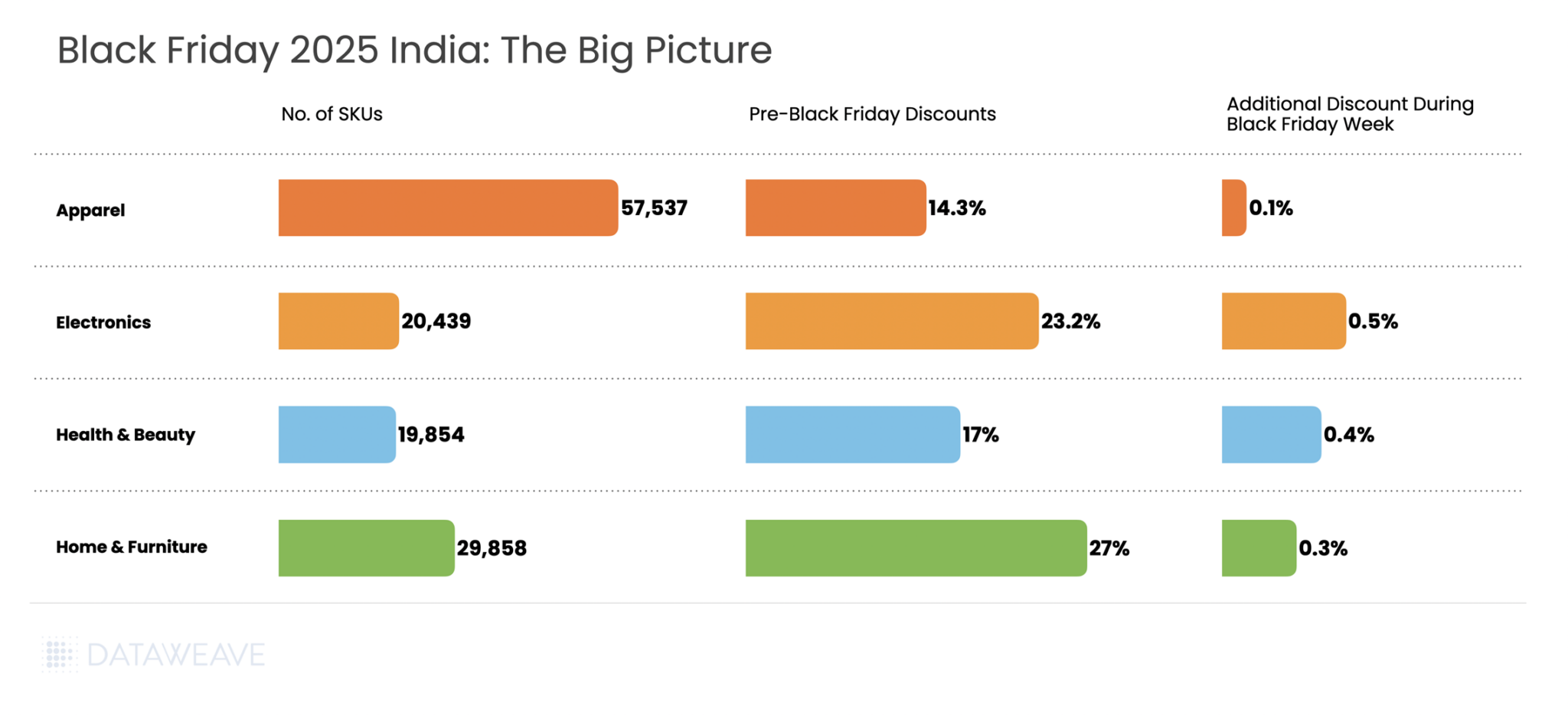
  • The Complete Guide to Competitive Pricing Strategies in Retail and E-commerce

    The Complete Guide to Competitive Pricing Strategies in Retail and E-commerce

    Your budget-conscious customers are hunting for value and won’t hesitate to switch brands or shop at other retailers.

    In saturated and fiercely competitive markets, how can you retain customers? And better yet, how can you attract more customers and grow your market share? One thing you can do as a brand or retailer is to set the right prices for your products.

    Competitive or competition-based pricing can help you get there.

    So what exactly is competitive pricing? Let’s dive into this strategy, its advantages and disadvantages, and how it can be used to stay ahead of the competition.

    What is Competitive Pricing?

    Competitive or competition-based pricing is a strategy where brands and retailers set product prices based on what their competitors charge. This method focuses entirely on the market landscape and sets aside the cost of production or consumer demand.

    It is a good pricing model for businesses operating in saturated markets, such as consumer packaged goods (CPGs) or retail.

    Competitive Pricing Models

    Competitive pricing isn’t a one-size-fits-all strategy. The approach includes various pricing models that can be customized to fit your business goals and market positioning.

    Here’s a closer look at five of the most common competition-based pricing models:

    Price Skimming

    If you have a new product entering the market, you can initially set a high price. Price skimming allows you to maximize margins when competition is minimal.

    This strategy taps into early adopters’ willingness to pay a premium for new project categories. As competitors enter the market, you can gradually reduce the price to maintain competitiveness.

    Premium Pricing

    Premium pricing lets you position your product as high-quality or luxurious goods.

    When you charge more than your competitors, you’re not just selling a product—you’re selling status and an experience. This strategy is effective when your offering is of superior quality or has unique features that justify a higher price point.

    Price Matching

    Price matching—also known as parity pricing—is a defensive pricing tactic.

    By consistently matching your competitors’ prices, you can retain customers who might otherwise, be tempted to switch to an alternative.

    This approach signals your customers that they don’t need to look elsewhere for what they need and can feel comfortable remaining loyal to your brand.

    Penetration Pricing

    Penetration pricing is when you set a low price for a new product to gain market share quickly. The opposite of price skimming, this strategy can be particularly effective in price-sensitive or highly competitive industries.

    By attracting customers early, you can also deter some competitors from entering the market. This bold move can establish your product as a market leader from the get-go.

    Loss Leader Pricing

    Loss leader pricing is a strategic sacrifice that can lead to greater gains in the long run.

    By offering a product at a low price—sometimes even below cost—you can attract new customers to your brand and strengthen your current customers’ loyalty.

    Eventually, you can cross-sell other higher-margin products to your loyal customer base to cover the loss from your loss leader pricing and increase sales of other more profitable products.

    Key Advantages of Competitive Pricing

    Although it’s not the only pricing strategy available, competitive pricing has some significant advantages.

    It is Responsive

    Agility is synonymous with profit in industries where consumer preferences and market conditions shift rapidly.

    Competitive pricing allows you to adapt quickly—if a competitor lowers their prices, you can respond promptly to maintain your positioning.

    It is Simple to Execute and Manage

    Competitive pricing is straightforward, unlike cost-based pricing, which requires complex calculations and spans various factors and facets.

    By closely monitoring competitors’ prices and adjusting your prices accordingly, you can implement this pricing strategy with relative ease and speed.

    It Can Be Combined with Other Pricing Strategies

    Competitive pricing is not a standalone strategy—it’s a versatile approach that can easily be combined with other pricing strategies. For example, say you want to use competitive pricing without losing money on a product. In this case, you could use cost-plus pricing to determine a base price that you won’t go below, then use competitive pricing as long as the price stays above your base price.

    Key Disadvantages of Competitive Pricing

    While competition-based pricing has its advantages, it’s not without its pitfalls. Here are some potential disadvantages of competitive pricing.

    It De-emphasizes Consumer Demand

    If you focus solely on what competitors are charging, you could overlook consumer demand.

    For example, you could underprice items that consumers could be willing to purchase for more. Or, you might overprice items that consumers perceive as low-value, which can reduce sales.

    You Risk Price Wars

    If you and your competition undercut each other for customer acquisition and loyalty, you will eventually erode profit margins and harm the industry’s overall profitability. It’s a slippery slope where everyone loses in the end.

    There’s Potential for Complacency

    When you base your prices on beating those of competitors, you might neglect to differentiate your offerings through innovation and product improvements. Over time, this can weaken your brand’s position and lead to a loss of market share. Staying competitive means more than just matching prices—it means continuously evolving and adding value for the consumer.

    4 Tips for a Successful Competitive Pricing Strategy in Retail

    Here are four competition-based pricing tips for retailers:

    Retailer Tip #1. Know Where to Position Your Products in the Market

    For competitive pricing to work, you must understand your optimal product positioning in the overall market. To gain this understanding, you must regularly compare your offerings and prices with those of your key competitors, especially for high-demand products.

    Then, you can decide which competition-based pricing model is suitable for you.

    Retailer Tip #2. Price Dynamically

    Dynamic pricing is a tactic with which you automatically adjust prices on your chosen variables, such as market conditions, competitor actions, or consumer demand.

    When it comes to competitive pricing, a dynamic pricing system can track your competitors’ price changes and update yours in lockstep.

    Price-monitoring tools like DataWeave allow you to stay ahead of the game with seasonal and historical pricing trend data.

    Retailer Tip #3. Combine Competitive Pricing with Other Pricing Strategies

    Competitive pricing can be powerful, but it doesn’t have to stand alone. You can enhance its benefits with complementary marketing tactics.

    To illustrate, you can bundle products to offer greater value than what your competitors are offering. You can also leverage loyalty programs to offer exclusive discounts or rewards so customers keep returning, even when your competitors offer them lower prices.

    Retailer Tip #4. Stay in Tune with Consumer Demand

    Competition-based pricing aligns you with your competitor, but don’t lose sight of what your customers want. Routinely test your pricing strategy against consumer behavior to ensure that your prices reflect the actual value of your offerings.

    5 Tips for a Successful Competitive Pricing Strategy for Consumer Brands

    If you’re thinking about how to create a competitive pricing strategy for your brand, consider these five tips:

    Brand Tip #1. Identify Competing Products for Accurate Comparisons

    The first step in competitive pricing is to know the value of what you’re selling and how it compares to that of your competitors’ products. This extends to private-label products, similar but not identical products, and use-case products.

    Product matching ensures your pricing decisions are based on accurate like-for-like comparisons, allowing you to compete effectively.

    Brand Tip #2. Understand Your Product’s Relative Value

    Knowing how your product competes on value is key to setting the right price. If your product offers higher value, price it higher; if it offers less, price it accordingly. This ensures your pricing strategy reflects your product’s market placement.

    Brand Tip #3. Consider Brand Perception

    Even if your product is virtually the same as a competitor’s, your brand’s perceived value may be different, which plays a crucial role in pricing.

    If your brand is perceived as premium, you can justify higher prices. Conversely, if customers perceive you as a value brand, your pricing should reflect affordability.

    Brand Tip #4. Leverage Value-Based Differentiation

    When your prices are similar to competitors’, you must differentiate your products by expressing your product value through branding, packaging, quality, or something else entirely.

    This differentiation will compel consumers to choose your product over other similarly priced options.

    Brand Tip #5. Stay Vigilant with Price Monitoring

    Your competitors will update their pricing repeatedly, and you will, too.

    It can be difficult and time-consuming to monitor your competitive pricing, so you’ll need a system like DataWeave to monitor competitors’ pricing and manage dynamic pricing changes.

    This vigilance ensures your brand remains competitive and relevant in real time.

    4 Essential Capabilities You Need to Implement Successful Competition-Based Pricing

    You’ll need four key capabilities to implement a competitive pricing strategy effectively.

    AI-Driven Product Matching

    Product matching means you’ll compare many products (sometimes tens or hundreds) with varying details across multiple platforms. Accurate product matching at that scale requires AI.

    For instance, AI can identify similar smartphones to yours by analyzing features like screen size and processor type. DataWeave’s AI product matches start with 80–90% matching accuracy, and then human oversight can fine-tune the data for near-perfect matches.

    You can make informed pricing decisions once you know which competing products to base your prices on.

    Accurate and Comprehensive Data

    A successful competition-based pricing strategy depends on high-quality, comprehensive product and pricing data from many retailers and eCommerce marketplaces.

    By tracking prices on large online platforms and niche eCommerce sites across certain regions, you’ll gain a more comprehensive market view, which enables you to make quick and confident price changes.

    Normalized Measurement Units

    Accurate price comparisons are dependent on normalized unit measurements.

    For example, comparing laundry detergent sold in liters to laundry detergent sold in ounces requires converting either or both products to a common base like price-per-liter or price-per-ounce.

    This normalization ensures accurate pricing analysis.

    Timely Actionable Insights

    Timely and actionable pricing insights empower you to make informed pricing decisions.

    With top-tier competitive pricing intelligence systems, you get customized alerts, intuitive dashboards, and detailed reports to help your team quickly act on insights.

    In Conclusion

    Competitive pricing or competition-based pricing is a powerful strategy for businesses navigating crowded markets, but you must balance competitive pricing with your brand’s unique value proposition.

    Competitive pricing should complement innovation and customer-centric strategies, not replace them. To learn more, talk to us today!

  • DataWeave’s AI Evolution: Delivering Greater Value Faster in the Age of AI and LLMs

    DataWeave’s AI Evolution: Delivering Greater Value Faster in the Age of AI and LLMs

    In retail, competition is fierce, and in its ever-evolving landscape, consumer expectations are higher than ever.

    For years, our AI-driven solutions have been the foundation that empowers businesses to sharpen their competitive pricing and optimize digital shelf performance. But in today’s world, evolution is constant—so is innovation. We now find ourselves at the frontier of a new era in AI. With the dawn of Generative AI and the rise of Large Language Models (LLMs), the possibilities for eCommerce companies are expanding at an unprecedented pace.

    These technologies aren’t just a step forward; they’re a leap—propelling our capabilities to new heights. The insights are deeper, the recommendations more precise, and the competitive and market intelligence we provide is sharper than ever. This synergy between our legacy of AI expertise and the advancements of today positions DataWeave to deliver even greater value, thus helping businesses thrive in a fast-paced, data-driven world.

    This article marks the beginning of a series where we will take you through these transformative AI capabilities, each designed to give retailers and brands a competitive edge.

    In this first piece, we’ll offer a snapshot of how DataWeave aggregates and analyzes billions of publicly available data points to help businesses stay agile, informed, and ahead of the curve. These fall into four broad categories:

    • Product Matching
    • Attribute Tagging
    • Content Analysis
    • Promo Banner Analysis
    • Other Specialized Use Cases

    Product Matching

    Dynamic pricing is an indispensable tool for eCommerce stores to remain competitive. A blessing—and a curse—of online shopping is that users can compare prices of similar products in a few clicks, with most shoppers gravitating toward the lowest price. Consequently, retailers can lose sales over minor discrepancies of $1–2 or even less.

    All major eCommerce platforms compare product prices—especially their top selling products—across competing players and adjust prices to match or undercut competitors. A typical product undergoes 20.4 price changes annually, or roughly once every 18 days. Amazon takes it to the extreme, changing prices approximately every 10 minutes. It helps them maintain a healthy price perception among their consumers.

    However, accurate product matching at scale is a prerequisite for the above, and that poses significant challenges. There is no standardized approach to product cataloging, so even identical products bear different product titles, descriptions, and attributes. Information is often incomplete, noisy, or ambiguous. Image data contains even more variability—the same product can be styled using different backgrounds, lighting, orientations, and quality; images can have multiple overlapping objects of interest or extraneous objects, and at times the images and the text on a single page might belong to completely different products!

    DataWeave leverages advanced technologies, including computer vision, natural language processing (NLP), and deep learning, to achieve highly accurate product matching. Our pricing intelligence solution accurately matches products across hundreds of websites and automatically tracks competitor pricing data.

    Here’s how it works:

    Text Preprocessing

    It identifies relevant text features essential for accurate comparison.

    • Metadata Parsing: Extracts product titles, descriptions, attributes (e.g., color, size), and other structured data elements from Product Description Pages (PDP) that can help in accurately identifying and classifying products.
    • Attribute-Value Normalization: Normalize attributes names (e.g. RAM vs Memory) and their values (e.g., 16 giga bytes vs 16 gigs vs 16 GB); brand names (e.g., Benetton vs UCB vs United Colors of Benetton); mapping category hierarchies a standard taxonomy.
    • Noise Removal: Removes stop words and other elements with no descriptive value; this focuses keyword extraction on meaningful terms that contribute to product identification.

    Image Preprocessing

    Image processing algorithms use feature extraction to define visual attributes. For example, when comparing images of a red T-shirt, the algorithm might extract features such as “crew neck,” “red,” or “striped.”

    Image Preprocessing using advanced AI and other tech for product matching in retail analytics.

    Image hashing techniques create a unique representation (or “hash”) of an image, allowing for efficient comparison and matching of product images. This process transforms an image into a concise string or sequence of numbers that captures its essential features even if the image has been resized, rotated, or edited.

    Before we perform these activities there is a need to preprocess images to prepare them for downstream operations. These include object detection to identify objects of interest, background removal, face/skin detection and removal, pose estimation and correction, and so forth.

    Embeddings

    We have built a hybrid or a multimodal product-matching engine that uses image features, text features, and domain heuristics. For every product we process we create and store multiple text and image embeddings in a vector database. These include a combination of basic feature vectors (e.g. tf-idf based, colour histograms, share vectors) to more advanced deep learning algorithms-based embeddings (e.g., BERT, CLIP) to the latest LLM-based embeddings.

    Classification

    Classification algorithms enhance product attribute tagging by designating match types. For example, the product might be identified as an “exact match”, “variant”, “similar”, or “substitute.” The algorithm can also identify identical product combinations or “baskets” of items typically purchased together.

    What is the Business Impact of Product Matching?

    • Pricing Intelligence: Businesses can strategically adjust pricing to remain competitive while maintaining profitability. High-accuracy price comparisons help businesses analyze their competitive price position, identify opportunities to improve pricing, and reclaim market share from competitors.
    • Similarity-Based Matching: Products are matched based on a range of similarity features, such as product type, color, price range, specific features, etc., leading to more accurate matches.
    • Counterfeit Detection: Businesses can identify counterfeit or unauthorized versions of branded products by comparing them against authentic product listings. This helps safeguard brand identity and enables brands to take legal action against counterfeiters.

    Attribute Tagging

    Attribute tagging involves assigning standardized tags for product attributes, such as brand, model, size, color, or material. These naming conventions form the basis for accurate product matching. Tagging detailed attributes, such as specifications, features, and dimensions, helps match products that meet similar criteria. For example, tags like “collar” or “pockets” for apparel ensure high-fidelity product matches for hard-to-distinguish items with minor stylistic variations.

    Attributes that are tagged when images are matched for retail ecommerce analytcis.

    Including tags for synonyms, variants, and long-tail keywords (e.g., “denim” and “jeans”) improves the matching process by recognizing different terms used for similar products. Metadata tags categorize similar items according to SKU numbers, manufacturer details, and other identifiers.

    Altogether, these capabilities provide high-quality product matches and valuable metadata for retailers to classify their products and compare their product assortment to competitors.

    User-Generated Content (UGC) Analysis

    Customer reviews and ratings are rich sources of information, enabling brands to gauge consumer sentiment and identify shortcomings regarding product quality or service delivery. However, while informative, reviews constitute unstructured “noisy” data that is actionable only if parsed correctly.

    Here’s where DataWeave’s UGC analysis capability steps in.

    • Feature Extractor: Automatically pulls specific product attributes mentioned in the review (e.g., “battery life,” “design” and “comfort”)
    • Feature Opinion Pair: Pairs each product attribute with a corresponding sentiment from the review (e.g., “battery life” is “excellent,” “design” is “modern,” and “comfort” is “poor”)
    • Calculate Sentiment: Calculates an overall sentiment score for each product attribute
    The user generated content analysis framework used by DataWeave to calculate sentiment.

    The final output combines the information extracted from each of these features, which looks something like this:

    • Battery life is excellent
    • Design is modern
    • Not satisfied with the comfort

    The algorithm also recognizes spammy reviews and distinguishes subjective reviews (i.e., those fueled by emotion) from objective ones.

    DataWeave's image processing tool also analyses promo banners.

    Promo Banner Analysis

    Our image processing tool can interpret promotional banners and extract information regarding product highlights, discounts, and special offers. This provides insights into pricing strategies and promotional tactics used by other online stores.

    For example, if a competitor offers a 20% discount on a popular product, you can match or exceed this discount to attract more customers.

    The banner reader identifies successful promotional trends and patterns from competitors, such as the timing of discounts, frequently promoted product categories or brands, and the duration of sales events. Ecommerce stores can use this information to optimize their promotion strategies, ensuring they launch compelling and timely offers.

    Other Specialized Use Cases

    While these generalized AI tools are highly useful in various industries, we’ve created other category—and attribute-specific capabilities for specialty goods (e.g., those requiring certifications or approval by federal agencies) and food items. These use cases help our customers adhere to compliance requirements.

    Certification Mark Detector

    This detector lets retailers match items based on official certification marks. These marks represent compliance with industry standards, safety regulations, and quality benchmarks.

    Example:

    • USDA Organic: Certification for organic food production and handling
    • ISO 9001: Quality Management System Certification

    By detecting these certification marks, the system can accurately match products with their certified counterparts. By identifying which competitor products are certified, retailers can identify products that may benefit from certification.

    Image analysis based product matching at DataWeave also detects certificate marks.

    Nutrition Fact Table Reader

    Product attributes alone are insufficient for comparing food items. Differences in nutrition content can influence product category (e.g., “health food” versus regular food items), price point, and consumer choice. DataWeave’s nutrition fact table reader scans nutrition information on packaging, capturing details such as calorie count, macronutrient distribution (proteins, fats, carbohydrates), vitamins, and minerals.

    The solution ensures items with similar nutritional profiles are correctly identified and grouped based on specific dietary requirements or preferences. This helps with price comparisons and enables eCommerce stores to maintain a reliable database of product information and build trust among health-conscious consumers.

    Image processing for product matching also extracts nutrition table data at DataWeave.

    Building Next-Generation Competitive and Market Intelligence

    Moving forward, breakthroughs in generative AI and LLMs have fueled substantial innovation, which has enabled us to introduce powerful new capabilities for our customers.

    How Gen AI and LLMs are used by DataWeave to glean insights for analytics

    These include:

    • Building Enhanced Products, Solutions, and Capabilities: Generative AI and LLMs can significantly elevate the performance of existing solutions by improving the accuracy, relevance, and depth of insights. By leveraging these advanced AI technologies, DataWeave can enhance its product offerings, such as pricing intelligence, product matching, and sentiment analysis. These tools will become more intuitive, allowing for real-time updates and deeper contextual understanding. Additionally, AI can help create entirely new solutions tailored to specific use cases, such as automating competitive analysis or identifying emerging market trends. This positions DataWeave to remain at the forefront of innovation, offering cutting-edge solutions that meet the evolving needs of retailers and brands.
    • Reducing Turnaround Time (TAT) to Go-to-Market Faster: Generative AI and LLMs streamline data processing and analysis workflows, enabling faster decision-making. By automating tasks like data aggregation, sentiment analysis, and report generation, AI dramatically reduces the time required to derive actionable insights. This efficiency means that businesses can respond to market changes more swiftly, adjusting pricing or promotional strategies in near real-time. Faster insights translate into reduced turnaround times for product development, testing, and launch cycles, allowing DataWeave to bring new solutions to market quickly and give clients a competitive advantage.
    • Improving Data Quality to Achieve Higher Performance Metrics: AI-driven technologies are exceptionally skilled at cleaning, organizing, and structuring large datasets. Generative AI and LLMs can refine the data input process, reducing errors and ensuring more accurate, high-quality data across all touchpoints. Improved data quality enhances the precision of insights drawn from it, leading to higher performance metrics like better product matching, more accurate price comparisons, and more effective consumer sentiment analysis. With higher-quality data, businesses can make smarter, more informed decisions, resulting in improved revenue, market share, and customer satisfaction.
    • Augmenting Human Bandwidth with AI to Enhance Productivity: Generative AI and LLMs serve as powerful tools that augment human capabilities by automating routine, time-consuming tasks such as data entry, classification, and preliminary analysis. This allows human teams to focus on more strategic, high-value activities like interpreting insights, building relationships with clients, and developing new business strategies. By offloading these repetitive tasks to AI, human productivity is significantly enhanced. Employees can achieve more in less time, increasing overall efficiency and enabling teams to scale their operations without needing a proportional increase in human resources.

    In our ongoing series, we will dive deep into each of these capabilities, exploring how DataWeave leverages cutting-edge AI technologies like Generative AI and LLMs to solve complex challenges for retailers and brands.

    In the meantime, talk to us to learn more!

  • Less is More in Holiday Pricing: The Case for a Simple, Stable Approach This Holiday Season

    Less is More in Holiday Pricing: The Case for a Simple, Stable Approach This Holiday Season

    With pricing making headlines more frequently than ever, now is the perfect moment for retailers to take a step back and rethink their holiday strategy. The heightened focus on pricing—driven by economic uncertainties, inflationary pressures, and fluctuating supply chain dynamics—presents a unique opportunity for retailers to not only meet customer expectations but to exceed them by rebuilding trust. In today’s climate, where consumer confidence is often fragile, the perception of fair pricing can be a significant differentiator. This is especially true during the holiday season when shoppers are more budget-conscious, and every dollar counts.

    Rather than focusing on the price of individual items, consumers are increasingly concerned with the total amount they spend at checkout. This means the overall basket cost, rather than the price tag on a single product, holds greater sway in determining whether a customer feels they’ve gotten a good deal. Retailers who can maintain steady, predictable basket pricing—despite external pressures such as supply chain disruptions or increased competition—will stand out as reliable and customer-centric.

    Pricing Strategy for the Holiday Season

    Your pricing strategy sets the tone for fostering and maintaining customer trust during the busy holiday season. From establishing initial prices to managing markdowns, having a stable, well-thought-out plan is crucial to balancing profitability with customer satisfaction. Below are several guiding principles to help you navigate this critical time frame:

    holiday-pricing-considerations

    Anchor Your Prices Early on Key Holiday Items

    Identify the products that are likely to drive traffic and sales during the holiday period and set your prices strategically early on. Use these prices as a ceiling that you won’t exceed, allowing customers to trust that they’re getting consistent value. By establishing this anchor price, you create a sense of stability in an otherwise fluctuating market, helping your customers feel confident that they won’t face price hikes on essential holiday items.

    Prepare for Competitive Moves

    The holiday season is notorious for aggressive pricing tactics by competitors, so you’ll need to remain agile. Be prepared to make strategic price reductions when necessary, but ensure you stay below your anchored price to avoid eroding trust. Monitoring competitors closely and adjusting your strategy without undermining your overall value proposition will be key to maintaining a competitive edge.

    To accomplish this, having reliable and timely competitor pricing data is essential. A sophisticated pricing intelligence platform like DataWeave’s can get the job done, which is equipped to handle the scale and speed demanded during the fast-paced holiday season.

    Collaborate with Vendors on Promotions

    Strong vendor relationships are crucial during the holiday season. By working closely with your suppliers, you can develop compelling promotions that not only attract customers but also ensure you have adequate inventory levels to support any reduced pricing strategies. Vendors may offer additional incentives or discounts during this period, and leveraging those to provide deeper savings can help retailers pass along better deals to customers without sacrificing margin.

    Pre-Holiday Markdowns

    Pre-holiday markdowns are an essential tool to clear out older inventory and make room for newer, more seasonal items. Get ahead of these markdowns by tracking trends and data from previous years. This will allow you to anticipate demand and address any overstocking issues early, ensuring that your shelves are stocked with the right products at the right time.

    Post-Holiday Markdowns

    Once the holiday rush subsides, differentiating between products is crucial. For “In and Out” items, which are seasonal or limited-time offers, your goal should be to clear through inventory as quickly as possible to free up valuable shelf space for upcoming product cycles. For products that are part of your regular planogram, the focus should shift to adjusting inventory levels back down to non-holiday norms, ensuring you’re not left with excess stock that could tie up cash flow in the slower months ahead.

    Manage Markdowns at the Store/Item Level

    Not all stores or products will move at the same pace, so it’s essential to manage markdowns on a granular level. Each store has different inventory turnover rates, and customer demand may vary from one location to another. Tailoring markdown strategies to the specific needs of individual stores and products allows for greater flexibility and ensures you’re maximizing sell-through while minimizing excess stock.

    Managing the Rest of the Assortment

    While holiday-specific items will undoubtedly capture much of the attention from customers due to the increased volume and seasonal demand, it’s essential to remember that the rest of the customer’s basket—comprised of non-holiday items—plays a pivotal role in their overall shopping experience. Retailers often focus heavily on optimizing prices for holiday items, but maintaining a consistent and customer-friendly pricing strategy across the entire assortment is equally important. Neglecting non-holiday items can erode trust and diminish the effectiveness of the overall holiday pricing strategy. Customers shop holistically, and their perception of your brand is shaped by the totality of their shopping experience, not just individual product categories.

    While holiday promotions may attract traffic, it’s the consistency and transparency of your broader pricing strategy that will strengthen trust and encourage repeat business. After all, the holiday season is not just about winning a single transaction—it’s about building relationships that extend well into the new year.

    A few critical factors to consider for your non-holiday assortment:

    Minimize Price Increases Unless Absolutely Necessary

    The holiday season is a delicate time when customers are highly sensitive to pricing. Sudden, unexpected price hikes, especially on everyday, non-seasonal items, can quickly erode the trust you’ve worked hard to build. Customers may forgive small fluctuations, but if they perceive a retailer is taking advantage of holiday demand or inflationary pressures to unnecessarily raise prices, that goodwill can evaporate. By maintaining steady pricing, you reinforce the idea that your brand prioritizes fairness over opportunism, especially in a period marked by heightened scrutiny around pricing practices.

    Evaluate Price Gaps Between Product Tiers

    A key element of pricing strategy that retailers should focus on is maintaining appropriate price gaps between product tiers, such as private label and national brands. Ensuring that the price difference between these tiers remains clear and consistent helps reinforce a value proposition for both types of customers: those who seek premium national brands and those who are value-oriented and gravitate toward private label options. If the price gap becomes too narrow, customers may be confused about the differentiation between products, leading to dissatisfaction or lost sales.

    Ensure Accurate Value Sizing

    One of the most effective ways to gain customer trust is through clear, transparent pricing, particularly when it comes to value sizing. Misleading unit pricing, whether intentional or accidental, can quickly frustrate customers, making them feel that they are being deceived. Ensure that unit pricing is visible, logical, and consistent across all product categories, allowing customers to make informed choices without feeling overwhelmed or misled. By offering transparency in this area, you can foster a sense of fairness and accountability, further building your reputation as a customer-first retailer.

    Maintain Price Links Across Your Assortments

    Consistency in pricing across various categories and product lines is crucial to managing customer expectations. Pricing disparities between similar products or across different stores in your chain can create confusion and frustration, leading to negative perceptions of your brand. Customers expect a seamless shopping experience, and this includes consistency in pricing, no matter what they buy or where they buy it. Establishing and maintaining price links within your assortment will ensure that your broader pricing strategy remains aligned with customer expectations, reinforcing reliability.

    Trust is Your Greatest Currency

    In a retail environment where customers are constantly bombarded with news about inflation, price hikes, and economic instability, trust is your greatest asset. Negative perceptions surrounding pricing, whether it’s from the media or personal experiences, can make customers wary and hesitant. By committing to a stable, transparent, and fair pricing strategy—not just for holiday items but across the entire assortment—you can differentiate yourself in the market and foster long-term loyalty. Stability and consistency in your pricing model allow customers to feel confident that they’re getting good value every time they shop with you, regardless of external economic pressures.

    It’s important to prioritize the customer relationship above all else, even if that means sacrificing some immediate short-term gains. Retailers who opt for quick wins through aggressive price changes may see a temporary boost in profits but risk damaging long-term customer loyalty. On the other hand, by focusing on providing a consistent and fair experience, you position your brand as a reliable choice, one that customers will return to not just during the holidays but throughout the entire year.

    In a season where every retailer is vying for the same holiday dollar, your approach to pricing must stand out by emphasizing trust, loyalty, and customer satisfaction. Pricing transparency and fairness are key differentiators, especially in an environment where many retailers will be tempted to capitalize on increased demand by raising prices or reducing promotions. Instead, leading with trust and focusing on stability will allow you to rise above the noise and deliver a superior customer experience.

    In Summary: Stability Wins

    This holiday season, the winning strategy isn’t about pushing for the highest possible margins or taking advantage of seasonal demand spikes. It’s about the bigger picture—building lasting customer relationships that extend well beyond the holidays. By prioritizing consistency in your pricing, maintaining transparency across your assortment, and leading with trust, you’ll not only achieve success during the holiday period but also set the stage for long-term customer loyalty.

    In short, stability wins. Prioritize the customer experience, remain consistent in your approach, and lead with trust. Doing so will ensure that your customers not only choose you during the holidays but continue to choose you long into the future.

    To learn more, reach out and chat with us today!

  • The Essential Price Management Framework for Retailers

    The Essential Price Management Framework for Retailers

    As a leader with over 20 years of experience leading pricing strategy at a major US grocery chain, I deeply understand the complexities pricing teams face when trying to derive, quantify, and execute corporate pricing initiatives.

    Providing insights into the competitive marketplace in order to ensure the overall success of directed pricing strategies is more than simple reporting.

    That’s what many teams get wrong.

    Reporting is a post-mortem, which is a valuable exercise, but not one that will help you achieve your pricing goals all by itself. After all, your pricing goals can change due to a number of reasons: macroeconomic challenges, regional competition, corporate objectives, along with several other factors.

    Pricing teams need a well-defined process to devise and implement their pricing strategies. This process needs to holistically examine your product base to provide robust price management. It also needs to be backed up by technology powered by the latest advancements because you can be sure your competition is already thinking that way.

    Let’s break down an effective and modern price management process for retailers.

    Data Collection

    The first aspect of any effective price management framework for retailers is a clearly defined product data collection. You need to understand your collection in terms of who to collect pricing data from, what data to collect, where to collect it from, and how often.

    • The who: Consists of both primary competition and others you’d like to keep tabs on
    • The what: Can range from targeted single items like Key Value Items (KVIs) or total portfolio
    • Where: Can range from targeted locations within your market or the total competitive network
    • How often: To be able to support your price management process and for reporting purposes, determining a cadence is essential.

    Data is power and the more data you can acquire, the more insights you’ll gain. Make sure that your collection data is well thought out ahead of time. Leaning on a price management framework built for retailers that can aggregate all your data into representative prices can help.

    For example, if you have multiple competitive stores in a single market, flattening pricing data into a defined representative price will help speed up your analysis. Don’t get confined to a single store when a comprehensive assortment view across your target markets will provide a more accurate understanding.

    Data Refinement

    Competitive Matched Items

    Next, you need to examine your competitive-matched items. These are the products that you want to be priced in direct response to your competitors’ pricing. The goal is to remain closely aligned with their prices so as not to lose market share while simultaneously achieving your corporate strategies.

    Your price management system needs to help you manage your overlapping items. Trying to do so manually will be inefficient and is almost impossible to execute across 100% of your product catalog. 

    The mapping needs to go beyond exact UPC / PLU matches to encompass other match criteria. It needs to be able to incorporate any number of derivatives, including competitor-specific item codes like Amazon’s ASINs or Target’s DPCIs. This will help you overcome the challenge of mapping exact items to a competitor when the competitor’s site doesn’t showcase a UPC. It will also help you map your own private-label items to your competitor’s private-label counterparts.

    A good price management framework will also help you match the same items but with dissimilar sizes (e.g., Cheerios 18 OZ vs. Cheerios 20 OZ), either by letting you match directly within acceptable tolerances or by enabling you to compare prices on a per-unit basis. 

    We need to leverage GenAI to help facilitate matches beyond UPC / PLU exact matches, such as Exact Item with no Competitor Code, Exact Item with Competitive Specific Codes, Similarity Matching on Private Label, Similarity Matching on Size all need to leverage it.

    If you’re playing in a vertical that doesn’t always have a unifying code (restaurants, apparel, etc.) you’ll need to leverage the latest GenAI tools to map items together for price management. The variables are simply too numerous and complex to do manually.

    Unmatched Items and Internal Portfolio

    Not every product will be included in your competitive-matched items collection. Competitive matches in your internal portfolio offer a proxy for building clear and concise price management strategies that are in line with your corporate initiatives.

    However, your unmatched items still need to be factored into your price strategy. If you only manage your competitively priced items, you won’t have a holistic viewpoint of your total product catalog and pricing. It’s critical to ensure that internal portfolio items are effectively mapped and grouped in order to extend overall price management.

    Here are three things you need to consider when managing the pricing of your internal product portfolio. A smart price management framework is your best bet for achieving these results:

    • Value Size Groupings
      Value size groupings allow for the same branded items of different sizes to be priced accordingly to ensure price parity. You don’t want to sell a private label gallon of milk for $4.00 while the half gallon is at $1.75, for example. You need certain mechanisms in place to alert you when price parity is off. This is especially true when some of your items are competitively matched, and others are not.
    • Relationships between Brands
      Relationships between brands are also critical to ensure price parity. There should be well-defined relationships between like-sized products that are from different brands. This will ensure that your private label program is priced ‘at a value’ compared with their national branded counterparts. You need to maintain the balance between different private label tiers along with different national brand tiers.
    • Price Links
      Price Links are also critical to keeping up to date from a consumer perspective. Your customers expect that certain items should be priced together and will be put off if they are not. For example, if you sell an item in different sizes or flavors and scents, their prices should be logically linked.

    For your internal portfolio, there may be items that don’t have a competitive match or simply don’t fall into one of your internal portfolio groupings. These are unique items to your banner and should be considered margin drivers for your brand.

    Leveraging Data for Action

    Now that you have a complete line of sight into both competitively matched items and internal mappings, you can move to fully leveraging your data. Figuring out how to utilize these competitive insights to understand where your price positioning is compared with your competition can be a challenge without a playbook. An effective price management framework will help guide you to the best insights and help you understand how it relates to your corporate strategy.

    If you don’t have a well-defined corporate pricing strategy (competitive or margin) or you need to update it to be more modern, the data sets provided by a price management framework can help you ascertain where you are in your pricing journey. They can also help you identify options for where you want to go.

    Here are some other ways a price management framework can help you improve your pricing strategy:

    • Utilize Competitive Data
      Get competitive insights, identify competitive price zones, and understand your competitors’ pricing philosophy. Figure out if they’re using strategies like:
      • High-Low
      • Everyday Low Price (EDLP)
      • Cost Plus
    • Unravel Competitor Strategy
      See if you can unlock what your competition has planned for pricing strategy and promotions. Try relating what you see in corporate filings and tie back to what you see in your competitive data sets.
    • Assortment Analysis
      Try looking at the data not only from a pricing perspective but also from a competitive assortment, promotion, and supply chain perspective.
    • Proactive Alerts
      Establish alerts for your internal portfolio to ensure that you don’t exceed your tolerance based on price moves.

    Leveraging a Price Management Framework Designed for Retailers

    A price management system designed specifically for you as a retailer is a game changer. An effective one can be configured specifically for the price owners, whether you have a dedicated team for this function or the price is owned by the category management team.

    For category managers, standard reporting offers a clear view of pricing performance and trends. Beyond that, competitive intelligence becomes crucial—using data from various sources like collected pricing data, market filings, social media insights, etc. to provide the senior leadership team with a deeper understanding of competitor strategies and actions. This empowers informed decision-making at the highest levels.

    With these price management insights, retailers can gain a holistic view of the competitive marketplace, uncover gaps and opportunities, and scale their business more effectively. As someone with experience on the retailer’s side of the market, I know first-hand how valuable these insights can be.

    We’d love to talk with you if you’re interested in learning more about DataWeave’s AI-powered price intelligence solution for retailers. Click here to schedule an introductory conversation.

  • A Guide to Digital Shelf Metrics for Consumer Brands

    A Guide to Digital Shelf Metrics for Consumer Brands

    Our world is increasingly going online. We work online, socialize online, and shop online every day. As a consumer brand, you need to ensure complete awareness of your brand’s online presence across eCommerce platforms, search engines, and media.

    Only by deeply understanding the customer journey can you ensure that your product is reaching your ideal customers and maximizing your brand’s market share. You need data to intrinsically understand your customer journey and make changes where you’re lacking.

    As the old adage goes: ‘You can’t manage what you don’t measure.’

    You need digital shelf metrics to measure and start benchmarking your buyer’s journey. To find several of these types of key performance indicators (KPIs), you need a digital shelf analytics solution. These platforms allow you to track various metrics along the path to purchase from the awareness stage to the post-purchase phase across the entire internet, helping to inform online and offline sales strategies.

    Digital shelf analytics will help you gain insights into how your brand is doing versus the competition, which areas are lagging behind in historical performance, and what activities are driving sales. There are innumerable ways in which you can leverage these valuable insights. But how do you know which KPIs to start tracking with your digital shelf analytics solution?

    Here, we’ve summarized the top metric types your peers report, track and base their decisions on.

    With these KPIs in hand, consumer brands like yours can ensure that their products are consistently visible and appealing to their target audience across online marketplaces, ultimately enhancing conversion rates, market share, and profitability.

    Read this guide to learn more about the top digital shelf metrics consumer brands are tracking and how to use them in your own strategy.

    1. Share of Search

    Share of Search (SoS) is a KPI in digital shelf analytics that measures how frequently a consumer brand’s products appear in search results on eCommerce platforms relative to the competition for specific keywords. A good digital shelf analytics solution will be able to show this metric across all the top marketplaces and retailers, such as Amazon and Walmart, but also more niche marketplaces for industry-specific selling.

    This metric provides brands with a quantifiable way to measure how frequently their products are being “served up” to customers on online marketplaces. Essentially, it measures visibility and discoverability.

    Share of Search exmple_Digital Shelf Metrics

    With Share of Search on DataWeave, you can slice and dice your data in innumerable ways. These are a few important views you can see:

    • Aggregated SoS
    • Organic and Sponsored SoS scores
    • SoS scores across brands, retailers, keywords, cities
    • Historical SoS score trends

    Once you have benchmarked your SoS and category presence relative to your competition, you need to start interpreting the data. Here are some questions you can ask yourself to help interpret your findings:

    Share of Search exmple_Digital Shelf Metrics
    • Which of my key categories have the lowest SoS score?
    • Which products feature low on search results because they are out of stock?
    • Are my competitors’ products faring better due to sponsored searches?
    • Is my SoS low due to poor content quality?

    With insights in hand, you will know which actions to take to drive the biggest impact. For example, you could increase sponsored search results or improve organic reach by optimizing product pages.

    Understanding your SoS is essential to maximizing the awareness phase of your customer journey. It will help you improve your brand visibility and increase product conversions through better search and category presence.

    2. Share of Media

    Share of Media (SoM) is a KPI that is just as impactful, if not more so, than the SoS metric. However, only a limited number of brands track it or use it to drive strategic action. This makes it a perfect opportunity for brands looking to get an edge on the competition.

    But what is SoM in digital shelf analytics? Essentially, it’s a way of measuring retail media advertising activities like brand-sponsored banners, listings, videos, ads, and promotions that sometimes blend into search results. The main types of retail media advertising exist in two categories: banner advertising and sponsored listings.

    Banner advertising involves strategically placing designed banners within websites and search listings. These banners raise brand awareness and drive traffic to online storefronts.

    Sponsored listings are paid placements within search results on search engines or eCommerce platforms. They are prioritized based on the total bid amount and the product’s relevance. These paid listings are marked with “sponsored” or “ad.”

    Sponsored listings on an Amazon webpage

    It’s important to run these types of advertising campaigns on eCommerce platforms to gain customer visibility. In fact, “some 57% of US consumers started their online shopping searches on Amazon as of Q2 2023.” If you aren’t showing up, paying for placement can help.

    These listings serve to enhance your brand’s overall visibility, help you gain more precise reach, increase conversions, and drive better brand awareness and recall with your customers.

    These efforts aren’t free, however, so measuring their effectiveness is critical not only to gain all the listed benefits but to also not waste your valuable marketing budget. The SoM KPI can help a consumer brand answer questions like:

    • Where are the opportunities to increase paid ads?
    • Which categories could benefit from a promotional boost or a strategic and streamlined allocation of ad spend?
    • Which of my competitors have active banners and what is their share of media by keyword?
    • How has my ad spend trended historically in comparison to my competitor?
    Analytics Dashboard on Dataweave

    DataWeave’s digital shelf analytics (DSA) is among the first providers to offer Share of Media KPI tracking and analysis. This is because it requires advanced, multi-modal AI to gather, view, and aggregate listings that encompass text, images, and video. With Share of Media tracking facilitated by DataWeave, consumer brands can track and analyze the effectiveness of their own promotional investments as well as those of their competitors.

    3. Content Quality

    The content quality metric measures how well your product content adheres to the retailer’s specific guidelines, which are in place to steer traffic and sales on their sites.

    With the help of a DSA platform’s AI and ML capabilities, you can measure different elements of your product detail pages (PDPs), such as titles, descriptions, images, videos, and even customer reviews. You need to know which elements are missing, where they are missing, and which ones are negatively affecting sales so you can take corrective action.

    Did you know that the average cart abandonment rate is 69.99%? The quality of your content can significantly impact this number. Ensuring that your content is high-quality will help influence product discoverability, customer engagement, and conversion rates. It will also help position you ahead of the competition. If your content quality is poor, you may find yourself with lower search rankings, a higher return rate, and more abandoned carts.

    Here are some questions you can answer with the help of the content quality digital shelf metric:

    • Is my product content at a retail site exactly what was syndicated?
    • Are there any retailer initiated changes to my product content?
    • Are my product content updates reflected on the retailer platforms?
    • How well does my product content comply with the retailer guidelines?
    • How do I optimize my product content for enhanced discoverability and conversion?

    DataWeave’s content quality digital shelf analysis helps consumer brands ensure that product content on eCommerce platforms is high-quality and benchmark their product listings against the competition. It does this through a combination of AI-driven quality analysis and by presenting brands with actionable recommendations. These optimized suggestions are based on the top-performing products so you can focus your valuable time on the areas that will drive the biggest impact.

    4. Pricing & Promotions

    Your customers can easily shop around to find the best price for the product you’re selling. If your competitor is selling it cheaper, you’ll lose that sale.

    That’s why it’s essential to understand the pricing and promotional landscape for each of your products and categories. This can be a challenge, especially if it’s a common product or comes in multiple pack sizes or variants.

    It’s equally important to track pricing and promotions even at individual, physical stores. Doing so will allow you to remain competitive and responsive to local market dynamics by tailoring your pricing strategies based on regional competition. You don’t want your products to be overpriced (lost sales) or underpriced (lost profit) in specific markets.

    Harmonizing insights when operating an omnichannel consumer brand is extremely difficult without the aid of a digital shelf analytics solution. Insights need to be aggregated between desktop sites, mobile sites, and mobile applications, as well as from physical storefronts.

    Questions you can answer with the help of the pricing & promotions digital shelf metric include:

    • How do my product prices and promotions compare to my competitors?
    • How consistent is my product pricing across retail websites?
    • How does my product pricing vary across regions, ZIPs, and stores?
    • How do price changes influence my sales numbers?
    • Are there regional differences in pricing and promotion effectiveness?

    DataWeave’s digital shelf analytics platform stands out with its sophisticated location-aware capabilities, which enable the aggregation and analysis of localized pricing and promotions. The platform defines locations based on a range of identifiers, such as latitudes and longitudes, regions, states, ZIP codes, or specific store numbers.

    The platform can also extract promotional information, such as credit card-based or volume-based promotions. You can see variances across retailers, split by price groups, brands, and competitors. DataWeave specializes in enabling brands to conduct in-depth analyses across a wide array of attributes so you can answer just about any pricing or promotional question you have.

    Digital shelf pricing insights via Dataweave

    5. Availability

    The availability KPI in digital shelf analytics measures the in-stock and availability rates for a brand’s products across eCommerce and physical locations. Similar to the pricing and promotions metric, it relies heavily on location awareness, down to individual stores. Measuring both online availability and offline in-stock rates will help you understand the big picture and take more informed replenishment action.

    When you start leveraging the availability KPI with the help of digital shelf analytics, you can improve inventory management, boost product discoverability, increase the frequency with which your online product listings convert, and generally drive more sales. This KPI is essential for ensuring your customers can always find and buy the products they want.

    With the availability KPI, you can start answering questions like:

    • What is my overall in-stock rate?
    • Which of my products frequently go out of stock?
    • How does product availability vary across different regions and stores?
    • What is the impact of availability on my conversion rates?
    • Are there any seasonal trends in product availability that I need to address?
    • How quickly are we resolving stockout issues across different locations?
    • What are my biggest opportunities to reduce stockouts?

    DataWeave enables consumer brands to track their product availability metric through automated data collection from various eCommerce platforms in conjunction with physical in-stock rates. The platform provides granular, store-level insights so you can understand regional stock variations and optimize inventory distribution. By tracking historical availability data, you can identify seasonal patterns and predict future demand to pre-empt stockout issues. All of this can be configured with automatic notifications to alert you when there has been a stockout event or when a low stock threshold has been passed, facilitating timely replenishment.

    Graph showing availability across locations

    6. Ratings & Reviews

    The final KPI in our guide is the ratings & reviews digital shelf metric. Consumers rely heavily on genuine feedback from their peers and refer to star ratings, posted comments, and uploaded pictures to inform their buying decisions. This KPI analyzes the impact of customer feedback and reviews on your products’ performance across eCommerce platforms so you can measure overall brand perception and isolate areas of opportunity.

    This metric does something other digital shelf metrics don’t; it can inform your product strategy. It can help you identify repeat complaints that your product team can address with the manufacturer or use for the design of future products.

    Some questions you can answer with this powerful KPI include:

    • What is the overall customer sentiment towards my products based on ratings and reviews?
    • Which product features are frequently mentioned positively or negatively by customers?
    • How do my product ratings and reviews compare to those of my competitors?
    • Are there common issues or complaints that need to be addressed to improve customer satisfaction?
    • Which products have the highest and lowest ratings, and why?

    With DataWeave’s digital ratings and reviews feature, you can keep a pulse on customer sentiment to take short-term action as well as decide long-term strategy. You can leverage reviews to influence product perception, refine products, and enhance overall customer satisfaction.

    DataWeave’s Digital Shelf Metrics

    Each one of these metrics is interconnected and collectively influences a brand’s success. For instance, improving content quality and earning higher ratings can significantly enhance your product’s visibility in search results, thereby boosting the Share of Search digital shelf metric. By focusing on a comprehensive approach that integrates these metrics, brands can ensure their products are consistently visible, competitively priced, well-reviewed, and readily available.

    DataWeave gives consumer brands the means to execute a holistic digital shelf strategy. From a single portal, track and improve digital shelf metrics like Share of Search, Share of Media, Pricing and promotions, Availability, and Ratings and Reviews.

    Our solutions help audit and optimize the most critical KPIs that drive sales and market share for brands so you can stay competitive in a dynamic digital landscape and foster long-term customer satisfaction.

    Ready to get started? Schedule a call with a specialist to see how it can work for your brand.

  • How Digital Shelf Analytics Can Fix Common Revenue Growth Management Challenges for Consumer Brands

    How Digital Shelf Analytics Can Fix Common Revenue Growth Management Challenges for Consumer Brands

    As consumer goods brands increasingly turn to eCommerce marketplaces as a source of profitable growth, it becomes harder for teams to grapple with the complexity of revenue growth management.

    This complexity emerges from multiple fonts: there are hundreds, and even thousands, of competitors to consider when formulating strategies for managing pricing, promotion, and assortment changes. The world is currently experiencing a period of unprecedented supply chain instability, shifting more consumers away from traditional retail and into eCommerce shopping. And finally, consumer buying patterns, preferences, and trends are constantly shifting.

    Revenue growth management (RGM) and net revenue management (NRM) were once less complex processes; but that is no longer the case. Now, some 80% of consumer brand CEOs report that they “aren’t satisfied with their RGM results.”

    Gathering data, analyzing it, and acting on it quickly stand out as major challenges that businesses must overcome to grow their market share, earn more profits, and capitalize on market shifts in real time. In this article, we’ll dive into RGM and NRM, the obstacles business teams face, and explore how using technology for digital shelf analytics can help bridge the gap.

    What is Net Revenue Management (NRM) or Revenue Growth Management (RGM)?

    Every consumer goods company aims to increase profits and grow market share. This requires a concerted effort in RGM and net revenue management (NRM) strategy. Whether a company has a specific team dedicated to this task or relies on the abilities of business analysts or merchandisers, this function is crucial.

    It’s worth mentioning that though the terms NRM and RGM are often used interchangeably, there are subtle differences. While both net revenue management and revenue growth management focus on maximizing overall revenue for the brand, NRM typically has a narrower focus and is specific to optimizing profitability through product pricing, promotion, product mix, and cost management. RGM strategies are a bit broader and tend to look at the top line to grow market share and expand the customer base.

    The Challenges Revenue Teams Face

    Differentiating between ‘good growth’ and ‘bad growth’ is central to NRM and RGM. Net revenue management and revenue growth management teams need the data and tools in place to determine if growth in one area is coming at the expense of another so as not to cannibalize business. Tracking and analyzing extensive data to successfully take action on opportunities and determine whether strategies are working as intended consumes a tremendous amount of mental bandwidth. The fact that these decisions are incredibly time-sensitive only compounds the issue.

    To cope, many teams in charge of NRM or RGM employ digital shelf analytics strategies to help speed up data aggregation and analysis to make sure they’re capitalizing on potential opportunities.

    eCommerce has added a whole new layer of complexity to consumer goods sales. Instead of a few relatively stable prices at big-box stores, a single item for sale may experience high price volatility, with dozens of minute pricing changes occurring online each day. In some cases, consumers become blind to price volatility, letting brands increase prices, but consumer sentiment, the overall price elasticity of the product, and dozens of other factors go into determining the final price of an online product. Net revenue teams need to modernize and adapt to changing eCommerce environments to competitively price, promote, and grow their revenue.

    Here are the top three challenges standing in the way of net revenue management and revenue growth management teams and solutions to address these issues.

    Challenge 1: Incomplete or Inaccurate Data

    Incomplete and inaccurate data are critical for Net Revenue Management and Revenue Growth Management teams to get under control when attempting to modernize in a digital-centric selling environment. As more competitors enter the market, many brands find it hard to make strategic decisions without the complete picture.

    Data may be incomplete or inaccurate because a brand is analyzing only part of the market, such as Amazon or another enterprise-scale eCommerce marketplace. Additionally, they might not be analyzing all types of online media, such as branded ads, sponsored search listings, or sponsored category listings.

    Most importantly, another pitfall is the lack of hyperlocal data. Generalized data across regions, states, ZIPs, and stores can skew the decision-making process and result in poor outcomes.

    Overcoming Incomplete or Inaccurate Data

    In order to get the full picture, consumer brands need to ensure they have a view of the entire competitive landscape across their channels. This includes gathering data down to the case pack, the unique product identifier, and the geography, including ZIP and store. They also need the respective MSRP by SKU, the unit normalized price, and the selling price at a specific moment in time. This is done by aggregating brick-and-mortar store information available online, such as when stores list curbside pickup SKUs and pricing online.

    Individual teams cannot manually gather all this detailed data. The growth in eCommerce means there is simply too much data to find and aggregate. Instead, they can employ digital shelf technology to get more data from more sites. Teams can leverage AI to better match product listings, ads, and even visuals to avoid missing data on listings that lack common attributes, such as UPCs for normalization.

    To add to this, advanced pricing intelligence systems can cache URLs to help teams audit and verify their data, avoiding delays and confusion when ad hoc requests arise.

    Challenge 2: Difficulty in Making Sense of the Competitive Landscape

    Once net revenue management and revenue growth management teams have gathered all of the available data, it’s time to make sense of it. This is a monumental challenge, and ends up being the stage where most NRM and RGM teams flounder. Disparate marketplaces include different product attributes and images. This makes it extremely complicated to sync competitors’ data to ready it for analysis, especially if this analysis is carried out manually in Excel. These are some of the attributes that teams need to harmonize in order to make sense of the competitive landscape:

    • Product identifiers (UPC, SKU, Internal Code)
    • Size, case, pack, volume, bundled offerings
    • Language
    • Currency
    • Stock Status (Whether the product is available or not)
    • Platform-specific attributes such as ‘Amazon’s Choice,’ ‘Best Seller,’ etc.

    Teams also need to group and classify various categories of promotions. These can include sponsored listings, banner ads, coupons, bank offers, and others. Each of these categories needs to be tracked separately. This vast array of data points across hundreds of sites creates a big data problem for teams.

    Making Sense of the Competitive Landscape

    The best way to overcome this challenge is to task a digital shelf analytics system with gathering and harmonizing data automatically across the consumer goods competitive landscape. Competitive and market intelligence tools can help break down an overwhelming amount of data, matching similar products across competing brands and analyzing their various strengths and weaknesses. Once the technology matches complex product attributes and identifiers, it becomes easier for teams to gain insights and exploit findings. In a sense, the data needs to be cleaned before analysis can occur.

    Technology can gather data in multiple ways, and the best systems employ several methods to get the best matches. Data consumption modes include API integrations, CSV and Excel file uploads, and proprietary scrapers that view websites independently of direct inputs. Having all the data in a single place helps net revenue management and revenue growth management teams gain indicative insights on product popularity, pricing, and sales, on their own and competitor products.

    Challenge 3: Lack of Timely Visibility

    The final challenge that many net revenue management and revenue growth management teams face is something of a ‘silent killer’ — timeliness. Even if they successfully gather data across the entire competitive landscape and harmonize that data into a format for easy analysis, a lack of timeliness can render even the best actions irrelevant.

    Speed is of the utmost importance when there are market changes. If a product goes viral and competitors raise prices in response to increased demand, without timely visibility, the trend may be over before a consumer goods brand can successfully increase its prices for the duration of the trend. This can mean lost margins.

    Another example is analyzing data and incorporating lagging promotional and sales data into analyses. This can skew pricing strategies because timely data is not accessible to inform decision-making. Many teams waste time firefighting due to a lack of timely pricing and promotional intelligence data.

    Get Near Real-Time Insights for Faster Decision Making

    Using technology that allows for net revenue management and revenue growth management teams at consumer goods brands to establish update frequencies can be a game changer. Teams can set update frequencies based on their need. They can set up the system to check a fast-moving product daily, while a slow-moving item might only need to be checked weekly, monthly, or even quarterly. This allows teams to focus on the highest-impact products first and address the largest exceptions before they lose out on an opportunity. Managing exceptions with a digital shelf analytics platform saves teams significant time instead of poring over low-impact changes in the data.

    Digital Shelf Analytics for Net Revenue Management

    Modernizing a consumer goods brand’s net revenue management or revenue growth management processes requires advanced digital shelf analytics. DataWeave provides consumer goods companies with the technology they need for quick and accurate pricing, promotional, and assortment intelligence. By tracking over 200 million products each day, users can be sure they get the widest and most timely view of the competitive landscape. DataWeave’s deep industry knowledge is baked into every aspect of its platform.

    Learn more by requesting a demo today!

  • Competitor Price Monitoring in E-commerce: Everything You Need to Know

    Competitor Price Monitoring in E-commerce: Everything You Need to Know

    Picture this: You wake up one morning to discover that your top competitor reduced their prices overnight. And now your shopper traffic has tanked and your sales have taken a hit.

    Unfortunately, this is a common scenario because your customers can compare prices online in seconds—and loyalty lies with the budget.

    So, how can you protect your business? Price monitoring.

    Price monitoring solutions can help you keep abreast of competitor price changes—which, of course, will help you improve your pricing strategies, retain your customers, and maximize your profits.

    How? In this article, we’ll explore:

    • What is price monitoring
    • The key benefits of price monitoring for retailers and brands
    • What a capable price monitoring solution can do

    What Is Price Monitoring?

    Price monitoring is the process of tracking and analyzing your competitor’s prices across various online and offline platforms. By monitoring competitors’ prices, you can understand market price trends and adjust your prices strategically—which, in turn, helps you remain competitive, increase margins, and improve customer retention.

    5 Benefits of Price Monitoring

    Competitor price monitoring can help you:

    1. Gain a competitive edge: Competitor price tracking allows you to adjust your prices to remain attractive to consumers.
    2. Maximize revenue: With timely pricing data, you’re empowered to identify optimum price points that strike a delicate balance between maximizing revenue and maintaining customer loyalty.
    3. Retain customers: Consumers are looking for the most value for their dollar, so maintaining consistently competitive pricing is crucial for retaining loyal customers.
    4. Understand promotional effectiveness: Price monitoring helps businesses evaluate the effectiveness of their promotions and discounts. By comparing the impact of different pricing strategies, businesses can refine their promotional tactics to maximize sales and customer engagement.
    5. Understand market movements: By analyzing historical pricing data, you’re better positioned to anticipate future pricing changes — and adjust your strategies accordingly.

    4 Essential Capabilities of Price Monitoring Software

    Here are four capabilities to look for when choosing a price monitoring system.

    1. AI-Driven Product Matching

    Product matching is the process of identifying identical or similar products across different platforms to ensure accurate price comparisons.

    If your price monitoring solution can’t reliably match your products with competitors’ across various sales channels at scale, you’ll end up with poor data. Inaccurate data will then lead you to make misinformed pricing decisions.

    Product matching needs to be accurate and comprehensive, covering a wide range of products and product variations—even for including private label products.

    For example, AI-driven product matching can recognize a specific brand and model of sneakers across multiple online stores—even if product descriptions and images differ. Here’s how it works in a nutshell:

    • Sophisticated algorithms and deep learning architecture enable AI to identify and match products that aren’t identical but share key characteristics and features.
    • Using unified systems for text and image recognition, the AI matches similar SKUs across hundreds of eCommerce stores and millions of products.
      The AI zeroes in on critical product elements in images, like a t-shirt’s shape, sleeve length, and color.
    • The AI also extracts unique signatures from photos for rapid, efficient identification and grouping across billions of indexed items.

    DataWeave’s AI algorithm can initially match products with 80–90% accuracy. Then, humans can bring contextual judgement and make nuanced decisions that the AI might miss to correct errors quickly and push for accuracy closer to 100%. By integrating AI automation with human validation, you can achieve accurate and reliable product-matching coverage at scale.

    2. Accurate and Comprehensive Data Collection and Aggregation

    The insights you derive are only as good as the data you collect. However, capturing comprehensive pricing data is tough when your competitors operate on multiple platforms.

    For truly effective price monitoring insights, you need consistent, comprehensive, and highly accurate data. This means your chosen price monitoring system should:

    • Scrape data from various sources, such as desktop and mobile sites and mobile applications.
    • Pull data from various online platforms like aggregators, omnichannel retailers, delivery intermediaries, online marketplaces, and more.
    • Handle data from different regions and languages.
    • Collect data at regular intervals to ensure timeliness.

    DataWeave’s online price monitoring software covers all of these bases and more with a fast, automated data source configuration system. It also allows you to painlessly add new data sources to scrape.

    Instead of incomplete or inaccurate data, you’ll have comprehensive and up-to-date data, allowing you to respond quickly to market changes with confidence.

    3. Seamless Normalization of Product Measurement Units

    You can’t compare apples to oranges—or price-per-kilogram to price-per-pound.

    For price monitoring to be accurate, there must be a way to normalize measurement units—so that we’re always comparing price-per-gram to price-per-gram. If we compare prices without taking into account measurement units, our data will be misleading at best.

    Let’s take a closer look. Say that your top competitor sells 12oz cans of beans for $3, and you sell 15oz cans for $3.20. At first glance, your larger cans of beans will appear more expensive—but that’s not true. If we normalize the measurement unit—in this example, an oz—the larger can of beans offers more value to customers.

    Unit of measure normalization facilitates sound price adjustments based on accurate and reliable data. For this reason, every business needs a price tracking tool that can guarantee accurate comparisons by normalizing unit measurements—including weight, volume, and quantity.

    4. Actionable Data and an Intuitive User Experience

    Knowledge is only powerful when applied—and price monitoring insights are only useful when they’re accessible and actionable.

    For this reason, the best price monitoring software doesn’t just provide insights based on accurate and comprehensive data, but it also provides several ways to understand and deploy those insights.

    Ideal price monitoring solutions provide customized pricing alerts, intuitive dashboards, detailed reports, and visuals that are easy to interpret—all tailored to each particular team or a team member’s needs. These features should make it easy for team members to compare prices against those of competitors in specific categories and product groupings.

    Your price tracking tool should also permit flexible API integrations and offer straightforward data export options. This way, you can integrate competitive pricing data with your pricing software, Business Intelligence (BI) tools, or Enterprise Resource Planning (ERP) system.

    4 Ways Retailers Can Leverage Price Monitoring

    Retailers can use price monitoring tools to remain competitive without compromising profitability—here’s how:

    1. Track Competitors’ Prices

    Competitor price monitoring helps you avoid being undercut—and, as a result, maintain market share. By tracking competitor prices in real-time, you can adjust prices to remain competitive, especially in dynamic markets. Ideally, you should monitor both direct competitors selling the same products and indirect competitors selling similar or alternative products. This way, you’ll have a complete picture of market prices and can make more informed pricing adjustments.

    2. Understand Historical and Seasonal Price Trends

    As a retailer, you may want to analyze historical data to identify price patterns and predict future price movements—especially in relation to holidays and seasonal products. Knowing what’s coming, you’re better positioned to plan for pricing changes and promotional campaigns.

    3. Implement Dynamic Pricing

    Dynamic pricing is the process of adjusting prices based on real-time market conditions, product demand, and competitors’ prices—allowing you to respond faster to market changes to maintain optimized prices.

    4. Optimize Promotional Strategies

    Price monitoring tools can track retail promotions across numerous online and offline sales avenues, providing insight into the nature and timing of competitors’ promotions. This data can help you determine which promotions are most effective—and which aren’t—allowing you to improve your own promotions and discounts, and allocate marketing resources where it matters most. This is especially beneficial during peak sales periods.

    3 Ways Brands Can Employ Price Monitoring

    Here are three ways brands can use price monitoring to remain profitable, protect brand equity, and gain a competitive edge.

    1. Maintain Consistent Retail Prices

    Minimum advertised price (MAP) policies are designed to prevent retailers from devaluing a brand while ensuring fair competition among retailers. Price monitoring applications allow your brand to track retailers’ prices to detect MAP policy violations. Data in hand, you can maintain consistent pricing across online sales channels, physical stores, and retail stores’ digital shelves — and, critically, protect your brand equity.

    2. Improve Product and Brand Positioning

    When you understand how your products’ prices compare to those of competitors, you can set prices to improve brand positioning. For example, if you want to position your brand as luxurious and high-quality, you need to set higher product prices than budget-friendly alternative products.

    3. Ensure Product Availability

    You can use a price monitoring solution to track product availability to ensure products are always in stock, even across different physical stores and online marketplaces. If a product is frequently sold out, you can adjust production levels or help retailers to improve their inventory management.

    Key Takeaways: E-commerce Price Monitoring

    Price monitoring software allows you to compare your products’ prices with competitors. This valuable data can help you:

    • Optimize revenue through timely price changes and dynamic pricing
      Avoid being undercut by competitors
    • Improve pricing strategies and promotions to increase sales and retain customers
    • Maintain consistent prices across sales channels

    To learn more, check out our article, What is Competitive Pricing Intelligence: The Ultimate Guide here or reach out and talk to us today!

  • How Healthy is Your Assortment?

    How Healthy is Your Assortment?

    In 2025, both consumers and retailers continue to prioritize better health – albeit with evolving definitions and expectations.

    The pandemic fundamentally transformed how consumers approach wellness, with this shift becoming entrenched in shopping behaviors years later. As shopping habits have permanently altered, retailers now face increased pressure to rapidly adapt their assortments with in-demand health and wellness products that enhance customer experience across various channels – online and offline.

    Let’s explore how leading retailers are keeping consumers – and their own bottom lines – healthy by responding effectively to market trends to drive online sales and market share.

    Health & Wellness Influence The Product Mix Across Categories

    Consumption habits have changed dramatically since the onset of the pandemic. A McKinsey study shows that 82% and 73% of US, and UK consumers respectively now consider health & wellness a top priority. Typically shoppers adjust grocery shopping and meal planning at the start of the year, with many focusing on fresh, organic, and nutrient-rich foods.

    The influential health and wellness mega-trend spans diverse retail channels, including grocery, pharmacy and mass. It extends across numerous categories like:

    • Food and beverage (natural, organic, vegan, plant-based food)
    • Health and personal care
    • Beauty
    • Cleaning products
    • Fitness equipment 
    • Athleisure (apparel)
    • Consumer electronics like health wearables.

    Today’s health movement is so powerful and compelling that retailers have revised their business strategies to better serve health-conscious consumers. For instance, drugstores are reinventing themselves as healthcare destinations, with CVS and Kroger expanding into personalized care delivery and value-based clinics to enhance their health offerings.

    Major retailers like Amazon, Walmart, and Target report robust sales in health and wellness categories. For example, Walmart saw a 4.6% increase in comparable sales in early 2024, driven significantly by grocery, consumables, and health-related products.

    New product categories are gaining traction:

    • Functional foods and beverages are seeing unprecedented growth, with Target launching over 2,000 wellness items in the category, including exclusive products priced under $10.
    • Personalized nutrition and mental health products are surging, including tailored dietary solutions and stress-reducing items.
    • Health wearables and wellness tech continue to rise in popularity, with over 150 new wellness tech items launched at Target this year, including innovative red-light therapy devices.
    • Transparency and sustainability certifications like organic, non-GMO, and vegan labels are increasingly driving purchasing decisions.
    • Clinically proven benefits offered by health & wellness products are gaining traction among Gen Z.

    Retail’s Survival Of The Fittest Moves Online

    As the omnichannel retail sector continues to grow, more shoppers now make purchase decisions within minutes using just a few clicks rather than physically visiting brick-and-mortar stores. In some cases, AI agents like Operator from Chat-GPT or Gemini (Google’s Chatbot) even make personalized, curated lists and reduce the time taken to make purchase decisions. Traditional retail paradigms are rapidly becoming obsolete as consumers grow savvier, more empowered, and better informed than ever before.

    To stay competitive, more retailers are embracing AI-driven data insights to adjust their assortments to reflect consumer demand for health and wellness products.

    According to industry experts, data insights have emerged as a critical retail strategy that continues to gain momentum. This is because retailers can no longer afford to guess how to approach their omnichannel strategy. They need the accuracy, clarity, and efficiency of data insights to guide their assortment and pricing decisions to outmaneuver competitors, maximize sales, and win market share as shopping evolves online.

    Among its retail best practices, Bain & Company recommends retailers “lead with superior assortments that use a customer-centric lens to reduce complexity and increase space for the products customers love.” Insights can help retailers discover the optimal mix of national brands, private labels, limited-time offers, and value-added bundles.

    Lead with superior assortments …
    increase space for the products consumers love

    ~ Bain & Company

    Determining the optimal mix of products also includes bestsellers and unique items that help retailers distinguish their offerings. Assortment insights help retail executives track competitors’ assortment changes and spot gaps in their own product assortment to adapt to emerging consumer trends and in-demand products.

    Why Effective Assortment Planning Matters

    Assortment planning sits at the heart of retail success, directly influencing profitability, customer satisfaction, and competitive differentiation. In today’s health-conscious market, getting your assortment right means:

    • Meeting Customer Expectations: Today’s health-conscious consumers expect relevant, high-quality products that match their wellness goals. A well-planned assortment signals that a retailer understands its customers’ evolving needs.
    • Optimizing Inventory Investment: Strategic assortment planning ensures capital is allocated to products with the highest return potential while minimizing investments in slow-moving items.
    • Creating Competitive Advantage: A distinctive assortment that includes popular health and wellness products alongside unique offerings helps retailers stand out in a crowded marketplace.
    • Reducing Lost Sales: Effective assortment planning minimizes the risk of stockouts on high-demand health and wellness items, preventing customers from shopping elsewhere.
    • Supporting Omnichannel Strategies: Well-executed assortment planning ensures consistency across physical and digital touchpoints, creating a seamless customer experience.
    • Improving Operational Efficiency: A thoughtfully curated assortment reduces complexity throughout the supply chain, from procurement to warehouse management to in-store operations.

    As health and wellness continues to drive consumer spending, retailers who excel at assortment planning can capitalize on these trends more effectively than their competitors, turning market insights into tangible business results.

    AI-Powered Assortment Analytics Driving Retail Success

    The synergy of AI and data analytics into retail assortment planning is changing how businesses approach inventory management. Retailers using AI-driven predictive analytics have achieved a 36% SKU reduction while increasing sales by 1-2%, showcasing the efficiency of data-driven approaches according to a McKinsey report.

    Retailers face several challenges that can hinder strategic assortment planning:

    • Limited Understanding of Competition: Retailers struggle to gain comprehensive insights into their product assortments relative to competitors, often lacking visibility into their strengths and weaknesses across categories.
    • Data Overload: Assortment planning involves handling vast amounts of data, making it challenging for category managers to extract actionable insights without user-friendly tools and visualization.
    • Cross-Channel Consistency: With omnichannel retailing, ensuring consistency across physical stores, e-commerce, and other channels is complex. Misalignment can lead to customer dissatisfaction and loss of loyalty.
    • Adapting to Changing Market Trends: Identifying top-selling products and tracking consumer preferences is challenging. Balancing the right mix of products is crucial; without analytics, retailers risk lost sales or excess slow-moving inventory.
    • Scalability and Efficiency: As retailers expand into new markets or categories, scaling their assortment planning processes efficiently becomes a challenge. Legacy systems and manual methods often fail to support the agility needed for quick decision-making at scale.

    DataWeave’s Assortment Analytics helps retailers address these challenges by providing a robust, easy-to-use platform that delivers actionable insights into product assortments and competitive positioning. With AI-driven, contextual insights and alerts, retailers can effortlessly identify high-demand, unique products, capitalize on catalog strengths, optimize pricing and promotions, improve stock availability, and refine assortments to maintain a competitive edge.

    Beyond Data: Actionable Insights That Drive Results

    DataWeave’s platform provides a comprehensive, insight-led view into assortments through several key dimensions:

    • Stock Insights: Monitor stock changes across retailers to stay updated on availability.
    • Category and Sub-Category Insights: Analyze assortment changes, identify newly introduced or discontinued categories, and track leading retailers in specific segments.
    • Brand Insights: Identify newly introduced, missing, or discontinued brands, as well as leading brands within chosen categories.
    • Product Insights: Identify bestsellers and evaluate their impact on your portfolio, analyzing pricing and promotions.
    • Personalized Recommendations: Receive suggestions tailored to your behavior and user profile to refine decision-making.
    • User-Configured Alerts: Stay informed with alerts designed to highlight significant changes or opportunities.

    The platform addresses data overload by providing an intuitive, insight-driven view of your assortment. Category managers gain a comprehensive, bird’s-eye perspective of key changes within specified timeframes, allowing them to focus on what matters most.

    Preparing for the Future of Retail Health

    To avoid supply chain bottlenecks, inventory shortages, and out-of-stock scenarios, retailers are strategically using data insights to anticipate fluctuations in demand and proactively plan how to manage disruptions that could affect their assortments.

    For variety that satisfies consumers’ diverse product needs, retailers are using data insights to determine whether to collaborate with nimble suppliers to promptly fill any gaps.

    To further strengthen their assortments’ attractiveness, retailers are using AI-powered pricing analytics to offer the right product at the right price. These analytics help retailers know exactly how they compare to rivals’ pricing moves with relevant data so they can keep up with market fluctuations and stay competitive by earning consumer engagement, sales, and trust.

    To Conclude

    Like nourishing habits that improve consumers’ health, data insights improve retailers’ e-commerce health. Advanced assortment and pricing analytics, powered by artificial intelligence, help retailers make better decisions faster to boost their agility, outmaneuver rivals, and fuel online growth.

    In a retail landscape where consumer preferences for health and wellness continue to evolve rapidly, the retailers who thrive will be those who leverage data and AI to understand, anticipate, and meet these changing demands with the right products at the right time. Reach out to us to know more.

  • Using Siamese Networks to Power Accurate Product Matching in eCommerce

    Using Siamese Networks to Power Accurate Product Matching in eCommerce

    Retailers often compete on price to gain market share in high performance product categories. Brands too must ensure that their in-demand assortment is competitively priced across retailers. Commerce and digital shelf analytics solutions offer competitive pricing insights at both granular and SKU levels. Central to this intelligence gathering is a vital process: product matching.

    Product matching or product mapping involves associating identical or similar products across diverse online platforms or marketplaces. The matching process leverages the capabilities of Artificial Intelligence (AI) to automatically create connections between various representations of identical or similar products. AI models create groups or clusters of products that are exactly the same or “similar” (based on some objectively defined similarity criteria) to solve different use cases for retailers and consumer brands.

    Accurate product matching offers several key benefits for brands and retailers:

    • Competitive Pricing: By identifying identical products across platforms, businesses can compare prices and adjust their strategies to remain competitive.
    • Market Intelligence: Product matching enables brands to track their products’ performance across various retailers, providing valuable insights into market trends and consumer preferences.
    • Assortment Planning: Retailers can analyze their product range against competitors, identifying gaps or opportunities in their offerings.

    Why Product Matching is Incredibly Hard

    But product matching stands out as one of the most demanding technical processes for commerce intelligence tools. Here’s why:

    Data Complexity

    Product information comes in various (multimodal) formats – text, images, and sometimes video. Each format presents its own set of challenges, from inconsistent naming conventions to varying image quality.

    Data Variance

    The considerable fluctuations in both data quality and quantity across diverse product categories, geographical regions, and websites introduce an additional layer of complexity to the product matching process.

    Industry Specific Nuances

    Industry specific nuances introduce unique challenges to product matching. Exact matching may make sense in certain verticals, such as matching part numbers in industrial equipment or identifying substitute products in pharmaceuticals. But for other industries, exactly matched products may not offer accurate comparisons.

    • In the Fashion and Apparel industry, style-to-style matching, accommodating variants and distinguishing between core sizes and non-core sizes and age groups become essential for accurate results.
    • In Home Improvement, the presence of unbranded products, private labels, and the preference for matching sets rather than individual items complicates the process.
    • On the other hand, for grocery, product matching becomes intricate due to the distinction between item pricing and unit pricing. Managing the diverse landscape of different pack sizes, quantities, and packaging adds further layers of complexity.

    Diverse Downstream Use Cases

    The diverse downstream business applications give rise to various flavors of product matching tailored to meet specific needs and objectives.

    In essence, while product matching is a critical component in eCommerce, its intricacies demand sophisticated solutions that address the above challenges.

    To solve these challenges, at DataWeave, we’ve developed an advanced product matching system using Siamese Networks, a type of machine learning model particularly suited for comparison tasks.

    Siamese Networks for Product Matching

    Our methodology involves the use of ensemble deep learning architectures. In such cases, multiple AI models are trained and used simultaneously to ensure highly accurate matches. These models tackle NLP (natural language processing) and Computer Vision challenges specific to eCommerce. This technology helps us efficiently narrow down millions of product candidates to just 5-15 highly relevant matches.

    The Tech Powering Siamese Networks

    The key to our approach is creating what we call “embeddings” – think of these as unique digital fingerprints for each product. These embeddings are designed to capture the essence of a product in a way that makes similar products easy to identify, even when they look slightly different or have different names.

    Our system learns to create these embeddings by looking at millions of product pairs. It learns to make the embeddings for similar products very close to each other while keeping the embeddings for different products far apart. This process, known as metric learning, allows our system to recognize product similarities without needing to put every product into a rigid category.

    This approach is particularly powerful for eCommerce, where we often need to match products across different websites that might use different names or images for the same item. By focusing on the key features that make each product unique, our system can accurately match products even in challenging situations.

    How Siamese Networks Work?

    Imagine having a pair of identical twins who are experts at spotting similarities and differences. That’s essentially what a Siamese network is – a pair of identical AI systems working together to compare things.

    How it works:

    • Twin AI systems: Two identical AI systems look at two different products.
    • Creating ‘fingerprints’ or ‘embedding’: Each system creates a unique ‘fingerprint’ of the product it’s looking at.
    • Comparison: These ‘fingerprints’ are then compared to see how similar the products are.

    Architecture

    The architecture of a Siamese network typically consists of three main components: the shared network, the similarity metric, and the contrastive loss function.

    • Shared Network: This is the ‘brain’ that creates the product ‘fingerprints’ or ‘embeddings.’ It is responsible for extracting meaningful feature representations from the input samples. This network is composed of layers of neural units that work together. Weight sharing between the twin networks ensures that the model learns to extract comparable features for similar inputs, providing a basis for comparison.
    • Similarity Metric: After the shared network processes the inputs, a similarity metric is employed. This decides how alike two ‘fingerprints’ or ‘embeddings’ are. The selection of a similarity metric depends on the specific task and characteristics of the input data. Frequently used similarity metrics include the Euclidean distance, cosine similarity, or correlation coefficient, each chosen based on its suitability for the given context and desired outcomes.
    • Loss Function: For training the Siamese network, a specialized loss function is used. This helps the system improve its comparison skills over time. It guides and trains the network to generate akin embeddings for similar inputs and disparate embeddings for dissimilar inputs.

      This is achieved by imposing penalties on the model when the distance or dissimilarity between similar pairs surpasses a designated threshold, or when the distance between dissimilar pairs falls below another predefined threshold. This training strategy ensures that the network becomes adept at discerning and encoding the desired level of similarity or dissimilarity in its learned embeddings.

    How DataWeave Uses Siamese Networks for Product Matching

    At DataWeave, we use Siamese Networks to match products across different retailer websites. Here’s how it works:

    Pre-processing (Image Preparation)

    • We collect product images from various websites.
    • We clean these images up to make them easier for our AI to understand.
    • We use techniques like cropping, flipping, and adjusting colors to help our AI recognize products even if the images are slightly different.

    Training The AI

    • We show our AI system millions of product images, teaching it to recognize similarities and differences.
    • We use a special learning method called “Triplet Loss” to help our AI understand which products are the same and which are different.
    • We’ve tested different AI structures to find the one that works best for product matching, including ResNet, EfficientNet, NFNet, and ViT. 

    Image Retrieval 

    • Once trained, our AI creates a unique “fingerprint” for each product image.
    • We store these fingerprints in a smart database.
    • When we need to find a match for a product, we:
      • Create a fingerprint for the new product.
      • Quickly search our database for the most similar fingerprints.
      • Return the top matching products.

    Matches are then assigned a high or a low similarity score and segregated into “Exact Matches” or “Similar Matches.” For example, check out the image of this white shoe on the left. It has a low similarity score with the pink shoe (below) and so these SKUs are categorized as a “Similar Match.” Meanwhile, the shoe on the right is categorized as an “Exact Match.”

    Similarly, in the following image of the dress for a young girl, the matched SKU has a high similarity score and so this pair is categorized as an “Exact Match.”

    Siamese Networks play a pivotal role in DataWeave’s Product Matching Engine. Amid the millions of images and product descriptions online, our Siamese Networks act as an equalizing force, efficiently narrowing down millions of candidates to a curated selection of 10-15 potential matches. 

    In addition, these networks also find application in several other contexts at DataWeave. They are used to train our system to understand text-only data from product titles and joint multimodal content from product descriptions.

    Leverage Our AI-Driven Product Matching To Get Insightful Data

    In summary, accurate and efficient product matching is no longer a luxury – it’s a necessity. DataWeave’s advanced product matching solution provides brands and retailers with the tools they need to navigate this complex landscape, turning the challenge of product matching into a competitive advantage.

    By leveraging cutting-edge technology and simplifying it for practical use, we empower businesses to make informed decisions, optimize their operations, and stay ahead in the ever-evolving eCommerce market. To learn more, reach out to us today!

  • Why Strategic Competitive Insights Are Key to Optimizing Your Product Assortment

    Why Strategic Competitive Insights Are Key to Optimizing Your Product Assortment

    For retailers, the breadth and relevance of their product assortment are critical for success. Amid a crowded market filled with countless products clamoring for consumer attention, retailers must find innovative ways to distinguish themselves. While pricing undeniably impacts purchasing decisions, the diversity and distinctiveness of a retailer’s product range can provide a crucial competitive advantage.

    Creating an attractive and profitable assortment that resonates with your target audience requires more than intuition; it demands deep insights into both your own and your competitors’ offerings. A well-curated assortment aligned with current trends can drive higher conversions and foster customer loyalty. However, achieving this perfect balance is a formidable challenge without the right insights.

    This is where a data-driven strategy becomes essential, enabling you to curate a product mix that captivates and converts.

    However, retailers often encounter significant challenges when attempting to strategically plan their assortments:

    • Limited Competitive Insights: Gaining a clear understanding of your competitors’ assortment strengths and weaknesses across various categories is challenging. Without this visibility, it’s difficult to know where you have an edge or where you might be falling behind.
    • Tracking Demand Patterns: Identifying top-sellers and monitoring shifts in consumer demand can be a struggle. Without the ability to easily detect trends or changes in demand, you risk missing opportunities to stock trending items.

    Attempting to navigate these challenges manually is not only arduous but also susceptible to substantial errors.

    How Assortment Analytics Solutions Help

    The ideal Assortment Analytics solution must offer a fact-based approach to:

    • Identify Strengths and Weaknesses: Understand how your assortment measures up against the competition.
    • Stay Trend-Responsive: Keep your product mix fresh and aligned with the latest consumer trends.
    • Boost Conversions: Create a relatively unique, customer-focused assortment that enhances conversions.

    Many retailers attempt to analyze competitor assortments using manual, in-house methods, which inevitably leads to significant blind spots:

    • Variations in product classifications and taxonomies across competitors make meaningful comparisons challenging.
    • Gathering complete and accurate data across a vast competitive landscape is difficult.
    • Inconsistent titles and descriptions hinder reliable product matching without AI assistance.
    • Capturing and comparing detailed product attributes efficiently is nearly impossible without advanced tools.

    To overcome these challenges, retailers need a scalable, accurate Assortment Analysis solution designed specifically for the complexities of modern retail needs.

    DataWeave’s Assortment Analytics Solution

    DataWeave addresses these challenges by providing retailers with a robust platform to gain actionable insights into their product assortments and the competitive landscape. Leveraging advanced analytics and AI-driven algorithms, Assortment Analytics empowers retailers to make informed assortment management decisions, optimize their product offerings, and stay competitive.

    Armed with our insights, retailers can lead with their strengths and stock unique and in-demand products in their assortment. Further, by recognizing the strengths in their product catalog, they can craft effective pricing strategies and optimize their logistics, creating a more competitive and appealing shopping experience for their customers. Here are a few capabilities of DataWeave’s solution:

    In-Depth Competitive Analysis Across Retailers

    The solution offers detailed competitive analysis, revealing insights into competitors’ assortments. It maps competitor products to a common taxonomy, making comparisons accurate and meaningful. Retailers can visualize assortments at granular levels like category, sub-category, and product type.

    The data for these insights is collected at configurable intervals, typically monthly or quarterly, and is consumed not only via dashboard summaries but also raw data files to enable in-depth analysis. Retailers have the flexibility to choose specific competitors, brands, products, and categories for tracking, allowing for a tailored and strategic approach to assortment optimization.

    Brand and Category Views to Assess Your Portfolio

    The solution provides a comprehensive evaluation of your product assortment through brand and category views. In brand views, your portfolio is assessed against competitors at the brand level, highlighting:

    • Newly Introduced Brands: Insights into recently introduced brands, revealing shifts in the brand landscape.
    • Absence or Limited Presence: Identification of brands lacking representation or with minimal presence compared to competitors, indicating areas for improvement.
    • Strong Presence and Exclusivity: Recognition of brands where you excel, including exclusive offerings, showcasing your competitive edge.

    Identifying Top-Selling Competitive Products To Boost Assortment Strategy

    Beyond just comparing assortment numbers, the DataWeave solution surfaces insights into which competitor products are actually performing well. It equips category and assortment managers with indicators that assess competitor products in terms of their popularity and shelf velocity.

    It analyzes metrics like pricing fluctuations, ratings, customer reviews, search rankings, and replenishment rates to pinpoint hot sellers you may want to stock. With these insights, merchandizing managers can pinpoint top-selling products among competitors, enabling informed decisions to enhance their assortment in comparison.

    Sophisticated Attribute Tagging and Analysis

    Using AI-powered attribute tagging, the solution simplifies granular product analysis within specific categories. An Apparel retailer, for instance, can filter the data to compare assortments based on attributes like material, pattern, color, etc.

    Retailers can select attributes relevant to their products and gain detailed insights. These custom filter attributes dynamically populate the panel, facilitating targeted data exploration. Category and merchandizing managers can delve into critical details swiftly, enabling strategic decision-making and comprehensive competitive analysis within their categories.

    You can capitalize on opportunities by stocking in-demand, on-trend items and address assortment gaps quickly. At the same time, you can double down on your strengths by enhancing your exclusive or top-performing product sets.

    In summary, DataWeave’s Assortment Analytics solution provides an invaluable competitive edge. The insights enable evidence-based decisions to attract more customers, encourage bigger baskets, and maximize the value of every assortment choice.

    To learn more, read our detailed product guide here or get on a exploratory call with one of our experts today!

  • 5 Must-Have Capabilities of Your Ideal Competitive Pricing Intelligence Solution

    5 Must-Have Capabilities of Your Ideal Competitive Pricing Intelligence Solution

    In the cutthroat world of retail, where razor-thin margins and fierce competition reign supreme, pricing becomes your secret weapon to driving sales. The magic bullet unlocks sales, attracts customers, and ultimately fuels your bottom line. But with ever-changing market trends and competitor tactics shifting constantly, effective pricing strategies become even more crucial.

    A recent Bain & Company study highlights this very point. 78% of respondents acknowledged that their pricing decisions could be improved, leaving significant revenue untapped. John Furner, President and CEO of Kroger, echoes this sentiment. In a press release announcing a new pricing strategy, he emphasized their commitment to “providing our customers with predictable, affordable prices on the products they need most.” This focus on transparent and consistent pricing reflects the growing importance of building trust with customers, where value goes beyond just the lowest price tag.

    The right pricing strategy can unlock a treasure trove of benefits for retailers, including attracting new customers, boosting sales, and ultimately increasing their bottom line.

    But here’s the challenge: keeping pace with market trends and competitor strategies requires constant vigilance. This is where an advanced, user-centric pricing intelligence tool comes into play. Retailers need a platform specifically designed to address their unique challenges. It should empower them to protect margins, create a seamless pricing process, and attract and retain price-sensitive customers. To help you navigate this landscape, we’ve identified the must-have capabilities of a pricing intelligence solution that will transform your pricing strategy and propel your business toward long-term success.

    1. Reliable and Accurate Data Collection

    Retailers need a competitive intelligence solution that goes beyond merely capturing information en masse from competitor sites. An ideal solution ensures that data is consistent, extensive, and highly accurate, with an added level of granularity. This is achieved through statistical process control methods for data quality assurance, enabling highly accurate data capture and processing.

    Such a platform should be capable of scraping data from various sources, including desktop sites, mobile sites, and mobile applications, as well as a variety of online platforms: aggregators, omnichannel retailers, delivery intermediaries, quick commerce platforms, D2C sites, and more. This versatility ensures that data is captured across any global region and in dozens of languages, making the system geography and language agnostic.

    DataWeave’s solution includes a fast and automated data source configuration system, enabling a swift setup of new web sources for data capture. This capability ensures that retailers can stay ahead of the curve as the market landscape and competitor strategies evolve.

    An effective competitive pricing intelligence solution allows retailers to move away from working with incomplete or inaccurate data and instead leverage a comprehensive information stream to create strategic pricing decisions and optimize their overall business strategy. At the end of the day, the insights you base your decisions on are only as good as the data you aggregate. Even with the world’s best analytics engine, it’s always a case of “garbage in, garbage out.”

    2. Hyperlocal Insights From Store-Level Data

    Monitoring pricing and availability across specific stores is crucial for retailers to gain critical insights into a vast network of locations, enabling them to make strategic decisions that enhance pricing strategies and supply chain effectiveness, thereby minimizing stockouts or pricing inefficiencies in key markets. A platform like DataWeave provides retailers with a comprehensive view of store-level data across ZIP codes, maintaining a hyperlocal competitive strategy. It offers detailed visibility into product availability, highlighting out-of-stock scenarios across different competitors. This capability is invaluable, allowing quick identification of price improvement opportunities and providing retailers with a bird’s eye view of where products can be priced higher than usual to gain margins.

    The system operates at configurable intervals—daily, weekly, or monthly—enabling retailers to keep a vigilant eye on pricing, product availability, and delivery timelines based on the selected fulfillment option. Unlike many other providers who offer limited insights from a sample of stores, this solution delivers exhaustive analytics from every storefront. This comprehensive approach grants retailers (and brands) a strategic edge, facilitating efficient inventory tracking, precise pricing adjustments, and rapid responses to fluctuating market dynamics.

    3. Sophisticated, AI-Powered Product Matching

    A solution that matches products accurately at scale is essential for a robust and reliable competitive pricing strategy. Advanced platforms use unified systems for both text and image recognition to accurately match similar SKUs across thousands of eCommerce stores and millions of products. Deep learning architecture is employed to develop unique AI that matches text and images, grouping similar products based on their features, ensuring accurate matches even for private label products.

    This AI identifies critical elements of products in images, such as focusing on the top half of a model wearing a shirt, the sleeve length, the color of the product, etc.. Deep learning models, trained on extensive datasets of images, enhance these images by removing irrelevant background details and improving the quality of the core product image. Innovative AI then extracts unique signatures from the photos, allowing for quick and efficient identification and grouping of products across billions of indexed items.

    No matter how powerful the AI, combining it with human expertise is key to achieving true data veracity—ensuring accuracy, freshness, and comprehensive coverage required for reliable product matching. A human-in-the-loop approach elevates the AI-powered product matching process by addressing key challenges. AI algorithms may initially identify product matches with 80-90% accuracy, but human validation corrects errors, pushing accuracy closer to 100%. Humans apply contextual judgment for subjective criteria like aesthetics and design, making nuanced decisions that quantitative rules might miss. Continuous learning through an iterative feedback loop allows AI models to quickly adapt to changing trends and preferences as human experts provide context and re-label incorrect predictions. By integrating AI’s automation and scale with human validation, judgment, and knowledge curation, pricing intelligence solutions can achieve the accuracy and coverage necessary for actionable competitive pricing insights.

    This approach results in retailers being able to match products and compare prices between identical products, similar products, and private label brands.

    4. Unit of Measure Normalization

    Effective product matching and grouping are crucial for maintaining competitive pricing, but this requires a tech stack that can normalize units of measure across various sites. For example, a 10.75oz can of chicken noodle soup priced at $3 may seem cheaper than a 12.90oz can priced at $3.20, but this isn’t always the case. Initially, the larger package might appear more expensive, but when prices are compared based on the same unit amount, it often offers better value. Therefore, it is essential for retailers to standardize units to accurately compare prices. Advanced technology goes beyond simply matching products; it ensures accurate comparisons by normalizing unit measurements, including weight, quantity, and volume—crucial factors for establishing a clear pricing picture across competitors.

    Imagine comparing soup prices regardless of whether they are advertised in ounces, milliliters, or liters. By normalizing unit measurements, retailers can develop tailored pricing strategies on a level playing field, eliminating the risk of being misled by seemingly lower prices that conceal smaller quantities. Unit normalization allows retailers to uncover hidden value propositions by accurately determining the cost per unit, enabling them to set competitive prices, highlight the true value of their products, and make data-driven decisions.

    5. Ease of Actionability

    The most valuable insights are ineffective if they cannot be easily accessed and acted upon. Imagine a solution that not only provides industry insights but also customizes alerts and dashboards to show exactly how your prices compare to competitors in your specific categories and product groupings. An ideal solution would offer all this in one centralized platform, giving retailers easy access to data through intuitive dashboards, seamless data export options, and flexible API integrations. This enables a smooth, effortless process for adopting and utilizing the platform.

    Ease of use and actionable insights should be at the core of such a solution. A SaaS-based web portal can provide businesses with access to insights through user-friendly dashboards, detailed reports, and impactful visualizations. Customized insights tailored for each persona within the organization facilitate swift actions on relevant competitive intelligence. Whether it’s day-to-day tactical recommendations or inputs for long-term strategies, the platform should ensure that all insights are easily consumable and actionable.

    Moreover, the data should be accessible using plug-and-play APIs, enabling businesses to integrate external data with their internal pricing or ERP systems and BI tools. This integration generates predictive intelligence, enhances decision-making, and drives more robust business outcomes.

    Choosing the Right Pricing Intelligence Solution Will Determine Your Success

    Retailers need to leave behind generic pricing intelligence tools. For true success, retailers need a solution built to tackle their specific challenges. With capabilities like comprehensive data collection capturing granular details across regions and languages, local insights into store-level data for informed decision-making, accurate price comparisons with unit normalization, and access to actionable insights, retailers gain a complete and holistic picture of the pricing landscape, setting them up for success. Additionally, AI-powered and human-aided product matching ensures accurate competitor analysis

    These are just some of the essential capabilities DataWeave offers to retailers. By prioritizing these, retailers can transform their pricing strategy into a profit-generating machine, keeping them ahead of the curve and exceeding customer expectations in a competitive market to help them stay at the forefront of their categories.

    To learn more, talk to us today!

  • 6 Common Pricing Intelligence Challenges Retailers Face (And How to Overcome Them)

    6 Common Pricing Intelligence Challenges Retailers Face (And How to Overcome Them)

    When your product pricing is sub-optimal, you leave money on the table. This is especially significant for eCommerce retailers who must contend with their consumers ‘shopping around’ for the best price before making a purchase. All eCommerce retailers experience some amount of cart abandonment. In fact, the average cart abandonment rate is estimated at 70.19%, and the reason is often that customers find a better price elsewhere, whether at other online stores or in traditional brick-and-mortar ones.

    If you want to win the business of price-sensitive shoppers, you need a robust pricing strategy to keep up with changing competitor pricing. That’s one reason (among others) that retailers rely heavily on pricing intelligence solutions. With the right pricing intelligence solution, retailers can stay on top of market shifts, manage profit margins, maintain price perception, and of course, price their products competitively.

    Unfortunately, adding a new pricing intelligence solution to a retailer’s tech stack is not without its challenges. But the good news is there are ways to overcome them.

    In this post, we’ve rounded up six challenges most commonly cited by retailers and proposed strategies to overcome them. So if you’re considering a pricing intelligence solution that can get you closer to your business goals, read on to learn more.

    1. Scalability Constraints

    As access to the internet has expanded globally, the ratio of brick-and-mortar sales compared with eCommerce continues to narrow. A natural consequence of this is that more shoppers than ever before now browse and buy across diverse web environments, including mobile apps.

    This means that retailers need to track pricing across not just websites and physical stores, but also across mobile apps — a sales channel that was largely sidelined before.

    Modern pricing intelligence solutions need to consolidate data from:

    • Online storefronts
    • Mobile apps


    … and also from delivery channels, which often have different assortments and pricing:

    • Standard home delivery
    • Expedited, same-day home delivery
    • Buy online, pickup in-store (BOPIS)
    • Subscription
    • Curbside pickup


    In this context, imagine having to track the pricing of millions of SKUs compared against dozens of competitors each day. When new channels and devices are added, many pricing intelligence solutions in the market are unable to handle such data complexity and scale. They’re not built to continually grow and expand to meet changing needs. Even worse, some retailers opt for homegrown DIY systems, which struggle to keep the datasets updated, accurate, and current—activities that require significant cost and human effort.

    How DataWeave Bridges This Gap:

    What you need is a platform that can track millions of SKUs across dozens of competitors and geographies. No matter where the data is coming from or how vast the demand for the product is, an ideal solution should be able to synthesize huge amounts of complex data and generate meaningful insights.

    Your competitors are continually changing their eCommerce setup, whether through subtle changes to their product attribute listings or broader changes to domains or apps. With DataWeave’s pricing intelligence solution designed to scale up as required, you never need to worry about the backend flexing to accommodate changes.

    2. Inability to Match Products Without Clear UPC/EAN Identifiers

    Another problem with many pricing intelligence solutions is their inability to match products if a UPC/EAN identifier is missing. Often, a competitor will list an identical product on their storefront and omit any clear identifiers. On Amazon, an ASIN might be listed or you might be able to bring in a DPCI from Target.com. However, without clear identifiers across eCommerce platforms, retailers struggle to aggregate every instance of the products, and as a result, are unable to achieve accurate pricing comparisons. They often face this challenge when they work with commoditized web scraping service providers who have very limited expertise or experience in refining the data into meaningful insights.

    How DataWeave Bridges This Gap:

    If you can’t match UPC/EAN codes, you need a solution that leverages artificial intelligence to match products based on other variables, such as product titles, descriptions, and images. AI, in combination with human expertise, can take on the task at a speed and accuracy that would be unfeasible for humans alone.

    Artificial Intelligence is constantly learning and improving. At DataWeave, we accelerate this process by introducing new scenarios and datasets for the product to continually learn from. At the outset, our AI product matching is roughly 80-90% accurate every time. To improve this number to over 95%, we introduce human validation and nuanced judgments. Over the years, this feedback loop has continued to refine its algorithms, resulting in near-perfect data accuracy for retailers.
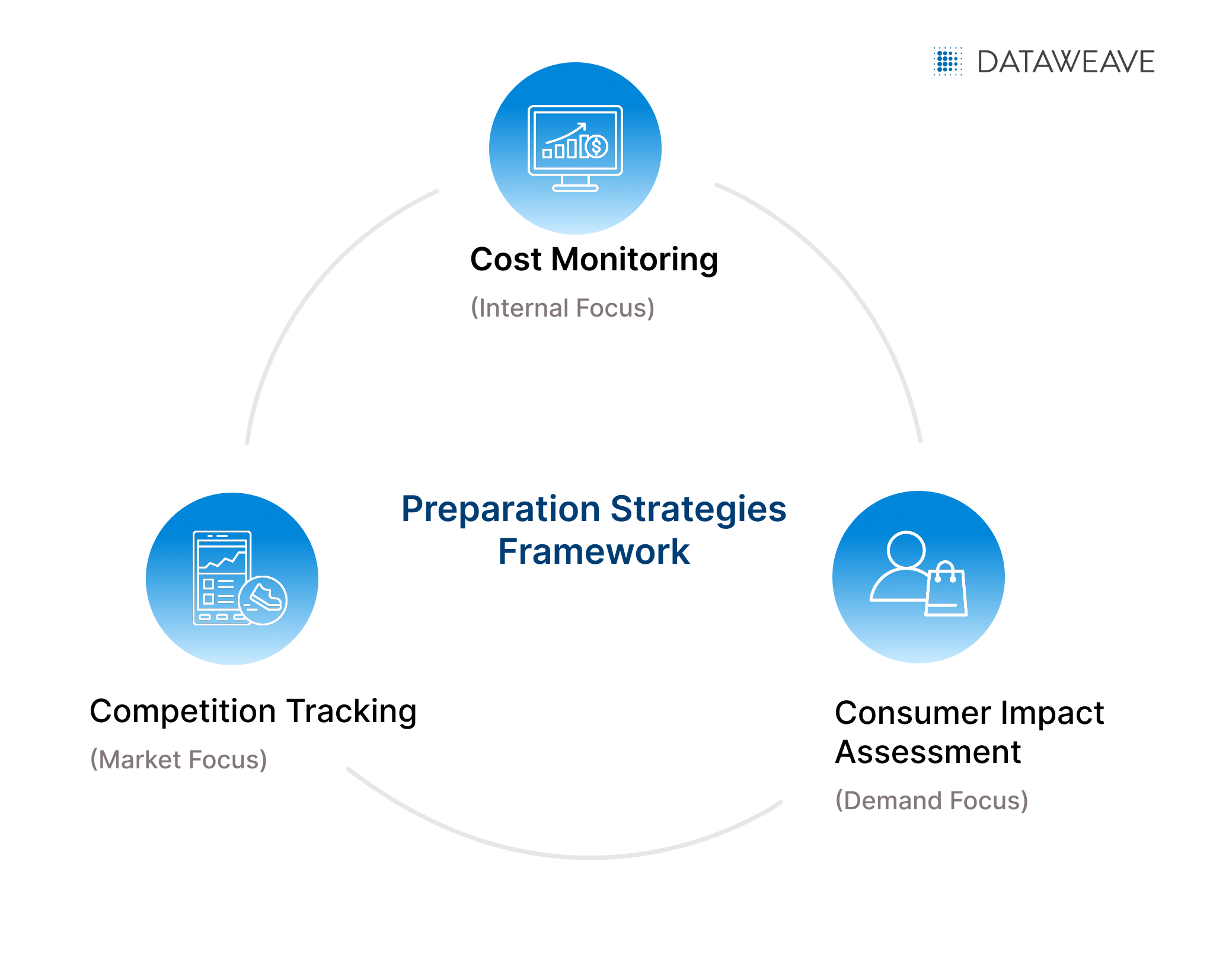
    Our solution uses AI built on more than ten years of data to perform robust product matching for retailers at a massive scale. Using a unified platform with text and image recognition, DataWeave matches products from among hundreds of eCommerce websites and across millions of products.

    3. Poor and Inconsistent Data

    Retailers often complain that the data within their pricing intelligence solution isn’t accurate, is inconsistent, and may even be comprised of statistical smoothing and gap-plugging smokescreens. The root of this problem often lies in the inability of these tools to consistently track prices across diverse web environments. Poorly designed web scraping infrastructure fail when eCommerce websites change their underlying configuration and structure (which happens periodically). As a result, they don’t have enough data to see the market as a whole, and end up viewing synthetic or small sample-set data.

    How DataWeave Bridges This Gap:

    At DataWeave, transparency drives our approach to delivering insights. We only present real-world data in our data feeds and dashboards to customers. This is possible only due to the supreme confidence we have in our ability to consistently capture and present accurate data. We achieve this by using a combination of AI and sophisticated web scraping infrastructure developed and enhanced over a decade.

    In fact, we are the first in the industry to launch a Data Statistics Dashboard that helps our customers scrutinize match rates, track data freshness, highlight any gaps in the data, and manage product matches independently.

    4. Limited Integration Options with Internal Systems

    Too often, a retailer will select a pricing intelligence solution that promises exceptional insights but then fails to offer a manageable workflow for day-to-day use. This usually happens because it doesn’t integrate with the retailer’s existing tech stack.

    Without a convenient process that connects internal systems, your pricing intelligence solution is just another piece of technology that your team does not use to its full potential. You may require your competitor pricing data to flow into price optimization tools, price management tools, BI tools, ERP systems, or revenue management systems. Without this capability, you’ll see limited ROI and underwhelming results because all the insights in the world are of little use if you can’t consume them easily and put them into action.

    How DataWeave Bridges This Gap:

    At DataWeave, we understand the importance of being able to integrate external data with your internal tech stack. Our data can be accessed and extracted using plug-and-play APIs, enabling businesses to combine their external and internal data to generate predictive intelligence.

    We also have other data feeds ready to be integrated, including FTP and Amazon S3. Our integration experts can work with you to create custom integrations to existing internal pricing platforms. Our ultimate goal here is to seamlessly elevate your pricing intelligence strategy with minimal change management.

    5. Limited Custom Analysis Capabilities

    Every retailer is unique. There are various geographies, languages, markets, product categories, and pricing strategies that differentiate one retailer from the next. Many retailers find it challenging to derive actionable insights from their pricing intelligence solution because the analysis and customization capabilities are too limited.

    For example, some retailers might want to evaluate their competitiveness after applying coupons and promos to selling prices. Others may want to perform a one-time pricing analysis of just list prices across competitors. Some may want to view insights that help them take tactical decisions day-to-day, while others would like a historical view across multiple dimensions to help make strategic long-term pricing decisions.

    Without the ability to customize their views or the underlying data, retailers could feel restricted in their ability to drive meaningful impact with their pricing intelligence.

    How DataWeave Bridges This Gap:

    What you need are foundational dashboards, reports, and visualizations in a web portal that can be tailored to your business needs. Then, you need the expertise and guidance of a team of business analysts who can help you configure custom reports and dashboards.

    At DataWeave, we offer bespoke insights for each persona, enabling swift actions on relevant competitive intelligence. These include day-to-day tactical recommendations or inputs for long-term strategies. And because all DataWeave customers get access to our team of expert analysts, it’s simple and straightforward to configure unique reports and dashboards to suit your business.

    6. Sloppy Support

    No solution, at least not one that undertakes complex work, works optimally with a ‘set it and forget it’ approach. From time-to-time, you need human intervention to ensure your pricing intelligence is working in the way that it needs to for you. Unfortunately, one of the most common challenges retailers face with their pricing intelligence tool is a lack of support.

    Unavailable or patchy customer support is a significant challenge that can result in low confidence, delayed resolutions, and even abandoned pricing actions.

    How DataWeave Bridges This Gap:

    Dataweave’s global team of pricing experts are available around the clock for support and guidance. Not only do we have tech experts and business analysts that you can consult at any point, we also have an exceptional team of customer success professionals to help you overcome any technical and strategic issue you might face.

    As one customer puts it, with DataWeave you gain access to: “Excellent customer service, super collaborative staff, user-friendly interface.”

    Another verified user from the consumer goods industry had this to say:

    “Great platform and customer service! Our client service team is very helpful and always responds to ad-hoc requests in a very timely matter!”

    Read more reviews from real DataWeave users on G2: https://www.g2.com/products/dataweave/reviews

    Finding The Right Pricing Intelligence Solution

    As the competition heats up, retailers need to unlock every available opportunity to gain an edge and capture market share. At DataWeave, our AI-powered pricing intelligence software helps you uncover gaps quickly and build a pricing strategy that is as attractive as it is effective. Our ability to scale, match your products across the entire ecosystem with consistent accuracy, and slide right into your current operations to provide advanced analytics, makes us the preferred choice for many of the world’s leading retailers.

    Want to start benefiting from actionable product matching and pricing intelligence? Request a demo today.

  • How Monitoring and Analyzing  End-User Prices can Help Retailers and Brands Gain a Competitive Edge

    How Monitoring and Analyzing  End-User Prices can Help Retailers and Brands Gain a Competitive Edge

    Retailers and brands are constantly engaged in a fierce battle over prices and discounts. Whether it’s major events like Amazon Prime Day, brand-led sales, or everyday price wars, they depend on pricing intelligence and digital shelf analytics to fine-tune their strategies. With a variety of offers such as sales, promotions, and bundles, determining the actual cost to the customer becomes a complex task. The price set by the brand, the retailer’s offer, and the final amount paid by the customer often vary significantly.

    In their analysis, retailers and brands frequently focus on the listed price or the final sale price, overlooking a critical factor: the “end-user price.” This includes all discounts, taxes, and shipping costs, providing a more accurate picture of what customers are truly willing to pay at checkout.

    Grasping this end-user price is vital for both retailers and brands. For retailers, it helps them stay competitive and refine their promotional strategies. For brands, it offers insights into competitive positioning, net revenue management, and shaping customer price perception.

    However, emphasizing the end-user price is challenging, as it involves comprehending all the intricate elements of pricing.

    How end-user pricing is calculated

    The list price, also known as the manufacturer’s recommended retail price (MSRP), is the initial price set by the brand. This may not always be displayed on marketplaces, especially in categories like grocery. The selling price, on the other hand, is the amount at which a retailer offers the product, often reduced from the list price. The end-user price is the actual amount the customer pays at checkout, which includes taxes, promotions, and other factors that affect the final cost.

    The process involves 3 key stages:

    Step 1: Identifying and categorizing promotional offers

    The first critical step in calculating end-user pricing is to identify and categorize the various promotional offers available for a given product that can reduce the final amount paid by the consumer. These promotions span a wide range of types:

    • Bank Offers: Involving discounts or cash back incentives when paying with specific bank credit or debit cards. For instance, a customer may receive 10% cashback on their purchase by using a specific bank’s card.
    • Bundled Deals: Combining multiple products or services at a discounted bundle price. A common example is a smartphone bundle including the phone itself, a protective case, and earphones at a reduced total cost.
    • Promo Codes/Coupons: Customers can enter promo codes or coupons during checkout to unlock special discounted prices or percentage-off offers, like 20% off a hotel booking, or even a special brand discount personalized for their needs (think loyalty offers and in-app promotions).
    • Shipping Offers: These include free shipping or reduced shipping fees for certain products or orders, such as free delivery on orders above a set amount.
    • TPRs (Temporary Price Reductions): TPRs play a significant role in the strategies of most retailers. Brands and retailers use them to encourage shoppers to purchase more of a product or to try a new product they wouldn’t usually buy. A TPR involves reducing the price of a product by more than 5% from its regular shelf price.

    By accurately identifying and classifying each type of promotion available, brands can then calculate the potential end-user pricing points.

    Step 2: Accounting for location and fulfilment nuances (delivery, in-store pickup) that impact final pricing

    Product pricing and promotional offers can vary based on the consumer’s location or ZIP code. Additionally, customers may opt for different fulfilment modes like delivery, shipping, or in-store pickup, which can further impact the final cost. Accurately calculating the end-user price necessitates considering these location-based pricing nuances as well as the chosen fulfilment method.

    In the example below, the selling price is $4.32 for one retailer (on the left in the image) after a discount for online purchase. In another case with Meijer, the item total shows $17.91, but the consumer ends up paying $15.74 after taxes and fees are applied (on the right in the image).

    Step 3: Applying each eligible promotion or offer to the selling price to determine potential end-user price points

    With the various promotional offers and discounts categorized in the previous steps, retailers and brands can now apply each eligible promotion to the product’s selling price. This involves deducting percentages for bank cashback, implementing bundled pricing, applying coupon code discounts, and incorporating shipping promotions.

    For retailers, this step allows them to calculate their true effective selling price to customers after all discounts and promotions. They can then compare this end-user price against competitors to ensure they remain competitively priced.

    For brands, by systematically layering every applicable offer onto the baseline selling price, they can accurately calculate the multiple potential end-user price points a customer may pay at checkout for their products across different retailers and regions.

    Why the end-user price matters

    Optimizing pricing strategies using the end-user price can benefit retailers and brands in several ways:

    • Price Competitiveness: By monitoring end-user pricing, retailers can adjust for discounts and promotional offers to attract customers, while brands can refine their pricing models to stay ahead in the market.
    • Customer Acquisition and Loyalty: Offers, promotions, and discounts directly impact the final price paid by customers, playing a crucial role in attracting new customers and retaining existing ones. For example, Walmart’s competitive pricing in groceries boosts customer loyalty and repeat purchases.
    • Consumer Perception: End-user pricing significantly shapes how consumers perceive both retailers and brands. Competitive pricing and promotional transparency enhance reputation and conversion rates. Amazon, for instance, is known for its competitive pricing and fast deliveries, which strengthen its consumer perception and satisfaction.
    • Sales Volumes: The final checkout price influences affordability and perceived value, directly affecting sales volumes. Both retailers and brands benefit from understanding this, as it guides consumer purchasing decisions and drives revenue streams.
    • Brand Perception: Consistent and transparent pricing enhances the perception of both the retailer and the brand. This not only strengthens the value proposition but also builds consumer trust and fosters long-term loyalty.

    While the listed and selling prices are readily available, calculating the true end-user price is quite complex. It involves meticulous tracking and application of various types of promotions, offers, location-based pricing nuances, and fulfillment costs – an uphill task without robust technological solutions.

    Track and Analyze end-user prices with DataWeave

    DataWeave’s end-user price tracking capability empowers retailers and brands with the insights and tools necessary to comprehend the complexities of pricing dynamics. For retailers, it offers the ability to monitor end-user pricing across various products and categories compared to competitors, ensuring competitiveness after all discounts and enabling optimization of promotional strategies. Brands benefit from informed pricing decisions, optimized strategies across retail channels, and a strengthened position within their industries.

    Our intuitive dashboard presents classified promotions and corresponding end-user prices across retailers, providing both retailers and brands with a transparent, comprehensive view of the end-user pricing landscape.

    Within the detailed product view of DataWeave’s dashboard, the Price and Promotions panel showcases diverse promotions available across different retailers for each product, along with the potential end-user price post-promotions.

    Harness the power of DataWeave’s sophisticated Pricing Intelligence and Digital Shelf Analytics to gain an accurate, real-time understanding of your end-user pricing dynamics. Make data-driven pricing decisions that resonate with customers and propel your brand toward sustained success.

    Find out how DataWeave can empower your eCommerce pricing strategy – get in touch with us today or write to us at contact@dataweave.com!

  • Augmenting AI-powered Product Matching with Human Expertise to Achieve Unparalleled Accuracy

    Augmenting AI-powered Product Matching with Human Expertise to Achieve Unparalleled Accuracy

    In today’s expansive omnichannel commerce landscape, pricing intelligence has become indispensable for retailers seeking to stay competitive and refine their pricing strategies. The sheer magnitude of eCommerce, spanning thousands of websites, billions of SKUs, and various form factors, adds layers of complexity. Consequently, ensuring the accuracy and reliability of competitive insights presents a formidable challenge for retailers aiming to leverage pricing data effectively.

    At the core of any robust pricing intelligence system lies product matching. This process enables retailers to recognize identical or similar products across competitors. Once these matches are identified, tracking prices is a relatively more straightforward task, facilitating ongoing analysis and informed decision-making.

    Accurate matching is crucial for meaningful price comparisons and tailoring product assortments. The challenge is matching products is often complicated, especially for non-local brands, niche categories, or items lacking consistent global identifiers. It becomes even trickier when trying to match very similar but not identical products. A comprehensive approach that compares and analyzes multiple attributes like product titles, descriptions, images and more is essential.

    Artificial intelligence algorithms are commonly used to automate product matching, leveraging machine learning techniques to analyze patterns in images and text data. While AI can adapt and improve over time, the question remains: Can it fully address the complexities of product matching on its own?

    The reality is that many retailers still struggle with incomplete, inaccurate, or outdated product data, despite these AI-powered product matching solutions. This can lead to suboptimal pricing decisions, missed opportunities, and reduced competitiveness.

    Challenges in an ‘AI-only’ Approach to Product Matching

    While AI plays a vital role in automated product matching solutions, there are complexities that AI alone cannot fully address:

    Subjectivity in Matching Criteria

    Some product categories have subjective or hard-to-quantify criteria for determining similarity. AI learns from historical data, so it may struggle with nuanced aspects like:

    Aesthetics, style, and design: In the Fashion and Jewellery vertical, for example, products are matched according to attributes like style, aesthetics, design – all of which have some subjectivity involved.

    Quantity/packaging variations: In the grocery sector, variations in product packaging and quantities can introduce complexities that require subjective decision-making. For example, apples may be sold in different packaging like a 0.5 kg bag or a pack of 4 individual apples. Determining if these different packaging options should be considered equivalent often involves making a qualitative judgment call, rather than a clear-cut objective decision.

    Matching product sets: For categories like home furnishings, the focus is often on matching coordinated sets rather than individual items. For example, in the bedroom category, matching may involve grouping together an entire set of complementary furniture like a bed frame, dresser, and wardrobe based on their cohesive design and style. This goes beyond simply making one-to-one product associations, requiring more nuanced judgments about aesthetic coordination.

    Contextual Factor

    Products can have regional preferences, cultural differences, or evolving trends that impact how they are matched. AI may miss important context like Local/regional product names or distinct brand names across countries.

    For instance, in the image we see Sprite (in the US) is branded Xubei in China. Continuous human curation is needed to help AI adapt to this context.

    High Accuracy & Coverage Expectations

    Retailers rely on AI powered and automated pricing adjustments based on product matching for insight. To ensure that pricing recommendations and updates are accurate, accurate product matching is crucial. For this, simply identifying similar top results is not enough – the process must comprehensively capture all relevant matches. While AI excels at finding the top groupings with around 80% accuracy, even small matching errors can have significant consequences.

    As AI matching improves, customer expectations may rise even higher. If AI achieves 90% accuracy, for instance, SLAs may demand over 95%. Reaching such a high level of accuracy is very challenging for AI alone, especially when faced with incomplete data, contextual nuances, evolving trends, and subjective matching criteria across products and categories.

    The solution is to combine the power of AI with human expertise. This is the key to achieving true data veracity – the accuracy, freshness, and comprehensive coverage required for precise and reliable product matching.

    Human-in-the-Loop Approach for Elevated Product Matching

    Human intelligence and quality testing can elevate the AI powered product matching process by addressing key challenges:

    • Matching Validation: AI algorithms may identify product matches with 80-90% accuracy initially. Having humans validate these AI-suggested matches allows for correcting errors and pushing the accuracy close to 100%. As humans flag issues, provide context, and re-label incorrect predictions, it allows the AI model to learn and enhance its reliability for complex, high-stakes decisions.
    • Applying Contextual Judgment: For subjective matching criteria like aesthetics, design, and categorizing product sets, human discernment is needed. Humans can make nuanced judgments beyond just quantitative rules, ensuring meaningful apples-to-apples product comparisons. Their contextual understanding augments AI’s capabilities.
    • Continuous Learning Via Feedback Loop: Product experts possess rich category knowledge across markets. Integrating this human insight through an iterative feedback loop helps AI models quickly learn and adapt to changing trends, preferences, and context. As humans explain their match assessments, the AI continuously enhances its precision over time.

    By combining AI’s automation and scale with human validation, judgment, and knowledge curation, pricing intelligence solutions can achieve the accuracy and coverage demanded for actionable competitive pricing insights.

    DataWeave’s Data Veracity Framework: A Scalable Workflow Combining AI and Human Expertise

    Given the vast number of products, retailers, and brands that exist today, any product matching solution must be highly scalable. At DataWeave, we bring you such a scalable workflow to address these complexities by integrating human expertise with AI-driven automation. The image below outlines our approach for combining AI with human intelligence in a seamless, scalable workflow for accurate product matching:

    Retailers and brands can benefit in several ways with this workflow, as listed below.

    Several Rounds of Data Verification Due to Hierarchical Validation Teams

    The workflow employs a hierarchical validation team of Leads and Executives to efficiently integrate human expertise without creating bottlenecks. Verification Leads play a pivotal role in managing the distribution of product matches identified by DataWeave’s AI model to the Verification Executives.

    The Executives then meticulously validate these AI-suggested matches, adding any missing product associations and removing inaccurate matches. After validation, the matched product groups are sent back to the Leads, who perform random sampling checks to ensure quality.

    Throughout this entire workflow, feedback and suggestions are continuously gathered from both the Executives and Leads. This curated input is then incorporated back into DataWeave’s AI model, allowing it to learn and improve its matching accuracy on an ongoing basis.

    This hierarchical structure ensures that human validation seamlessly scales alongside the AI’s matching capabilities. Leveraging the respective strengths of AI automation and human expertise in an iterative feedback loop prevents operational bottlenecks while steadily elevating overall accuracy.

    Confidence-based Distribution of Matched Articles for Validation

    The AI model assigns confidence scores, differentiating high-confidence (>95%) and low-confidence matches. For high-confidence groups, executives simply remove incorrect matches – a quicker process. Low-confidence matches require more human effort in adding/removing matches.

    As the AI model improves over time with feedback, the share of high-confidence matches increases, making validation more efficient and swift.

    Automated, Standardized Process with Iterative Feedback Loop

    The entire workflow is standardized and automated, with verification metrics seamlessly tracked. At each step, feedback captured from both leads and executives flows back into the AI, enhancing its matching accuracy and coverage iteratively.

    DataWeave’s closed-loop system of AI automation with hierarchical human validation allows product matching to achieve comprehensive accuracy at a vast scale.

    Unleash the Power Accurate and Comprehensive Product Matching

    In summary, combining AI and human expertise in product matching is crucial for retailers navigating the complexities of omnichannel retail. While AI algorithms excel in automation, they often struggle with subjective criteria and contextual nuances. DataWeave’s approach integrates AI-driven automation with human validation, delivering the industry’s most accurate product matching capabilities, enabling actionable competitive pricing insights.

    To learn more, reach out to us today!

  • Why Localized, Store-Specific Pricing and Availability Insights is Critical for Consumer Brands

    Why Localized, Store-Specific Pricing and Availability Insights is Critical for Consumer Brands

    Brands are becoming increasingly proficient in monitoring and refining their presence on online marketplaces, utilizing Digital Shelf Analytics to gather and analyze data on their online performance. These tools offer invaluable insights into enhancing visibility, adjusting pricing strategies, and improving content quality on eCommerce sites.

    Yet, as the retail landscape shifts towards a more integrated omnichannel approach, it’s crucial for brands, particularly those in CPG, to apply similar strategies to their offline channels. For brands that count physical stores among their primary sales channels, gaining localized insights is key to boosting in-store sales performance.

    Collecting shelf data from offline channels presents more challenges than online. Traditional methods, such as physical store visits, often fall short in reliability, timeliness, scale, and level of coverage.

    However, the world of eCommerce provides a solution. As part of the effort to facilitate options like buy-online-pickup-in-store (BOPIS) for shoppers, major retailers make store-specific product details available online. Consumers often go online and select their nearest store to make purchases digitally before choosing a fulfillment option like picking up at the store or direct delivery. Aggregating this store-level information offers brands critical insights into pricing and inventory across a vast network of stores, enabling them to make informed decisions that improve pricing strategies and supply chain efficiency, thus minimizing stockouts in crucial markets.

    Further, as consumers increasingly seek flexibility in how they receive their purchases—be it through in-store pickup, delivery, or shipping—brands need to adeptly monitor pricing and availability for these different fulfilment options. Such granular insight empowers brands to adapt swiftly and maintain a competitive edge in today’s dynamic retail environment.

    Why does monitoring pricing and availability data across stores matter to brands?

    • Hyperlocal Competitive Strategy: This allows brands to adjust their pricing strategies based on regional competition. By understanding the local market, brands can decide whether to position themselves as cost leaders or premium offerings. In particular, this is indispensable for Net Revenue Management (NRM) teams.
    • Targeted Marketing Initiatives: Understanding regional price and availability enables brands to customize their marketing efforts for specific markets. By aligning their strategies with local demand trends and inventory levels, brands can more effectively engage their target audiences.
    • Efficient Inventory Management: By keeping a close eye on store-level data, brands can better manage their stock, ensuring high-demand products are readily available while minimizing the risk of overstocking or running out of stock.
    • Minimum Advertised Price (MAP) Monitoring: While brands cannot directly control retail pricing, staying updated on pricing trends helps them adjust their MAP to reflect the competitive landscape, consumer expectations, cost considerations, and regional differences. A strategic approach to MAP management supports brand competitiveness and profitability in a fluctuating market.

    DataWeave’s Digital Shelf Analytics solutions equip brands with the necessary data and insights to do all of the above.

    DataWeave’s Digital Shelf Analytics is location-aware

    DataWeave’s Digital Shelf Analytics platform stands out with its sophisticated location-aware capabilities, enabling the aggregation and analysis of localized pricing, promotions, and availability data. Our platform defines locations using a range of identifiers, including latitudes and longitudes, ZIP codes, or specific stores, and can aggregate this data for particular states or regions.

    The strength of the platform lies in its robust data collection and processing framework, which operates seamlessly across thousands of stores and regions. This system is designed to operate at configurable intervals—daily, weekly, or monthly—allowing brands to keep a vigilant eye on product availability, pricing strategies, and delivery timelines based on the selected fulfillment option.

    Unlike many other providers, who may provide limited insights from a sample of stores, our solution delivers exhaustive analytics from every storefront. This comprehensive approach grants brands a strategic edge, facilitating efficient inventory tracking, precise pricing adjustments, and rapid responses to fluctuating market dynamics. It cultivates brand consistency and loyalty by enabling brands to adapt proactively to the changing landscape.

    Aggregated store-level digital shelf insights via DataWeave

    In the summarized view shown above, a brand can track how its various products are positioned across stores and retailers like Walmart, Amazon, Meijer, and others in the US.

    Using DataWeave, brands can easily see important metrics like availability levels, prices, and other metrics across these stores gaining immediate visibility without having to physically audit them. the brand can track the same metrics for products across competitor brands and inform its own pricing, stock, and assortment decisions.
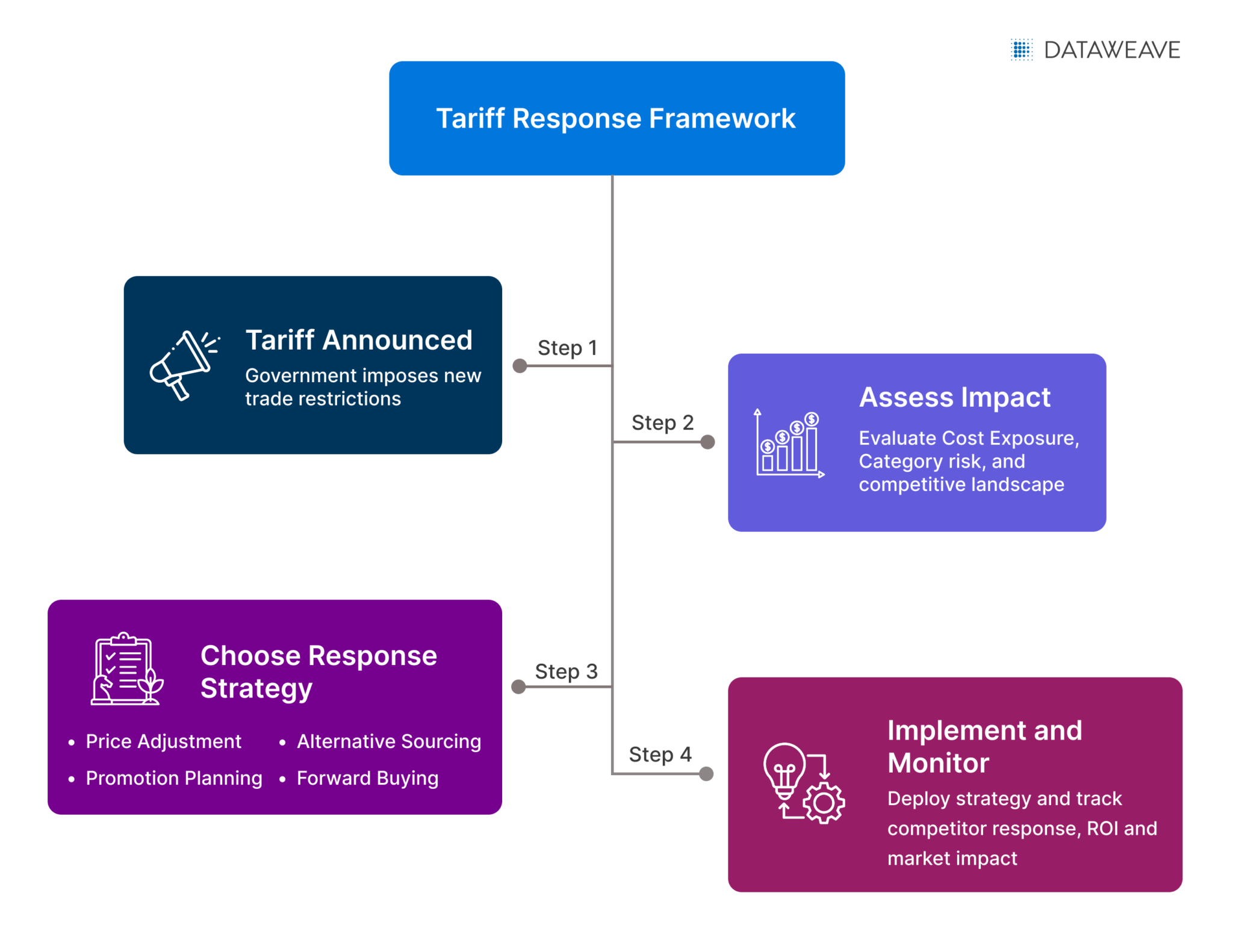

    Store-level availability insights

    We provide a comprehensive view of product availability, highlighting the distribution of out-of-stock (OOS) scenarios across various retailers and pinpointing the availability status throughout a brand’s network of stores. This capability enables swift identification of widespread availability issues, offering a bird’s-eye view of where shortages are most pronounced. By simply hovering over a specific location, detailed information about stock status and pricing for individual stores becomes accessible.

    Such insights are crucial for brands to adapt their strategies, mitigate risks, and ensure they meet consumer needs despite the ever-changing retail ecosystem.

    Store-level pricing insights

    Retailers often adopt different pricing strategies to deal with margin pressure, local competition, and surplus stock. Grasping these pricing dynamics at a hyperlocal level enables brands to tailor their strategies effectively to maintain a competitive edge.

    Our platform offers an in-depth look at how prices vary among retailers, across different stores, and throughout various regions. This analysis reveals the nuanced pricing tactics employed by retailers on a regional scale.

    For example, brands might see that some retailers, like Kroger and Walmart in the chart below, maintain consistent pricing across their outlets, demonstrating a uniform pricing strategy. In contrast, others, such as Meijer and Shoprite, might adjust their prices to match local market conditions, indicating a more localized approach to pricing.

    With DataWeave, brands can dive deeper into the pricing landscape of a specific retailer, examining a price map that provides detailed information on pricing at the store level upon hovering over a given location.

    By presenting a historical analysis of average selling prices across different retailers, we equip brands with the insights needed to understand past pricing strategies and anticipate future trends, helping them to strategize more effectively in an ever-evolving market.

    Digital Shelf Analytics that work for both eCommerce and brick-and-mortar store data

    While established brands have made strides in gathering online pricing and availability data through Digital Shelf Analytics solutions, integrating comprehensive insights from both brick-and-mortar and eCommerce channels often remains a challenge.

    DataWeave stands out for its capacity to collect data across diverse digital platforms, including desktop sites, mobile sites, and mobile applications. This capability ensures that omnichannel brands can have a holistic view of their pricing, promotional, and inventory strategies across all locations and digital landscapes.

    Leveraging localized Digital Shelf Analytics to understand the intricacies of pricing and availability at the store level allows brands to fine-tune their approaches, swiftly adapt to local market shifts, and uphold a unified brand presence across the digital and offline spheres. This strategic agility places them in a favorable competitive position, enhancing customer satisfaction and trust, which are crucial for sustained success.

    Know more about DataWeave’s Digital Shelf Analytics here.

    Schedule a call with a specialist to see how it can work for your brand.

  • How AI-Powered Visual Highlighting Helps Brands Achieve Product Consistency Across eCommerce

    How AI-Powered Visual Highlighting Helps Brands Achieve Product Consistency Across eCommerce

    As eCommerce increasingly becomes a prolific channel of sales for consumer brands, they find that maintaining a consistent and trustworthy brand image is a constant struggle. In an ecosystem filled with dozens of marketplaces and hundreds of third-party merchants, ensuring that customers see what aligns with a brand’s intended image is quite tricky. With many fakes and counterfeit products doing the rounds, brands may further struggle to get the right representation.

    One way brands can track and identify inconsistencies in their brand representation across marketplaces is to use Digital Shelf Analytics solutions like DataWeave’s – specifically the Content Audit module.

    This solution uses advanced AI models to identify image similarities and dissimilarities compared with the original brand image. Brands could then use their PIM platform or work with the retailer to replace inaccurate images.

    But here’s the catch – AI can’t always accurately predict all the differences. Relying solely on scores given by these models poses a challenge in tracking the subtle differences between images. Often, image pairs with seemingly high match scores fail to catch important distinctions. Fake or counterfeit products and variations that slip past the AI’s scrutiny can lead to significant inaccuracies. Ultimately, it puts the reliability of the insights that brands depend on for crucial decisions at risk, impacting both top and bottom lines.

    Dealing with this challenge means finding a balance between the number-based assessments of AI models and the human touch needed for accurate decision-making. However, giving auditors the ability to pinpoint variations precisely goes beyond simply sharing numerical values of the match scores with them. Visualizing model-generated scores is important as it provides human auditors with a tangible and intuitive understanding of the differences between two images. While numerical scores are comparable in the relative sense, they lack specificity. Visual interpretation empowers auditors to identify precisely where variations occur, aiding in efficient decision-making.

    How AI-Powered Image Scoring Works

    At DataWeave, our approach involves employing sophisticated computer vision models to conduct extensive image comparisons. Convolutional Neural Network (CNN) models such as Resnet-50 or YOLO, in conjunction with feature extraction models, analyze images quantitatively. This AI-powered image scoring process yields scores that indicate the level of similarity between images.

    However, interpreting these scores and understanding the specific areas of difference can be challenging for human auditors. While computer vision models excel at processing vast amounts of data quickly, translating their output into actionable insights can be a stumbling block. A numerical score may not immediately convey the nature or extent of the differences between images

    In the assessment of these images, all fall within the 70 to 80 range of scores (out of a maximum of 100). However, discerning the nature of differences—whether they are apparent or subtle—poses a challenge for the AI models and human auditors. For example, there are differences in the placement or type of images in the packaging, as well as packing text that are often in an extremely small font size. It is, of course, possible for human auditors to identify the differences in these images, but it’s a slow, error-prone, and tiring process, especially when auditors often have to check hundreds of image pairs each day.

    So how do we ensure that we identify differences in images accurately? The answer lies in the process of visual highlighting.

    How Visual Highlighting Works

    Visual highlighting is a method that enhances our ability to comprehend differences in images by combining sophisticated algorithms with human understanding. Instead of relying solely on numerical scores, this approach introduces a visual layer, resembling a heatmap, guiding human auditors to specific areas where discrepancies are present.

    Consider the scenario depicted in the images above: a computer vision model assigns a score of 70-85 for these images. While this score suggests relatively high similarity, it fails to uncover major differences between the images. Visual highlighting comes into play to overcome this limitation, precisely indicating regions where even subtle differences are seen.

    Visual highlighting entails overlaying compared images and emphasizing areas of difference, achieved through techniques like color coding, outlining, or shading specific regions. The significance of the difference in a particular area determines the intensity of the visual highlight.

    For instance, if there’s a change in the product’s color or a discrepancy in the packaging, these variations will be visually emphasized. This not only streamlines the auditing process but also enables human evaluators to make well-informed decisions quickly.

    Benefits of Visual Highlighting

    • Intuitive Understanding: Visual highlighting offers an intuitive method for interpreting and acting upon the outcomes of computer vision models. Instead of delving into numerical scores, auditors can concentrate on the highlighted areas, enhancing the efficiency and accuracy of the decision-making process.
    • Accelerated Auditing: By bringing attention to specific regions of concern, visual highlighting speeds up the auditing process. Human evaluators can swiftly identify and address discrepancies without the need for exhaustive image analysis.
    • Seamless Communication: Visual highlighting promotes clearer communication between automated systems and human auditors. Serving as a visual guide, it enhances collaboration, ensuring that the subtleties captured by computer vision models are effectively conveyed.

    The Way Forward

    As technology continues to evolve, the integration of visual highlighting methodologies is likely to become more sophisticated. Artificial intelligence and machine learning algorithms may play an even more prominent role in not only detecting differences but also in refining the visual highlighting process.

    The collaboration between human auditors and AI ensures a comprehensive approach to maintaining brand integrity in the ever-expanding digital marketplace. By visually highlighting differences in images, brands can safeguard their visual identity, foster consumer trust, and deliver a consistent and reliable online shopping experience. In the intricate dance between technology and human intuition, visual highlighting emerges as a powerful tool, paving the way for brands to uphold their image with precision and efficiency.

    To learn more, reach out to us today!


    (This article was co-authored by Apurva Naik)

  • How DataWeave Enhances Transparency in Competitive Pricing Intelligence for Retailers

    How DataWeave Enhances Transparency in Competitive Pricing Intelligence for Retailers

    Retailers heavily depend on pricing intelligence solutions to consistently achieve and uphold their desired competitive pricing positions in the market. The effectiveness of these solutions, however, hinges on the quality of the underlying data, along with the coverage of product matches across websites.

    As a retailer, gaining complete confidence in your pricing intelligence system requires a focus on the trinity of data quality:

    • Accuracy: Accurate product matching ensures that the right set of competitor product(s) are correctly grouped together along with yours. It ensures that decisions taken by pricing managers to drive competitive pricing and the desired price image are based on reliable apples-to-apples product comparisons.
    • Freshness: Timely data is paramount in navigating the dynamic market landscape. Up-to-date SKU data from competitors enables retailers to promptly adjust pricing strategies in response to market shifts, competitor promotions, or changes in customer demand.
    • Product matching coverage: Comprehensive product matching coverage ensures that products are thoroughly matched with similar or identical competitor products. This involves accurately matching variations in size, weight, color, and other attributes. A higher coverage ensures that retailers seize all available opportunities for price improvement at any given time, directly impacting revenues and margins.

    However, the reality is that untimely data and incomplete product matches have been persistent challenges for pricing teams, compromising their pricing actions. Inaccurate or incomplete data can lead to suboptimal decisions, missed opportunities, and reduced competitiveness in the market.

    What’s worse than poor-quality data? Poor-quality data masquerading as accurate data.

    In many instances, retailers face a significant challenge in obtaining comprehensive visibility into crucial data quality parameters. If they suspect the data quality of their provider is not up to the mark, they are often compelled to manually request reports from their provider to investigate further. This lack of transparency not only hampers their pricing operations but also impedes the troubleshooting process and decision-making, slowing down crucial aspects of their business.

    We’ve heard about this problem from dozens of our retail customers for a while. Now, we’ve solved it.

    DataWeave’s Data Statistics and SKU Management Capability Enhances Data Transparency

    DataWeave’s Data Statistics Dashboard, offered as part of our Pricing Intelligence solution, enables pricing teams to gain unparalleled visibility into their product matches, SKU data freshness, and accuracy.

    It enables retailers to autonomously assess and manage SKU data quality and product matches independently—a crucial aspect of ensuring the best outcomes in the dynamic landscape of eCommerce.

    Beyond providing transparency and visibility into data quality and product matches, the dashboard facilitates proactive data quality management. Users can flag incorrect matches and address various data quality issues, ensuring a proactive approach to maintaining the highest standards.

    Retailers can benefit in several ways with this dashboard, as listed below.

    View Product Match Rates Across Websites

    The dashboard helps retailers track match rates to gauge their health. High product match rates signify that pricing teams can move forward in their pricing actions with confidence. Low match rates would be a cause for further investigation, to better understand the underlying challenges, perhaps within a specific category or competitor website.

    Our dashboard presents both summary statistics on matches and data crawls as well as detailed snapshots and trend charts, providing users with a holistic and detailed perspective of their product matches.

    Additionally, the dashboard provides category-wise snapshots of reference products and their matching counterparts across various retailers, allowing users to focus on areas with lower match rates, investigate underlying reasons, and develop strategies for speedy resolution.

    Track Data Freshness Easily

    The dashboard enables pricing teams to monitor the timeliness of pricing data and assess its recency. In the dynamic realm of eCommerce, having up-to-date data is essential for making impactful pricing decisions. The dashboard’s presentation of freshness rates ensures that pricing teams are armed with the latest product details and pricing information across competitors.

    Within the dashboard, users can readily observe the count of products updated with the most recent pricing data. This feature provides insights into any temporary data capture failures that may have led to a decrease in data freshness. Armed with this information, users can adapt their pricing decisions accordingly, taking into consideration these temporary gaps in fresh data. This proactive approach ensures that pricing strategies remain agile and responsive to fluctuations in data quality.

    Proactively Manage Product Matches

    The dashboard provides users with proactive control over managing product matches within their current bundles via the ‘Data Management’ panel. This functionality empowers users to verify, add, flag, or delete product matches, offering a hands-on approach to refining the matching process. Despite the deployment of robust matching algorithms that achieve industry-leading match rates, occasional instances may arise where specific matches are overlooked or misclassified. In such cases, users play a pivotal role in fine-tuning the matching process to ensure accuracy.

    The interface’s flexibility extends to accommodating product variants and enables users to manage product matches based on store location. Additionally, the platform facilitates bulk match uploads, streamlining the process for users to efficiently handle large volumes of matching data. This versatility ensures that users have the tools they need to navigate and customize the matching process according to the nuances of their specific product landscape.

    Gain Unparalleled Visibility into your Data Quality

    With DataWeave’s Pricing Intelligence, users gain the capability to delve deep into their product data, scrutinize match rates, assess data freshness, and independently manage their product matches. This approach is instrumental in fostering informed and effective decisions, optimizing inventory management, and securing a competitive edge in the dynamic world of online retail.

    To learn more, reach out to us today!

  • Capturing and Analyzing Retail Mobile App Data for Digital Shelf Analytics: Are Brands Missing Out?

    Capturing and Analyzing Retail Mobile App Data for Digital Shelf Analytics: Are Brands Missing Out?

    Consumer brands around the world increasingly recognize the vital role of tracking and optimizing their digital shelf KPIs, such as Content Quality, Share of Search, Availability, etc. These metrics play a crucial role in boosting eCommerce sales and securing a larger online market share. With the escalating requirements of brands, the sophistication of top Digital Shelf Analytics providers is also on the rise. Consequently, the adoption of digital shelf solutions has become an essential prerequisite for today’s leading brands.

    As brands and vendors continue to delve further and deeper into the world of Digital Shelf Analytics, a significant and often overlooked aspect is the analysis of digital shelf data on mobile apps. The ability of solution providers to effectively track and analyze this mobile-specific data is crucial.

    Why is this emphasis on mobile apps important?

    Today, the battle for consumer attention unfolds not only on desktop web platforms but also within the palm of our hands – on mobile devices. As highlighted in a recent Insider Intelligence report, customers will buy more on mobile, exceeding 4 in 10 retail eCommerce dollars for the first time.

    Moreover, thanks to the growth of delivery intermediaries like Instacart, DoorDash, Uber Eats, etc., shopping on mobile apps has received a tremendous organic boost. According to an eMarketer report, US grocery delivery intermediary sales are expected to reach $68.2 billion in 2025, from only $8.8 billion in 2019.

    In essence, mobile is increasingly gaining share as the form factor of choice for consumers, especially in CPG. In fact, one of our customers, a leading multinational CPG company, revealed to us that it sees up to 70% of its online sales come through mobile apps. That’s a staggering number!

    The surge in app usage reflects a fundamental change in consumer behavior, emphasizing the need for brands to adapt their digital shelf strategies accordingly.

    Why Brands Need To Look at Apps and Desktop Data Differently

    Conventionally, brands that leverage digital shelf analytics rely on data harnessed from desktop sites of online marketplaces. This is because capturing data reliably and accurately from mobile apps is inherently complex. Data aggregation systems designed to scrape data from web applications cannot easily be repurposed to capture data on mobile apps. It requires dedicated effort and exceptional tech prowess to pull off in a meaningful and consistent way.

    In reality, it is extremely important for brands to track and optimize their mobile digital shelf. Several digital shelf metrics vary significantly between desktop sites and mobile apps. These differences are natural outcomes of differences in user behavior between the two form factors.

    One of these metrics that has a huge impact on a brand’s performance on retail mobile apps is their search discoverability. Ecommerce teams are well aware of the adverse impact of the loss of even a few ranks on search results.

    Anyone can easily test this. Searching something as simple as “running shoes” on the Amazon website and doing the same on its mobile app shows at least a few differences in product listings among the top 20-25 ranks. There are other variances too, such as the number of sponsored listings at the top, as well as the products being sponsored. These variations often result in significant differences in a brand’s Share of Search between desktop and mobile.

    Share of Search is the share of a brand’s products among the top 20 ranked products in a category or subcategory, providing insight into a brand’s visibility on online marketplaces.

    Picture a scenario in which a brand heavily depends on desktop digital shelf data, confidently assuming it holds a robust Share of Search based on reports from its Digital Shelf Analytics partner. However, unbeknownst to the team, the Share of Search on mobile is notably lower, causing a detrimental effect on sales.

    To fully understand the scale of these differences, we decided to run a small experiment using our proprietary data analysis and aggregation platform. We restricted our analysis to just Amazon.com and Amazon’s mobile app. However, we did cover over 13,000 SKUs across several shopping categories to ensure the sample size is strong.

    Below, we provide details of our key findings.

    Share of Search on The Digital Shelf – App Versus Desktop

    Our analysis focused on three popular consumer categories – Electronics, CPG, and Health & Beauty.

    In the electronics category, brands like Apple, Motorola, and Samsung, known for their mobile phones, earbuds, headphones, and more, have a higher Share of Search on the Amazon mobile app compared to the desktop.

    Meanwhile, Laptop brands like Dell, Acer, and Lenovo, as well as other leading brands like Google have a higher Share of Search on the desktop site compared to the app. This is the scenario that brands need to be careful about. When their Share of Search on mobile apps is lower, they might miss the chance to take corrective measures since they lack the necessary data from their provider.

    In the CPG category, Ramen brand Samyang, with a lot of popularity on Tiktok and Instagram, shows a higher Share of Search on Amazon’s mobile app. Speciality brands like 365 By Whole Foods, pasta and Italian food brands La Moderna, Divinia, and Bauducco too have a significantly higher Share of Search on the app.

    Cheese and dessert brands like Happy Belly, Atlanta Cheesecake Company, among others, have a lower Share of Search on the mobile app. Ramen brand Sapporo is also more easily discovered on Amazon’s desktop site. Here, we see a difference of more than 5% in the Share of Search of some brands, which is likely to have a huge impact on the brand’s mobile eCommerce sales levels and overall performance.

    Lastly, in the Health & Beauty category, Shampoos and hair care brands like Olaplex, Dove, and Tresemme exhibited a higher Share of Search on the mobile app compared to the desktop.

    On the other hand, body care brands like Neutrogena and Hawaiian Tropic, as well as Beardcare brand Viking Revolution displayed a higher Share of Search on Amazon’s desktop site.

    Based on our data, it is clear that there are several examples of brands that do better in either one of Amazon’s desktop sites or mobile apps. In many cases, the difference is stark.

    So What Must Brands Do?

    Our findings emphasize the imperative for brands to move beyond a one-size-fits-all approach to digital shelf analytics. The striking variations in Share of Search between mobile apps and desktops conclusively demonstrate that relying solely on desktop data for digital shelf optimization is inadequate.

    If brands see that they’re falling behind on the mobile digital shelf, there are a few things they can do to help boost their performance:

    • If a brand’s Share of Search is lower on the mobile app, they can divert their retail spend to mobile in order to inorganically compensate for this difference. This way, any short-term impact due to lower discoverability is mitigated. This is also likely to result in optimized budget allocation and ROAS.
    • Brands also need to ensure their content is optimized for the mobile form factor, with images that are easy to view on smaller screens, and tailored product titles that are shorter than on desktops, highlighting the most important product attributes from the consumer’s perspective. Not only will this help brands gain more clicks from mobile shoppers, but this will also gradually lead to a boost in their organic Share of Search on mobile.
    • CPG brands, specifically, need to optimize their digital shelf for delivery intermediary apps (along with marketplaces). The grocery delivery ecosystem is booming with companies like DoorDash, Delivery Hero, Uber Eats, Swiggy, etc. leading the way. Using Digital Shelf Analytics to optimize performance on delivery apps is quite an involved process with a lot of bells and whistles to consider. Read our recently published whitepaper that specifically details how brands can successfully boost their visibility and conversions on delivery apps.

    But first, brands need to identify and work with a Digital Shelf Analytics partner that is able to capture and analyze mobile app data, enabling tailored optimization approaches for all eCommerce platforms.

    DataWeave leads the way here, providing the world’s most comprehensive and sophisticated digital shelf analytics solution, rising above all other providers to provide digital shelf insights for both web applications and mobile apps. Our data aggregation platform successfully navigates the intricacies of capturing public data accurately and reliably from mobile apps, thereby delivering a comprehensive cross-device view of digital shelf KPIs to our brand customers.

    So reach out to us today to find out more about our digital shelf solutions for mobile apps!

  • AI-powered Product Matching: The Key to Competitive Pricing Intelligence in eCommerce

    AI-powered Product Matching: The Key to Competitive Pricing Intelligence in eCommerce

    With thousands of products and hundreds of online retailers to choose from, the average modern-day shopper usually compares prices across several e-commerce sites effortlessly before often settling for the lowest priced option. As a result, retailers today are forced to execute millions of price changes per day in a never-ending race to be the lowest priced – without losing out on any potential margin.

    Identifying, classifying, and matching products is the first step to comparing prices across websites. However, there is no standardization in the way products are represented across e-commerce websites, causing this process to be fairly complex.

    Here’s an example:

    What’s needed is a pricing intelligence solution that first matches products across several websites swiftly and accurately, and then enables automated tracking of competitor pricing data on an ongoing basis.

    Pricing intelligence solutions already exist. What’s wrong with using them?

    There are several challenges with the incumbent solutions in the market – the biggest one being that they don’t work in a timely manner. In essence, it’s like deferring the process of finding actionable information that helps retailers acquire a competitive advantage, and instead doing it in hindsight. Like an autopsy of sorts.

    Here are the various solution types we have in the market today:

    • Internally developed systems – Solutions developed by retailers themselves often rely on heavy manual data aggregation and have poor product matching capabilities. Since these solutions have been developed by professionals not attuned to building data crunching machines, they pose significant operational challenges in the form of maintenance, updates, etc.
    • Web scraping solutions – These solutions have no data normalization or product matching capabilities, and lack the power to deliver relevant actionable insights. What’s more, it’s a struggle to scale them up to accommodate massive volumes of data during peak times such as promotional campaigns.
    • DIY solutions – These solutions require manual research and entry of data. It goes without saying that due to the level of human intervention and effort required, they’re expensive, difficult to scale, slow, and of questionable accuracy.

    As common as it is nowadays, AI has the answer

    DataWeave’s competitive pricing intelligence solution is designed to help retailers achieve precisely the competitive advantage they need by providing them with accurate, timely, and actionable pricing insights enabled by matching products at scale. We provide retailers with access to detailed pricing information on millions of products across competitors, as frequently as they need it.

    Our technology stack broadly consists of the following.

    1. Data Aggregation

    At DataWeave, we can aggregate data from diverse web sources across complex web environments – consistently and at a very high accuracy. Having been in the industry for close to a decade, we’re sitting on a lot of data that we can use to train our product matching platform.

    Our datasets include data points from tens of millions of products and have been collected from numerous geographies and verticals in retail. The datasets contain hierarchically arranged information based on retail taxonomy. At the root level, there’s information such as category and subcategory, and at the top level, we have product details such as title, description, and other <attribute, value> relationships. Our machine learning architectures and semi-automated training data building systems, augmented by the skills of a strong QA team, help us annotate the necessary information and create labeled datasets using proprietary tools.

    2. AI for Product Matching

    Product matching at DataWeave is done via a unified platform that uses both text and image recognition capabilities to accurately identify similar SKUs across thousands of e-commerce stores and millions of products. We use an ensemble deep learning architectures tailored to NLP and Computer Vision problems specific to us and heuristics pertinent to the Retail domain. Products are also classified based on their features, and a normalization layer is designed based on various text/image-based attributes.

    Our semantics layer, while technically an integral part of the product matching process, deserves particular mention due to its powerful capabilities.

    The text data processing consists of internal, deep pre-trained word embeddings. We use state-of-the-art, customized word representation techniques such as ELMO, BERT, and Transformer to capture deeply contextualized text with improved accuracy. A self-attention/intra-attention mechanism learns the correlation between the word in question and a previous part of the description.

    Image data processing starts with object detection to identify the region of interest of a given product (for example, the upper body of a fashion model displaying a shirt). We then leverage deep learning architectures such as VggNet, Inception-V3, and ResNet, which we have trained using millions of labeled images. Next, we apply multiple pre-processing techniques such as variable background removal, face removal, skin removal, and image quality enhancing and extract image signatures via deep learning and machine learning-based algorithms to uniquely identify products across billions of indexed products.

    Finally, we efficiently distribute billions of images across multiple stores for fast access, and to facilitate searches at a massive scale (in a matter of milliseconds, without the slightest compromise on accuracy) using our image matching engine.

    3. Human Intelligence in the Loop

    In scenarios where the confidence scores of the machine-driven matches are low, we have a team of Quality Assurance (QA) specialists who verify the output.

    This team does three things:

    • Find out why the confidence score is low
    • Confirm the right product matches
    • Figure out a way to encode this knowledge into a rule and feed it back to the algorithm

    In this way, we’ve built a self-improving feedback loop which, by its very nature, performs better over time. This system has accumulated knowledge over the 8 years of our operations, which is going to be hard for anyone to replicate. Essentially, this process enables us to match products at massive scale quickly and at very high levels of accuracy (usually over 95%).

    4. Actionable Insights Via Data Visualization

    Once the matching process is completed, the prices are aggregated at any frequency, enabling retailers to optimize their prices on an ongoing basis. Pricing insights are typically consumed via our SaaS-based web-portal, which consists of dashboards, reports, and visualizations.

    Alternatively, we can integrate with internal analytics platforms through APIs or generate and deliver spreadsheet reports on a regular basis, depending on the preferences of our customers.

    To summarize

    The benefits of our solution are many. Detailed price improvement opportunity-related insights generated in a timely manner empower retailers to significantly enhance their competitive positioning across categories, product types, and brands, as well as ability to influence their price perception among consumers. These insights, when leveraged at a higher granularity over the long term, can help maximize revenue through price optimization at a large scale.

    Our solution also helps drive process-based as well as operational optimizations for retailers. Such modifications help them better align themselves to effectively adopt a data-driven approach to pricing, in turn helping them achieve much smarter retail operations across the board.

    All of this wouldn’t be possible if the product matching process, inherent to this system, was unreliable, expensive, or time-consuming.

    If you would like to learn more about DataWeave’s proprietary product matching platform and the benefits it offers to eCommerce businesses and brands, talk to us now!

  • Why Unit of Measure Normalization is Critical For Accurate and Actionable Competitive Pricing Intelligence

    Why Unit of Measure Normalization is Critical For Accurate and Actionable Competitive Pricing Intelligence

    Competitive pricing intelligence is pivotal for retailers seeking to analyze their product pricing in relation to competitors. This practice is essential for ensuring that their product range maintains a competitive edge, meeting both customer expectations and market demands consistently.

    Product matching serves as a foundational element within any competitive pricing intelligence solution. Products are frequently presented in varying formats across different websites, featuring distinct titles, images, and descriptions. Undertaking this process at a significant scale is highly intricate due to numerous factors. One such complication arises from the fact that products are often displayed with differing units of measurement on various websites.

    The Challenge of Varying Units

    In certain product categories, retailers often offer the same item in varying volumes, quantities, or weights. For instance, a clothing item might be available as a single piece or in packs of 2 or 3, while grocery brands commonly sell eggs in counts of 6, 12, or 24.

    Consider this example: a quick glance might suggest that an 850g pack of Kellogg’s Corn Flakes priced at $5 is a better deal than a 980g pack of Nestle Cornflakes priced at $5.2. However, this assumption can be deceptive. In reality, the latter offers better value for your money, a fact that only becomes evident through price comparisons after standardizing the units.

    This issue is particularly relevant due to the prevalence of “shrinkflation,” where brands adjust packaging sizes or quantities to offset inflation while keeping prices seemingly low. When quantities, pack sizes, weight, etc. reduce instead of prices increasing, it’s important that this change is considered while analyzing competitive pricing.

    Normalizing Units of Measure

    In order to effectively compare prices among different competitors, retailers must standardize the diverse units of measurement they encounter. This standardization (or normalization) is crucial because price comparisons should extend beyond individual product SKUs to accommodate variations in package sizes and quantities. It’s essential to normalize units, ranging from “each” (ea) for individual items to “dozen” (dz) for sets, and from “pounds” (lb), “kilograms” (kg), “liters” (ltr), to “gallons” (gal) for various product types.

    For example, a predetermined base unit of measure, such as 100 grams for a specific product like cornflakes, serves as the reference point. The unit-normalized price for any cornflake product would then be the price per 100 grams. In the example provided, this reveals that Kellogg’s is priced at $0.59 per 100 grams, while Nestle is priced at $0.53 per 100 grams.

    Various Categories of Unit Normalization

    1. Weight Normalization

    Retailers frequently feature products with weight measurements expressed in grams (g), kilograms (kg), pounds (lbs), or ounces (oz).

    2. Quantity or Pack Size Normalization

    Products are also often featured with varying pick sizes or quantities in each SKU.

    mounting hardware kit

    3. Volume or Capacity Normalization

    Products can also vary in volumes or capacities with units like liters (L) or fluid ounces (fl oz).

    DataWeave’s Unit Normalized Pricing Intelligence Solution

    DataWeave’s highly sophisticated product matching engine can match the same or similar products and normalize their units of measurement, leading to highly accurate and actionable competitive pricing insights. It standardizes different units of measurement, like weight, quantity, and volume, ensuring fair comparisons across similar and exact matched products.

    Retailers have the flexibility to view pricing insights either with retailer units or normalized units. This capability empowers retailers and analysts to perform accurate, in-depth analyses of pricing information at a product level.

    In some scenarios, analyzing unit normalized pricing reflects pricing trends and competitiveness more accurately than retail price alone. This is particularly true for categories like CPG, where products are sold in diverse units of measure. For instance, in the example shown here, we can view a comparison of price position trends for the category of Fruits and Vegetables based on both retail price and unit price.

    The difference is striking: the original retail price based analysis shows a stagnation in price position, whereas unit normalized pricing analysis reflects a more dynamic pricing scenario.

    With DataWeave, retailers can specify which units to compare, ensuring that comparisons are made accurately. For example, a retailer can specify that unit price comparisons apply only to 8, 12, or 16-ounce packs, as well as 1 or 3-pound packs, but not to 10 and 25-pound bags. This precision ensures that products are matched correctly, and prices are represented for appropriately normalized units, leading to more accurate pricing insights.

    To learn more about this capability, write to us at contact@dataweave.com or visit our website today!

  • From Data to Dollars: How Digital Shelf Analytics Drives Tangible Business Impact and ROI for Brands

    From Data to Dollars: How Digital Shelf Analytics Drives Tangible Business Impact and ROI for Brands

    For consumer brands, the digital marketplace presents an unparalleled landscape of opportunities for engaging with consumers and expanding their market presence. Within this dynamic environment, Digital Shelf Analytics has emerged as a crucial pillar in a brand’s eCommerce strategy. This technology provides valuable insights into a brand’s organic and paid visibility on marketplaces, content quality, pricing strategies, promotional efforts, and product availability. These insights help brands gain a comprehensive understanding of their competitive positioning and overall market performance.

    Nevertheless, many brands often grapple with the question of whether this understanding translates into tangible actions that drive real business impact and return on investment (ROI). This uncertainty stems from a lack of clarity about the direct correlation between digital shelf insights and key metrics such as enhanced sales conversions.

    Nonetheless, there is compelling evidence that when these insights are effectively harnessed and strategic actions are taken, brands can realize significant, measurable benefits.

    So, the question arises: does Digital Shelf Analytics genuinely deliver on its promises?

    At DataWeave, we’ve partnered with numerous brands to fuel their eCommerce growth through the application of digital shelf analytics. In this article, we will delve into these insights, uncovering the concrete and quantifiable results that brands can achieve through their investments in digital shelf analytics.

    Digital Shelf KPIs and Their Impact

    Digital Shelf Analytics is a robust system that analyzes specific key performance indicators (KPIs) about the digital shelf, furnishing brands with precise recommendations to not only bolster these KPIs but also to monitor the enhancements over time. The following is a brief explanation of digital shelf KPis and their expected impact areas:

    Product Availability: Ensuring Shoppers Never Hear “Out of Stock” Again

    Timely insights on the availability of products ensures brands reduce replenishment times at scale, which can significantly impact sales, creating an unbreakable link between product availability and revenue. With Digital Shelf Analytics, procurement and replenishment teams can set up notifications to promptly identify low or out-of-stock items and take swift action. This can also be done for specific ZIP codes or individual stores. In addition, availability plays a crucial role in a brand’s Share of Search and search rankings, as online marketplaces often ensure only in-stock products are shown among the top ranks.

    Share of Search: Dominating the Digital Aisles

    If a product isn’t visible, does it even exist? In fact, 70% of consumers never go beyond the first page of search results on major online marketplaces. Therefore, as a brand, the visibility of your products for relevant search keywords and their appearance on the first page can heavily determine your awareness metrics. This is where the concept of Share of Search comes into play. Think of it as securing prime shelf space in a physical store. Digital shelf insights and benchmarking with category leaders for Share of Search help ensure your products command relevant attention on the digital shelf.

    Content Quality: Crafting the Perfect Product Story

    Creating engaging product descriptions and visuals is akin to giving your products a megaphone in a crowded marketplace. By enhancing content quality, including product names, titles, descriptions, and images, brands can climb the search result rankings, leading to increased visibility and subsequently, more sales.

    Ratings and Reviews: The Power of Social Proof

    Public opinion holds immense sway. Research indicates that a single positive review can trigger a 10% surge in sales, while a multitude of favorable reviews can propel your product to a 44% higher trajectory. The correlation between ratings and sales is not surprising—each step up the rating ladder can translate to substantial revenue growth.

    While it’s reasonable to anticipate a connection between these KPIs and downstream impact metrics such as impressions, clicks, and conversions, we were driven to explore this correlation through the lens of real-world data. To do so, we meticulously monitored the digital shelf KPIs for one of our clients and analyzed the improvements in these metrics.

    It’s essential to acknowledge that not all observed impact areas can be solely attributed to enhancements in digital shelf KPIs. Still, it’s evident that a robust correlation exists. The following section presents an in-depth case study, shedding light on the results of this analysis.

    A Success Story: Real-World Impact of Digital Shelf Analytics

    Let’s dive into the journey of one of our clients – a prominent CPG brand specializing in the sale of baked goods and desserts. Through their experience, we will illustrate the transformative impact of our DataWeave Digital Shelf Analytics product suite.

    Over a period of one year, from August 2022 to July 2023, the brand leveraged several key modules of Digital Shelf Analytics for Amazon, including Share of Search, Share of Category, Availability, Ratings and Reviews, and Content Audit. Each of these digital shelf KPIs played a vital role in shaping the brand’s performance across various stages of the buyer’s journey.

    The buyer’s journey is typically delineated into three key stages:

    • Awareness: At this stage, shoppers peruse multiple product options presented on search and category listing pages, gaining an initial understanding of the available choices.
    • Consideration: Here, shoppers narrow down their selections and evaluate a handful of products, moving closer to a purchase decision.
    • Conversion: In this final stage, shoppers make their ultimate product choice and proceed to complete the purchase.

    Let’s now examine the data to understand how digital shelf KPIs helped drive tangible ROI on Amazon for the brand across the stages of the buyer journey.

    Stage 1: Raising Awareness

    Enhancing Share of Search and Share of Category can help brands boost product visibility and raise brand awareness. The following chart demonstrates the steady, incremental improvements in our client’s Share of Search and Share of Category (in the top 20 ranks of each listing page) throughout the analyzed period. These enhancements were achieved through various measures, including product sponsorship, content enhancement, price optimization, promotional initiatives, and more.

    This amplified Share of Search and Share of Category directly translates into improved product discoverability, as evident from the surge in impressions depicted in the chart below.

    Stage 2: All Things Considered

    In the consideration stage, shoppers make their product selections by clicking on items that meet their criteria, which may include factors like average rating, number of ratings, price, product title, and images. For brands, this underscores the importance of crafting meticulously detailed product content and accumulating a substantial number of ratings.

    The subsequent chart illustrates the year-long trend in both average ratings and the number of ratings, both of which have displayed steady improvement over time.

    The enhancements in the number of ratings and the average rating have a direct and positive impact on product consideration. This, in turn, has led to a noticeable year-over-year increase in page views, as indicated in the chart below.

    These improvements are likely to have also been influenced by the overall enhancement of content quality, which is detailed separately in the section below.

    Stage 3: Driving Decisions

    As buyers progress to the next stage, they reach the pivotal point of making a purchase decision. This decision is influenced by multiple factors, including product availability, content quality, and the quality of reviews, reflecting customer sentiment.

    Our client effectively harnessed our Availability insights, significantly reducing the likelihood of potential out-of-stock scenarios and enhancing replenishment rates, as highlighted in the chart below. The same chart also indicates improvements in content quality, measured by the degree to which the content on Amazon aligns with the brand’s ideal content standards.

    Below, you’ll find the year-over-year growth in conversion rates for the brand on Amazon. This metric stands as the ultimate measure of business impact, directly translating into increased revenue for brands.

    As the data uncovers, growth in key digital shelf KPIs cumulatively had a strong correlation with impressions, page views, and conversion rates.

    It is also important to note that the effect of each KPI cannot be viewed in isolation, since they are often interdependent. For example, improvement in content and availability could boost Share of Search. Accurate content could also influence more positive customer feedback. Brands need to consider optimizing digital shelf KPIs holistically to create sustained business impact.

    Impact on eCommerce Sales

    After the implementation of digital shelf analytics, the results spoke for themselves. Sales consistently outperformed the previous year’s records month after month. As shown in the chart below, the diligent application of DataWeave’s recommendations paved the way for an impressive 8.5% year-over-year increase in sales, leaving an indelible mark on the brand’s eCommerce success.

    From boosting product visibility to catapulting conversion rates, Digital Shelf Analytics serves as the key to unlocking unparalleled online success.

    While the success story detailed above does not establish a direct causation between Digital Shelf Analytics and sales revenue, there is undoubtedly a strong correlation. It’s evident that digital shelf KPIs play a pivotal role in optimizing a brand’s eCommerce performance across all stages of the buyer journey. Hence, for brands, it is vital that they collaborate with the right partner and harness digital shelf insights to fine-tune their eCommerce strategies and tactics.

    That said, the eCommerce landscape is in a constant state of flux, and there is still much to learn about how each digital shelf KPI influences brand performance in the online realm. With more data and an increasing number of brands embracing Digital Shelf Analytics, it’s only a matter of time before a direct causation is firmly established.

    Reach out to us today to know more about how your brand can leverage Digital Shelf Analytics to drive higher sales and market share in eCommerce.

  • Revolutionizing Fuel Pricing: How Fuel Retailers and Convenience Stores Can Gain a Winning Edge with DataWeave

    Revolutionizing Fuel Pricing: How Fuel Retailers and Convenience Stores Can Gain a Winning Edge with DataWeave

    Consider this scenario: A retailer establishes its fuel prices using pricing data that’s a few days old, only to subsequently discover that a nearby competitor is offering substantially lower prices. The result? Lost customers, decreased foot traffic, and diminished sales. This serves as a stark reality that retailers must confront and address today.

    In the fiercely competitive realm of retail, where every decision holds weight, maintaining a competitive edge is paramount. The fuel category, frequently underestimated, has the potential to significantly impact a retailer’s revenue stream. This challenge is not unique; retailers worldwide, particularly in North America, grapple with a common hurdle: mastering the intricate art of real-time fuel pricing.

    The Quest For Reliable, Real-Time Fuel Pricing Data

    For retailers, traditional methods for procuring and analyzing fuel price data have proven to be both expensive and error-prone, often relying on manual data collection or third-party data providers. These outdated approaches yield frustrating delays, inaccuracies, and missed opportunities. When it comes to obtaining timely fuel pricing intelligence, the majority of fuel retailers grapple with three central challenges:

    • Low Accuracy: Ensuring that fuel pricing information remains up-to-date, dependable, and actionable, even when sourced from complex web-based platforms.
    • Less Coverage: Acquiring comprehensive data that encompasses all of North America, spanning across retailers, convenience stores, fuel stations, and beyond.
    • High Cost: Effectively managing the substantial costs associated with acquiring and processing this vital information.

    DataWeave’s Fuel Pricing Intelligence Solution

    Comprehensive, accurate, and real-time fuel pricing intelligence can play a huge role in the profitability of retailers throughout North America. DataWeave takes the forefront in delivering this transformative Data-as-a-Service (DaaS) solution to some of the most prominent retailers in the region, including the top 20 fuel retail behemoths.

    With a rich and extensive history spanning over a decade in the realm of competitive intelligence, DataWeave boasts an impressive track record of empowering well-informed decision-making in retail. We leverage state-of-the-art technology to bring an unparalleled level of accuracy, timeliness, and coverage to fuel pricing intelligence.

    The following are some compelling advantages offered by our solution:

    Accurate and Real-Time First Party Data

    We deliver retailers an unparalleled advantage through real-time, first-party fuel price data. Our data originates directly from the retailer’s own channels, encompassing websites and mobile apps, rendering it the industry’s foremost and most reliable source.

    Imagine having access to fuel pricing information that updates as frequently as every 30 minutes. This rapid update cadence guarantees that you, as a retailer, constantly possess the latest pricing insights at your fingertips, empowering you to respond swiftly to market fluctuations and competitor manoeuvres. Our comprehensive data spans a wide spectrum of fuel types, including:

    • Gasoline: Be it regular, mid-grade, super, premium, ethanol-free, ethanol blends, methanol blends, or reformulated gasoline, we have got you covered.
    • Diesel: Our data encompasses biodiesel, biodiesel off-road, biodiesel blends, biodiesel ultra-low sulfur (ULS), diesel ultra-low sulfur (ULS), diesel off-road, standard diesel, and premium diesel.

    Armed with our real-time, first-party data, you can make pricing decisions with unwavering confidence, secure in the knowledge that you possess access to the most current, authoritative, and extensive fuel pricing intelligence in North America.

    The data points we capture directly from relevant web sources include: gas station postal code, store name and code, location, city, state, ZIP code, fuel type, competitor name, regular price, member price (if available), time and date of data capture, and more.

    Click here if you wish to access a sample report of our fuel pricing data.

    Unrivaled Geographical Coverage

    Our extensive coverage of fuel data spans over 30,000 ZIP codes and encompasses the top 100 retailers across the western, mid-western, and eastern regions of the United States.

    Retailers benefit from the flexibility to configure and tailor the solution to their precise needs, whether it involves adding more locations or selectively acquiring specific segments of the data. This far-reaching coverage guarantees that retailers, whether situated in bustling urban centers or remote areas, can readily access the essential data required to maintain their competitive edge.

    Moreover, if you currently source your fuel pricing data from alternative providers, our solution seamlessly integrates, amplifies, and complements your existing array of data sources, ensuring a harmonious and unified approach to data acquisition.

    Optimization of Dynamic Pricing Strategies

    In the world of retail, the importance of timing cannot be overstated. Even a mere difference of a few cents can translate into millions of dollars in revenue impact. With DataWeave, retailers gain the capability to make data-driven decisions that provide them with a competitive edge around the clock, every single day.

    Our platform empowers you to unearth margin gaps by pinpointing opportunities to raise prices while maintaining your competitive pricing position. It also identifies instances where you may be substantially overpriced, prompting necessary price adjustments to ensure competitiveness within the market. All these valuable insights are available at a hyperlocal level, facilitating pricing efficiency and optimization across your various regions of coverage. Equipped with this real-time data, you can swiftly adapt to ever-changing market conditions.

    Furthermore, our comprehensive competitive data seamlessly integrates into your existing pricing systems through APIs, facilitating quick and informed pricing actions based on robust data.

    Reliable and Customer-First Tech Platform

    Our platform boasts a remarkable level of sophistication when it comes to data aggregation, normalization, visualization, and integration capabilities. It stands as a massively scalable system with the capacity to aggregate billions of data points daily, spanning thousands of web sources. This includes the intricate handling of sources like mobile apps and websites known for frequently altering their site structures, among others.

    What truly sets us apart is our proficiency in addressing these challenges through a blend of human expertise and large-scale machine learning. Additionally, our commitment to delivering unmatched service extends to round-the-clock, 24/7 support. This comprehensive approach makes our fuel pricing intelligence solution not only effective but also cost-efficient in meeting your fuel data requirements.

    We also provide a variety of options for you to consume our data, which includes receiving our reports via email, SFTP, S3 buckets, data lakes like Snowflake, and APIs.

    Enhance your Fuel Pricing Strategies with DataWeave

    In the ever-competitive world of retail, staying ahead is not just a goal; it’s a necessity. The fuel pricing landscape, often overlooked, holds immense power to impact a retailer’s profitability. DataWeave’s real-time, comprehensive, and accurate fuel pricing intelligence solution is the key to securing this advantage. Retailers and convenience stores now have a powerful platform at their disposal, offering unparalleled precision, comprehensive coverage, and the agility needed to navigate this landscape.

    Join the ranks of industry leaders who have already harnessed the potential of DataWeave. Reach out to us today to redefine your approach to fuel pricing and propel your business to new heights!

  • DataWeave Launches PricingPulse: Empowering Retail Leaders With Comprehensive and Strategic Pricing Insights

    DataWeave Launches PricingPulse: Empowering Retail Leaders With Comprehensive and Strategic Pricing Insights

    In the evolving retail landscape, success often hinges on a singular focal point: pricing. A recent Statista survey revealed that 70% of US online users prioritize competitive pricing in their digital shopping choices. In this cutthroat arena, where surpassing rivals is paramount, a deep comprehension of pricing nuances is no longer just an edge, but a necessity.

    Retailers are increasingly adopting pricing intelligence solutions that meticulously dissect competitor pricing data in comparison to their own, down to the SKU level. This analysis empowers their pricing teams with the insights they need to price their products competitively on a day-to-day basis.

    However, in a landscape where a staggering 50 million price changes occur daily, reliance on a reactive pricing intelligence solution, though effective in many ways, often falls short. To develop a strategic and predictive pricing engine, retailers also need the ability to track historical pricing relative to market conditions, competitor actions, seasonality, promptness of competitor pricing actions, and more. This would be particularly useful for senior retail pricing and business unit leaders as they look to gain a strategic perspective on their competitive pricing health. However, even today’s leading providers of retail pricing intelligence solutions lack in this area. This results in a relatively myopic view of competitive pricing even in large retail organizations.

    Introducing DataWeave’s PricingPulse

    DataWeave’s PricingPulse helps retail leaders better understand their competitive pricing strategies in comparison to relevant market dynamics over time. The capability bridges the gap between day-to-day competitive pricing operations and long-term strategic pricing analysis and actions, enabling senior retail pricing leaders to untangle the complexities of their pricing strategies. Delivered as a dashboard, the view offers an elevated vantage point for industry-wide pricing dynamics, empowering retailers with the foresight needed to navigate market shifts, predict vulnerabilities, and capitalize on new opportunities.

    PricingPulse is provided to all DataWeave retail customers as an add-on to our Pricing Intelligence solution.

    The insights offered by PricingPulse enable retailers to answer pivotal questions about competitor pricing behaviors, price leadership across categories, timing of price changes, and the effectiveness of capitalizing on price improvement opportunities. Some of the questions that PricingPulse offers answers to include:

    • How frequently are my competitors changing prices and for which products?
    • How does my price leadership vary across key product categories?
    • Which day of the week or month do my competitors change their pricing most and least frequently?
    • How well do I seize on price improvement opportunities over time?

    Strategic Pricing Views Via PricingPulse

    In the following section, we share a few views available to retail leaders via our PricingPulse dashboard. For a complete list of insights available on the dashboard, request a demo today.

    Competitive Price Leadership Across Retailers and Categories

    This view provides retailers with an overview of the price leaders across various product categories and how it changes with time. More often than not, retailers would aim to gain price leadership in certain categories, while maintaining healthy margins in others.

    Retailers can also gauge their consistency and effectiveness in maintaining a competitive edge for key categories over time. They can fortify areas of strength and identify opportunity areas to optimize their pricing.

    In addition, the dashboard tracks a retailer’s price index across categories, a measure that determines its price competitiveness.

    The price index is determined by dividing the retailer’s price by the lowest price offered by any of its competitors. A ratio lesser than 1 indicates that the retailer is the lowest priced in the market. This measure is also presented for competitors, providing insights into competitors that are most attractively priced in the market. A timeline trend of this metric helps track how price leadership among retailers changes over time.

    Price Change Trends

    This view provides a summary of the level of price changes by a retailer and its competitors over a period of time, which includes the average magnitude of price changes as well as the proportion of the retailer’s assortment that underwent these price changes.

    In addition, the number of price changes each month are provided for each retailer. This is further broken down into the total number of price changes during each day of the week.

    These insights help retailers determine which competitors are most and least active in their pricing activities, how aggressive the pricing actions are, and if there are any specific price change patterns followed in terms of the days of the week or month.

    Price Improvement Opportunities and Actions

    The dashboard actively reports on price improvement opportunities, which could include either a price increase opportunity or a price decrease opportunity, for a retailer and its competitors across categories over time. A price increase opportunity occurs when a product is significantly under priced (by more than 2%) and a price decrease opportunity occurs when a product is significantly overpriced (by more than 2%).

    Further, the retailer gains insight into how many price improvement opportunities were actually acted on within 15 days of the opportunity presenting itself. This “action rate” helps retailers quantify how well they seize on price improvement opportunities, which eventually result in higher sales and margins. The dashboard also reports on the average number of days it took for a retailer to act on a price improvement opportunity, thereby quantifying the responsiveness and agility of pricing teams.

    This is especially useful for pricing leaders to “audit” or evaluate the performance of their pricing teams. When similar insights are viewed for a set of competitors as well, retailers can better understand the level of sophistication of their competitors’ pricing operations.

    Ready to Elevate Your Pricing Game?

    The launch of DataWeave’s PricingPulse marks a significant advancement in the realm of pricing solutions for retail leaders. As the retail landscape undergoes continuous transformation, the significance of precise pricing strategies cannot be overstated. PricingPulse is the first and only pricing view in the industry to bridge the gap between tactical pricing decisions and comprehensive strategic analysis.

    In a world where agility and foresight are crucial, PricingPulse equips retail leaders with the ability to predict competitor actions, optimize pricing strategies, and stay ahead of the competition.

    If you are a senior pricing leader or retail business unit head, reach out to us today to either sign up or learn more!

  • Amazon India’s Pricing and Discounts on Prime Day 2023: A Deep Dive Analysis Across Leading Categories and Brands

    Amazon India’s Pricing and Discounts on Prime Day 2023: A Deep Dive Analysis Across Leading Categories and Brands

    Amazon’s India Prime Day 2023 shattered previous records with a peak of 22,190 orders received in a minute. An important aspect of Amazon’s India Prime Day was the benefits it offers to Prime Members. Thousands of sellers, brands, and bank partners collaborated to help Prime members save a staggering sum of over Rs. 300 Crores. The 2 day (July 15-16) event even witnessed strong growth in Prime membership, with 14% more members shopping than last year’s Prime Day event. 45,000+ new products were launched by over 400+ top Indian and global brands.

    However, our analysis reveals that Amazon was able to make a huge splash despite adopting a relatively modest discounting strategy for the event.

    Pricing and Discounts on Prime Day 2023

    While Prime Day is Amazon’s showstopper, bringing huge benefits to partner brands and sellers, it’s interesting to also see how Flipkart responded to such a massive sale by its biggest competitor. Therefore, we leveraged our proprietary data aggregation and analysis platform to analyze the prices and discounts of Amazon and Flipkart across key product categories – Apparel, Home & Furniture, Consumer Electronics, and Health & Beauty – during Prime Day.

    Since products on Amazon and other eCommerce websites are often sold at discounts even on normal days not linked to a sale event, we delved into the real value that Prime Day offers to shoppers by focusing on price reductions or additional discounts during the sale compared to the week before. As a result, our approach highlights the genuine benefits of the event for shoppers who count on lower prices during the sale.

    Research Methodology

    For our analysis, we tracked the prices of a large number of products across Amazon and Flipkart during Prime Day as well as the week prior to the event. The details of our sample are mentioned below:

    • Number of SKUs: 85,000+
    • Retailers: Amazon, Flipkart
    • Categories: Apparel, Home & Furniture, Consumer Electronics, Health & Beauty
    • Pre-event Analysis:10-14 July 2023
    • Prime Day Analysis: 15-16 July 2023

    Our Findings

    Based on our analysis, Prime Day showcased relatively higher price reductions in the Health and Beauty category, offering an average additional discount of 5.3%. In comparison, the Apparel category had lower discounts at 4.90%, followed by the Home & Furniture category at 2.50% during the sale event.

    Average price reduction on Amazon on Prime Day across categories.

    The Consumer Electronics category, known for attractive prices during sale events, featured only 0.9% price reductions. This is due to the fact that the category was already being sold at a very high average discount of around 44.8% the week prior to Prime Day.

    Below, we delve deeper into our analysis of each category to better understand how price reductions were distributed across key subcategories on Amazon. We also report on the degree to which Flipkart responded to Amazon’s pricing actions during the event.

    Apparel

    As Amazon grappled with heightened costs and reduced profit margins in apparel (like most other retailers), its average discount before Prime Day was already at 36.5%. Then, on Prime Day, Amazon’s apparel deals were tempered at around 4.9% average price reduction across 43.7% of its assortment.

    Flipkart, on the other hand, offered only a modest additional discount of 1.8% across 17.7% of its Apparel assortment. It’s clear that while Flipkart took steps to compete against Amazon in this category, it was done to a lower extent on fewer products than Amazon.

    Apparel average price reduction across retailers on Prime Day.

    Across all the apparel subcategories we analyzed, Men’s Shoes (11.6%), Women’s Shoes (9.5%), and Men’s Shirts (8.7%) were among the ones with the highest price reductions. On the other hand, Men’s and Women’s Swimwear (2.3%), Women’s Innerwear (2.9%), and Women’s Athleisure (3.3%) had conservative markdowns.

    Apparel average price reduction across subcategories on Amazon.

    Pricing choices within different subcategories likely stemmed from a range of factors, such as inventory quantities, trends in demand, and the aim to harmonize competitive deals with the maintenance of viable profit margins. These decisions reflect Amazon’s attempt to cater to a consumer base that is particularly conscious of pricing.

    Across all apparel subcategories, leading brands that offered the highest markdowns were Sweet Dreams (65.5%), Ketch (55.1%), Clarks (44.9%), and Kibo (38.4%). Meanwhile, Reebok and Adidas offered significant additional discounts at 26.3% and 24.9%, respectively, as well.

    Apparel average price reduction across leading brands on Amazon.

    For brands, however, reducing prices is just one approach to entice shoppers. They must also guarantee their prominent presence and easy discoverability within Amazon’s search results. This significantly amplifies their potential to generate higher clicks and conversions. In our analysis, we monitored brands’ Share of Search across various frequently used search terms in addition to the discounts they provided. The Share of Search denotes the portion of a brand’s products within the top 20 search results for a specific search query.

    Our data indicates that certain brands gained ground in their discoverability during Prime Day, while others fell behind. Van Heusen in Women’s Athleisure (30%), Campus in Men’s Shoes (50%), and Rovar’s (30%) in Women’s Swimwear among others, improved their Share of Search by significant levels during Prime Day.

    Apparel share of search on Amazon on Prime Day.

    On the other hand, brands like Sparkx in Men’s Shoes, Xyxx in Men’s Innerwear, WomanLikeU in Women’s Swimwear, and Adidas in Women’s Shoes lost around 40%-80% in their Share of Search during the event. This is likely to have impacted their sales volumes adversely.

    Home & Furniture

    The Home & Furniture industry faced challenges of reduced demand and overstocked inventory over the past year. Therefore, even before Prime Day, discounts offered in this category on Amazon averaged a staggering 45.3%. Consequently, on Amazon Prime Day, additional discounts averaged only 2.5% on Amazon, offered across 33.3% of its assortment. Flipkart opted, in effect, not to compete with Amazon in this category, offering a negligible additional discount of 0.8% across 14.70% of its assortment.

    Home & furniture average price reduction across retailers on Prime Day.

    Of all the Home & Furniture subcategories we analyzed, Luggage (5.1%), Beds (3.9%), and Coffee Tables (3.1%) had high price reductions, while Rugs (0.6%), Bookcases (1.5%), and Washer/Dryers (1.2%) had lower markdowns. This highlights the difference in consumer preferences across geographies, with rugs being more discretionary in India but staple in the US.

    Home & furniture average price reduction across subcategories on Amazon.

    The Home & Furniture category is not known for its brand loyalty among shoppers. Therefore, brands often rely on attractive pricing to gain shopper interest. This Prime Day, brands that offered the highest markdowns in this category include It Luggage (40%), Couch Culture (25.8%), Story@Home (23.3%), and Verage (21.2%).

    Home & furniture average price reduction across leading brands on Amazon.

    In terms of Share of Search, Wudparadise in Entertainment Units gained the highest (50%). Solimo (an Amazon Brand) in Beds (40%), Sofas (30%), and Coffee Tables (10%) gained significant ground in its respective categories too. In contrast, About Space in Bookcases (-60%), Anika in Entertainment Units (-40%), and Sleepyhead in Mattresses (-40%) lost out on their discoverability in their respective categories during the event.

    Home & furniture share of search on Amazon on Prime Day.

    To gain a competitive edge during sale events like Prime Day, brands need to monitor their Share of Search closely, especially in categories like Home & Furniture with low brand loyalty.

    Consumer Electronics

    This Prime Day, five smartphones got sold every second with 70% of the demand coming from Tier 2 & 3 cities in India, largely comprising of foldable smartphones and newly launched smartphones (OnePlus Nord 3 5G, Samsung Galaxy M34 5G, Motorola Razr 40 Series, Realme Narzo 60 Series and iQOO Neo 7 Pro 5G). Multiple new products were launched this Prime Day, by brands such as OnePlus, iQOO, Realme Narzo, Samsung, Motorola, boAt, Sony, and more in India.

    Consumer electronics average price reduction across retailers on Prime Day.

    Despite the high demand and new product launches, Amazon’s price reductions in the Consumer Electronics category averaged only 0.9% across 27% of its assortment. Similar to what we observed in the Home & Furniture category, this can be attributed to the prevailing high average discount of 44.8% the week prior to Prime Day. Essentially, in Consumer Electronics, shoppers needn’t always wait till sale events like Prime Day to view the most attractive deals. Several are offered even during the days leading up to the sale.

    Across subcategories, Earbuds (2.4%), Wireless Headphones (1.6%), and TVs (1.3%) received the highest price reductions due to their popularity and high sales volumes during sales events. On the other hand, Smartwatches (0.6%), Drones (0.4%), and Smartphones (0.3%) had lower markdowns.

    Consumer electronics average price reduction across subcategories on Amazon.

    In terms of price reductions across brands, Da Capo (52.6%), Muzen (33.3%), JLab (23.6%), and Earboss (21.5%) offered the most attractive deals in the Consumer Electronics category. Notably, Amazon Basics also offered modestly attractive deals (12.2%), highlighting Amazon’s strategy of promoting in-house brands.

    Consumer electronics average price reduction across leading brands on Amazon.

    The Consumer Electronics category has a loyal shopper base, but generic search keywords like earbuds, headphones, and tablets remain essential for attracting high-intent shoppers and increasing brand awareness. So when it comes to Share of Search, Noise in Smartwatches, Samsung in Smartphones and Tablets, and HP in Laptops, all made strong strides in building their discoverability on Amazon during Prime Day.

    Consumer electronics share of search on Amazon on Prime Day.

    Xiaomi in Laptops, Ekko in Earbuds, OnePlus in Smartphones and Apple in Tablets, lost out to other brands during the sale.

    Health & Beauty

    Health & Beauty emerged as the top-performing category in terms of additional discounts during Prime Day in India. Our data shows that Amazon offered an average additional discount of 5.3% on almost half of its products (46.8%) in this category. Competing head to head with Amazon in this category, Flipkart offered 5.5% additional discounts across 35.8% of its assortment.

    Health & beauty average price reduction across retailers on Prime Day.

    Within all the subcategories we analyzed, Sunscreen (7.5%), Make-Up (7.2%), Shampoo (6.6%), and Moisturiser (6.4%) saw the highest price reductions on Amazon. Conversely, staple items like Toothpaste (3.%) and Beardcare (3.6%) had lower markdowns.

    Health & beauty average price reduction across subcategories on Amazon.

    During the sale event, brands like Sadhev (43.4%), Clear (41.1%), Teenilicious (40.4%), and Coal Clean Beauty (38.4%), offered the most attractive deals.

    Health & beauty average price reduction across leading brands on Amazon.

    In terms of significant gains in Share of Search for brands, L’Oreal Paris in Shampoo and Conditioner led the pack along with Oracura in Electric toothbrushes and The Formularx in Moisturiser. Perfora in Toothpastes and Ustraa in Beardcare also gained more than 10% in their Share of Search during the sale event.

    Health & beauty share of search on Amazon on Prime Day.

    Other popular brands like Tresemme in Conditioners, and Swiss Beauty in Make-Up surprisingly had reduced visibility among the top search results for relevant subcategories.

    Navigating the Competitive Landscape: How To Thrive During Sale Events

    Amazon’s strategic pricing during Prime Day reflects a balance of profitability, inventory, and competition. Competitive pricing insights empower retailers to make informed decisions, optimize strategies, and thrive during high-stakes events. Prime Day serves as a crucial opportunity to drive sales, attract new customers, and boost loyalty. Therefore, monitoring competitor prices accurately, at scale, is essential for impactful pricing strategies.

    For more insights on staying ahead during sale events, reach out to us today!

    If you’d like to learn about Amazon’s pricing and discounts during Prime Day 2023 in the US, check out our analysis here.

  • Impact of Inflation on Grocery: Pricing Insights on Leading US Retailers

    Impact of Inflation on Grocery: Pricing Insights on Leading US Retailers

    Inflation, like an invisible force, silently shapes the dynamics of economies, gradually eroding the purchasing power of consumers and leaving its imprint on various industries. High costs, hiring lags, and stagnating earnings pose severe challenges to businesses. One industry segment that intimately feels the impact of inflation is grocery, where price increases can be extremely concerning for the average consumer.

    Over the last 12-plus months, the US has experienced a notable rise in inflation, stirring up concerns and influencing the way we shop for everyday essentials. Rising costs of raw materials, transportation, and labor have all played a role in driving up prices. Additionally, disruptions in global supply chains and fluctuations in currency exchange rates have further exacerbated the situation, creating a complex web of interdependencies.

    To understand the magnitude of this phenomenon across leading e-retailers, we delved into an in-depth analysis of four major retail giants: Walmart, Amazon, Target, and Kroger.

    Each of these retailers possesses a unique business model and competitive strategy, as well as faces unique challenges. This leads to distinct approaches to managing inflationary pressures. Walmart for instance, expects operating income growth to outpace sales growth in 2023. Given the persistence of high prices and the potential for further macro pressures, the retailer is taking a cautious outlook. In 2022, Amazon’s eCommerce business swung to a net loss of $2.7 billion, compared to a profit of $33.4 billion the previous year.

    Amid these challenging circumstances, understanding the grocery pricing trends and strategies becomes imperative for retailers, both online and in stores to adapt and thrive in the current economic landscape. By examining their pricing trends, we can gain valuable insights into how these companies navigate the turbulent waters of the grocery industry against the backdrop of inflation.

    Our Research Methodology

    The data collected for our analysis encompassed a diverse range of products, from pantry staples like flour and rice to perishable goods like dairy and produce – a basket of around 600 SKUs matched across Amazon, Kroger, Target and Walmart, between January 2022 to February 2023.

    Further, we separately focused on the prices of a smaller subset of 30+ high-volume daily staples that are likely to yield higher sales and margins for these retailers.

    Average Selling Price of a Broad Set of Grocery Items

    Our analysis reveals that Walmart consistently offers the lowest prices, with an average of 8% below its closest competitor, Target, despite an annual price increase of about 5%. Walmart seems to prioritize a “stability and predictability” strategy over margin optimization. The retailer’s 8% growth last quarter indicates that this strategy is bearing fruit. However, it’s important to note that this approach may have its drawbacks as Walmart’s margins come under pressure.

    Average selling price trend across a basket of 500+ SKUs across Target, Walmart, Kroger, Amazon in the grocery category from Jan ’22 to Feb ’23.

    In order to weather inflationary pressures, Walmart may adopt a cautious approach to growth while also focusing on securing margins. Reports suggest that the retailer has been pushing back against consumer packaged goods (CPG) manufacturers following a series of price hikes to counter inflationary cost pressures in early 2023. One of the reasons behind Walmart’s growth and increased sales can be attributed to ‘non-traditional’ higher-income households now seeking deals and discounts at Walmart as their spending power declines.

    Interestingly, Amazon emerges as the highest-priced retailer, followed by Kroger, which increased its prices by 10% throughout the year. Consumer perception commonly associates Amazon with the lowest prices, but the data tells a different story. In fact, Amazon has been charging 12% to 18% higher prices than Walmart for groceries and is still maintaining its success.

    While the company’s online sales declined by 4%, it saw a significant 9% increase in revenue from third-party seller services, such as warehousing, packaging, and delivery, in 2022. Amazon’s strong logistics and same-day delivery services give it a competitive advantage over other retailers, contributing to its revenue growth and margins. Interestingly, this presents an opportunity for Walmart and other retailers to increase prices while maintaining their strong competitive price positions.

    Kroger, on the other hand, seems to be aiming for a premium price perception, consistently raising prices almost every month. Kroger’s pricing strategy appears to be closer to Amazon’s.

    Average Selling Price for High-Volume Daily Staples

    Pricing strategies often change for different categories of products. To better understand this, we focused our analysis further on a small subset of 30+ high-volume staples across retailers. These include baked goods, popular beverages, canned food, frozen meals, dairy, cereals, detergents, and other similar items.

    Average selling price trend of 30+ high-volume daily staples across Target, Walmart, Kroger, Amazon in the grocery category from Jan ’22 to Feb ’23.

    Walmart, possibly overestimating the impact of inflation, has continued to keep its prices the lowest, potentially aiming to increase margins through volume.

    The level of price disparity across retailers is expectedly lower here, with Amazon and Kroger closely tracking Walmart’s average prices.

    Target’s pricing strategy stands out as it consistently emerges as the highest-priced retailer for daily staples, despite being one of the lower-priced retailers for a broader basket of grocery items. This suggests that Target’s underlying technology may not be as optimized to address market dynamics compared to other leading retailers. In our opinion, Target may want to strengthen its efforts to track pricing more intensely for this sub-category.

    A Data-fuelled Approach is the Need of the Hour

    In the challenging economic landscape, retailers and grocery stores are under pressure to maintain their revenues and margins. Adopting a comprehensive and dynamic pricing strategy is crucial. Understanding which product categories are experiencing price increases among competitors can help retailers make informed decisions on pricing at both the category and product level.

    Retailers should consider their balancing margin performance with consumers’ willingness to pay, rather than implementing broad price increases that may harm customer trust. Price increases can be challenging for both customers and merchants. Retailers who employ a data-driven and insight-based approach are more likely to succeed.

    Keep an eye on the DataWeave blog for analysis on pricing, discounting, stock availability, discoverability, and more, across retailers and brands from other industry segments as well.

    For immediate insights, subscribe to our interactive grocery price tracking dashboard. Better still, reach out to us to speak to a DataWeave expert today!

  • It’s not easy being a Bakery Brand: Insights from Digital Shelf

    It’s not easy being a Bakery Brand: Insights from Digital Shelf

    By 2028, Fortune Business Insights projects that the global bakery products market will reach USD 590 billion. The CAGR (Compounded annual growth rate) for 2021-28 is estimated at 5.12%. Products in this segment include bread, buns, cookies, tortillas, salted snacks, English muffins, bagels, confectionery food, hot dogs, cakes, popcorn, and so on.

    Due to disruptions in the global supply chain caused by lockdowns and border closures, the pandemic has had a negative impact on the demand for bakery products and snacks worldwide. However, the market is not only changing, but consumer demand is increasing. Post-pandemic, health, food, and safety have gained renewed attention.

    People across the world are making healthier choices with a focus on wellness. 

    A growing number of people are interested in plant-based foods and beverages, reducing sugar consumption, and understanding the link between lifestyle and health, including obesity and diabetes. As a result of these trends, food producers are reshaping their product strategies to meet new consumer demands.

    In this article, we take a look at the ways companies can leverage data to inform their e-commerce strategy.

    What’s driving up the demand for bakery products?

    More people are choosing easy-to-use bakery products and snacks over other foods due to urbanization, convenience, western diets, and women’s participation in the workforce. Additionally, innovations in baking systems, food technologies, ingredients, formulations, and product ideas are providing customers with a greater level of choice, flexibility, and freedom.
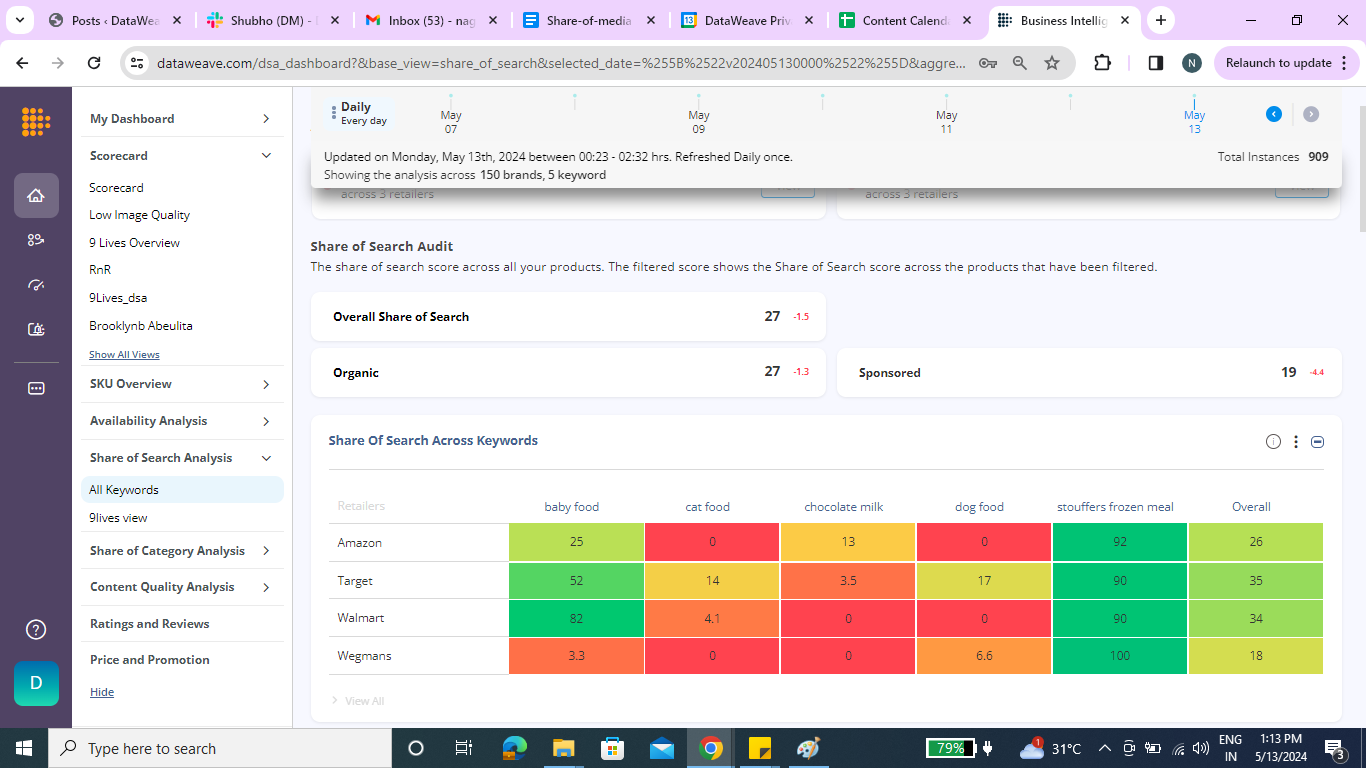
    How is e-commerce changing the game for bakery product companies?

    To optimize their supply chains, bakery food and snack companies must better understand e-commerce metrics given the wide variety of products available and eventually convert sales. There are several measures that companies need to pay attention to. 

    Stock availability metrics, discounts across locations, and share of search results – are all critical metrics companies need to track. In addition to providing manufacturers and retailers with an insight into the trends, DataWeave’s tools also allow them to make better business decisions and ultimately improve their bottom line. 

    Grocery Retailers and Bakery Brands tracked

    Methodology

    • Data Scrape period: February 2022 to September 2022
    • Country: Canada
    • Grocery Retailers tracked: Atlantic Superstore, Fortinos, InstaCart, Loblaws, Voila, Walmart Grocery, Zehrs.
    • Bakery brands: Betty Crocker, Dempsters, Hostess, No Name, Presidents Choice, Quaker, Vachon, Doritos.
    • Category tracked: Bread and Bakery, Chips, Crackers, Deserts, Snacks.

    Share of Search Analysis

    Which brands feature the most on e-commerce portals?

    When listing items on e-commerce platforms, share of search is crucial. The highest share of the top ten or top twenty items available on these platforms is correlated with how many times the item may be viewed. As a result, it would have a greater chance of being selected by the customer.

    By Retailer for Category “Desserts”

    Share of Search for Brands in each retailer
    • In Walmart Grocery, Vachon has the highest share of search at 41%, whereas Betty Crocker, Presidents Choice and No Name had the lowest share of search at 0%, in the Desserts Category.
    • In Loblaws, Presidents Choice had the highest share of search of 34%, whereas Dempsters had the lowest share of search of 2%  in the Desserts Category. 
    • The brand Presidents Choice consistently ranks high in the share of search results for Desserts across multiple retailers, including Atlantic Superstore, Fortinos, Instacart, Loblaws, and Zehrs – except at two retailers, Voila and Watlmart Grocery, where its share is zero.

    Trend of Share of Search for “Desserts”

    Share of Search analysis by Brands over Time in category “Desserts”
    • Share of search had dropped by around 4% for No Name, whereas for Vachon, it increased by 3% from Jan’-22 to Sep’ 22
    • By brands, Presidents Choice had the highest share of search at 42%, whereas Betty Crocker had the lowest share of search at 12% between Jan’ 22 and Sep’ 22 in the Desserts Category.

    Availability Analysis

    Which products are widely available across e-commerce portals?

    The availability of the product on the e-commerce portal is one of the key indicators of meeting customer demand. Brands can use insights from DataWeave to strategize how to restock their inventory and ease customer demand. Based on data analysis, brands can also determine which products to prioritize on which platforms.

    By Category

    Availability analysis by Category over Time
    • Availability of all five categories was around 52% in Feb’ 22, which steadily increased to 61% until Aug’ 22 and has reduced to reach 55% availability in Sep’ 22
    • Sliced Bread category has seen the most drop in availability by 12% between Jun’ 22 and Sep’ 22
    • The tortilla category has the most rise in availability. It has increased by 16% between Feb-22 and May-22. It also showed an overall rise in availability of 5% from Feb-22 to Sep-22

    By Location

    Availability analysis by Location and Category
    • Across categories, Snacks & Candy had better availability at 73% than Bread & Bakery, with 56% availability.
    • By Location, New Brunswick had more than 65% availability across all three categories; the closest Location is Nova Scotia, with 63% availability.
    • Alberta had the highest availability of 100% in the Snacks & Candy category and the lowest availability of 21% overall in all three categories (weighted aggregate)

    Discounts Analysis

    Several discount-based insights can be studied on e-commerce platforms. From location-based trends, retailer-based trends, and manufacturer-based insights. These insights can help companies make the most of the revenue opportunity while creating an attractive value proposition for the retail consumer.

    By Category

    Discount analysis by Category
    • Discounts of all three categories were around 24% in Feb’ 22, which steadily reduced to reach 15% in Sep’ 22
    • Snacks, cookies & chips category has contributed the most to the drop in discounting, which dropped by 17% between Apr’ 22 and Sep’ 22
    • The Tortilla Category does not have any discount in the month of Jul’ 22

    By Retailer

    • Discount on Bread & Bakery category in Walmart Grocery was around 9% in Feb’ 22. It steadily increased to 13% by Jun’ 22 and thereon reduced to reach 11% availability in Sep’ 22.

    By Location

    • Across Retailers, Nova Scotia had the highest availability of discounts at 22%, whereas New Brunswick had the lowest with discounts at 9% in Bread & Bakery category.
    Discount analysis by Retailers and Locations – Alberta, Ontario, New Brunswick, Nova Scotia
    Note: Analysis does not cover all locations

    Bakery and snack product manufacturers on e-commerce platforms have access to a rich trove of insights they can leverage to benchmark their strategies. They can better understand customer demands, align their supply chain and critically understand the trends impacting their bottom line. Engaging with a third-party platform like DataWeave’s Digital Shelf Analytics  can help brands unlock tremendous value. 

  • Insights from the Digital Shelf of Indian FMCG Brands

    Insights from the Digital Shelf of Indian FMCG Brands

    Analyzing Search, Promotions and Availability for Chocolates, Biscuits, and Malt Drinks across BigBasket, Blinkit, Dmart, Swiggy etc.

    Imagine you log into an e-commerce portal with a list of food items you need for the month. You know what you want, and scroll through the platform to see if there are any discounts. You check competitor products to see if you can get better deals. And within no time, fill your cart with products that you need and proceed to check out. 

    It all happens quickly. It’s an online shopping experience that we are familiar with. But what exactly is happening in the background?

    Brands are tracking and ensuring the highest keyword ranking, optimal availability and competitive discounts to grab your order. And to enable this, Brands rely on Digital Shelf Analytics.

    The FMCG marketplace

    Here, we take a closer look at some of the key factors that Fast Moving Consumer Goods (FMCG) Brands on e-commerce platforms need to pay attention to – to ensure their products appear on the top of search items, to better understand competitor discounts and to monitor the availability of their products across regions.

    FMCG has experienced rapid growth in the last two years, largely attributed to digitalization, changing consumer habits, and increased spending post-pandemic.  Macro factors, including government impetus, inflationary pressures, and consumption recovery, indicate a double digital growth for FMCG brands in the country. According to NielsenIQ’s FMCG Snapshot for Q2 2022, the FMCG industry has grown by 10.9% in the quarter ending June 2022, compared to 6% in the previous quarter.  In the second half of 2022, consumers are expected to spend even more during the festive season. With these shifts underway, the growth opportunities in this sector can only be exploited by companies that can sense trends early – and take appropriate action.

    In addition to providing manufacturers and retailers with actionable insights into e-commerce trends, DataWeave’s tools also allow them to make informed business decisions and ultimately improve their bottom line. Data-driven insights on e-commerce products can help brands optimize their supply chain to maximize sales. A company can determine the key areas that need attention based on an analysis of the availability of products on specific e-commerce channels, associated discounts, as well as zip-code level demand and supply statistics.

    Here are a few sample insights and trend analyses for some popular FMCG brands in the Biscuits, Chocolate and Malt drinks categories spotted by DataWeave.  

    Analytics Methodology: An overview of the data set analyzed

    • Data Scrape period: January 2022 to August 2022
    • Grocery Retailers tracked: Amazon Fresh, BigBasket, Dmart, Jiomart, Swiggy, Milkbasket
    • FMCG brands: Britannia, ITC, Mondelez, Nestle, Parle, Complan, Boost, Amul, Hershey’s
    • Category tracked: Biscuits, Chocolate, Malt drinks


    Availability Analysis

    What is the availability of Biscuits, Chocolate and Malt Drinks on e-commerce portals?

    The availability of a product on an e-commerce marketplace is a key indicator of whether the product meets consumer demands.  DataWeave’s availability analytics can be leveraged by FMCG brands to strategize their inventory and stock planning.  Brands can also make data-driven decisions on product visibility, i.e. identify which products to prioritize on which platforms. 

    • Biscuits had a better availability at 63% when compared to chocolates at 56% across all retailers
    • Dmart and Swiggy had more than 85% availability across all three categories, with Bigbasket coming next at 67% availability 
    • Flipkart Grocery and Blinkit had the lowest availability at 46% and 50%, respectively.
     Figure 1: Availability Scores for Biscuits, Chocolates and Malt Drinks across Retailers

    Which manufacturers have the highest availability of products on e-commerce platforms?

    A study of the availability of products across different manufacturers can reveal brands that have successfully tapped the market opportunity. Here’s a look at brands that have steadily improved their availability on e-commerce platforms.

    Figure 2: Availability Trends for Biscuits across Manufacturers
    • In the biscuits category, all five manufacturers marked approximately 50% availability in Jan 2022. Availability steadily grew to 68% in June 2022, then declined to 63% in Aug 2022.
    • Unibic experienced the largest drop in availability, dropping 15% between May 22 and Aug 22.
    • Mondelez saw the largest rise in availability, an increase of  23% between Mar-22 and Aug-22.
    Figure 3: Availability Trends for Malt Drinks across Manufacturers
    • Except for Boost and Nestle, availability for all seven manufacturers of malt drinks was consistently above 50%. The average availability across all manufacturers rose gradually from 55% in Jan to 63% in Jul-22, followed by a small decline to 57% in August.
    • From 30% availability in January 22 to a mere 7% in August 22, Boost has seen the greatest drop in availability.
    • The availability of Amul has risen the most over the past year, rising from 51% in January 22 to 78% in August 22, hitting 80% in July 22.

    Chocolate: Which manufacturers have the highest availability of products on the e-commerce platforms?

    Figure 4: Availability Trends for Chocolates across Manufacturers
    • Chocolate availability across all manufacturers averaged 47% in Jan-22, reaching a peak of 64% in May-22 and dropping to 51% in Aug-22.
    • From 46% in Jan-22 to 74% in May, Mondelez saw the biggest increase in availability, followed by a decline to 68% in August.
    • Ferrero experienced one of the sharpest drops in availability. Although the brand’s availability steadily grew from 77% in Jan 22 to 94% in Jul 22., it registered a steep drop to 49% in August. 

    The drop in availability hurts the Brand’s eCommerce in two ways. Not only does the Brand lose sales directly. But poor availability also impacts the keyword search ranking, which further hurts the sales.

    Check out DataWeave’s Digital Shelf Analytics Product for insights on how Availability tracking can help reduce stock-outs and boost sales. Click here to know more.

    Discount Analysis

    Location-based, retailer-based, and manufacturer-based discount trends can be analyzed. These studies can help companies plan attractive and appropriate promotional and discount strategies to enhance their revenue opportunities. 

    Which manufacturer has been offering the most discounts?

    A study of discounts offered across manufacturers for chocolates, malt drinks and biscuits indicates that some brands have increased their discounts while others have reduced their discount rates. These decisions could be triggered by demand, availability, and production cycle. Parle, for example, has steadily reduced its discount rates. 

    Figure 5: Discount Rate Trends across Manufacturers

    Average discount rates across manufacturers were around 9% in Jan 2022 and rose steadily to reach 14% in Jul 2022. A small decline is observed post-July, with a 12% discount rate registered in Aug 2022.

    • In the biscuit category, Unibic offered the biggest discount of 28%, followed by ITC at 20%.     
    • In the Chocolate category, Hershey’s offered the largest discount of 14%, followed by ITC at 12%.
    • In the Malt Drink Category, Amul offered the largest discount of 16%, followed by Boost at about 10%. 

    Check out DataWeave’s Digital Shelf Analytics Product for insights to respond to Competitor’s pricing and promotions. Click here to know more.

    Share of Search Analysis

    Which brands feature within the top 5 on the first page of the search?

    A product that appears within the top 5 items on the first page of a search, has a higher probability of being purchased. Below is a study of the share of the search for biscuits across manufacturers and retailers. 

    Figure 6: Share of Search for Biscuits across Manufacturers and Retailers
    • Britannia dominates the top ten share of search across different online retail platforms.
    • Mondelez has the highest share of search at 62% in Amazon Fresh, whereas Parle-G has the lowest share of search at 7%.
    • In Bigbasket, Britannia has the highest search share of 62%, whereas Parle-G has the lowest search share of 7%.

    Check out DataWeave’s Digital Shelf Analytics to track the Share of Keyword and Navigation Search. Click here to know more.

    Conclusion

    FMCG is a rapidly evolving industry sector with a high potential for growth in the coming years. FMCG brands must compete with one another to fully tap this market opportunity on several factors to ensure that their products are visible, available, and attractive to consumers. Digital crawling and big data technologies have enabled manufacturers and retailers to collect publicly available e-commerce data for useful, actionable insights and trend analysis. To stay competitive, it is crucial for manufacturers and retailers to engage with analytics and data experts to seamlessly integrate e-commerce analytics into their short- and long-term business strategies. Whether it’s building keywords to increase the share of search, knowing the right discounts to attract customers in a particular city or increasing the availability of products on specific e-commerce platforms, companies need to invest in the right data intelligence!

    DataWeave for FMCG Brands

    DataWeave has been working with global CPG/FMCG brands, helping them drive their growth on eCommerce platforms by enabling them to monitor their key metrics, diagnose improvement areas, recommend action, and measure interventions’ impact. DataWeave’s KPIs enable Brands to fill in the blind spots in their funnel data and allows them to respond to competitors on a near-real-time basis.

    If you want to know to learn how your brand can leverage DataWeave’s data insights and improve sales, then click here to sign up for a demo

  • Gold, Gift Hampers & Gadgets – brands that sparkled this Diwali!

    Gold, Gift Hampers & Gadgets – brands that sparkled this Diwali!

    The festival of lights symbolized the victory of light over darkness, good over evil & knowledge over ignorance. Over the years, Diwali has become all that and more. It has single-handedly become the biggest shopping season in India! Splurging on a new Smart TV or Fridge, or a furniture upgrade at home has become customary during Diwali. Not to forget buying gold and gifts for all your loved ones! 

    As more and more people are doing their Diwali shopping online, we decided to look at the data, see what people were browsing and buying. And more importantly, which brands spruced up their Digital Shelf & put their best foot forward this Diwali Season. 

    Methodology

    • We tracked the first 250 products on Amazon & Flipkart against specific keyword searches & product categories. 
    • Share of Search (SoS): The percentage of products that appeared on the search results page on Amazon or Flipkart belonging to a brand, against a specific keyword or category. 
    • Dates of Crawl during the Flipkart Big Billion Day / Amazon Great Indian Festival.
      – Pre-sale period: 1st October 2021
      – Sale Period: 3rd to 10th October 2021
      – Post Sale Period: 11th – 18th October 2021

    India’s E-Commerce Gold Rush

    YouGov reported that almost three in ten urban Indians (28%) are planning to spend on gold in the next 3 months. Seven in ten (69%) of these prospective gold buyers agreed with the statement, “Diwali is the best time to buy gold”, highlighting their inclination to spend during the festive season. Also, the same survey showed that Tanishq was the most trusted gold brand. With Kalyan Jewellers, Malabar Gold & Diamonds and PC Jewellers also making it to the top 5 list.

    E-Commerce Gold Rush

    While traditionally Gold was mostly sold offline, that trend has fast changed. We tracked brands that had the highest Share of Search against the keyword “Gold Coin” on both Amazon & Flipkart to see if Tanishq, Malabar Gold, PC Jewellers – the big trusted names in jewellery were making their mark online. 

    Search Insights for Gold Coin
    Search Insights for Gold Coin
    • On Amazon, MMTC-PAMP (a joint venture between Switzerland-based PAMP SA & MMTC Ltd, a Government of India undertaking) and Kundan had the highest visibility for the keyword “Gold Coin” at 10%, followed by Malabar Gold at 9%. (Refer to above graph of Search Visibility on Amazon)
    • MMTC-PAMP used the help of Sponsored ads to get this visibility. They sponsored 9 products during the sale, while ACPL, the largest supplier of silver in India sponsored 26 products and New Delhi-based PC Jewellers sponsored 12 products. (Refer to above graph of Sponsored Products on Amazon)

    As recently as 2 weeks ago, MMTC-PAMP launched their e-commerce portal following in the footsteps of other jewellery brands. According to a report by the World Gold Council, the jewellery industry went through a massive slowdown amid the pandemic and prepping their e-commerce & digital strategies are likely going to be the only way forward.

    • On Flipkart, PC Jewellers, Malabar Gold & Kundan occupied the top 3 spots on the search results page. While PC Jewellers sponsored 12 products on Amazon, on Flipkart they sponsored zero. Malabar Gold on the other hand sponsored a whopping 25 products on Flipkart! Interestingly Malabar Gold sponsored no products on Amazon for the keyword Gold Coin. (Refer to above graph of Sponsored Products on Flipkart)

    Unboxing the love – Branded Diwali Gift Hampers

    Branded-Diwali-Gift-Hampers
    Branded-Diwali-Gift-Hampers

    Now let’s talk about Diwali Gifts. How often have you thought of buying someone a Diwali gift but had absolutely no idea what to get them? You’re not alone! A lot of consumers would simply run a search for “Diwali Gift Hampers” or Diwali Gifts” in the hope to stumble across a great gifting idea and make an instant purchase! Smart brands who know this make sure their products have organic or sponsored visibility against these keywords

    On Amazon, Tied Ribbons, a D2C gift and Décor company had the highest number of Sponsored products (15) against the keyword Diwali Gift followed by the iconic Brand Archies with (14) products.
    Flipkart had a whole bunch of smaller brands and sellers optimizing their products for this keyword. Some bigger, more known brands like Chaayos, Cadbury, D2C Tea brand Vahdam did have visibility for the keywords “Diwali Gift Hampers/ Diwali Gifts” but they were way down on the list, at the bottom of the search results page, or on Page 2.

    Was this a missed opportunity for them?

    Give your home a festive upgrade!

    Diwali is a perfect time to upgrade or buy new electrical appliances for your home. Great prices, new product launches, and an unmatched festive feeling make it even more ideal to make new purchases. If you’re eyeing smart innovative electrical appliances for your home this year and decided to go make your purchase during the Flipkart Big Billion Day or Amazon Great Indian Festival, let’s take a look at which brands made sure they showed up right on top in your online search. 

    We tracked search visibility for 5 keywords in the home appliance space – Smart TV, Washing Machine, Microwave, Air Conditioner & Refrigerators to see which brands had the highest share of search

    Brands with the highest Share of Search on Amazon
    Brands with the Highest Share of Search on Amazon
    • On Amazon, both Samsung & LG had high visibility across all products except Air Conditioners!
    • For ACs, Voltas had the highest share of search even though they sponsored 0 products! And that’s definitely noteworthy. So what really gave them the edge and put them in this winning position?

    We took a look at their product reviews to draw an analysis. Voltas ACs had close to 10k reviews! The highest in the AC category. Ratings & Reviews play a key role in helping brands drive their Digital Shelf experience. Customers trust user-generated content more than information brands share with them. Also, Amazon’s A9 algorithm prioritizes products with better reviews & shows them higher up in search – a low-cost & organic way for brands to get to the top without spending money on Sponsored ads!

    Most loved AC brand
    Most loved Air Conditioner brand
    • When it comes to washing machines, Lloyd & White Westinghouse (trademark by Electrolux) sponsored the maximum number of products in the category, this gave them the highest Sponsored SoS (13%) on the first page. 
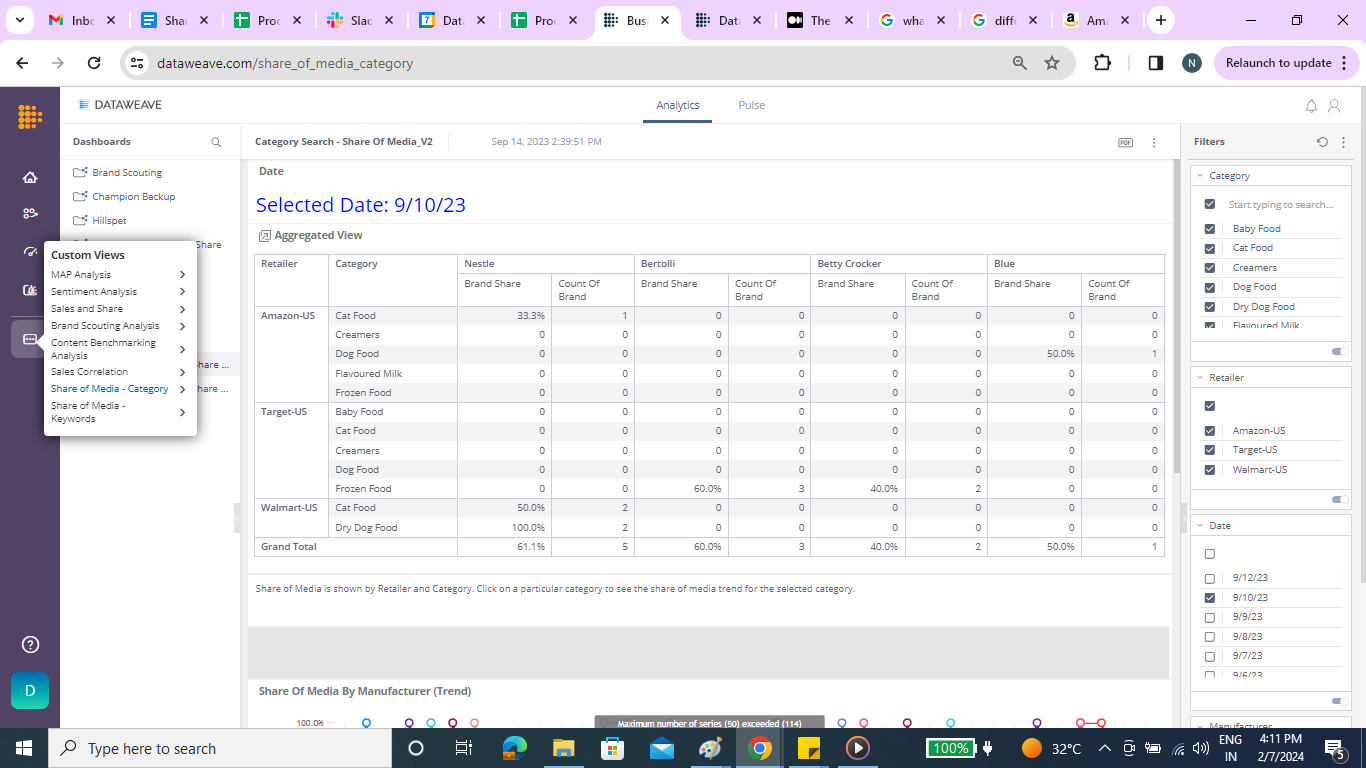
    • While their sponsored visibility was high, their overall SoS was low which is why they didn’t organically feature in the top 5. Sponsoring products is a great but expensive way to artificially boost product visibility during sale periods. Brands need to go the Voltas route by optimizing their reviews & rating or content, to organically gain and sustain product visibility.

    … & here are the brands that made it to the top on Flipkart.

    Brands with the highest Share of Search-on-FLIPKART
    Brands with the Highest Share of Search-on-FLIPKART

    Gift-worthy gizmos!

    Buy the latest gadgets and pamper yourself this Diwali or gift them to your loved ones! You could be looking to upgrade your laptop, or buying a fancy DSLR or Smartwatch, buying it online may be your best bet. Discounts have dwindled over the years but you may still get the most lucrative discounts online. Let’s look at the discounts offered on Amazon & Flipkart for some gift-worthy gizmos like Laptops, Cameras, Smart Watches & Headphones this festive season. 

    The platform that offered the highest number of products in their catalog at a discount

    Flipkart had the higher number of gizmos on Discount this Diwali

    On Amazon, during the sale, the headphones category offered a 75% of products on discount as compared to the pre-sales period. That number was just around 51% for cameras. Far more number of products were discounted on Flipkart – 87% for headphones & laptops. And cameras 77%. So if you were looking to shop for gadgets around Diwali, Flipkart would’ve been a better bet. 

    Let’s look at which platform offered the highest percentage of discounts on products. 

    Discounts were higher across all 4 product categories!
    Discounts were higher across all 4 product categories!

    Apart from more products being discounted on Flipkart, Flipkart also offered higher discounts across these 4 categories. Discounts were higher across all 4 product categories!  

    Do you know if your brand is prepped and ready to make an impact on a Big Festival Sale Day? Or simply just wondering if your Digital Shelf is optimized with the right price, discounts, reviews and keywords? Our team can DataWeave can help! Reach out to our Digital Shelf experts to learn more.

  • Prep, Prime and Plenish For Prime Day India 2021

    Prep, Prime and Plenish For Prime Day India 2021

    After demonetization, Covid-19 has probably been one of the worst scenarios for the retail sector in India. The entire nation went into lockdown and the industry noticed some big changes around the entire globe. From remote working to shopping, everything turned to digital and Bharat witnessed new trends across payments, e-commerce, and more.

    Not surprisingly, D2C has been a favorite amongst businesses thanks to its agility. More than 800 brands have joined the direct-to-consumer bandwagon in order to reach their audience quickly and in an efficient way. Where brands such as MamaEarth, Clovia, Bewakoof, Lenskart have been some of the popular brands in the sector, last year even traditional giants such as LG, Ajanta-Orpat, Piaggio, Havells also adopted the D2C model.

    Ramp up in D2c Brand Activity
    Source: Avendus

    Brands are more focused on making the user experience better and it will be safe to say that this year, D2C will be the highlight of the e-tail ecosystem. Naturally, e-commerce giants such as Amazon, Flipkart have played an important role in this revolution. Amazon, which has over 100 Million registered users in India, announced that it will host its flagship event, Prime Day this year on 26-27 July.

    Let’s look at some of the things brands can do to leave their mark this Prime Day in India.

    Digital Shelf Optimisation: Need Of The Hour

    Given that the pandemic has accelerated online shopping nationwide, Digital Shelf Optimisation (DSO) should be the key lever for any brand to accelerate its digital commerce growth. Events such as Prime day are significant for a brand’s reputation, customer experience, overall sales and can help you build a loyal customer base.

    With that in mind, we have prepared a list of things to consider, in order to help brands stand out from the crowd.

    1. Pricing And Discounting

    Pricing and Discounting
    Pricing and Discounting: Offer discounts and deals to attract customers.

    It is obvious that Prime Day will see a tremendous influx of shoppers. Noticeably, impulsive shopping is a trend during these sales, as everybody loves a good product for a discounted price. Make sure to offer discounts and deals to attract customers.

    Another suggestion is to keep a track of competition, their pricing and promotional strategies and keep an eye on price changes happening across relevant categories or SKU’s (Stock Keeping Unit). Competition analysis is a powerful tool and having accurate data on their sales, market share is a critical part of this.

    2. Optimise Product Visibility

    Product Visibility
    Product Visibility: Lakhs of sellers & brands are vying for the same spot

    Marketplaces are crowded, and getting discovered is already hard. Lakhs of sellers & brands are vying for the same spot. And with more people moving online, it’s going to get increasingly harder for brands to stand out. Optimize your search visibility using the right keywords relevant to your brand, strategically spend on Sponsored Ads to secure high visibility placements on Amazon and lastly make sure your online product packaging via product pages contain attractive images to position your product in the best light.

    3. Product Availability

    Product Availability
    Product Availability: Have plenty of stock available

    Make sure to have plenty of stock available as shoppers are likely to turn to other brands/products in case your product is unavailable. Also, keep in mind that people are generally more open to trying new products during a sale as it offers discounts. Track your products’ stock status to make sure they’re available 24 x 7.

    As the foremost goal during sales is to move inventory as much as possible, offering a large assortment is a good idea. Create product bundles that complement each other.

    4. Use A + Content

    A+ Content
    A+ Content is King: The new age packaging for your product

    Content is the new age packaging for your product. Content is crucial to change consumer shortlists & considerations into conversions.

    Your content tells your product story & gives customers the information they need to make a purchase. Use high resolution and accurate images, add features, benefits, USPs of your products clearly. It is advisable to use more than one image to show your product more clearly. Make sure all your brand & product pages on Amazon are optimized.

    5. Ratings And Reviews

    Ratings and Reviews
    Reviews and Ratings: Feedback is a very important e-commerce tool.

    Why would shoppers rely on word-of-mouth when they can take help from millions of people from the community? Not said enough, feedback is a very important e-commerce tool. Amazon’s A9 algorithm presents the choices to the consumers but reviews and star ratings still play an influential role in the journey from consideration to conversion.

    Brands could consider partnering with Dataweave, to keep track of reviews and manage negative ratings on Amazon.

    Summary

    According to a report by EY-IVCA Trend Book 2021, “ The e-commerce industry in India is expected to reach $99 Bn by 2024 and penetration of retail is expected to be 10.7% by 2024, compared to 4.7% in 2019.”

    Internet penetration rate in India 2007-2021 Published by Sandhya Keelery, Apr 27, 2021  Internet penetration rate in India went up to nearly around 45 percent in 2021, from just about four percent in 2007. Although these figures seem relatively low, it meant that nearly half of the population of 1.37 billion people had access to internet that year. This also ranked the country second in the world in terms of active internet users. Internet penetration rate in India from 2007 to 2021
    Source: Statista

    The same report also revealed that India will have 220 Million online shoppers by 2025. With e-commerce growing at an exponential rate, brands are advised to be more statistical & data-driven to win a larger % of online sales. 
    If you think this is the right time to optimize your digital shelf, take a look at our products and services.

    We at DataWeave would be happy to be a part of your e-commerce and digitization journey. You can sign up for a demo with our team to know more