Category: pricing analytics

  • What is Customer Price Perception  and why it is important

    What is Customer Price Perception and why it is important

    Finding the right price often requires a trade-off between margin and price perception. Brands may want to defeat competitors’ prices on all their products, but that can often lead to losses because sales directly link to price perception. Instead of trying to stay competitive across the board on all products, brands must identify key value categories (KVCs) and key-value items (KPIs) whose prices buyers tend to remember and price those products competitively. In this scenario, they can make up for lowered prices on key products by fixing higher prices on other products. 

    Consumers’ perception of price fairness largely determines their experience with a brand. Brands selling online can often have a disconnect between their prices and what customers expect their prices to be. However, that does not mean spiraling downwards by getting trapped in discounting cycles and heavy promotions that can harm your bottom line. Instead, brands require real-time monitoring across thousands of stock-keeping units (SKUs) to identify key categories and items they need to price with care. In this blog, you’ll learn about price perception and the factors that influence it. 

    What is Price Perception?

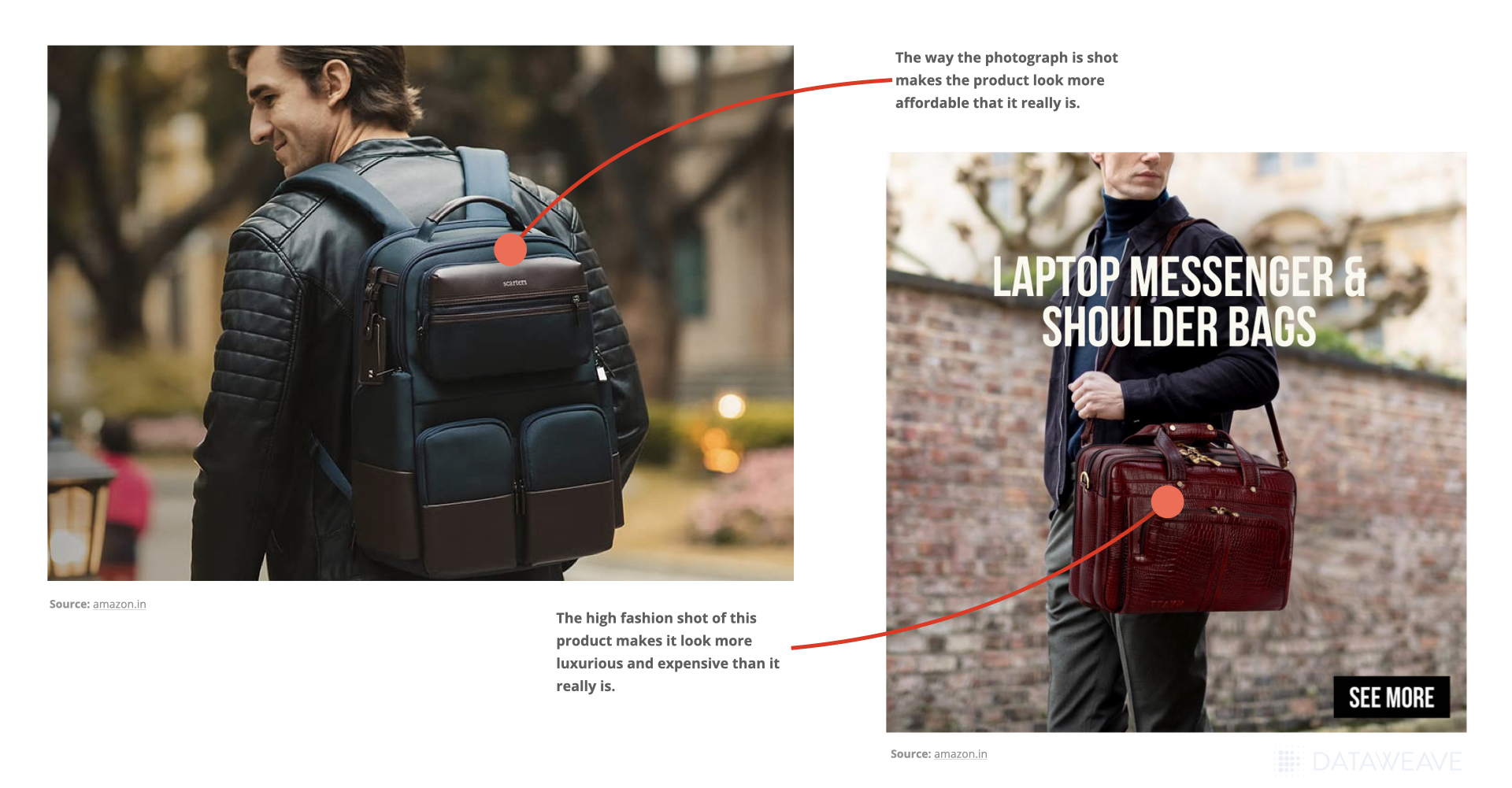
    Price perception is the perceived worth of a product or service in the consumer’s mind. It is one of the leading variables in the consumer’s buying process. Buyers are unaware of the true cost of production for the products they buy. Instead, they make buying decisions based on an internal feeling about how much certain products are worth and which brand offers them the best value. To offer competitive prices and yet obtain a higher price for products, brands often pursue marketing strategies to improve the price perception of their brand and products.
    Price Perception
    Price Perception

    However, brands should not fall into the trap of assuming that price perception is a competitor’s price index. It’s not about offering the lowest price on certain SKUs. Not every brand strives to offer the lowest prices. Some brands take a slightly different approach to ensure the right value for their products. For example, take a look at Trader Joe’s, a grocery chain that has never claimed low costs. They’ve always taken a holistic approach to their pricing and customers to build a loyal following. And it worked well for them. Trader Joe’s can boast one of a high-value perception score, despite not having rock-bottom prices. 

    Marketplaces such as Walmart and Amazon may not have the best prices on every item. Still, customer perception is that they will have the lowest prices and will often shift the share of sales towards such platforms over businesses that offer the same or even lower prices. 

    Some things to consider:

    • What do your customers think of your brand?
    • What are the key factors that are driving your customers’ price perceptions?
    • Is your product mix properly aligned with your brand perception?
    • Are you communicating the most important and relevant information to your customers?
    • Is your message being received and understood?
    • Who do your customers see as your competitors, and why?

    Also Read: 11 Reasons why your eCommerce Business is fail 

    What is Price Positioning?

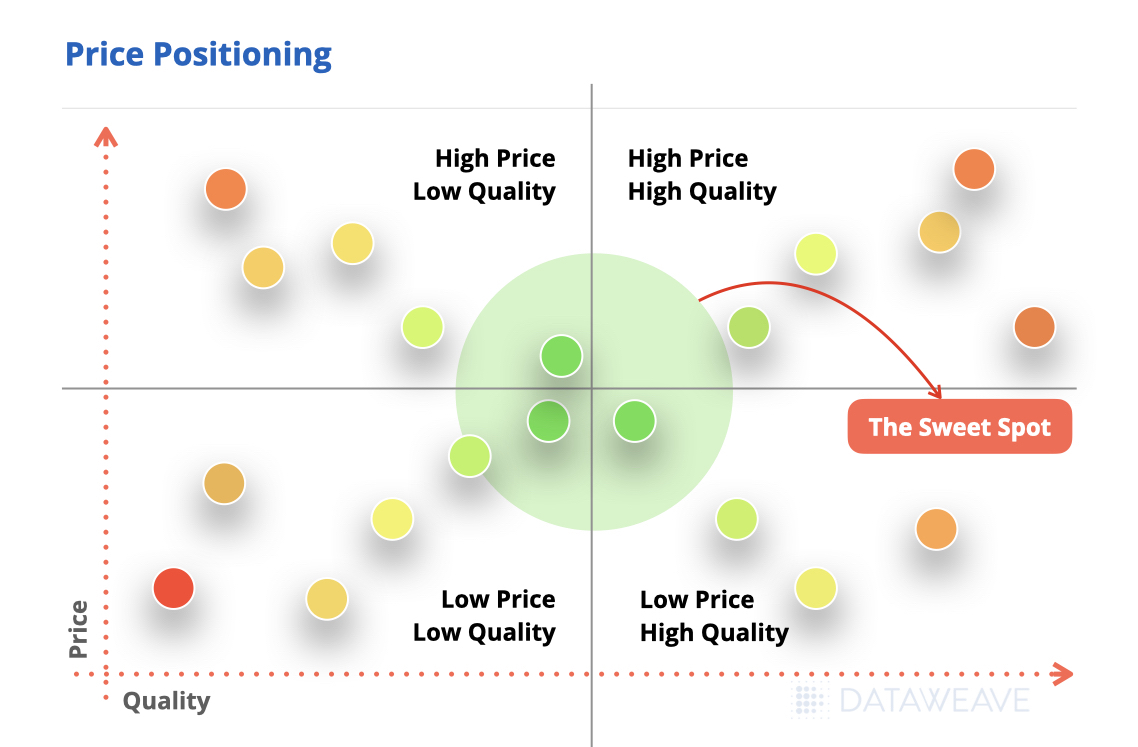
    Price positioning is pricing products or services within a certain price range. It indicates where certain services or products lie in relation to competitors’ pricing and in the mind of different customers. A brand’s price positioning has a huge impact on whether the products are seen as priced low or not. The following is a great way to understand the price-value matrix:
    Price Positioning
    Price Positioning

    Your brand’s position in this matrix will depend on your pricing objectives, competition, and customer loyalty. Price positioning helps the marketing and operating teams understand customers’ perceptions of your brand and convince customers to buy your products. Brands need a holistic approach toward setting prices for their products in order to drive conversions through intelligent pricing and competitive insights. 

    Factors that influence Price Perception

    Price-Quality Relationship

    Price is often an indicator of product quality. The general rule is that the higher-priced products are perceived to have better quality, implying that brands should consider a rational quality-price relationship in their pricing or promo strategy. For example, it might not be best practice to have similar prices for both good and low-quality products because customers will perceive low-quality products as overpriced and might not purchase from you.

    Price-Consciousness

    Customers aren’t price conscious about every product. Instead, they are only price conscious about certain products under the best price guarantee or BGP. For instance, if buyers find your BGP products more expensive than your competitors, the cheaper products in your assortment will still be perceived as expensive. 

    Value-Consciousness
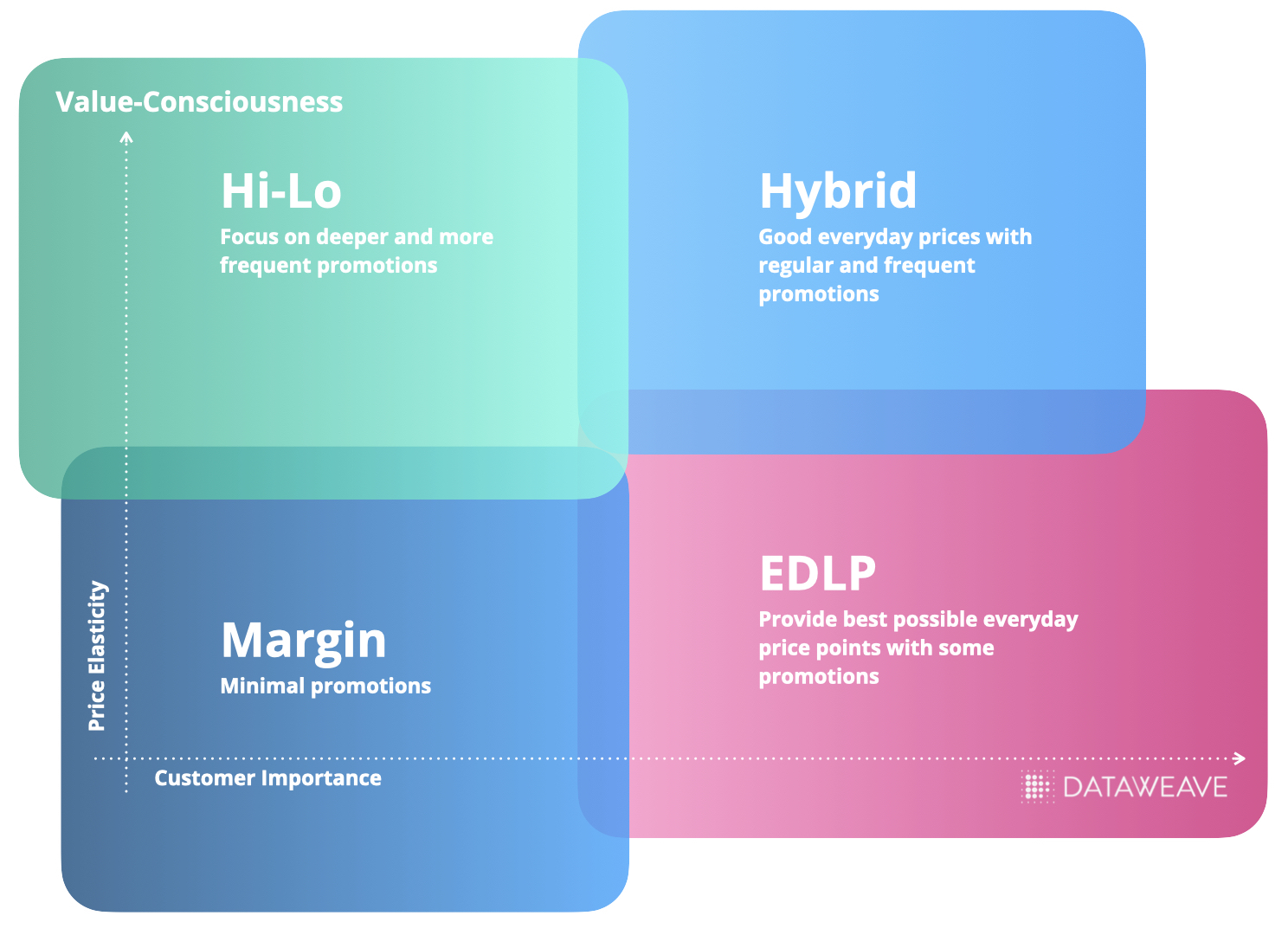
    During markdown periods, ensure that you are not undermining the efforts to shape and maintain price perception by offering extreme or complex discounts. In an attempt to clear stocks, promotions simply confuse the shopping experience for customers and further deteriorate trust in your brand. Your promotional offers should keep price perception during the holiday season or clearance sales by offering a simplified promotional program. Start by understanding which price mechanics and SKUs work best for your target customer segment. You should also reduce over-communication on hero deals else buyers will assume that you incorrectly price products during new seasonal launches. 

    Prestige Sensitivity

    Gerald Zaltman, a Harvard professor, argues that 95% of all purchasing decisions are subconscious. Luxury brands are a great example of how psychology directly links to price perception. Customers buy premium or luxury products to demonstrate their social status. In this scenario, buyers don’t hesitate to buy expensive products from certain brands even if they are explicitly overpriced. Thus, brands selling premium products will have to ensure pricing is coherent with buyers’ expectations. 

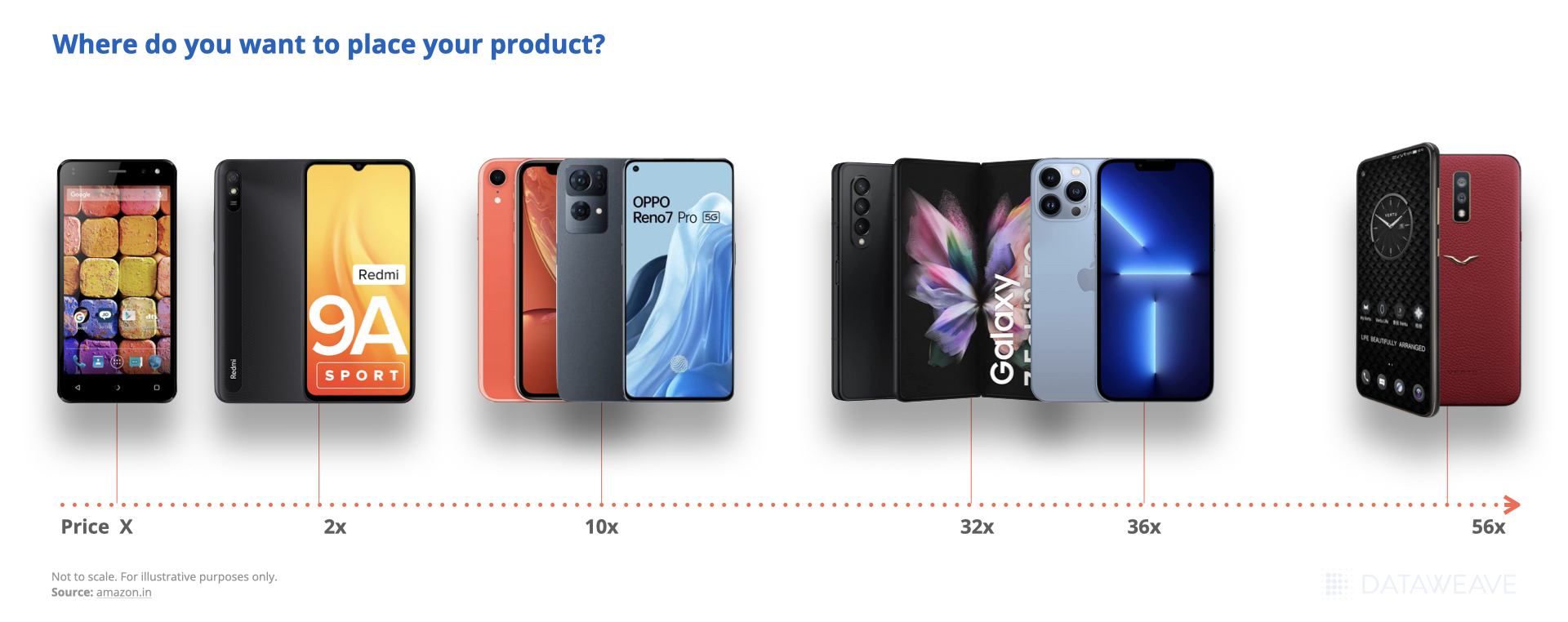
    Every customer wants to know they’re getting the best value. They use the highest and lowest prices in a range to understand how expensive a product or brand is. So, by removing high price point lines with low volume, customers will see more minor price points around the store. Brands must merchandise entry price points to help customers identify the lowest prices and improve the perception of their product ranges. 
    Product Range
    Product Range

    How to adjust Price Perception

    Here are three ways for brands to improve price parity:

    • Marketing to influence Price Perception

    An efficient pricing management strategy will focus on competitiveness and establishing the right price perception among your customers. You can influence customers’ price perception by improving the look and feel of your online stores since simpler designs are often reflections of lower prices. Another great way to influence price perception is to offer loyalty and reward programs that also improve brand loyalty and reinforces the vision of an economy store irrespective of the prices of your products.

    • Competitive Analysis

    Brands can understand price differences after a competitive analysis. Customers often search for similar products across brands to find the best deals, and you will be able to understand customer opinion through competitor analysis.

    • Price Management Automation

    A price monitoring platform can help brands to stay on top of promotions and discounts offered by their competitors. A price intelligence software will help brands associate products by similarity criteria and compare the pricing of their products with those of competitors. It offers a detailed view of the market and ensures that brands take care of their bottom line.

    Conclusion

    When a consumer comes across a similar low-priced product or service from a different brand, they may see it as a good deal or might perceive it not worthy of their time or money. What consumers think about your brand’s price is just as important as the actual price of that product. A buyer may sense a company as “upscale” and assume that they have high prices, or they may see a brand as a discount retailer whose prices are too high for its reputation. At times, consumers might also see cheaper alternatives as inferior. It’s not easy for a brand to understand its customers’ perception of price vs. value it offers. Brands need a long-term, dynamic pricing strategy that matches the demands and trends of a global, competitive market. And in order to drive sustainable growth, they need to make smarter pricing and promotion decisions with insights into competitive pricing. 

    Learn how DataWeave can help make sense of your and your competitor’s pricing & promotional strategies and help your brand build the right Price Perception. Sign up for a demo with our team to know more.
  • eCommerce Performance Analytics for CPG Private Label

    eCommerce Performance Analytics for CPG Private Label

    The combination of economic uncertainty, inflation, and perceived affordability has increased consumer’s willingness to buy and try more private label products, challenging National brands to differentiate their eCommerce strategies, especially those related to price positioning, in other ways.

    Our previously released report, Inflation Accelerates Private Label Share and Penetration, confirmed 8 out of 10 brands with the highest SKU count carried across all grocery retailer websites to be private label, signaling the strength of their digital Share of Voice. Given the growing shift in consumer preference toward private label brands, we are providing access to the latest trends seen from September 2021 through March 2022. Below you will find a summary of what the data revealed about the growing presence of private label brands on the Digital Shelf.

    Private Label Account and Category Penetration

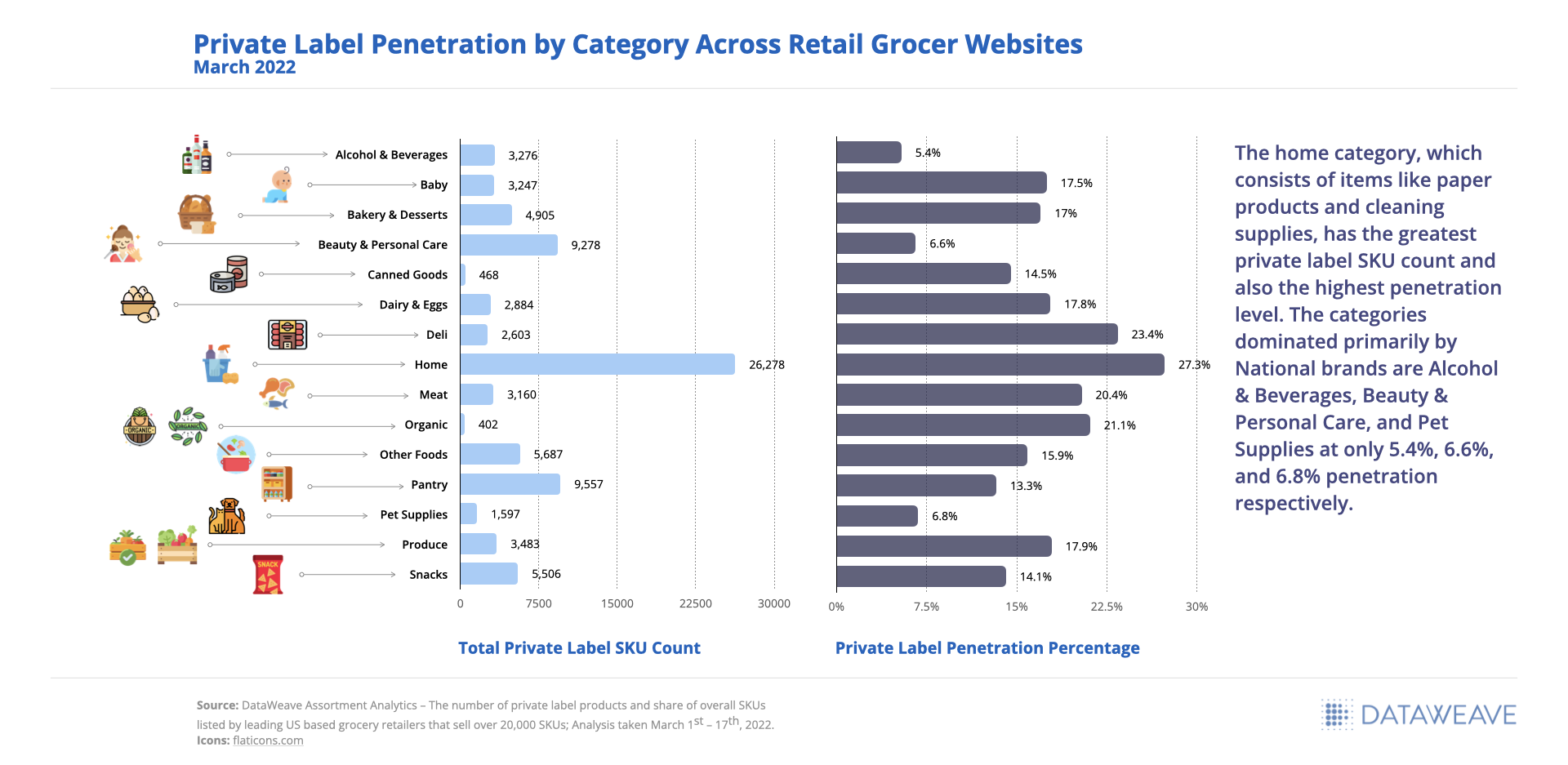
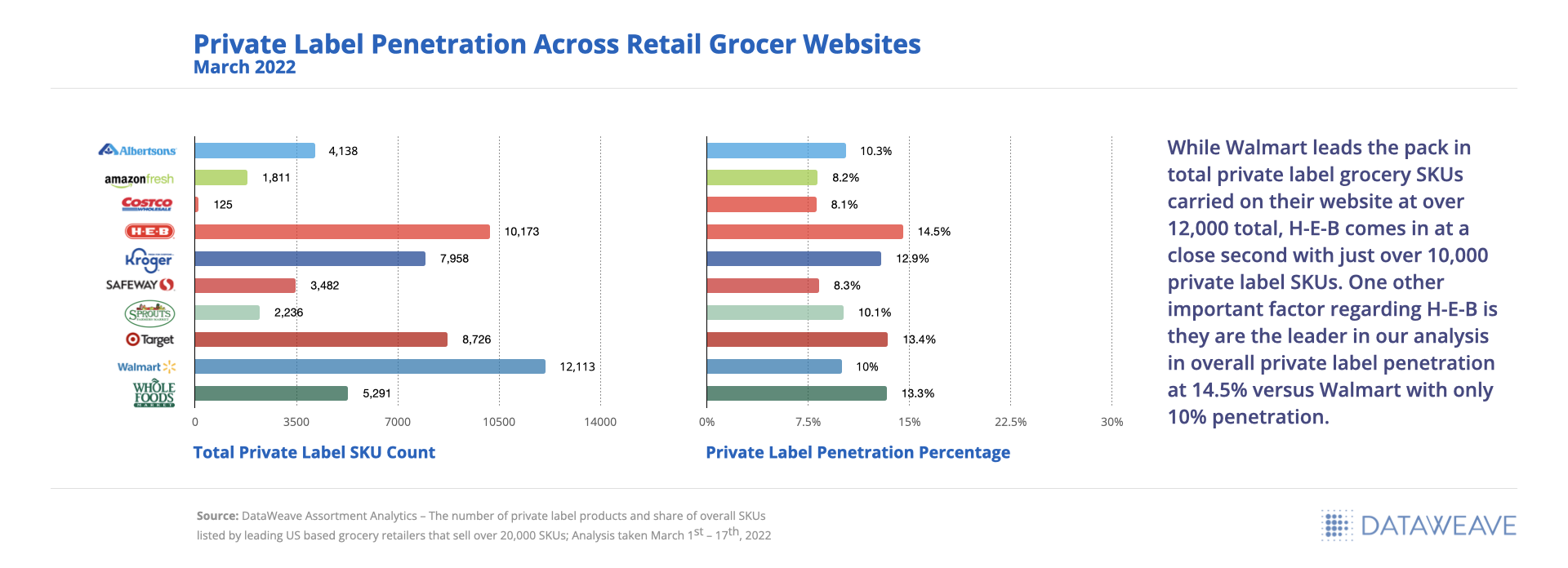
    We analyzed private label penetration at an account level to understand which private label brands have the greatest presence on retailer digital shelves, and to see which retailers may be leaving product assortment opportunities on the table.

    Private Label Penetration Across Retail Grocer Websites

    As a retailer, it is important to understand how your private label penetration stacks up against the industry average at a category level, especially given the performance tracked for retailers included within our analysis and the vast number of SKUs they offer online (over 20,000).

    Private Label Penetration by Category Across Retail Grocer Websites

    The Private Label and National Brand Price Gap Widens

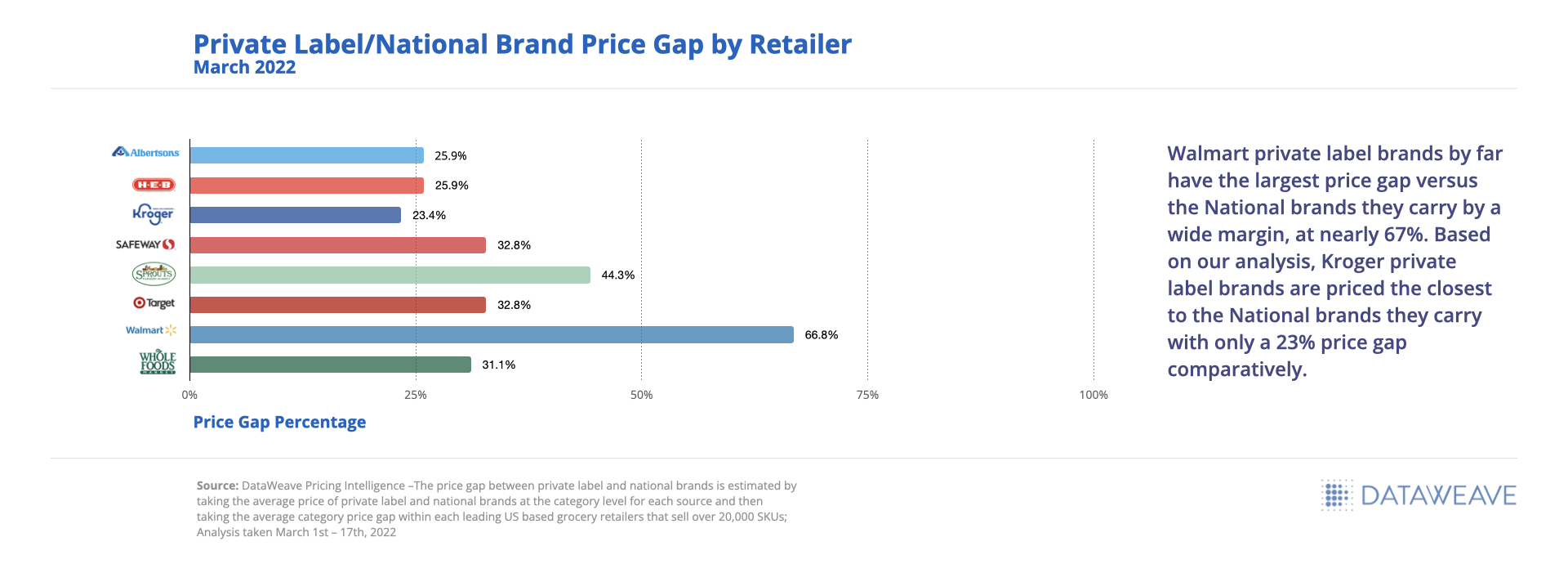
    Private label brands tried out of necessity mid-pandemic increased in popularity as grocery prices continued to rise, providing an opportunity for retailers to increase brand affinity and loyalty for their online shoppers. Retailers alike were able to keep affordability at the forefront of their strategies and maintain a price gap of 23% or more, despite inflationary pressures to increase prices.

    Private Label / National Brand Price Gap by Retailer

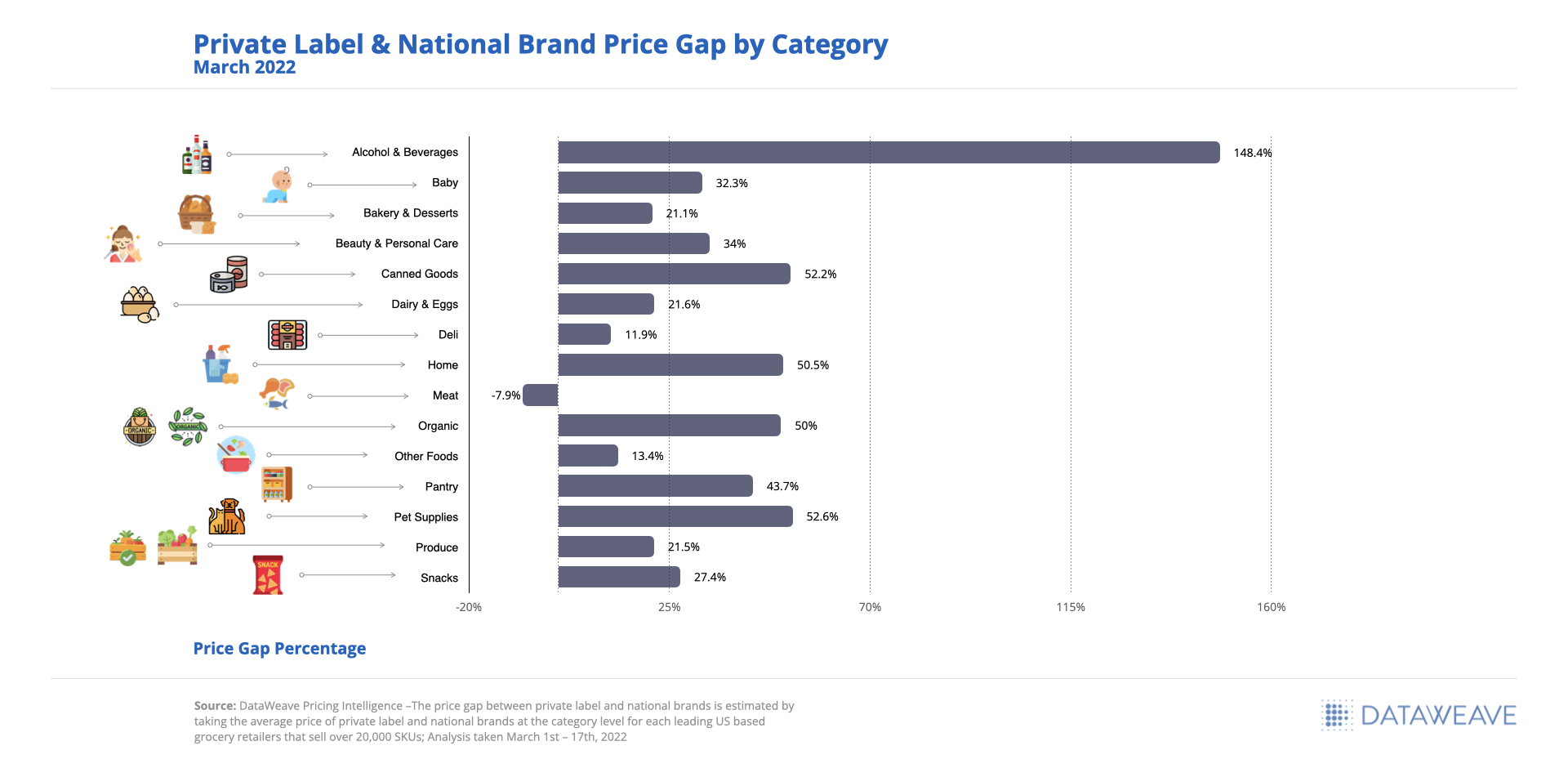
    Looking at the results at a category level, we can see that Meat is the only category found within our analysis where private label brands are priced higher than National brands at an average of 8% greater. The Alcohol & Beverages category tends to always see the greatest price gap between private label and National brands given the price variances by unit (ranging from under $10 to over $100), in this case averaging a 148% price gap.

    Private Label & National Brand Price Gap by Category

    Private Label Total Basket Value Comparison Across Retailers

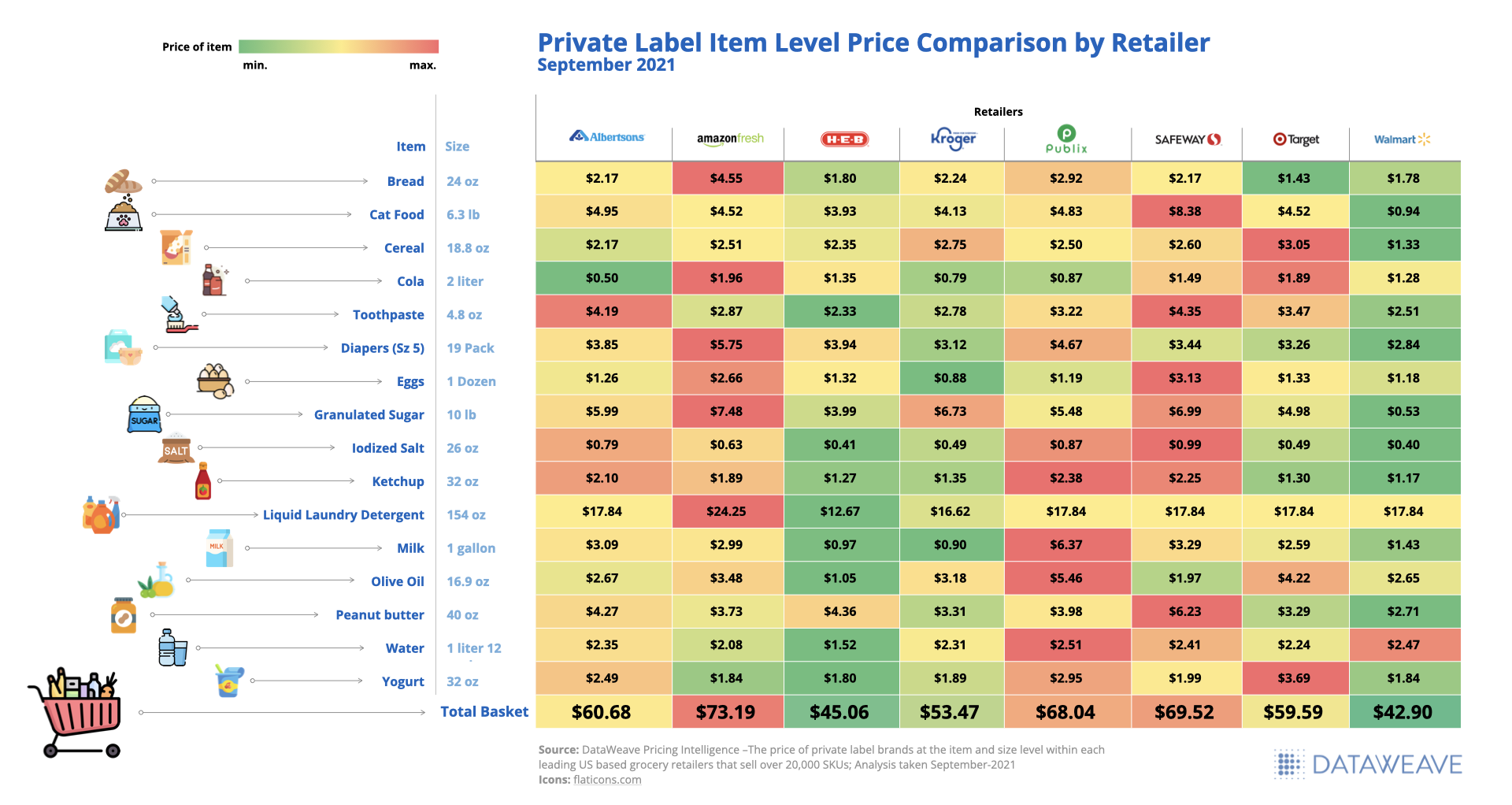
    While SKU-level pricing is extremely important to product strategy, for a retailer, it is equally as important to be as mindful of the total basket value even more so now as consumers further their private label loyalty across various categories. A few SKU-level missteps in pricing decisions can exacerbate cart abandonment and negatively impact shopper loyalty in a world where prices can be compared instantly in the palm of your hand.

    Based on our analysis, Walmart and H-E-B private label products offered the lowest priced total basket of goods at $42.90 and $45.06 respectively, whereas AmazonFresh and Safeway offered the highest total at $73.19 and $69.52 respectively.

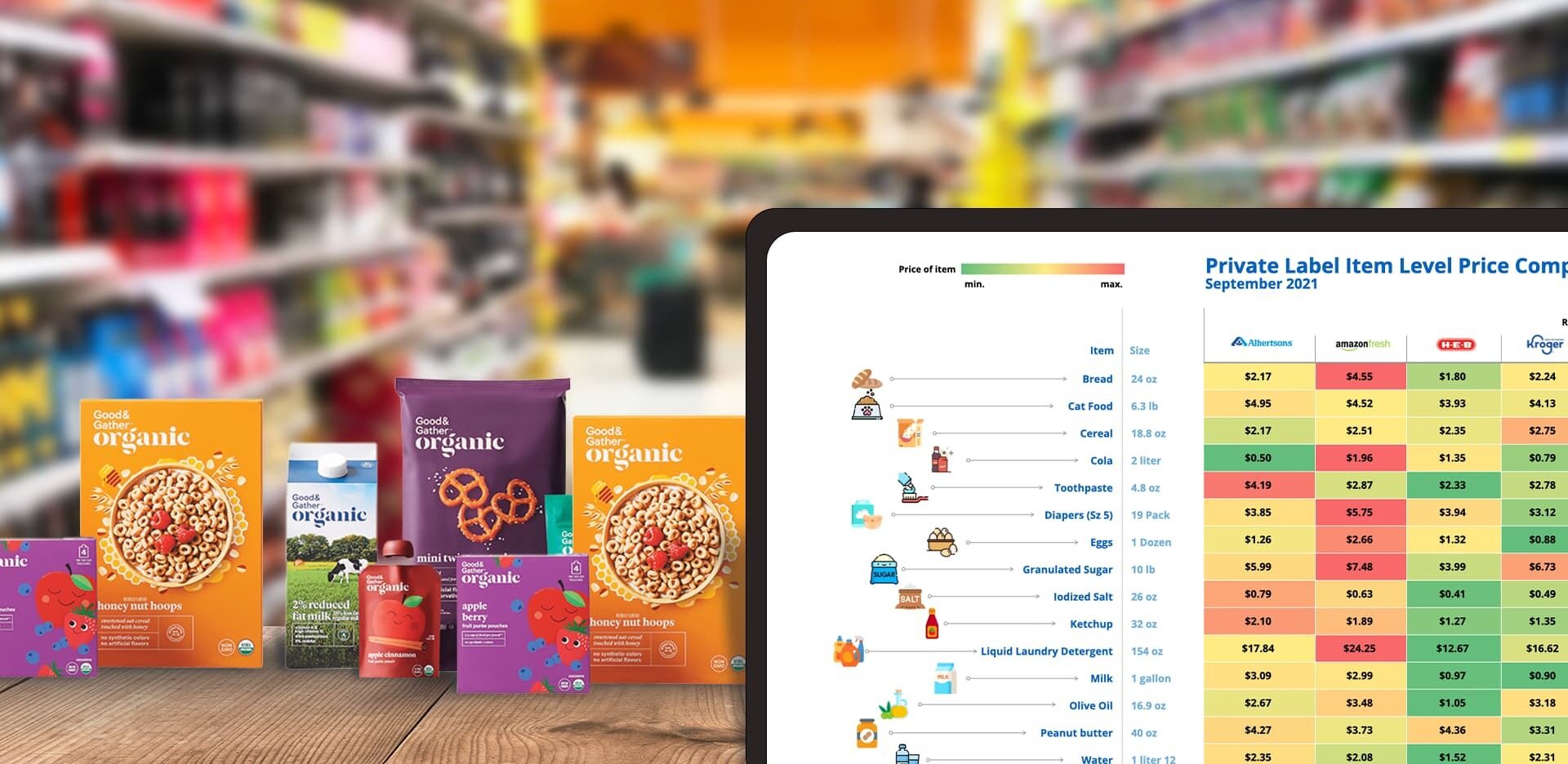
    Private Label Item Level Price Comparison by Retailer

    Inflation-driven Price Changes are on the Rise with Room to Grow

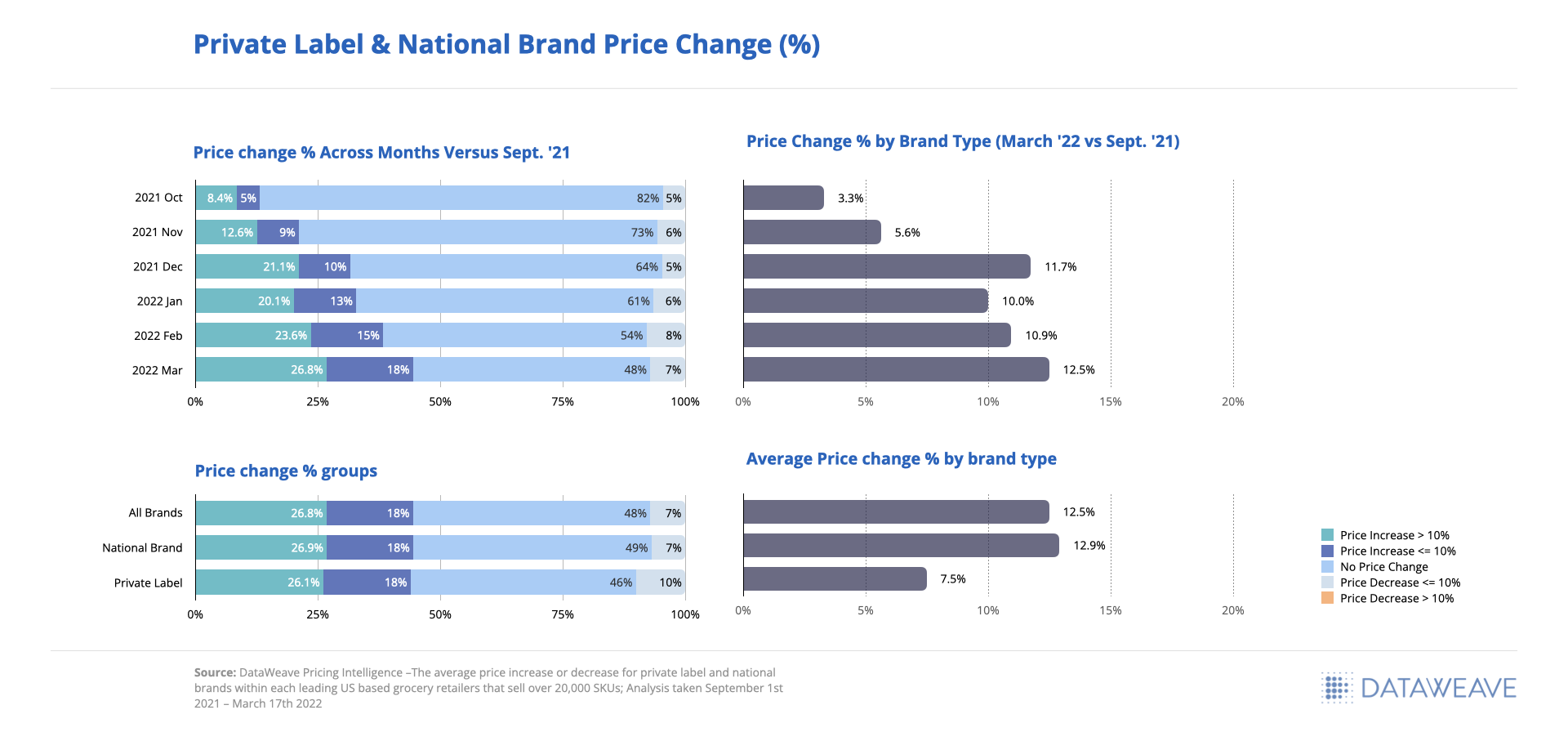
    Based on the 20,000+ SKUs analyzed, we saw a continual price increase every month since September 2021 when comparing future monthly prices to those we tracked in September. The greatest price increase happened in March 2022 at 12.5% on average, however, there are still 48% of SKUs that have yet to see a price increase even as inflationary pressures rise.

    When viewing the split between National and private label brand price increases in March 2022 versus September 2021, we saw National brands increased prices on average by 13% where private label brand prices only increased an average of 7%.

    Private Label & National Brand Price Change
    Private Label & National Brand Price Change (%)

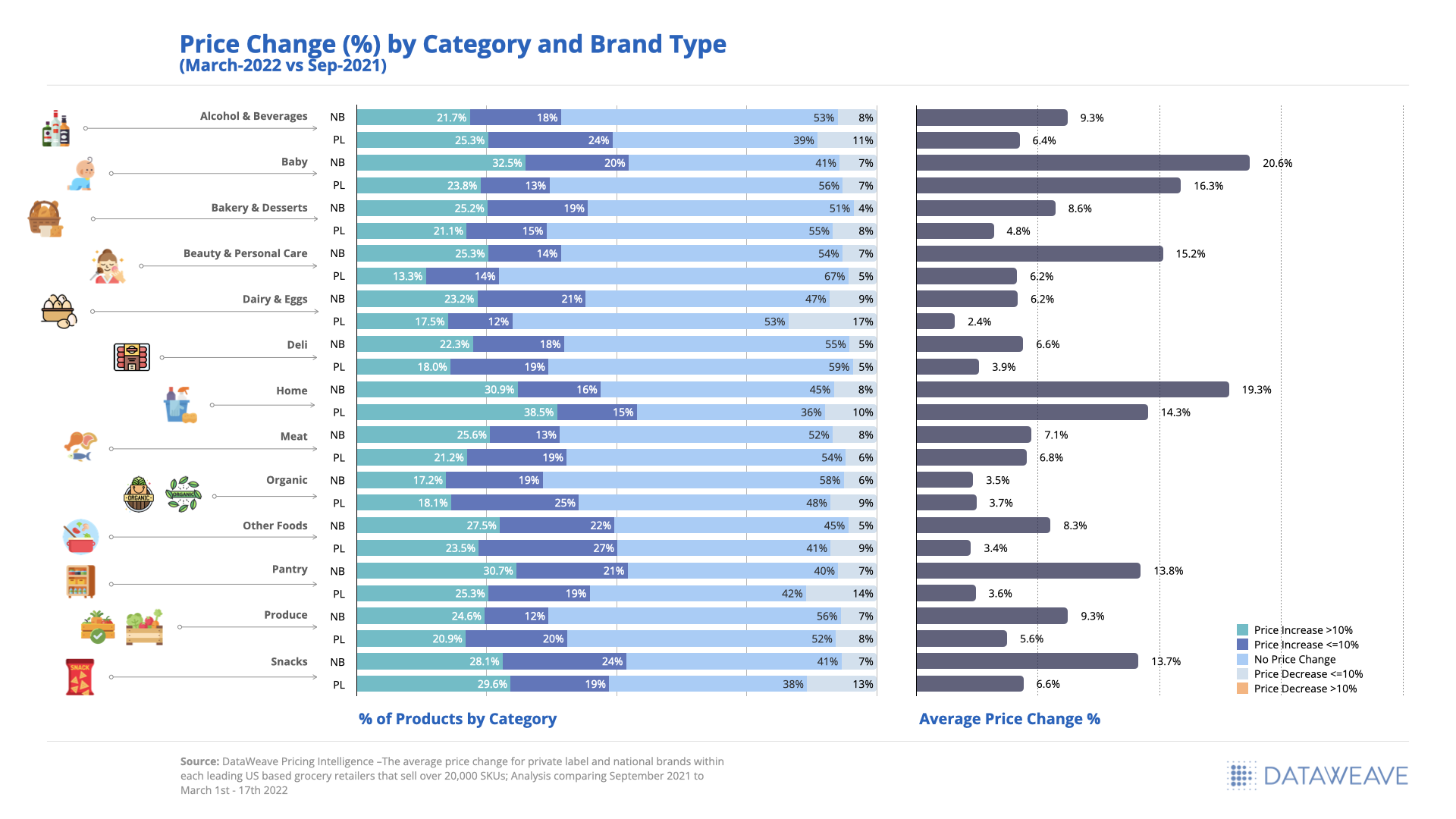
    Price decreases are still occurring across all categories, despite inflation, but to varying degrees ranging from 5% for Deli items to 17% for Dairy & Eggs. Within the Dairy & Eggs and Pantry categories, private label brands reduced prices for an additional 10% of total SKUs compared to National brands.

    The greatest category of opportunity for price increases within private label were found within Beauty & Personal Care with 67% of private label products yet to see a price change since September 2021.

    Price Change (%) by Category and Brand Type

    Private Label Price Change Correlation to Product Availability

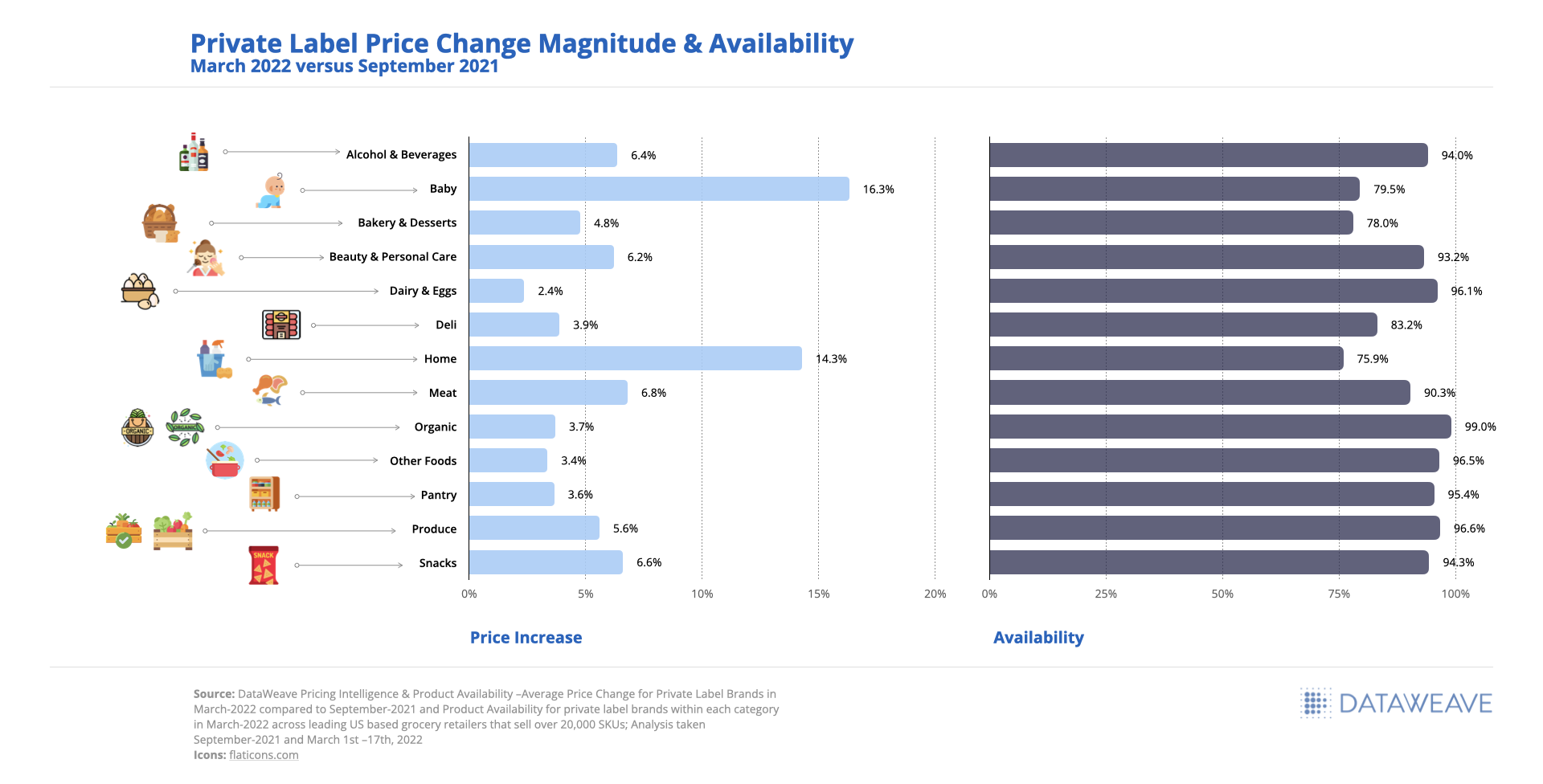
    The category with the greatest magnitude of price increase seen within private label brands occurred within Baby at 16.3% followed by Home at 14.3% on average. Private label products within Home and Baby categories were also showing the lowest availability rates, 75.9% and 79.5% respectively, indicating a high demand for these items even as prices increased.

    The private label categories with the smallest price increase on average were Dairy & Eggs at 2.4% and Other Foods and Pantry at 3.4% and 3.6%, respectively.

    Private Label Price Change Magnitude & Availability
    Private Label Price Change Magnitude & Availability

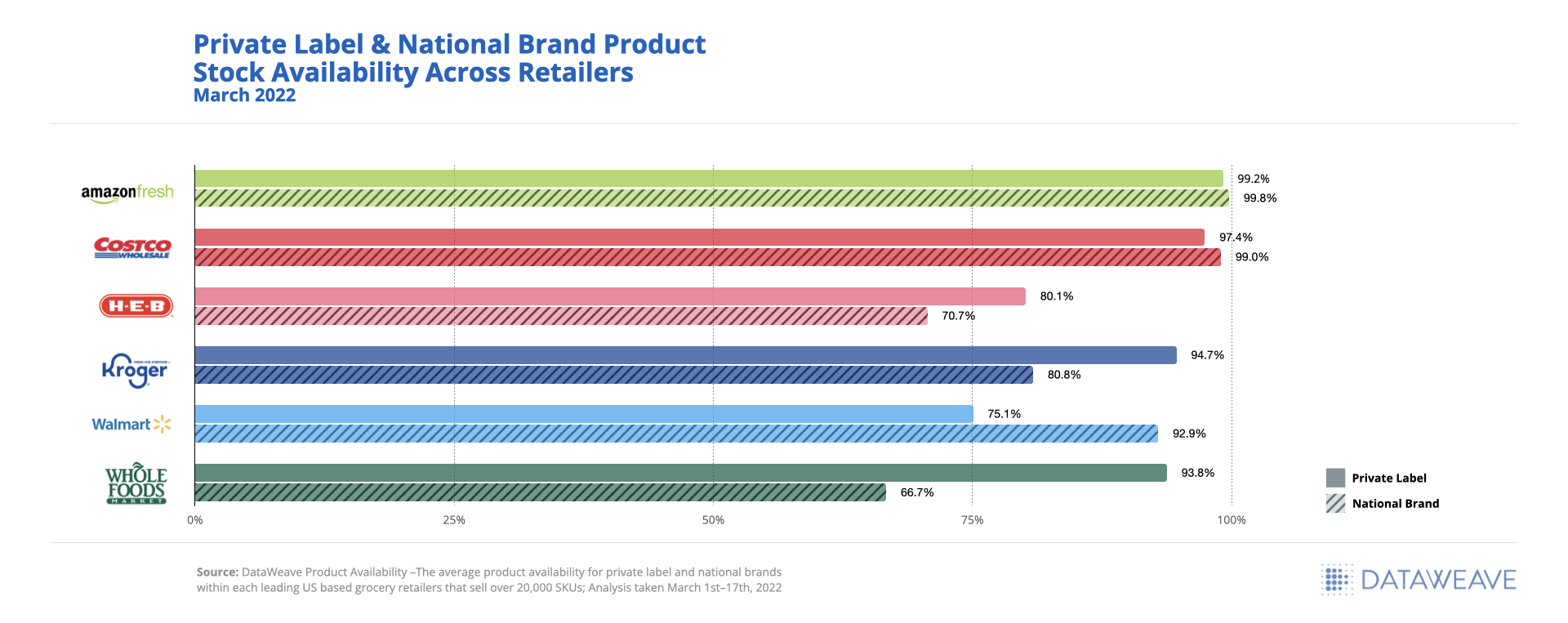
    While in many accounts both private label and National brands struggled with stock availability in March 2022, National brand availability is much lower (around 10% on average) than private label availability.

    H-E-B had the lowest overall product availability at 76% across both private label and National brands on average. Only Walmart had lower availability for Private Label at 75% compared to 93% for National brands, but they also had the greatest price gap between private label and National brands.

    Private Label & National Brand Product Stock Availability

    The Future of eCommerce Growth for Private Label

    Our greatest learning from this analysis is that it’s time for retailers to start thinking and planning more like the National brands they carry when it comes to positioning their private label brands for success. Successful retailers are taking this time to reset their private-label strategies and transfer short-term switching behavior into long-term customer loyalty.

    Retailers playing catch up have the opportunity to address some of the gaps highlighted throughout this analysis, for example, relative to pricing and assortment changes. Below are some of the highlighted opportunities:

    • Though inflation is driving price hikes, more than 50% of products analyzed have yet to see a price increase indicating an opportunity to protect margin
    • Narrowing the price gap between a store’s brand and National brands should not be the only focus as competitive private label brands are becoming a greater threat at a category and basket level
    • Modifying and expanding assortments as demand increases for private label can improve customer retention and loyalty, especially for cross-shopping consumers

    According to The Food Industry Association (FMI), only 20% of food retailers currently promote private brands on their homepages, and only 48% include detailed product descriptions indicating even more opportunities left on the table for retailers to optimize private label digital performance.

    Many leading retailers are leveraging real-time digital marketplace insights and eCommerce analytics solutions like ours to further their online brand presence and optimize sales performance. This report highlights only a small sample of the types of near real-time insights we provide our clients to effectively build competing strategies, make smarter pricing and merchandising decisions, and accomplish eCommerce growth goals. Be sure to reach out to our Retail Analytics experts for access to more details regarding the above analysis.

    For access to a previously recorded webinar presented in partnership with the Private Label Manufacturers Association and conducted by DataWeave’s President and COO, Krish Thyagarajan, click here.

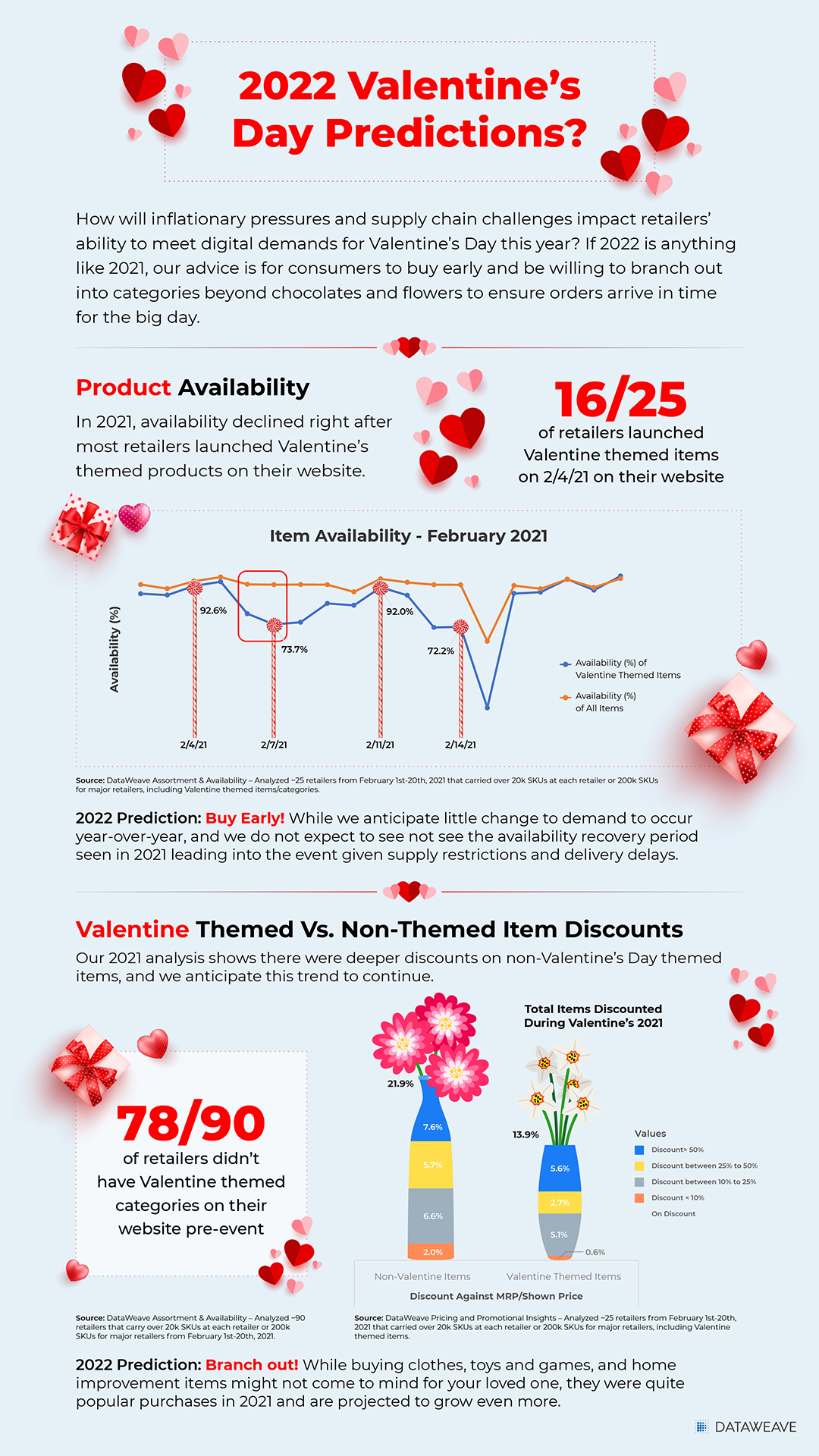
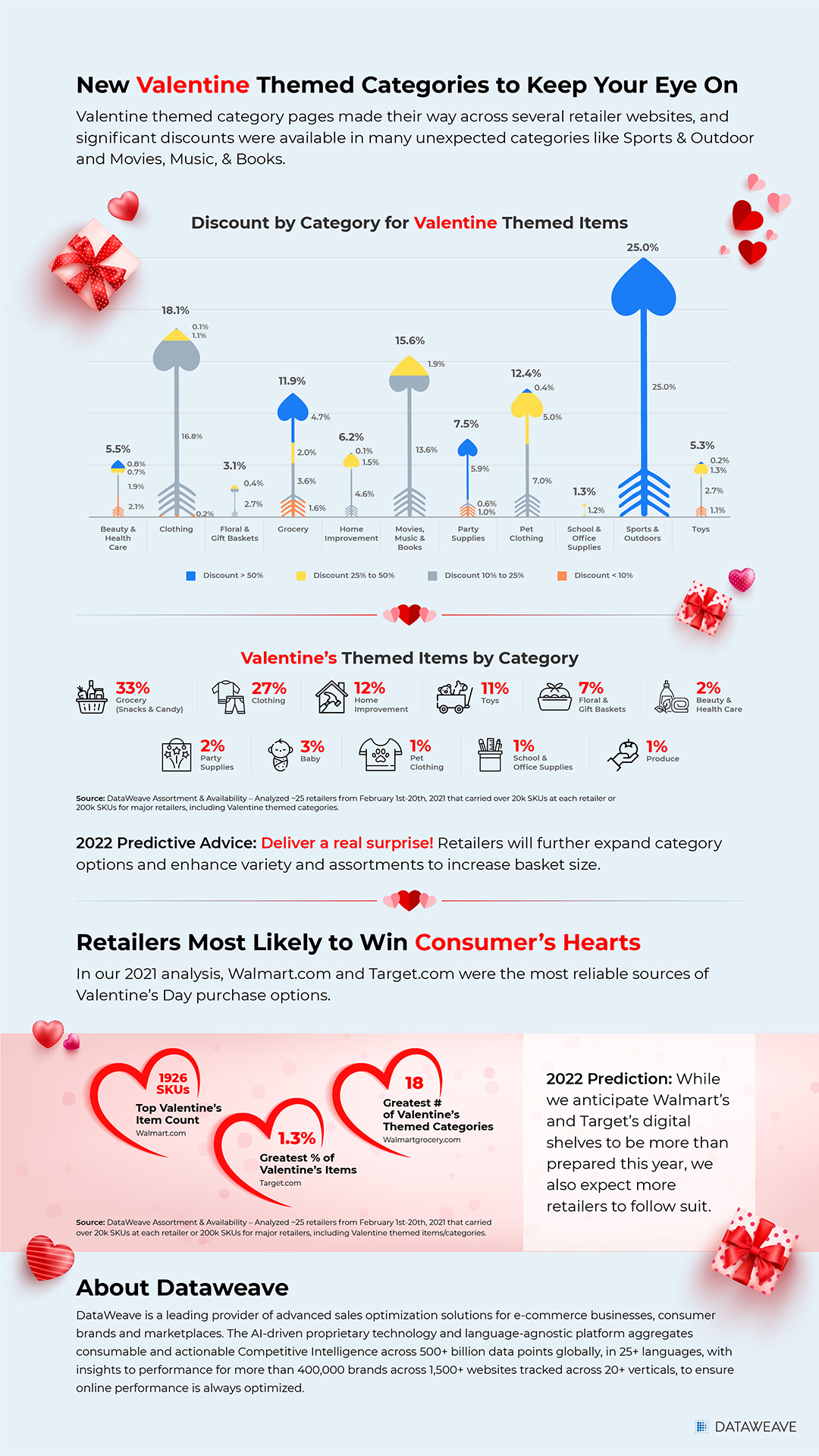
  • Valentine’s Day eCommerce Insights

    Valentine’s Day eCommerce Insights

    Access to these types of real-time digital marketplace insights can enable retailers and brands to make strategic decisions and help drive profitable growth in an intensifying competitive environment. Be sure to reach out to our Retail Analytics experts for access to more details regarding the above analysis.         

  • What Historical Pricing Data can tell you & how to use it

    What Historical Pricing Data can tell you & how to use it

    For many brands, pricing strategy boils down to guesswork — shooting in the dark and hoping consumers are willing and happy to pay. However, the ‘throw it at the wall, and see what sticks’ pricing strategy leads to big pricing mistakes. Pinning down an optimal price for products requires a clear picture of ideal customers, understanding each customer segment’s behavior, a solid grasp of your product’s value, and an analysis of competitors. Pricing analytics can help brands track a wide range of pricing metrics with cutting-edge analytical tools and use insights to get ahead of their competition. This analysis uses historical data to understand how previous pricing and promotion activities affect brand, sales, and customer price perception. It often involves identifying opportunities and weaknesses in competitors’ pricing strategies and exploiting them to improve sales and revenue. 

    Pricing analytics helps brands understand how product pricing and promotions affect profitability and the steps they can take to optimize their pricing structures. Brands can leverage their pricing and consumer data to design appropriate pricing models for achieving their sales goals.

    Here is a brief overview of pricing analytics, its benefits, and ways to improve sales with historical pricing analytics.

    What is historical pricing data analytics?

    historical pricing data analytics
    Historical Pricing Data Analytics

    Pricing analytics uses historical pricing and demand data to understand how pricing activities have affected profitability and overall brand. It also helps to optimize a brands’ pricing strategy for maximum revenue. Manual tracking of pricing for brands with numerous product lines, multiple selling points, different customer tiers, and complex product bundles is a huge challenge. Brands from every sector and industry vertical, manufacturing and distribution to retail and eCommerce, can benefit from pricing analytics.

    There are three types of pricing analysis:

    Descriptive

    Descriptive pricing analytics involves analyzing historical data to evaluate how customers have perceived and reacted to pricing fluctuations in the past. It analyzes metrics such as month-on-month sales growth, average revenue per customer, year-on-year pricing changes, or changes to the number of registrations to a particular service over a specific period. 

    Predictive

    Although brands can’t accurately predict how pricing changes will reflect sales, they can use predictive pricing analytics to get insights into the best possible chance of doing so. Predictive pricing analyzes historical data with statistical algorithms and machine learning to predict the price and trends of products in the future. It also helps brands to optimize their prices with future goals.

    Prescriptive

    Prescriptive pricing analytics is the opposite of descriptive analytics. Unlike descriptive analytics that helps brands explore their historical data to understand customer response after an event, prescriptive analytics help brands design better and more informed strategies. With prescriptive analytics, brands can shape their growth strategies to achieve more sustainable results over the long term.

    Benefits of historical pricing data analytics

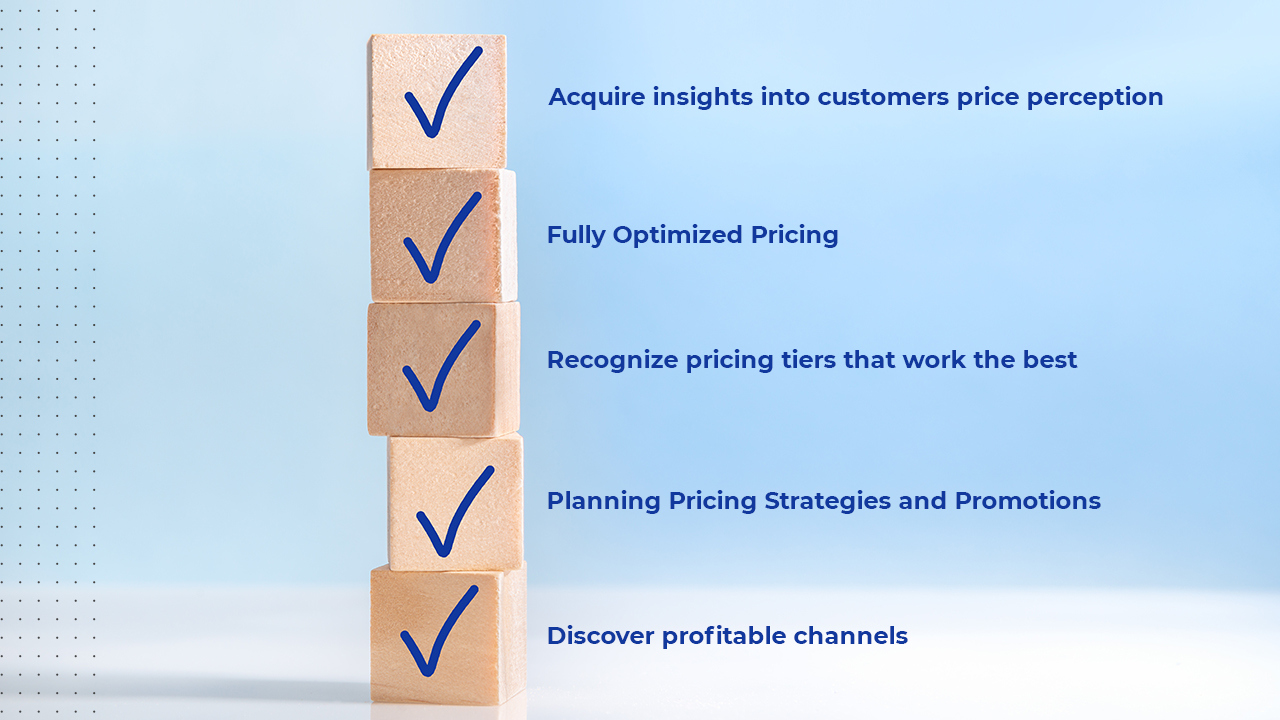
    Benefits of historical pricing data analytics
    Benefits of Historical Pricing Data Analytics

    Acquire insights into customers price perception

    While analyzing the metrics to understand pricing optimization, brands can also gather valuable insights into their customer’s price perception. Pricing analytics helps brands understand which customer segments are the most (and least) profitable and how each segment responds to specific pricing strategies. With historical pricing data analytics, brands can also intelligently link pricing and promotions by first determining customer price sensitivity then gauging the effectiveness of promotions

    Fully Optimized Pricing

    Historical pricing analytics means eliminating guesswork from deciding the optimal pricing for a given product. By analyzing historical pricing data, brands can discover how their past pricing and promotional decisions impact profitability. Based on this historical data, they can also test various pricing strategies like value-based and dynamic pricing. It also allows brands to learn which customer segments are most likely to respond positively to price change. These insights from pricing analytics will drive more effective (and profitable) pricing decisions.

    Recognize pricing tiers that work the best

    Many brands have gaps in their pricing strategy — underpriced or overpriced tiers, pricing leaks, markup errors, or neglected upsell opportunities. Tiered pricing models are prevalent in subscription-based brands where brands offer tiers to meet the needs of diverse customer segments. With historical pricing analytics, brands can improve their pricing tiers and get insight into the right number of tiers and optimal prices for each. Pricing analytics will comb a brand’s historical data to find tier pricing mistakes to improve sales and revenue.

    Planning Pricing Strategies and Promotions

    Promotional pricing decisions are critical for any brand, as pricing perception is directly linked to consumer demand and profits. Brands have to carefully plan promotions that include variables such as list prices, special offers, advertisements, and discounts while ensuring profit margins. With predictive analytics, brands can determine optimal discount levels, keep a close eye on the competition, and announce promotional offers when customers are likely to purchase. Historical pricing analysis also helps predict revenue and determine optimal locations and platforms for promotional ads.

    Discover profitable channels

    Not all sales channels bring equal revenue to your brand. Historical pricing analysis can help you determine the most effective quality, volume, and revenue channels. Brands must understand which marketing and sales channels bring quality leads that convert to paying customers. It also helps to determine which eCommerce channels are most profitable so you can optimize your budget and identify channels you should be investing in as a part of future customer acquisition strategies. 

    Metrics to track

    Metrics to track
    Metrics to Track

    Here are a few pricing analytics metrics that can help brands to understand customer behavior towards pricing:

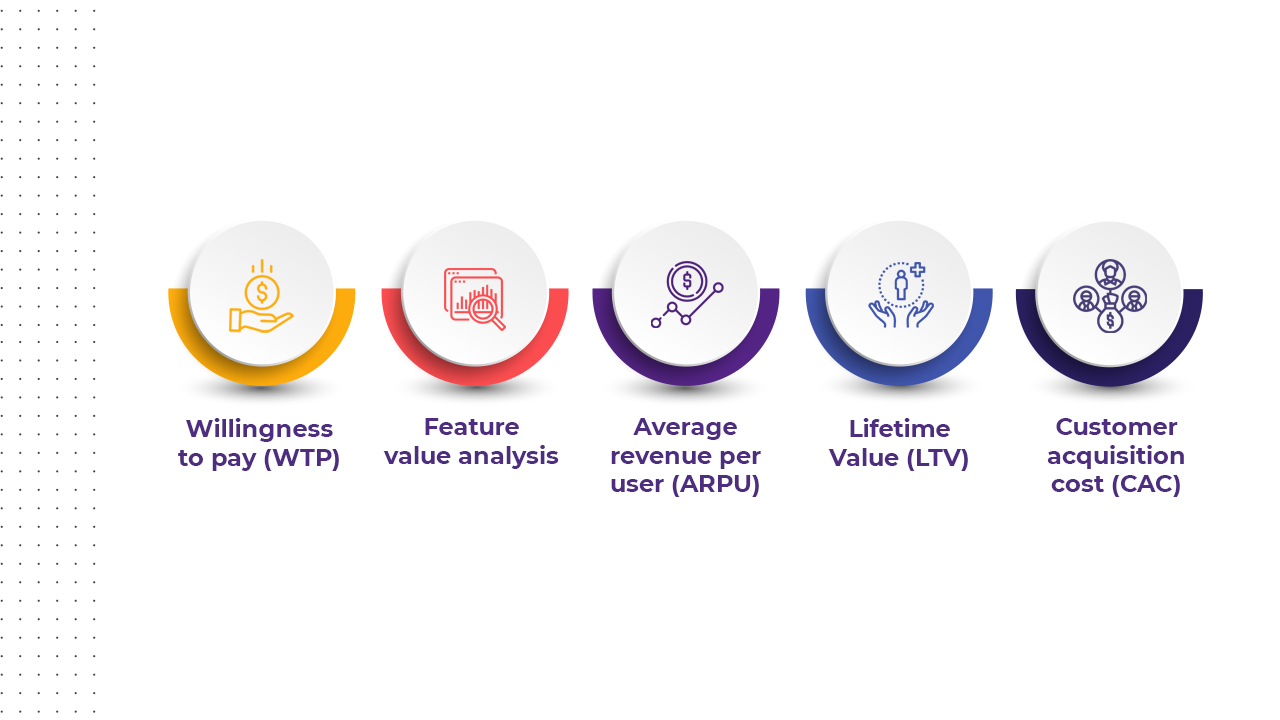
    Willingness to Pay (WTP)

    WTP, also known as price sensitivity, is the maximum price your potential customers are willing to pay for your service or product. It is an essential part of pricing strategy since you have no other way of understanding whether your product can yield an augmented product value. Numerous factors are responsible for a customer’s willingness to pay, and it’s not static. Brands must track willingness to pay for all customer segments to ensure that the product is priced competitively and drives maximum profit while staying in line with current market conditions. 

    Feature Value Analysis

    Feature value analysis, also known as relative reference analysis, measures the most important features to customers in relation to other features of a product or service. Analyzing critical features to customer segments will help brands price products based on basic or premium components. It can also help to better bundle your services or products so you can drive the most revenue. 

    Average Revenue per User (ARPU)

    The average revenue per user is the revenue generated from the sum of active users divided by the total number of users in a monthly time frame. Delving deeper into ARPU can help brands compare numbers with rivals and check how all products or customer segments perform. 

    Lifetime Value (LTV)

    Lifetime Value offers a complete picture of a user’s journey and the average revenue that the user will generate throughout their engagement as a customer with your brand. It helps brands determine various economic decisions such as marketing budgets, profitability, forecasting, and resource allocation. 

    Customer Acquisition Cost (CAC)

    A successful and profitable brand needs to balance its customer acquisition cost or CAC. It is about spending the right amount of resources and time to drive new customers without jeopardizing their lifetime value and revenue. Correct calculation of CAC helps brands to quantify their sales funnel and determine the efficiency and profitability of their strategies.

    Conclusion

    Historical pricing analytics is a powerful tool, and it can make a huge difference to a brand’s potential by increasing sales and unlocking incredible profitability in a relatively short time. Historical analysis of pricing and promotions data will help brands get better marketing returns than relying on traditional pricing approaches. 

    Leveraging pricing analytics will prevent brands from blindly reacting to competitor price changes and support solutions for scaling up price transformation efforts. By using historical pricing data, brands can more effectively segment their customers for marketing and promotion strategies. Properly utilizing predictive analytics and past sales data can help cut costs and keep profit margins high by adjusting production and prices according to market trends.
    Need help tracking your competitor prices? Or want historic pricing insights for your own brand? Or need to track the efficacy of your online promotions?
    Sign up for a demo
    with our team to know how DataWeave can help!