Category: Historical pricing analytics

  • Amazon US Prime Day 2023: Insights on Pricing and Discounts Across Popular Categories and Brands

    Amazon US Prime Day 2023: Insights on Pricing and Discounts Across Popular Categories and Brands

    Amazon’s Prime Day this year proved to be a record-breaking success, becoming the largest Prime Day event in the company’s history. Over the two-day extravaganza, shoppers in the US spent a staggering $12.7 billion, a 6.1% increase from the previous year. Amid inflationary pressures and supply chain disruptions, Amazon adopted a bold discounting strategy, offering steeper discounts compared to Prime Day 2022.

    An interesting aspect of Amazon’s approach is their loyalty based offerings. In the weeks leading to Prime Day on July 11-12, members of the loyalty program were given access to “invite-only deals” where shoppers could request invites to specific products that they were looking to purchase on deals. Overall, Amazon’s pricing and discount strategies during Prime Day were carefully designed to create a buzz among shoppers, generate increased sales, and maintain a competitive advantage in the market.

    While Prime Day is Amazon’s showstopper, it’s interesting to also see how other leading retailers respond to such a massive sale by their biggest competitor. Do they also lower their prices during the event, or are they happy to take a backseat? To answer these questions, we leveraged our proprietary data aggregation and analysis platform to analyze the prices and discounts of Amazon and its leading competitors across key product categories – Apparel, Home & Furniture, Consumer Electronics, and Health & Beauty – during Prime Day.

    Since products on Amazon and other eCommerce websites are often sold at discounts even on normal days not linked to a sale event, we delved into the real value that Prime Day offers to shoppers by focusing on price reductions or additional discounts during the sale compared to the week before. As a result, our approach highlights the genuine benefits of the event for shoppers who count on lower prices during the sale.

    Research & Methodology

    For our analysis, we tracked the prices of a large number of products across several leading retailers during Prime Day as well as the week prior to the event. The details of our sample are mentioned below:

    • Number of SKUs: 110,000+
    • Websites: Amazon, Walmart, Target, Overstock, The Home Depot, Wayfair, Ulta Beauty, Sephora
    • Categories: Apparel, Home & Furniture, Electronics, Health & Beauty
    • Pre-event Analysis: 4-10 July 2023
    • Prime Day Analysis: 11-12 July 2023

    Our Key Findings

    Our data reveals that Amazon’s price reductions were most aggressive in the Consumer Electronics category, with an average price reduction of 10.4% on Prime Day, due to the category’s popularity and high demand.
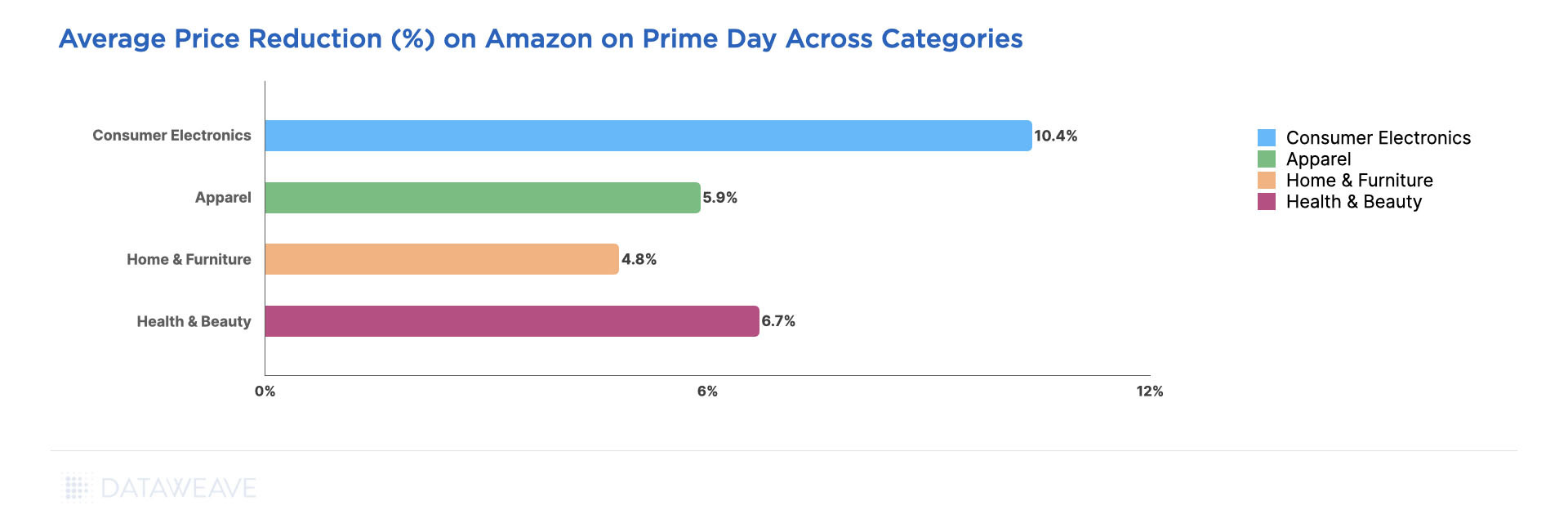
    The Health & Beauty (6.7%), Apparel (5.9%), and Home & Furniture (4.8%) categories offered relatively modest deals during the sale event.

    The Health & Beauty (6.7%), Apparel (5.9%), and Home & Furniture (4.8%) categories offered relatively modest deals during the sale event.

    Below, we delve deeper into our analysis of each category to better understand how price reductions were distributed across key subcategories on Amazon as well as the discounting strategies of Amazon’s leading competitors.

    Apparel

    As Amazon grappled with surplus inventory, heightened storage costs, and reduced profit margins in apparel (like most other retailers), its average discount before Prime Day was already as high as 13.3%. Then, on Prime Day, Amazon’s apparel deals were tempered at around 5.9% across an impressive 33.1% of its assortment, while Target and Walmart chose not to compete in a meaningful way.
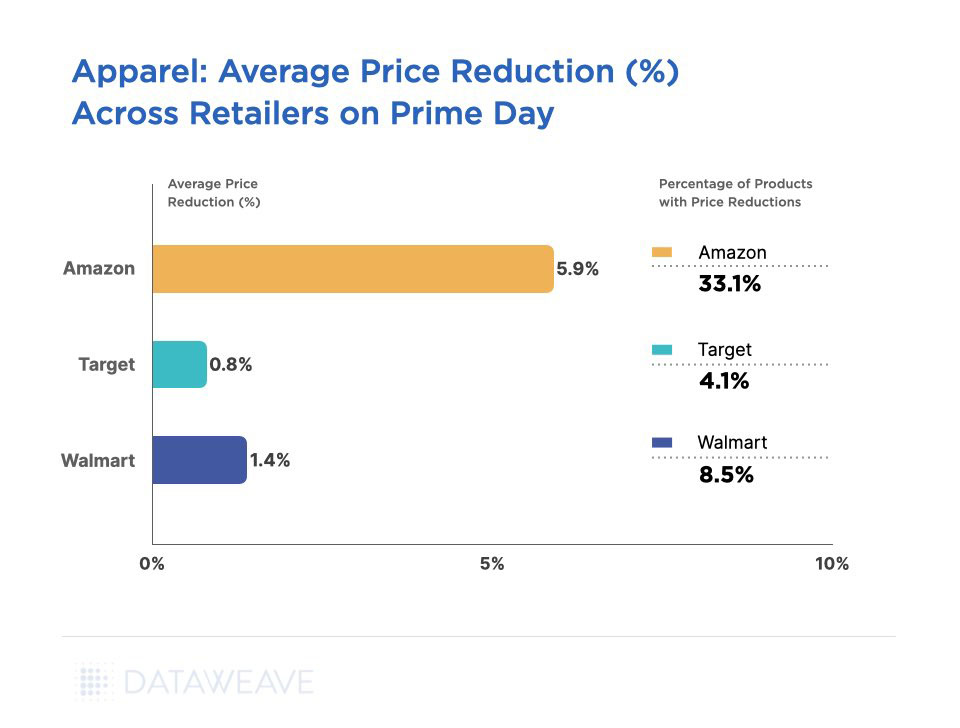
    Unlike Prime Day 2022, when Target competed with Amazon with high discounts, the retailer offered only 0.8% additional discount across 4.4% of its assortment in this category. Walmart, too, reduced its prices by only 1.4% on 8.5% of its assortment during Prime Day.

    Check out our latest analysis on fashion pricing trends across 2022-23 to better understand the pricing dynamics in this category in greater detail.

    Across all the apparel subcategories we analyzed, Women’s Athleisure (8.7%), Men’s Swimwear (8%), and Women’s Tops (7.6%) were among the ones with the highest price reductions. On the other hand, Men’s Athleisure (2.5%), Women’s Shoes (3.5%), and Men’s Innerwear (4.1%) had conservative markdowns.
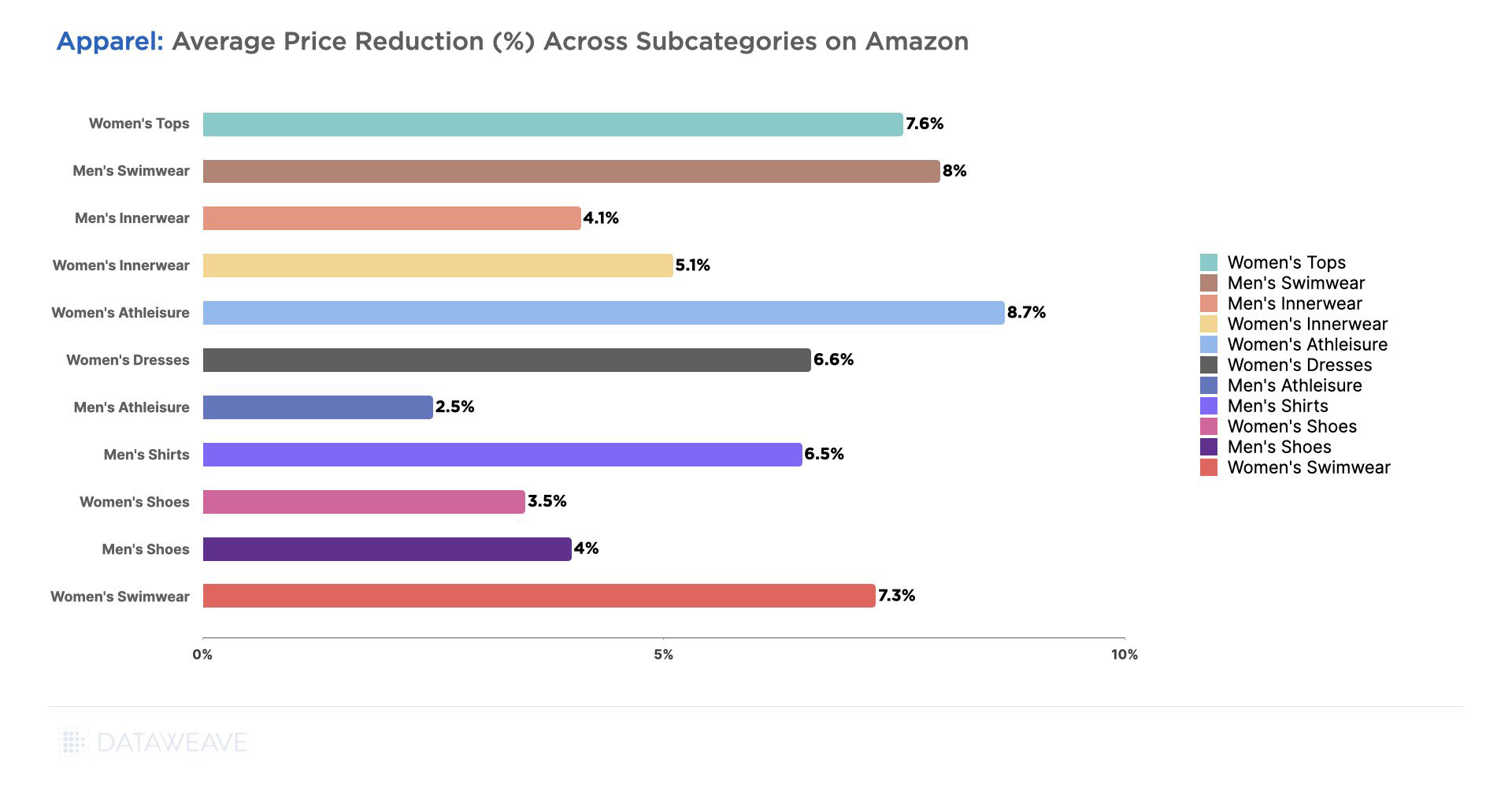
    Pricing decisions across the various subcategories are likely to have been influenced by several factors like inventory levels, demand patterns, and the need to balance competitive offers with maintaining reasonable profit margins, as Amazon tried to cater to a more price-sensitive consumer.

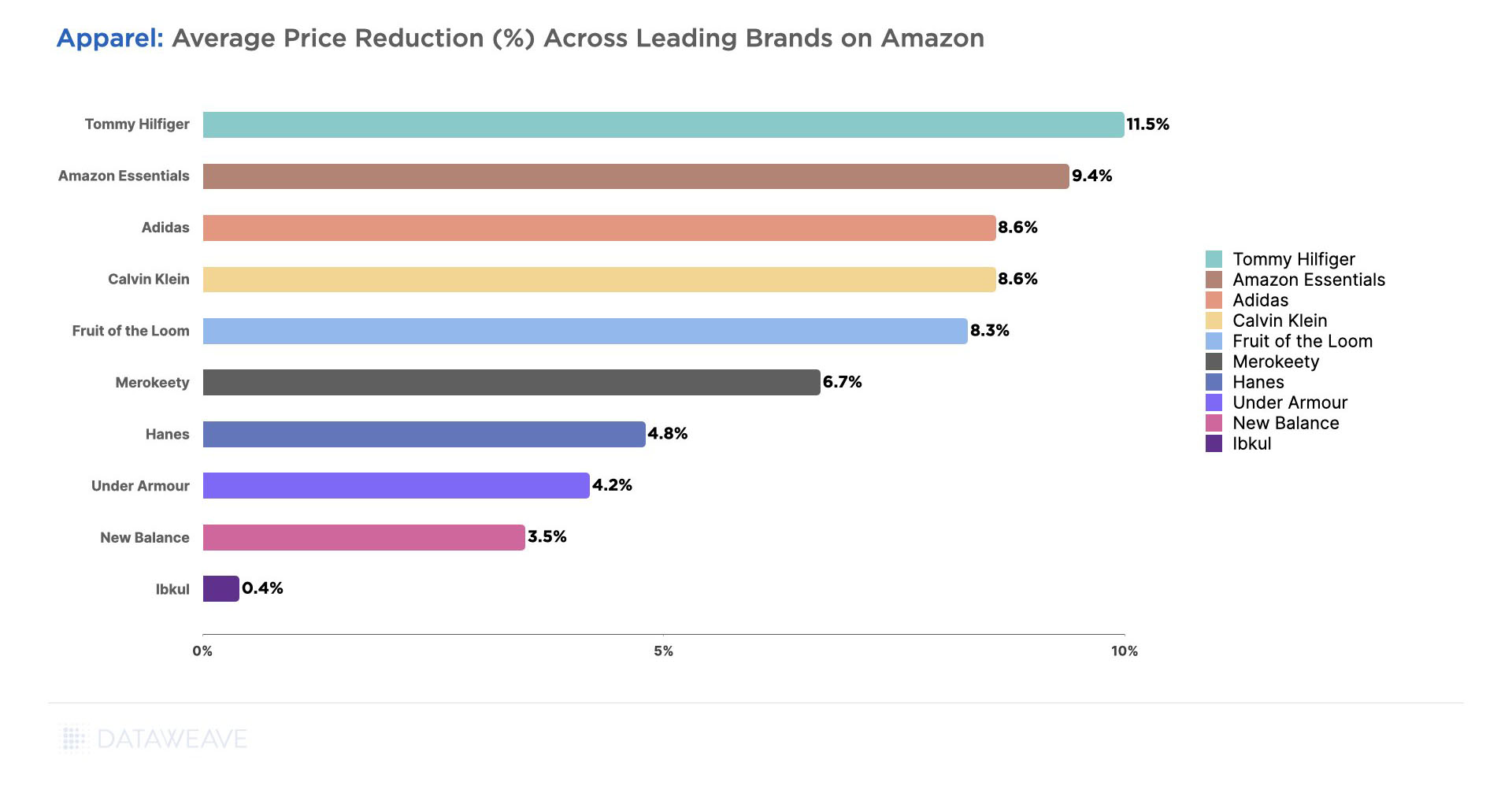
    Across all apparel subcategories, leading brands that offered the highest markdowns were Tommy Hilfiger (11.5%), Amazon Essentials (9.4%), Adidas (8.6%), and Calvin Klein (8.6%).
    For brands, however, lowering prices is only one lever to attract and convert shoppers. They also need to ensure they’re highly visible and discoverable on Amazon’s search listings. This exponentially improves their chances of driving more clicks and conversions. In our analysis, we tracked the Share of Search of brands across several popular search keywords. Share of Search for a brand is defined as the proportion of the brand’s products in the top 20 search results for a search query.

    Our data indicates that several brands gained impressive ground in their discoverability during Prime Day, while others fell behind. Gildan in Men’s Innerwear, Adidas in Men’s and Women’s Shoes, Anrabess in Women’s Athleisure, and Lululemon in Men’s Athleisure, among others, improved their Share of Search by significant levels during Prime Day.
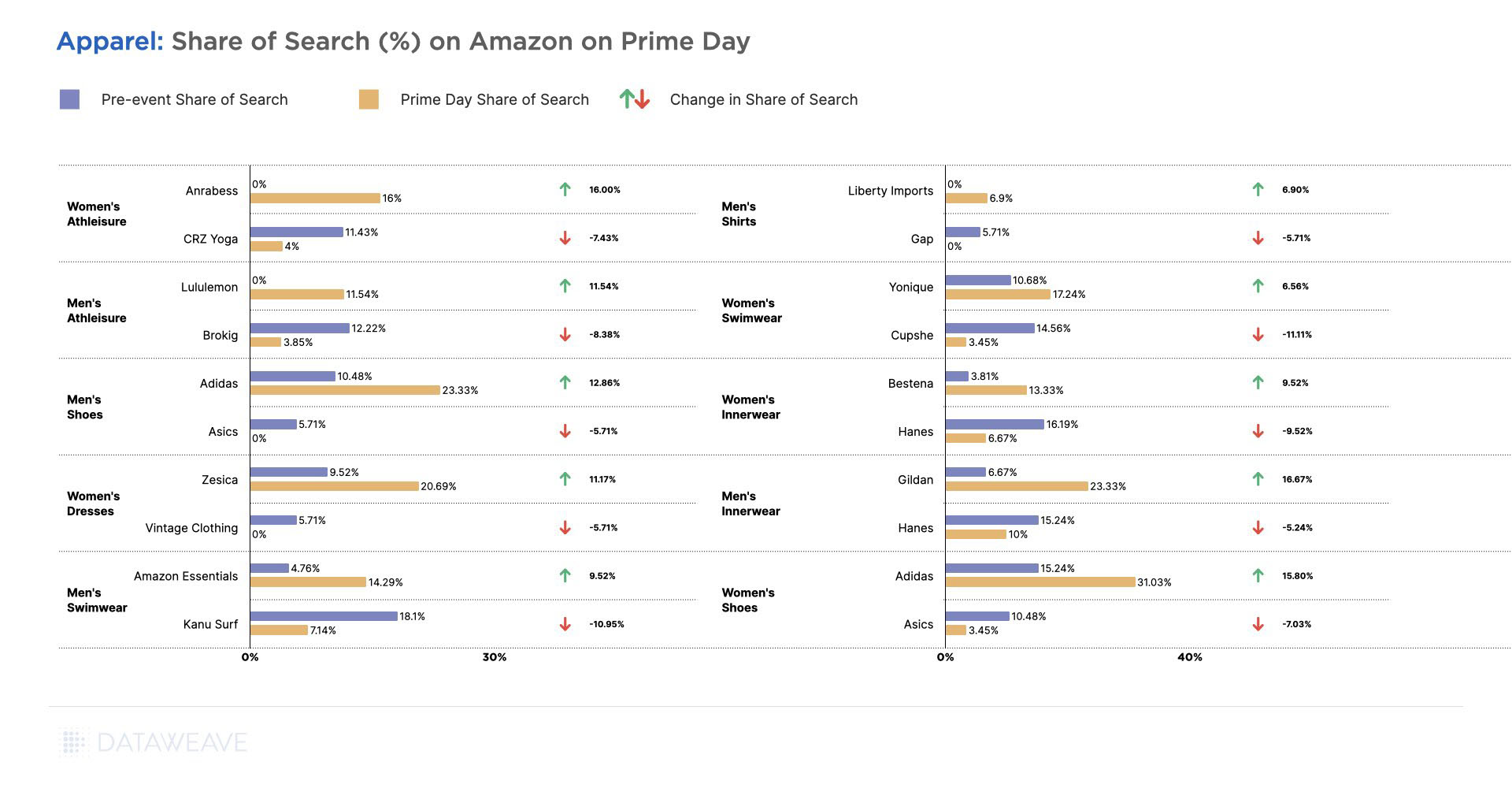
    On the other hand, brands like Hanes in Men’s and Women’s Innerwear, Kanu Surf in Men’s Swimwear, Cupshe in Women’s Swimwear, and others lost around 10% in their Share of Search during the event. This is likely to have impacted their sales volumes adversely.

    Home & Furniture

    The Home & Furniture industry has been challenged with reduced demand due to inflationary pressures over the past year or so. Leading retailers in the category overestimated the demand, leading to overstocking of inventory. As a result, Home & Furniture is one of the few categories that saw Amazon’s competitors participate at a significant level on Prime Day in order to ensure they don’t fall behind on liquidating their stock.
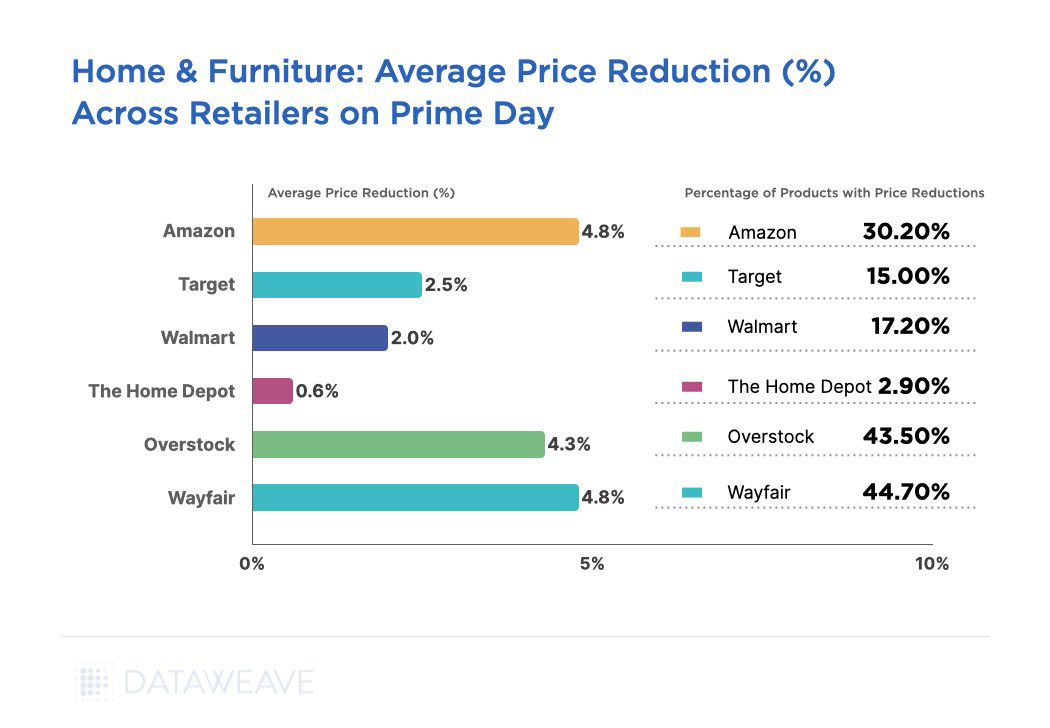
    Amazon’s additional discounts averaged 4.8% across 30.2% of its assortment. Wayfair and Overstock too reduced their prices by 4.8% and 4.3% on around 44% of their respective assortments. Wayfair’s move is likely a part of their strategy to attract new customers and expand their market share, in response to a decline in their consumer base. Last year, Wayfair experienced a loss of 5 million out of its 1.3 billion consumers due to weakening demand.

    Target and Walmart did offer additional discounts, but they were not at a competitive level. The Home Depot effectively opted not to compete at all during the sale event. Overall, the pricing actions of these retailers are in stark contrast to the highly conservative pricing strategies observed on Prime Day last year.

    Our recent pricing analysis of the Home & Furniture category revealed more interesting insights and pricing dynamics over the past year.

    Across all the subcategories we analyzed, Bookcases (8.2%), Rugs (7.8%), Mattresses (6.5%), and Luggage (6.2%) were among the ones with high price reductions.
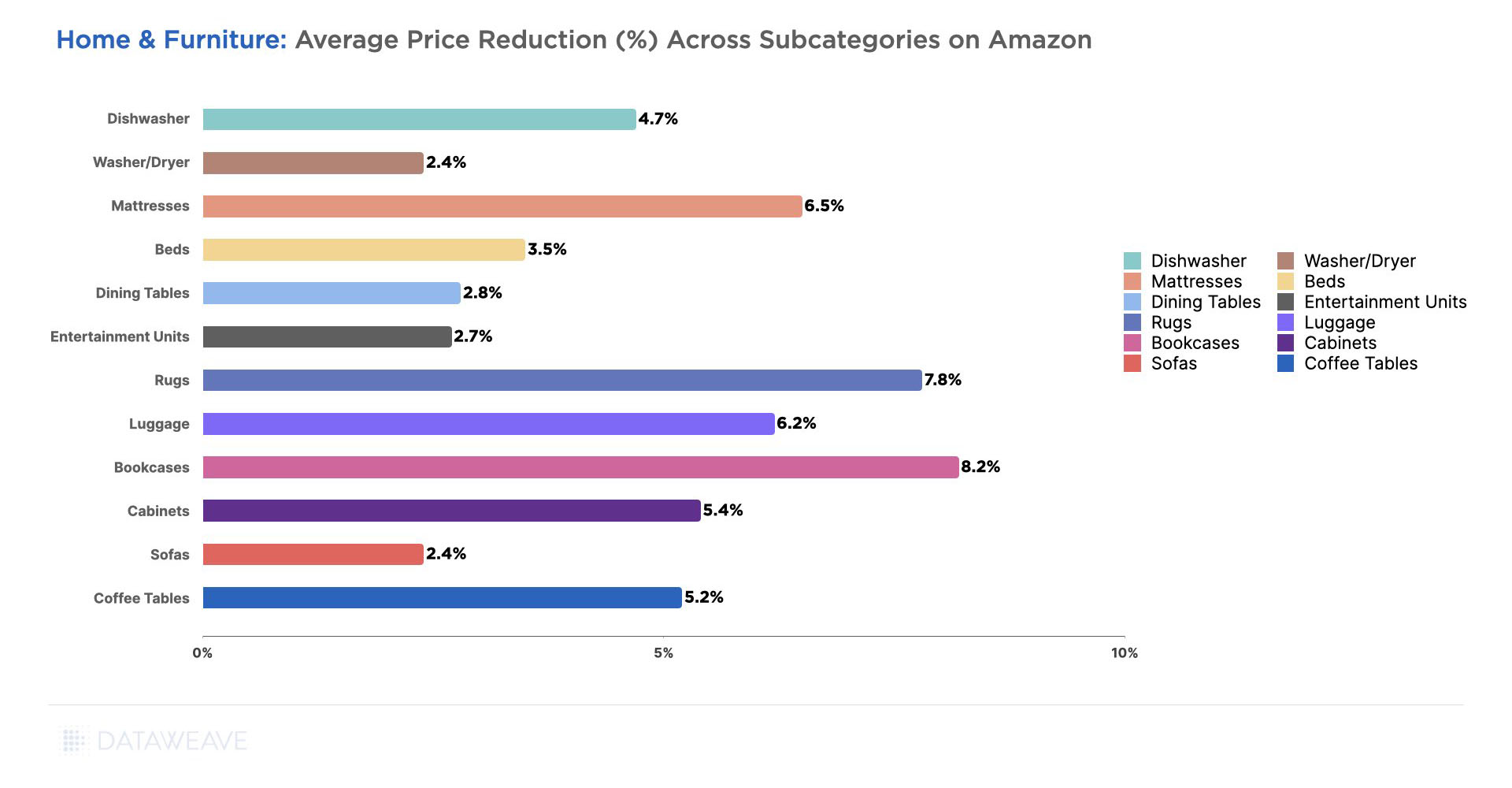
    Meanwhile, Sofas (2.4%), Washer / Dryers (2.4%), and Entertainment Units (2.7%) had lower markdowns. These are large and substantial purchases, making retailers more cautious about deeply discounting them while still ensuring profitability.

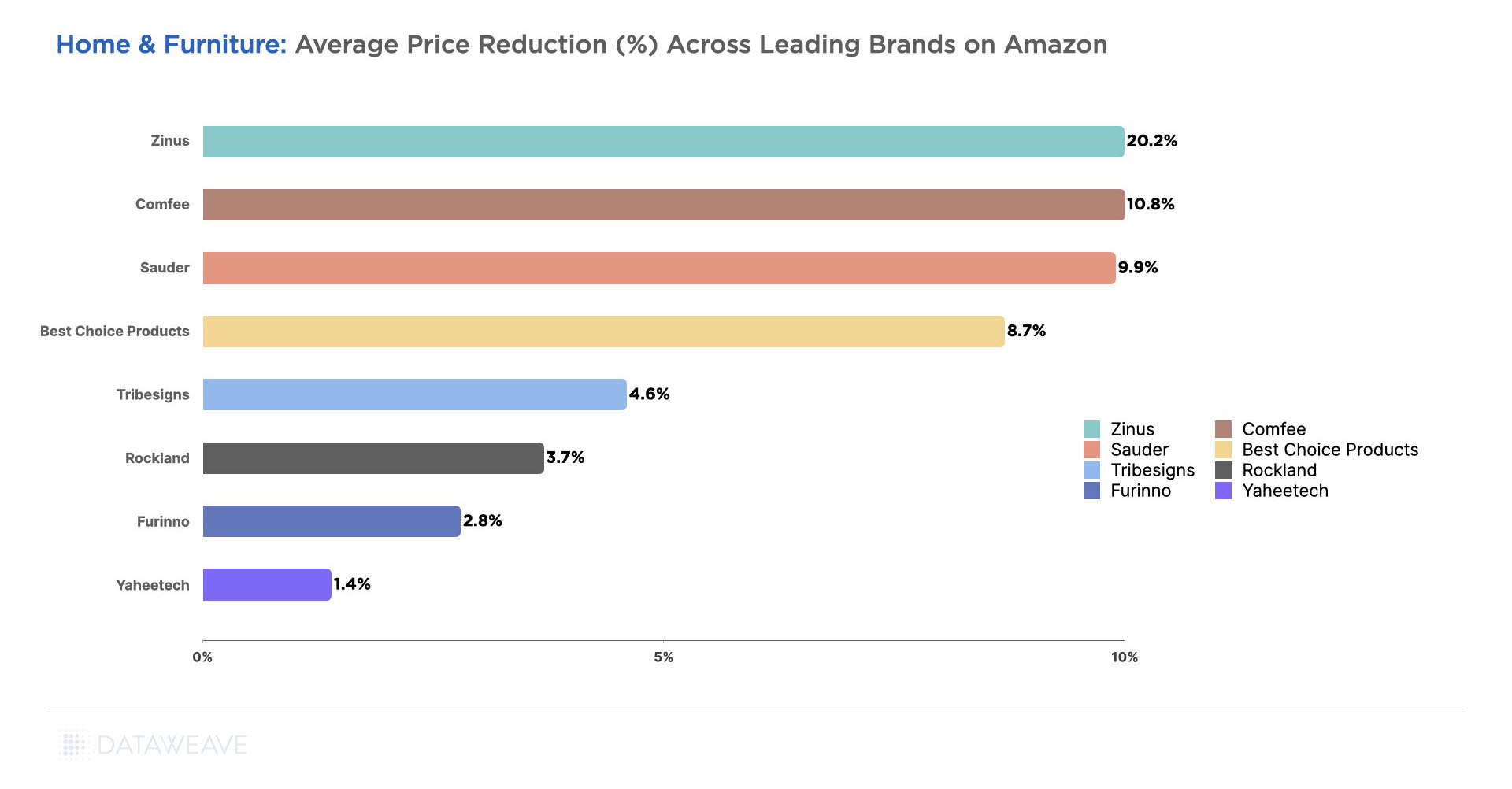
    The brands that stepped up and offered the highest markdowns in this category include Zinus (20.2%), Comfee (10.8%), Sauder (9.9%), and Best Choice Products (8.7%).
    In terms of Share of Search, Rockland in Luggage gained the highest (21%), followed by Farberware in Dishwasher, Olee Sleep in Mattresses, and Homeguave in Mattresses gained significant ground in their respective categories as shown in the image below.
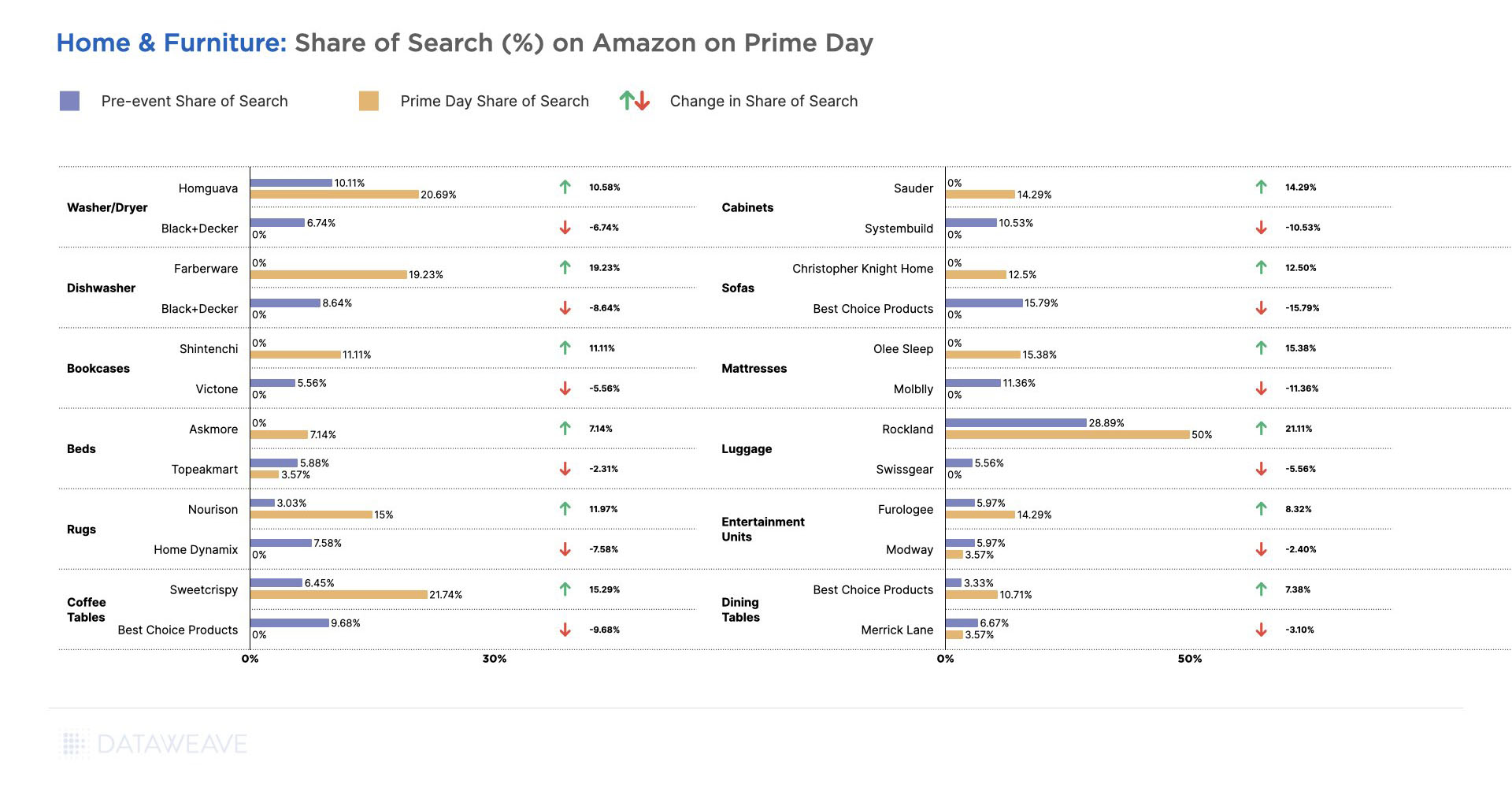
    Brands like Best Choice Products in Coffee Tables, Molblly in Mattresses, and Black+Decker in Washer/Dryers and Dishwashers lost a good portion of their Share of Search during the event. Due to high competition for visibility during sale events, brands that fail to keep an eye on their Share of Search stand to take a hit in their sales, especially in categories like Home & Furniture that tend to have low brand loyalty.

    Consumer Electronics

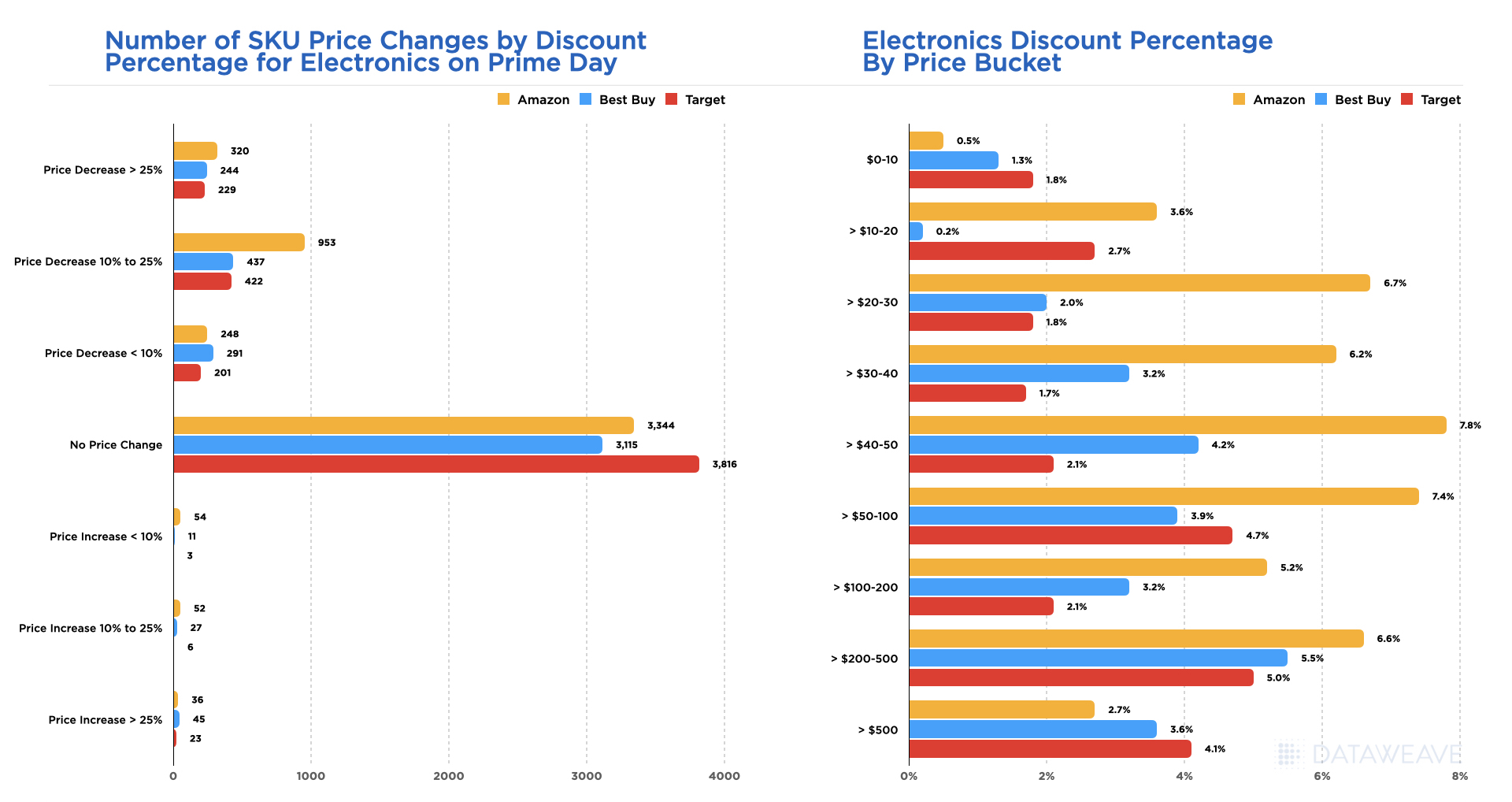
    2023 was the year of consumer electronics on Amazon Prime Day. Amazon’s price reduction during the sale averaged 10.4% across 54.5% of its assortment in the category. Target and Walmart, on the other hand, offered significantly lower additional discounts of 1.9% and 2.7% on 10.4% and 19.1% of their assortment, respectively.
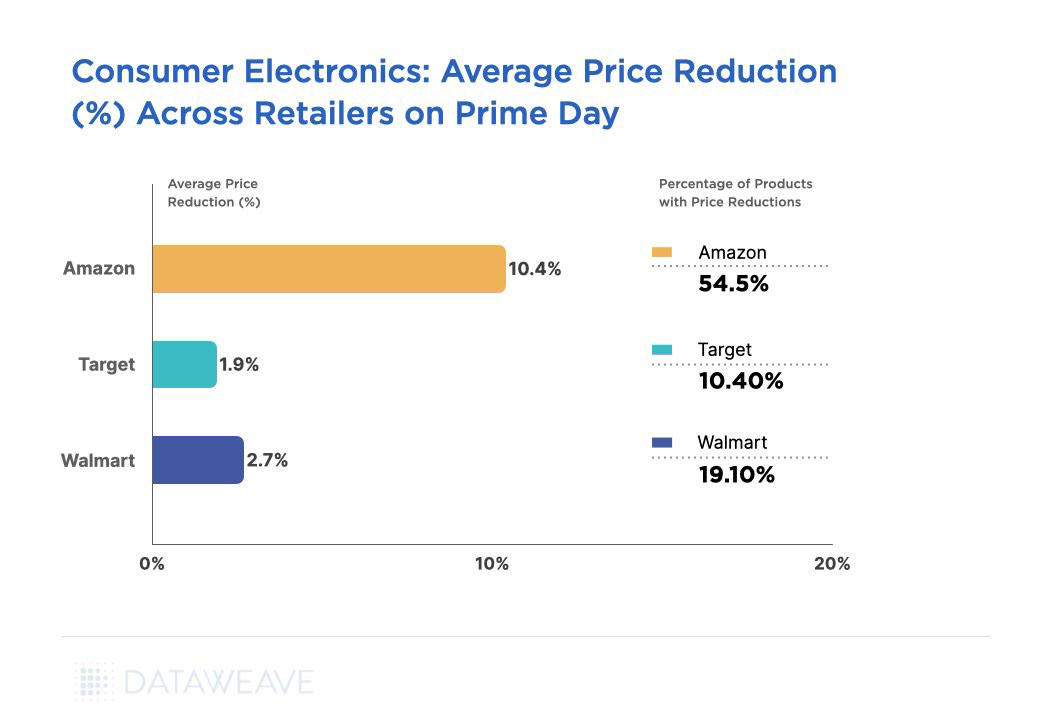
    The consumer electronics category often witnesses aggressive price reductions during Prime Day and other sale events due to its popularity and high demand. In addition, since retailer margins are usually low in this category, shoppers often have to wait for sale events like Prime Day (when brands markdown their wholesale rates) to have several attractive deals to choose from.

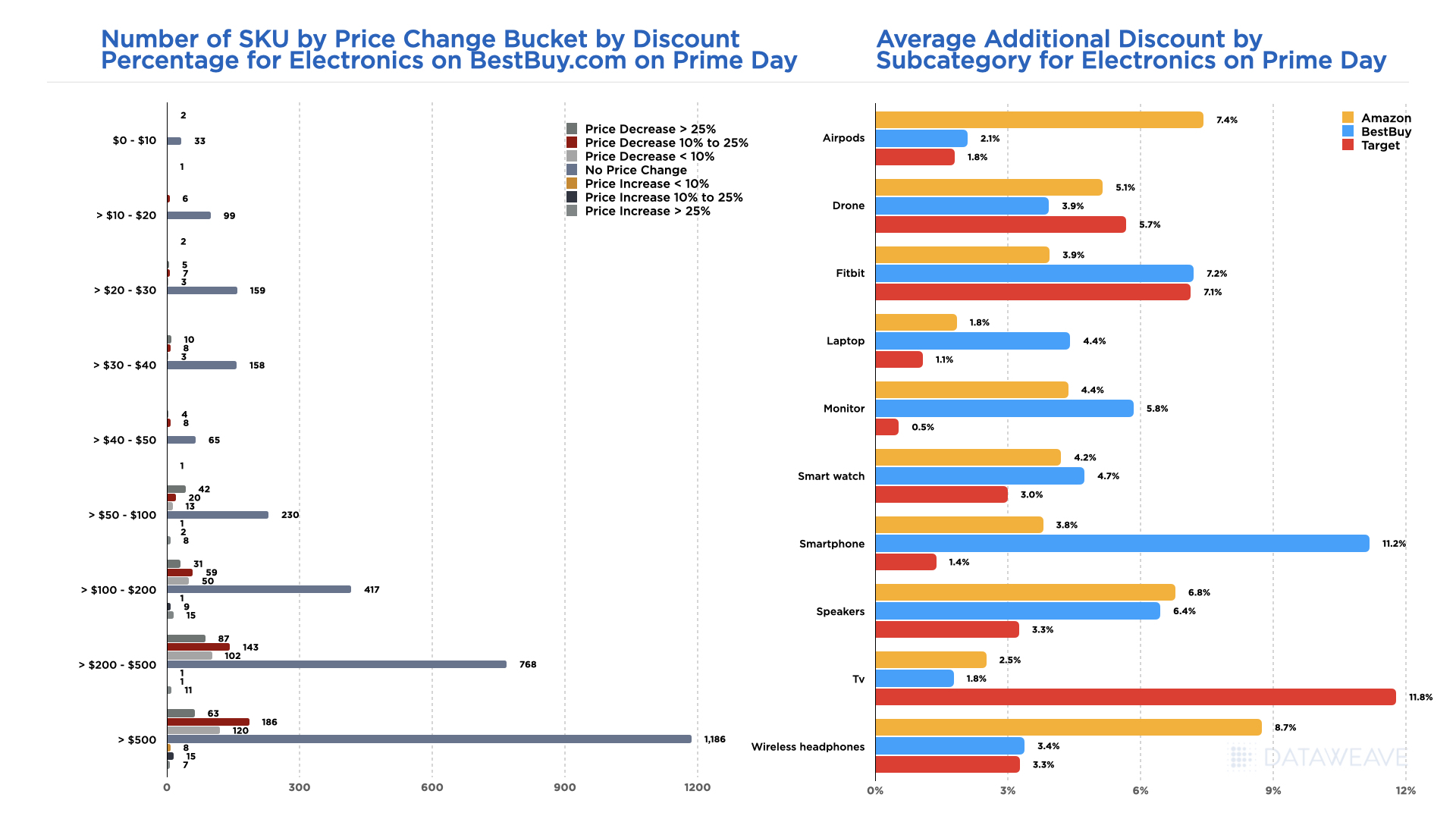
    Across all the subcategories we analyzed, Smartwatches (15.4%), Wireless Headphones (15.4%), Earbuds (14.9%), Headphones (12.5%), and Tablets (12.0%), were among the ones with the highest price reductions. All of these subcategories are quite popular that tend to sell in large volumes during sale events.
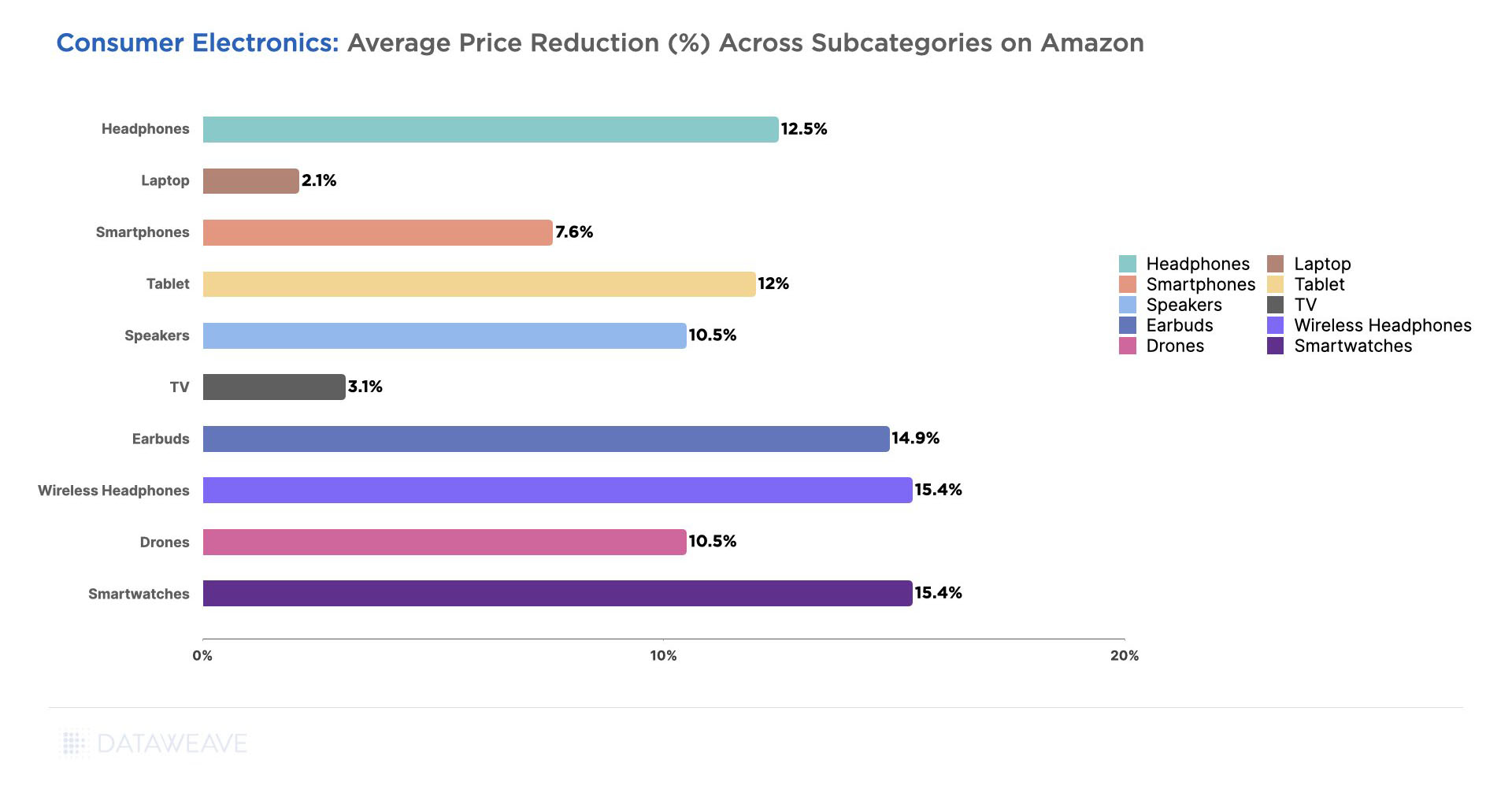
    Meanwhile, Laptops (2.1%), TVs (3.1%), and Smartphones (7.6%) had lower markdowns. A lower markdown on smartphones may reflect steady demand throughout the year, reducing the urgency to offer significant discounts during the short Prime Day window.
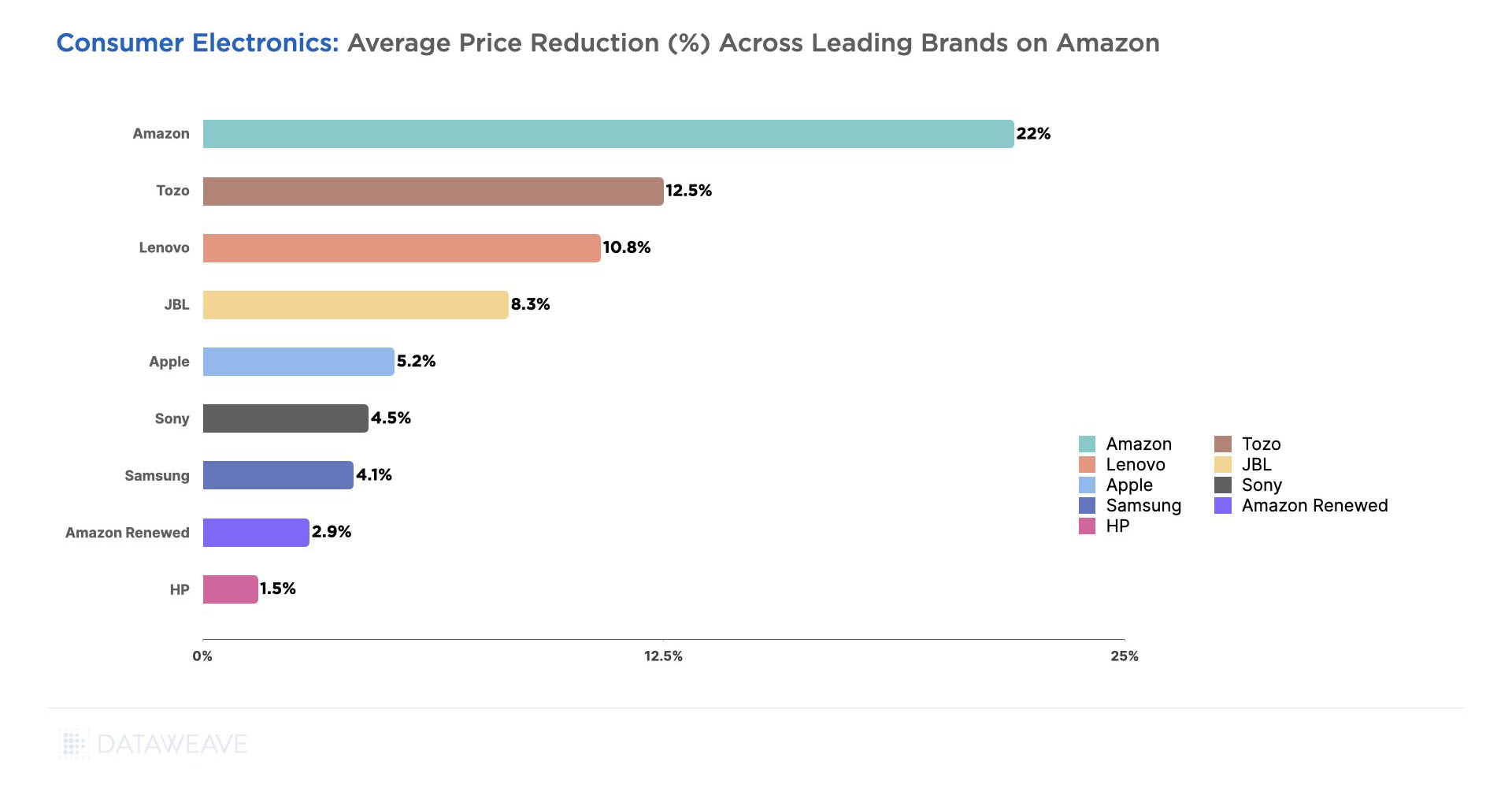
    Amazon (22%), Tozo (12.5%), Lenovo (10.8%), JBL (8.3%), and Apple (5%) offered the highest price reductions in Consumer Electronics as a whole. Clearly, Amazon didn’t hold back on offering attractive deals on its own private label products in this category.

    Consumer Electronics as a category tends to have a brand loyal shopper base. However, Share of Search generic search keywords are still very important for keywords like earbuds, headphones, and tablets that result in relatively lower priced products. HP in Laptops, Samsung in Tablets and TVs, and Oneplus in Smartphones all made strong strides in building their discoverability on Amazon during Prime Day. Beyond just driving more sales, this also has the intended effect of boosting brand awareness among high-intent shoppers.
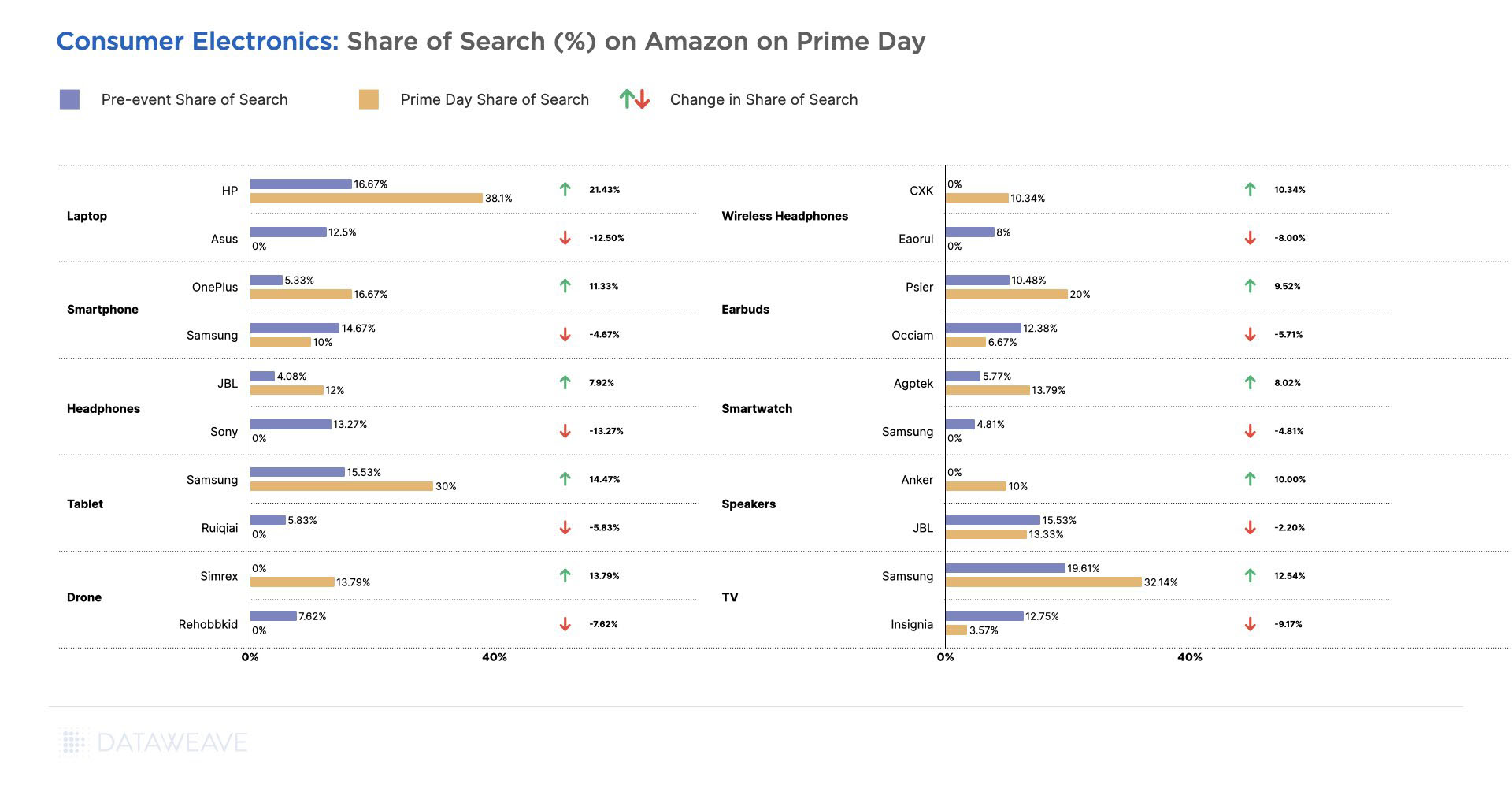
    Sony in Headphones, Asus in Laptops, and Insignia in TVs lost out to other brands in terms of their discoverability during the sale. Sony and Asus, especially would be hurting as they are prominent brands in their respective categories.

    Health & Beauty

    The Health & Beauty category is a favorite among consumers during Prime Day, as it encompasses a wide range of products like skincare, cosmetics, and grooming items. As shoppers often tend to stock up during the sale, brands and retailers are willing to offer competitive discounts and gain an edge over their competitors.

    Our data reveals that the average additional discount on Amazon was 6.7%, offered on a little over a third of its assortment. Walmart reduced its prices sizably as well, by an average of 3.1% on 13.4% of its assortment.
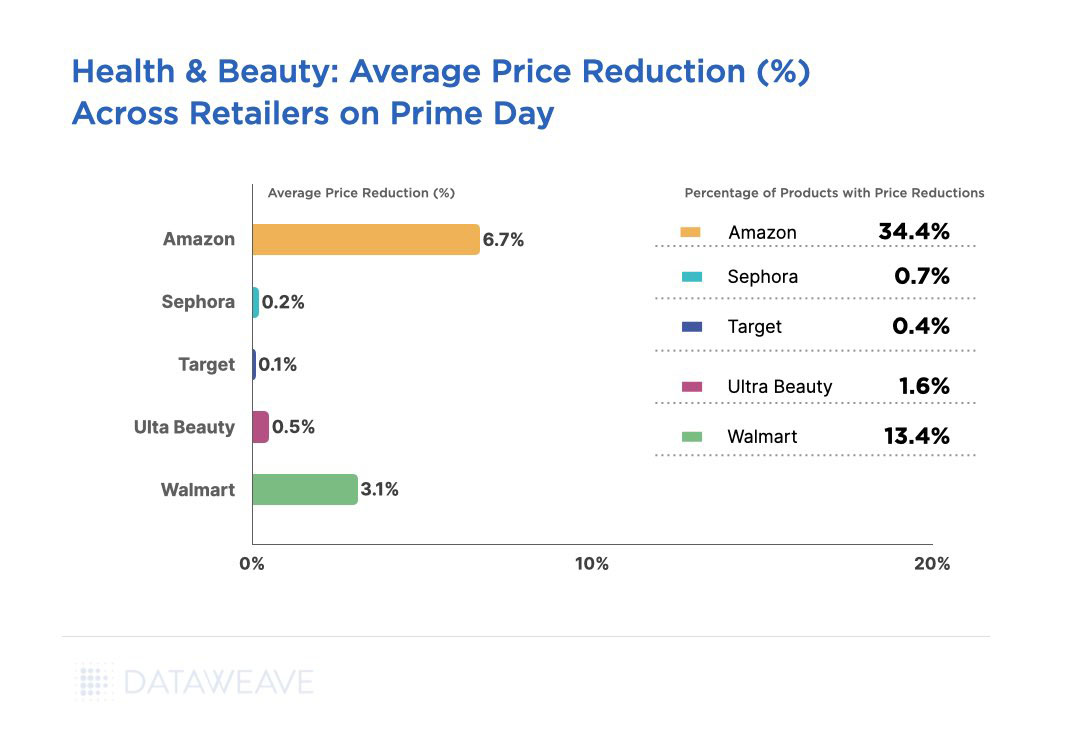
    Interestingly, Sephora and Ulta Beauty, leading retailers in the Health & Beauty category did not compete on price at all this Prime Day. It is likely they are confident their loyal customer base will not be influenced by Amazon’s Prime Day deals and be driven away merely by lower prices. In addition, keeping their prices steady during Prime Day might have been a strategic choice to protect their brand reputation and premium positioning.

    Relatively premium subcategories like Electric Toothbrushes (10%), Moisturizer (8.3%), Beardcare (7.3%), and Make Up (6.7%) saw the highest price reductions on Amazon.
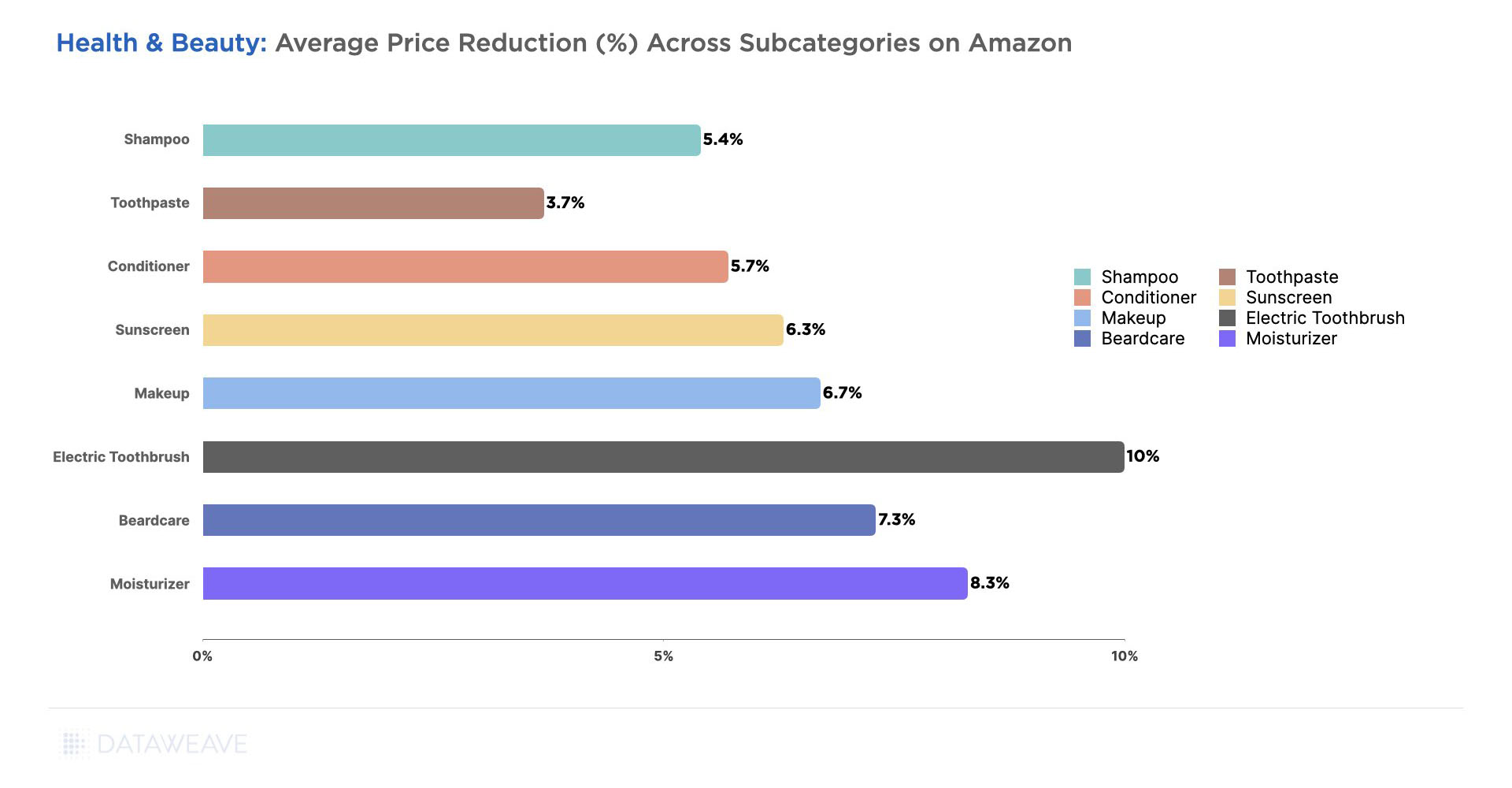
    In contrast, staple items like Toothpaste (3.7%), Shampoos (5.4%), and Conditioners (5.7%) had lower markdowns.

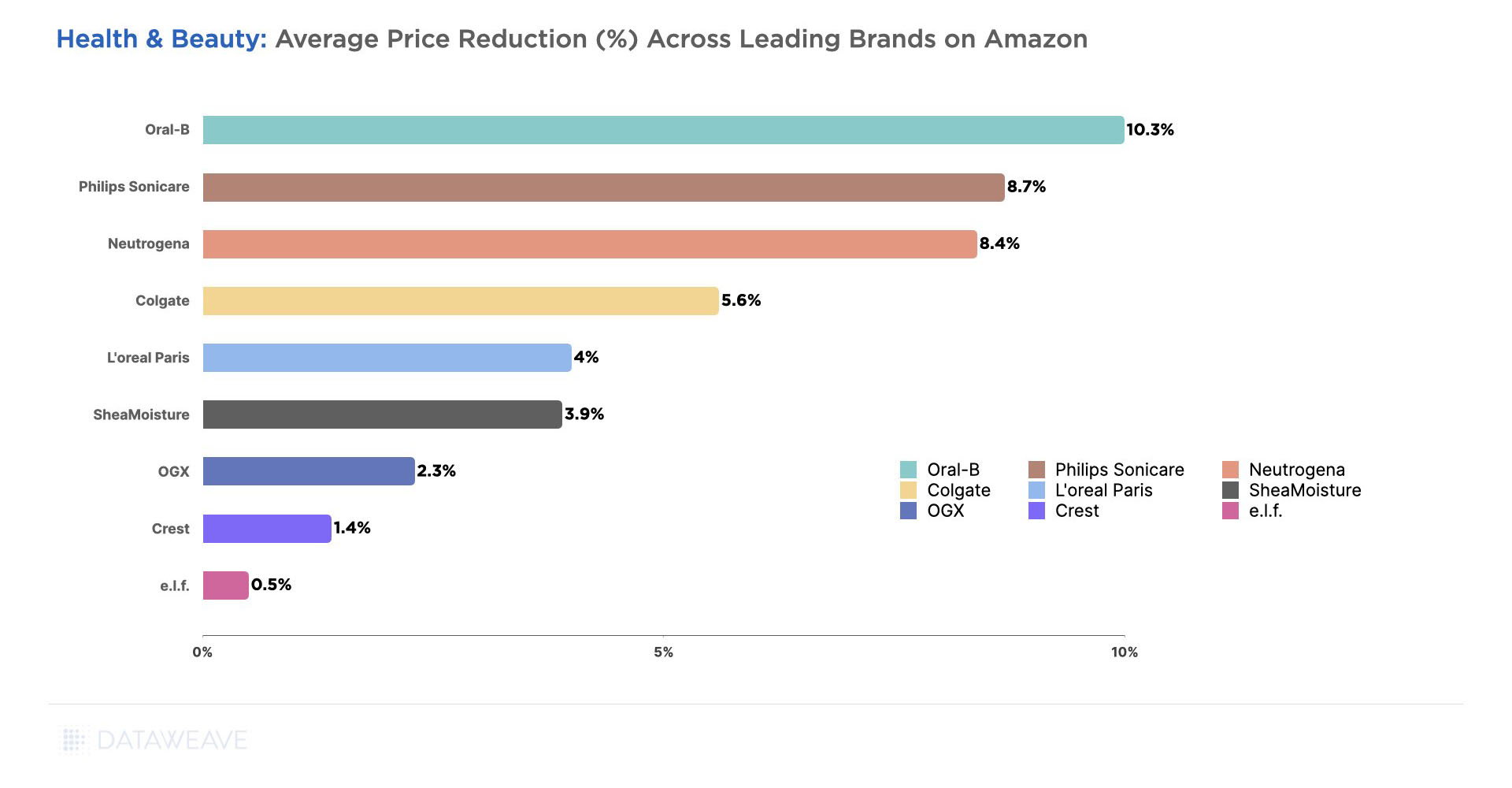
    Among the leading brands in this category, Oral-B (10.3%), Philips Sonicare (8.7%), Neutrogena (8.4%), and Colgate (5.6%) offered the most attractive deals during the sale event.
    In terms of significant gains in Share of Search for brands, Oral-B in Electric Toothbrushes led the pack again. Neutrogena in Sunscreens and Somall in Toothpastes also gained more than 10% in their Share of Search during the sale event, followed by Tresemme in Shampoos and Airspun in Make-Up products.
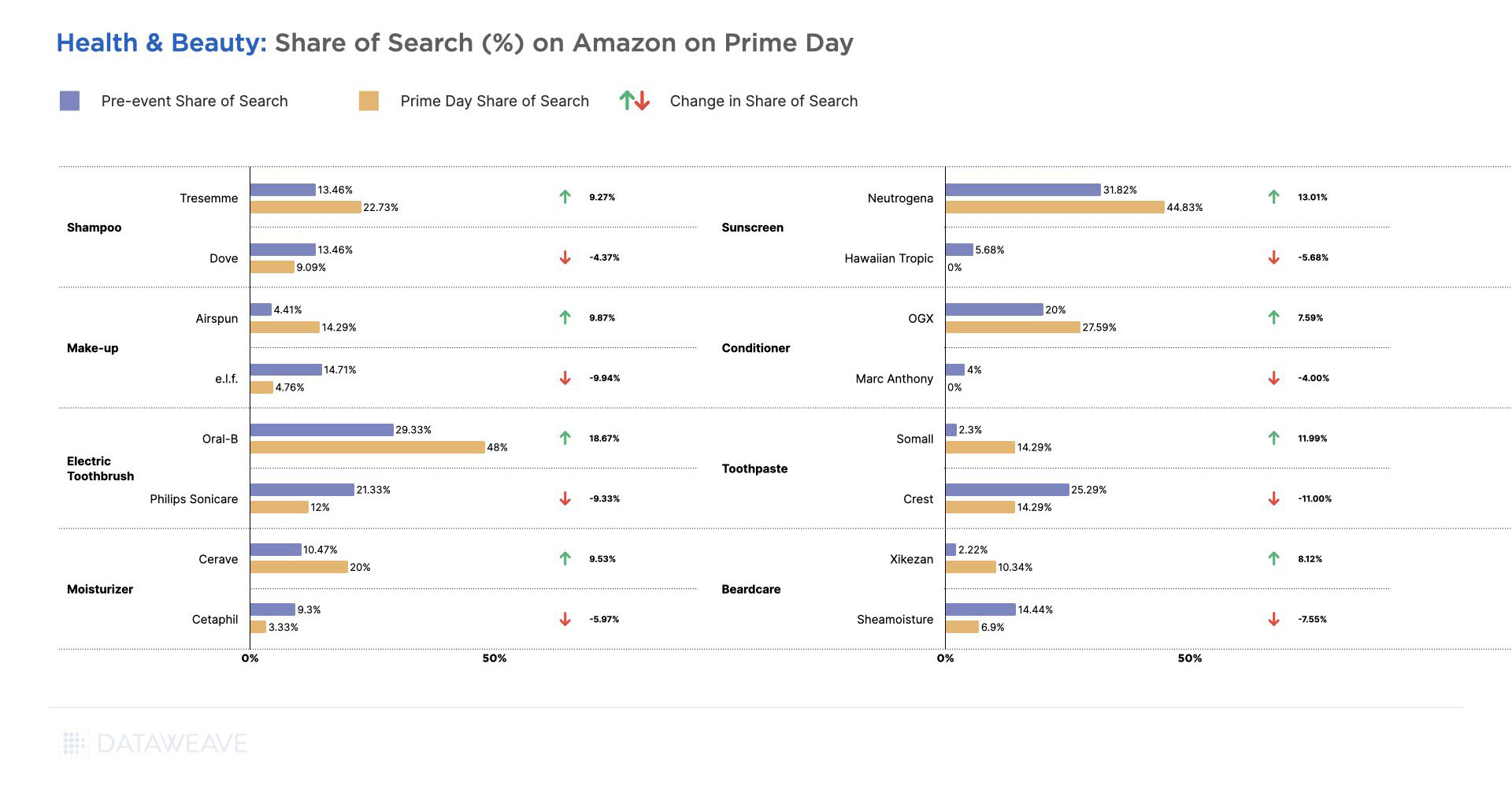
    Other popular brands like Crest in Toothpastes, e.l.f in Make-Up, Philips Sonicare in Electric Toothbrushes, and Sheamoisture in Beradcare surprisingly had reduced visibility among the top search results for relevant subcategories.

    Staying Ahead of the Curve During Sale Events

    This Prime Day, Amazon leveraged its scale to offer aggressive discounts across key product categories, while several competing retailers chose to sit back and let the sale play out. Others chose a selective discounting strategy that focused their modest price reductions on a small set of items.

    At DataWeave, we understand the pivotal role competitive pricing insights play in empowering retailers and brands to gain a competitive edge, especially during crucial events like Prime Day. For retailers, the ability to track competitor prices accurately, at scale, in a timely manner is essential to plotting and acting on impactful pricing strategies and staying ahead of the curve.

    To learn more about how this can be done, reach out to us today!

  • Navigating the Turbulent Home and Furniture eCommerce Market in 2023 with the Power of Competitive Intelligence

    Navigating the Turbulent Home and Furniture eCommerce Market in 2023 with the Power of Competitive Intelligence

    The home and furniture retail industry is going through a turbulent time. As inflation reared its head mid-2022, leading retailers in the category have been grappling with the higher costs associated with producing and distributing their products, as well as reduced shopper demand. The rising costs of raw materials, transportation, and labor have had a direct impact on the pricing dynamics within the industry. For example, reports indicate container rates soared to nearly 10 times pre-pandemic levels towards the end of 2021.

    Furthermore, shoppers’ spending power has been constrained, while higher interest rates have suppressed demand. Retailers have had to adapt their assortment and pricing strategies to cater to a wider range of shopper preferences driven by changing lifestyles and a growing emphasis on sustainability. Post-pandemic, demand has been primarily driven by affluent shoppers.

    Towards the end of 2021, due to supply delays and disruptions, retailers heavily stocked up on available products. However, when demand subsequently decreased in 2022, they were left with a significant amount of unsold stock that was purchased at high rates. This put them in a difficult situation, as they had an excess of products but were unable to sell them even at reduced prices without impacting their profit margins. Additionally, staying competitive in a rapidly changing market environment was equally important.

    Given this context, it is crucial for home and furniture retailers to adopt a data-driven approach that utilizes competitive and market insights to consistently maintain or increase their online sell-through rates. DataWeave’s Commerce Intelligence solution offers exactly that, empowering retailers across various industry segments to stay updated on evolving consumer trends and competitor actions.

    To gain a better understanding of the pricing strategies employed by leading home and furniture retailers throughout the past year, we leveraged our proprietary data aggregation and analysis platform to track and analyze the pricing of a wide range of products across multiple retailers and subcategories within the industry.

    Our Research Methodology

    • Number of SKUs: 400,000+
    • Key retailers tracked: Amazon, Wayfair, Home Depot, Overstock, Target, Walmart
    • Key categories reported: Home and Office, Bed and Bath, Bathroom, Bedroom, Decorative, Dining Room, Kitchen, Garden & Patio, Hardware
    • Timeline of analysis: April 2022 to April 2023

    Our Findings

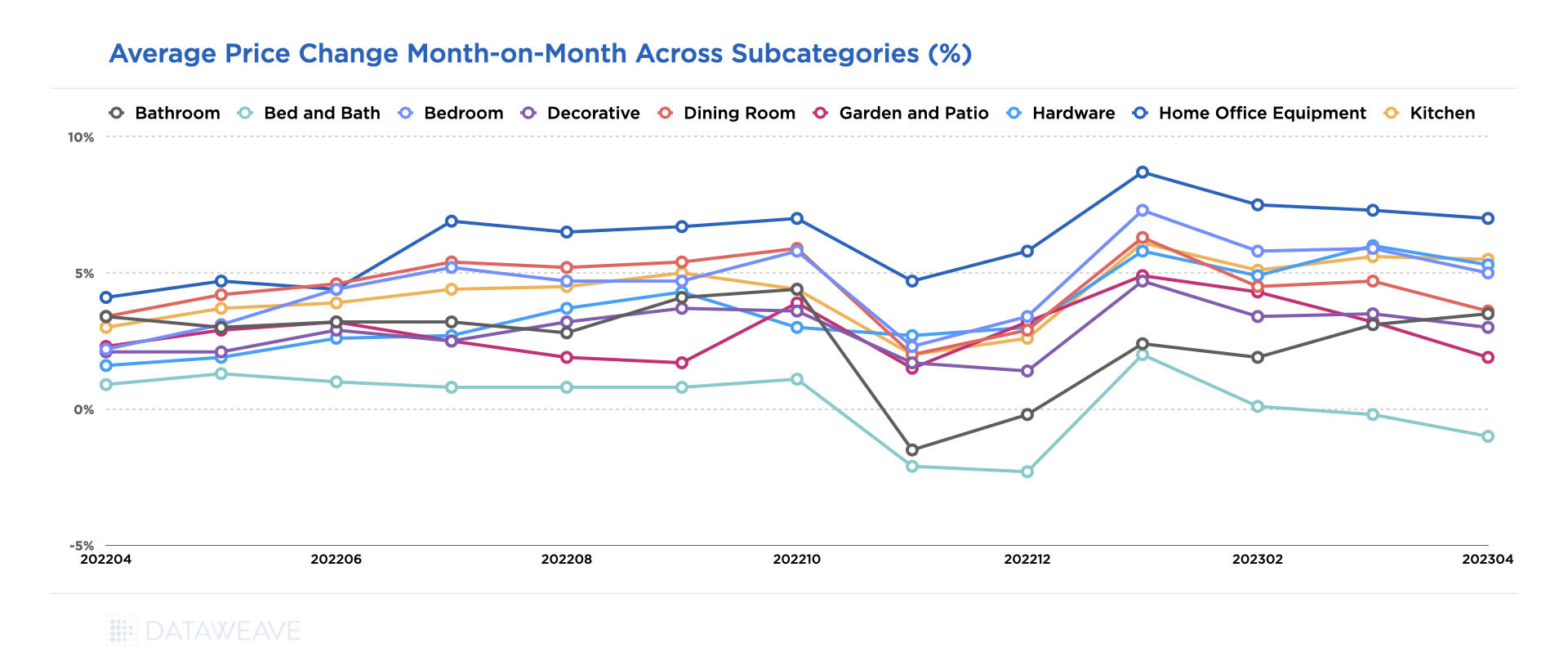
    Interestingly, our analysis indicates that average prices in the home and furniture category rose by around 5% between March 2022 and April 2023. However, there have been seasonal fluctuations in the prices over the course of the year.

    Among the various subcategories, the most substantial price surge was observed in home office equipment, with an uptick of 9.3% in January 2023 when compared to March 2022. The surge in demand for home office furniture, fueled by the widespread adoption of work from home arrangements, played a pivotal role in depleting inventories and consequently driving up prices. Additionally, the shift towards collaborative workspaces and the gradual expansion of office environments have contributed to the sustained demand for office furniture.

    Avg. price changes MoM across home and furniture subcategories from April 2022-23.

    While prices for several subcategories rose significantly, others experienced subdued growth, such as bed and bath. The subcategory experienced the lowest price increment, registering a modest 2.8% increase annually. This can be attributed to the impact of a subdued housing market and a decrease in first-time buyers, which may partly be due to the global recession and inflationary pressures.

    Moreover, retailers overestimated the demand for home furniture during the holiday season, leading to an overstocking of inventory. Consequently, prices experienced a dip from October to December 2022. In fact, this was a common trend across all home and furniture subcategories. As retailers emerged from the holiday season, prices rose to their highest level in January 2023, and have stayed relatively stable since.

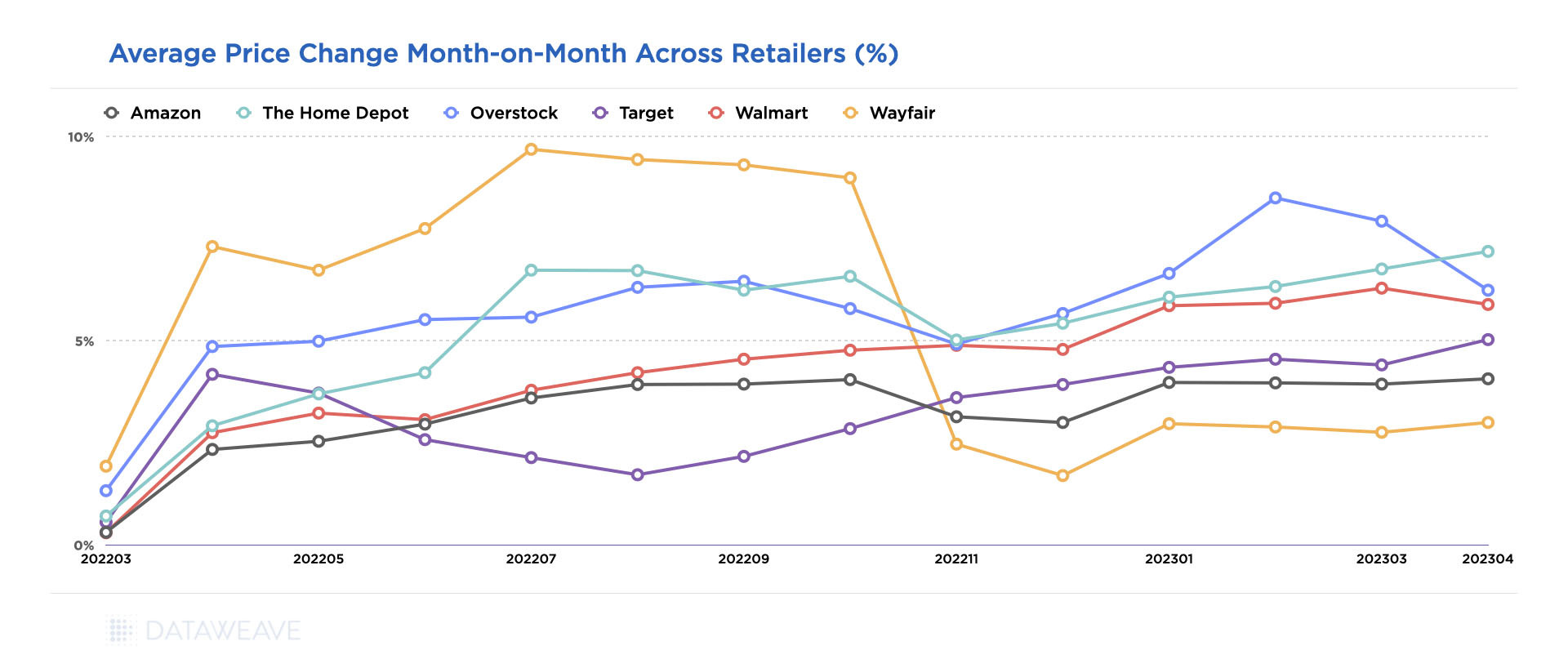
    Some of these trends vary among retailers as each faces different challenges and responds in distinct ways.

    Wayfair, for example, shows a significant dip in pricing after October 2022, with prices stabilizing in 2023. This could be in response to the retailer’s shrinking consumer count, losing 5 million of its 1.3 billion consumers in 2022 due to declining demand.

    Avg. price change MoM within the home and furniture sector across retailers from April 2022-23.

    In fact, online furniture retailers like Wayfair and Overstock reported declines in annual revenue in 2022, as the furniture sector continued to normalize from the high spending seen during COVID-era lockdowns. Wayfair reported that its 2022 net revenue was $12.2 billion, down almost 11% from the year prior. The company also laid off 10% of its workforce in August 2022. Overstock’s reported annual net revenue in 2022 was $1.9 billion, a 30% decrease year-over-year.

    Interestingly, both companies took contrasting approaches in response to this situation. Wayfair opted for aggressive cost-cutting measures, including layoffs and a reduced marketing budget. On the other hand, Overstock focused on attracting new customers through influencer marketing and improving their app, aiming to expand their customer base. With a strategy geared towards younger buyers, Overstock allocated a larger marketing budget than ever before. Our data supports the fact that Overstock did not rely on price reductions to entice shoppers.

    Target has consistently maintained lower price increases compared to Walmart, defying the common perception of Walmart being more conservative in its pricing. Notably, Amazon also stood out minimal price increases throughout the year, being surpassed only by Wayfair since November 2022.

    As price sensitive shoppers increasingly compare prices before making a purchase decision, retailers need to ensure they are priced competitively in the market on a consistent basis to liquidate stock and gain market share without compromising significantly on margins.

    A Sophisticated and Versatile Product Matching Solution is Essential to Achieving Price Leadership

    Product matching plays a vital role in monitoring competitive prices and analyzing price leadership. Within the home and furniture category, there is often a multitude of representations for the same product across various online platforms. Furthermore, eCommerce websites offer a wide array of options, including variations in size, color, material, and similar products. Without an accurate and comprehensive method of matching these products, it becomes impossible to track and compare prices effectively, especially on a large scale. Thus, a versatile product matching engine tailored to the unique requirements of the home and furniture sector becomes essential.

    DataWeave offers an industry-leading product matching platform that harnesses advanced AI models specifically trained to identify and leverage multiple product attributes extracted from titles, descriptions, and images to accurately match products across websites. Additionally, our platform intelligently matches similar products based on a diverse range of extracted attributes. This empowers our retail partners to gain competitive pricing intelligence not only on exact product matches but also on similar and substitute products, as well as their respective variants.

    With our competitive pricing intelligence solution, retailers in the home and furniture industry can confidently analyze and track prices, ensuring they stay at the forefront of price leadership in their market.

    To learn more, reach out to us today!
  • Fashion eCommerce 2023: Leveraging Pricing Intelligence to Stay Competitive Despite Reduced Demand

    Fashion eCommerce 2023: Leveraging Pricing Intelligence to Stay Competitive Despite Reduced Demand

    The fashion industry is currently undergoing a period of stabilization after facing significant disruptions in recent years. Fashion retailers find themselves navigating not only changing consumer preferences but also the challenges brought about by inflation and supply chain issues that are remnants of the COVID-19 era.

    The effects of inflation have raised concerns regarding overabundance, rise of sustainable and pre-used fashion and declining sales, creating a mismatch between supply and demand within the market. As consumers scale back on spending due to rising prices, fashion retailers are left grappling with surplus inventory, heightened storage costs, and reduced profit margins.

    Consequently, these market dynamics have significantly impacted the pricing strategies employed by fashion retailers, resulting in dynamic shifts in pricing and competitiveness across different time periods, subcategories, and individual retailers.

    Counteracting this impact requires fashion retailers to adopt a data-driven approach that leverages competitive and market insights. They must adopt agile and versatile pricing strategies that enable advanced pricing and assortment management. By understanding their market position and the competitive landscape, retailers can effectively react to reduced demand and inflationary pressures without compromising heavily on their top line and profitability.

    At DataWeave, we harnessed the power of our proprietary data aggregation and analysis platform to track and analyze the prices of prominent fashion retailers to uncover unique insights into their price competitiveness over the past year, as well as understand how pricing strategies varied across diverse subcategories.

    Our Methodology

    For this analysis, we tracked the average price changes among leading US fashion retailers over 12 months to understand how their pricing across several fashion subcategories altered in response to supply chain inefficiencies, inflationary pressures, seasonal effects, and changing consumer preferences.

    • Sample: 88,000+ SKUs matched across 5 leading retailers
    • Retailers tracked: Amazon, Walmart, Target, Macy’s, Zappos
    • Key subcategories reported on: Boots, Bottoms, Coats, Denims, Flats, Heels, Jackets, Kids
    • Timeline of analysis: April 2022 to April 2023

    Our Analysis

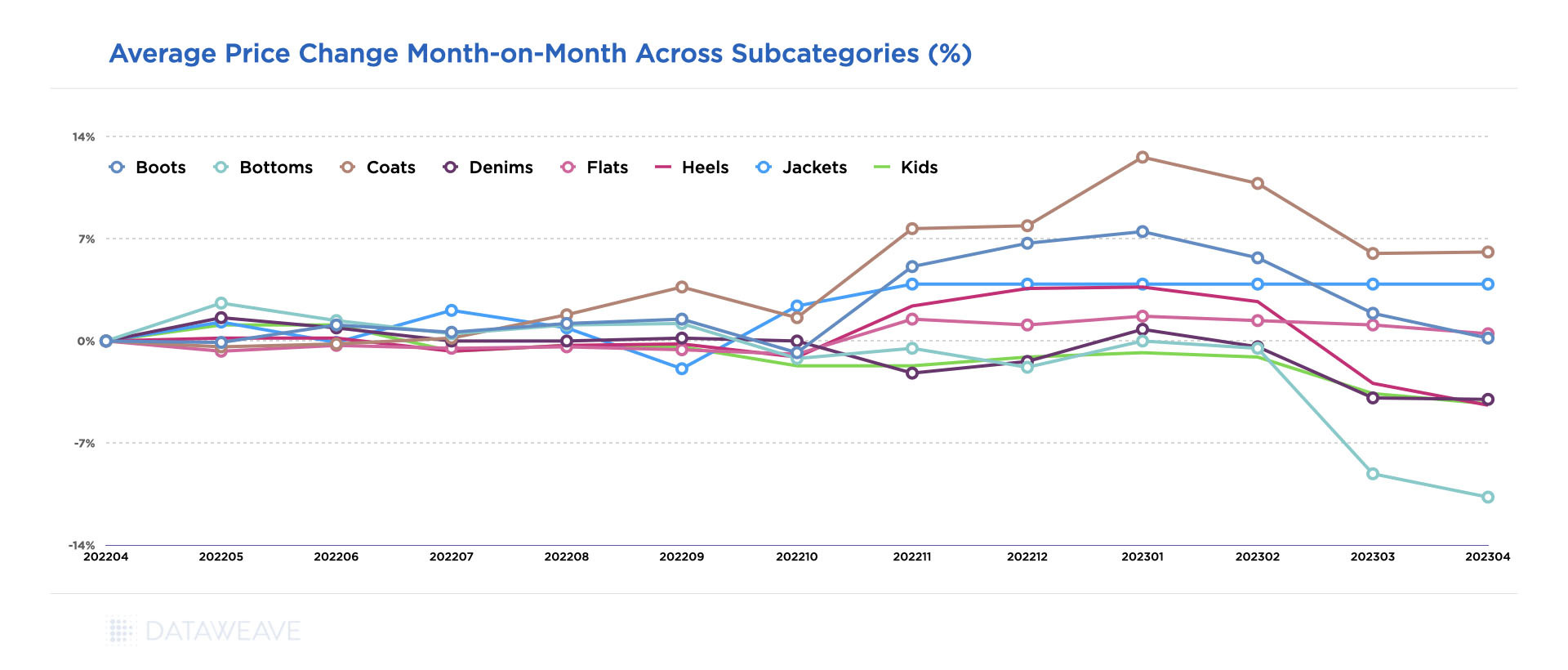
    While prices have generally been rising in several industry segments, such as groceries, due to inflation, the fashion sector has experienced relatively stable prices, with even a few periods of price drops. In fact, average prices in April 2023 are 1.2% lower than those in April 2022. The main reason for this trend is that consumers have become cautious about discretionary spending on fashion in order to prioritize other necessities, resulting in lower demand and overstocking by retailers.

    In the first quarter of 2022, clothing accounted for only 3.9% of total expenditure by US consumers, down from 4.3% in 2019 before the pandemic. Additionally, in March 2023, 60% of fashion retailers in the US still had surplus goods, accounting for almost 20% of their entire stock. As demand decreased, fashion retailers started offering freebies with purchases, bundling products, giving away unwanted items, and notably, slashing prices.

    Subcategory level analysis of Average Price Change Month-on-Month between April 2022 – April 2023

    Our analysis at a subcategory level reveals that in winter 2022, seasonal demand led to the largest price increases of 6-11% in coats, boots, and jackets. However, these prices quickly declined afterward. In 2023, stabilization of raw material costs and a continuing decline in demand for non-essential apparel and fashion accessories are factors contributing to a significant drop in prices.

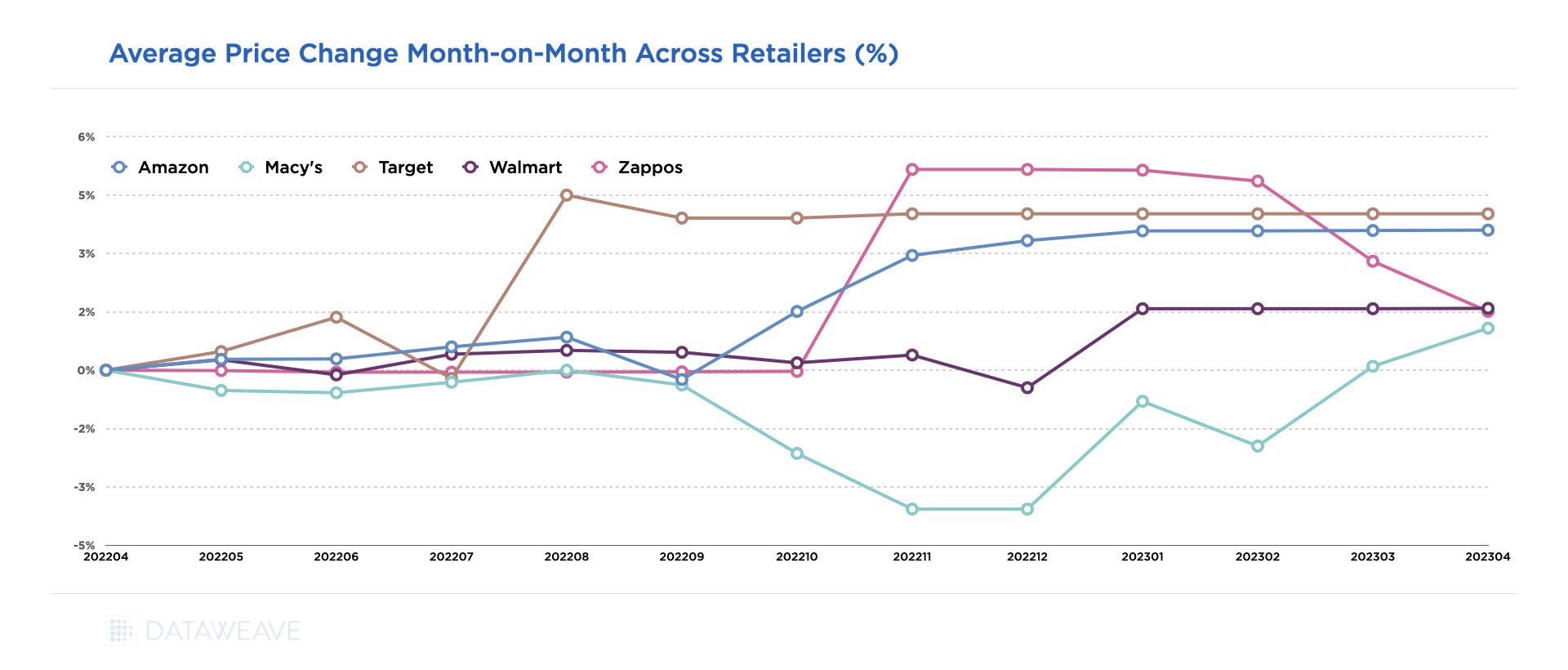
    Some of these trends vary among retailers as each faces different challenges and responds in distinct ways. Our data indicates that some retailers have chosen to increase their prices from Q3 2022 due to mounting pressure on profit margins, while others have further lowered prices due to increasing inventory levels.

    Average Price Change Month-on-Month Across Amazon, Macy’s, Walmart, Target, and Zappos between April 2022 – April 2023

    _____________

    Capability Spotlight

    Matching products across competitor websites is an essential part of tracking competitive prices and analyzing price leadership. In fashion, matching exact products is no mean feat. Websites often host a slew of variants in terms of size, color, material, etc. without any form of standardization in the way the products are represented. So fashion retailers often struggle with simply unusable pricing insights resulting from inaccurate and incomplete product matching. 

    DataWeave’s industry-leading product matching algorithm recognizes and leverages dozens of product attributes extracted from product titles, descriptions, and images to match products at very high levels of accuracy and coverage. What’s more, our platform can also match similar products based on a large variety of parameters, so our customers can benefit from a comprehensive competitive perspective.

    _____________

    For example, in August, Target reported a 90% plunge in profits during the second quarter of 2022, as shoppers concerned about inflation reduced spending on nonessential items. The company stated that its price cuts did not have the desired impact, resulting in a 1.5% increase in inventory compared to three months prior. As a result, we can see that Target’s average fashion prices spiked in August 2022 and have remained steady since then. Walmart also faced similar challenges and increased its prices in October 2022.

    However, during the same period in August 2022, Macy’s announced increased discounts to clear out excess inventory in preparation for the holiday shopping season. In the same announcement, Macy’s highlighted how the rising cost of groceries, which had experienced a double-digit increase, was impacting consumers’ budgets, changing their behaviors, and increasing the need for discounts. Our data reflects this, showing a significant drop in prices from October 2022 to January 2023.

    However, in January 2023, Macy’s successfully managed its inventory levels, reducing them from $6.4 billion in October 2022 to $4.3 billion in January 2023. As a result, average prices at Macy’s have started to rise.

    _____________

    For today’s fashion retailers, achieving a balance between expansion goals and profitability is crucial. It requires a meticulous examination of competitive and market insights on a regular basis to mitigate competitive pressures and navigate through these challenging times successfully.

    DataWeave’s platform offers retailers the insights they need to gain a competitive advantage. With access to accurate, timely, and actionable pricing and assortment insights, retailers can make informed decisions and stay ahead of the competition. To learn more, reach out to us today!
  • Impact of Inflation on Grocery: Pricing Insights on Leading US Retailers

    Impact of Inflation on Grocery: Pricing Insights on Leading US Retailers

    Inflation, like an invisible force, silently shapes the dynamics of economies, gradually eroding the purchasing power of consumers and leaving its imprint on various industries. High costs, hiring lags, and stagnating earnings pose severe challenges to businesses. One industry segment that intimately feels the impact of inflation is grocery, where price increases can be extremely concerning for the average consumer.

    Over the last 12-plus months, the US has experienced a notable rise in inflation, stirring up concerns and influencing the way we shop for everyday essentials. Rising costs of raw materials, transportation, and labor have all played a role in driving up prices. Additionally, disruptions in global supply chains and fluctuations in currency exchange rates have further exacerbated the situation, creating a complex web of interdependencies.

    To understand the magnitude of this phenomenon across leading e-retailers, we delved into an in-depth analysis of four major retail giants: Walmart, Amazon, Target, and Kroger.

    Each of these retailers possesses a unique business model and competitive strategy, as well as faces unique challenges. This leads to distinct approaches to managing inflationary pressures. Walmart for instance, expects operating income growth to outpace sales growth in 2023. Given the persistence of high prices and the potential for further macro pressures, the retailer is taking a cautious outlook. In 2022, Amazon’s eCommerce business swung to a net loss of $2.7 billion, compared to a profit of $33.4 billion the previous year.

    Amid these challenging circumstances, understanding the grocery pricing trends and strategies becomes imperative for retailers, both online and in stores to adapt and thrive in the current economic landscape. By examining their pricing trends, we can gain valuable insights into how these companies navigate the turbulent waters of the grocery industry against the backdrop of inflation.

    Our Research Methodology

    The data collected for our analysis encompassed a diverse range of products, from pantry staples like flour and rice to perishable goods like dairy and produce – a basket of around 600 SKUs matched across Amazon, Kroger, Target and Walmart, between January 2022 to February 2023.

    Further, we separately focused on the prices of a smaller subset of 30+ high-volume daily staples that are likely to yield higher sales and margins for these retailers.

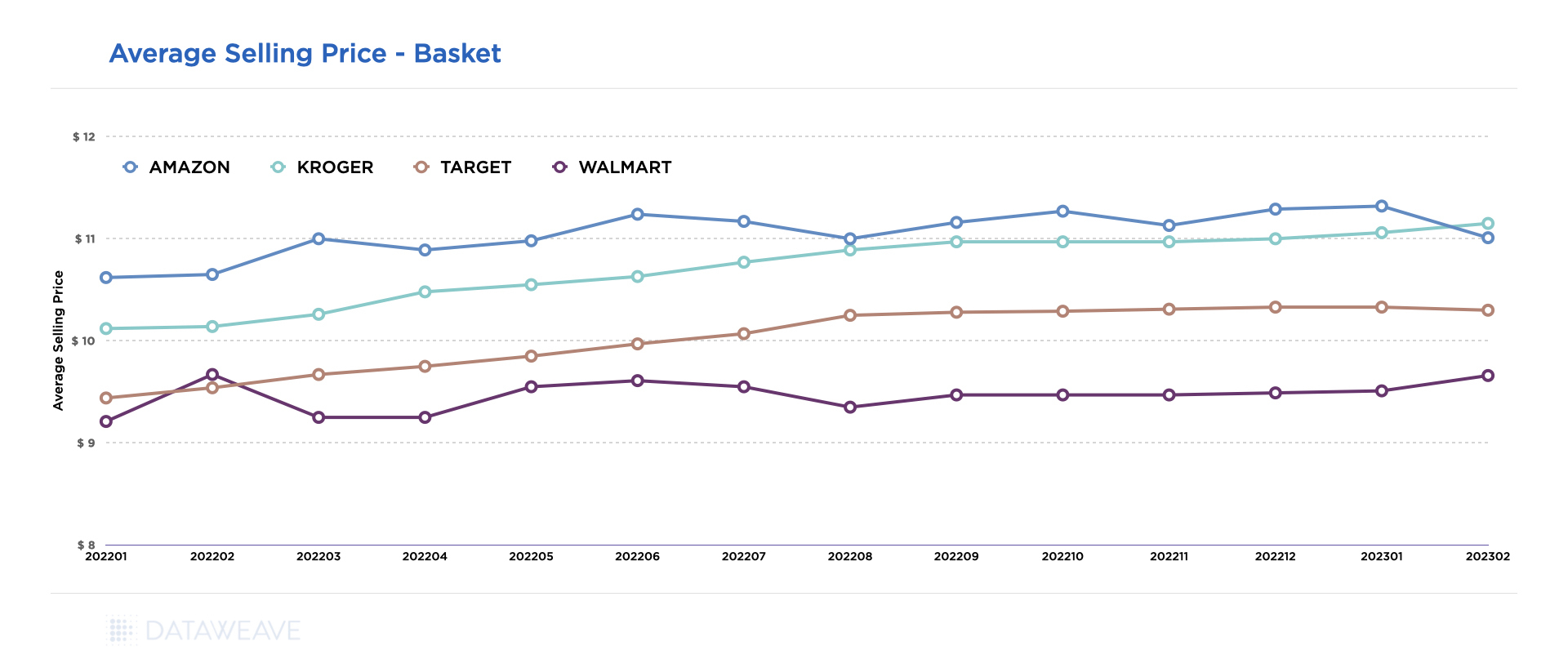
    Average Selling Price of a Broad Set of Grocery Items

    Our analysis reveals that Walmart consistently offers the lowest prices, with an average of 8% below its closest competitor, Target, despite an annual price increase of about 5%. Walmart seems to prioritize a “stability and predictability” strategy over margin optimization. The retailer’s 8% growth last quarter indicates that this strategy is bearing fruit. However, it’s important to note that this approach may have its drawbacks as Walmart’s margins come under pressure.

    Average selling price trend across a basket of 500+ SKUs across Target, Walmart, Kroger, Amazon in the grocery category from Jan ’22 to Feb ’23.

    In order to weather inflationary pressures, Walmart may adopt a cautious approach to growth while also focusing on securing margins. Reports suggest that the retailer has been pushing back against consumer packaged goods (CPG) manufacturers following a series of price hikes to counter inflationary cost pressures in early 2023. One of the reasons behind Walmart’s growth and increased sales can be attributed to ‘non-traditional’ higher-income households now seeking deals and discounts at Walmart as their spending power declines.

    Interestingly, Amazon emerges as the highest-priced retailer, followed by Kroger, which increased its prices by 10% throughout the year. Consumer perception commonly associates Amazon with the lowest prices, but the data tells a different story. In fact, Amazon has been charging 12% to 18% higher prices than Walmart for groceries and is still maintaining its success.

    While the company’s online sales declined by 4%, it saw a significant 9% increase in revenue from third-party seller services, such as warehousing, packaging, and delivery, in 2022. Amazon’s strong logistics and same-day delivery services give it a competitive advantage over other retailers, contributing to its revenue growth and margins. Interestingly, this presents an opportunity for Walmart and other retailers to increase prices while maintaining their strong competitive price positions.

    Kroger, on the other hand, seems to be aiming for a premium price perception, consistently raising prices almost every month. Kroger’s pricing strategy appears to be closer to Amazon’s.

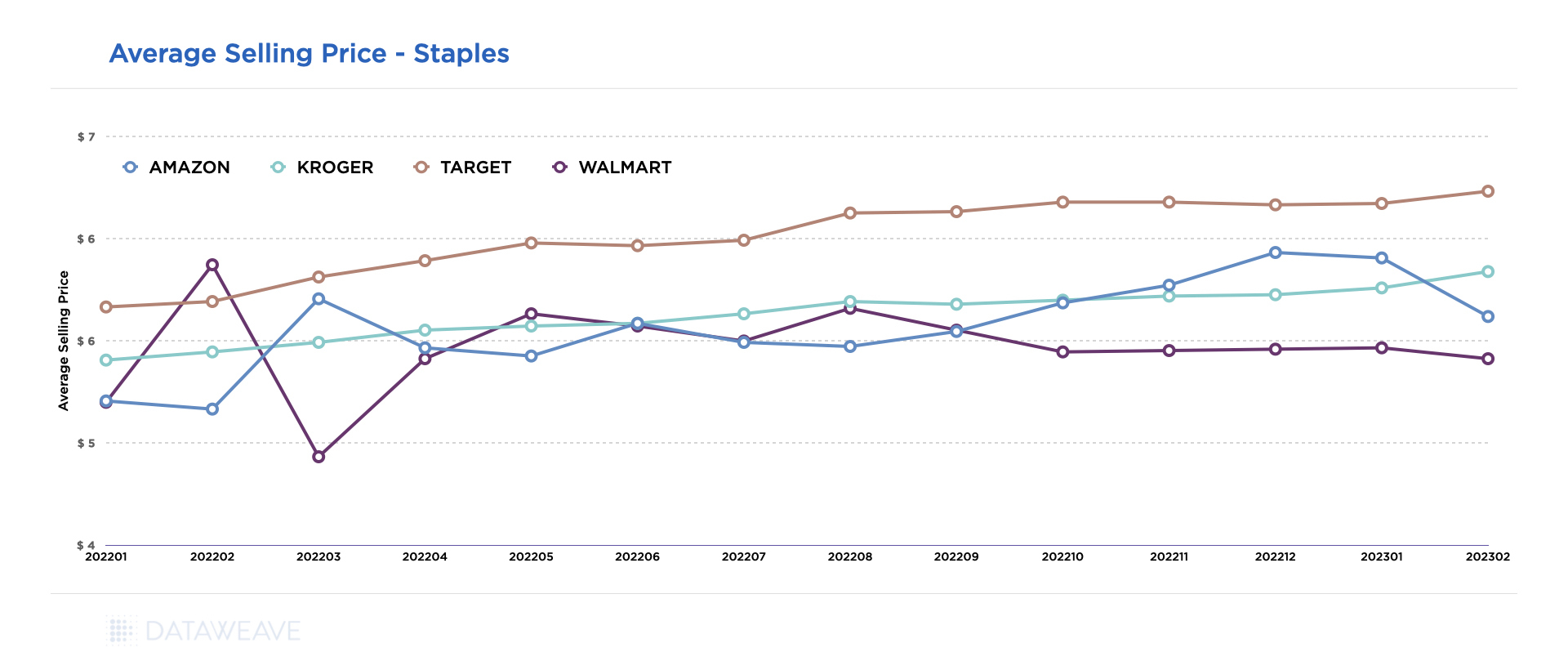
    Average Selling Price for High-Volume Daily Staples

    Pricing strategies often change for different categories of products. To better understand this, we focused our analysis further on a small subset of 30+ high-volume staples across retailers. These include baked goods, popular beverages, canned food, frozen meals, dairy, cereals, detergents, and other similar items.

    Average selling price trend of 30+ high-volume daily staples across Target, Walmart, Kroger, Amazon in the grocery category from Jan ’22 to Feb ’23.

    Walmart, possibly overestimating the impact of inflation, has continued to keep its prices the lowest, potentially aiming to increase margins through volume.

    The level of price disparity across retailers is expectedly lower here, with Amazon and Kroger closely tracking Walmart’s average prices.

    Target’s pricing strategy stands out as it consistently emerges as the highest-priced retailer for daily staples, despite being one of the lower-priced retailers for a broader basket of grocery items. This suggests that Target’s underlying technology may not be as optimized to address market dynamics compared to other leading retailers. In our opinion, Target may want to strengthen its efforts to track pricing more intensely for this sub-category.

    A Data-fuelled Approach is the Need of the Hour

    In the challenging economic landscape, retailers and grocery stores are under pressure to maintain their revenues and margins. Adopting a comprehensive and dynamic pricing strategy is crucial. Understanding which product categories are experiencing price increases among competitors can help retailers make informed decisions on pricing at both the category and product level.

    Retailers should consider their balancing margin performance with consumers’ willingness to pay, rather than implementing broad price increases that may harm customer trust. Price increases can be challenging for both customers and merchants. Retailers who employ a data-driven and insight-based approach are more likely to succeed.

    Keep an eye on the DataWeave blog for analysis on pricing, discounting, stock availability, discoverability, and more, across retailers and brands from other industry segments as well.

    For immediate insights, subscribe to our interactive grocery price tracking dashboard. Better still, reach out to us to speak to a DataWeave expert today!
  • U.S. Prime Day Deals 2022: Promotion Intelligence First Look

    U.S. Prime Day Deals 2022: Promotion Intelligence First Look

    As inflation hits another 40-year high at 9.1 percent, U.S. consumers geared up for their first sign of hope and relief in the form of anticipated discount buys – 2022 Amazon Prime Days, or so we thought. While Prime Days have grown to become a promotional period almost as important as Black Friday to digital shoppers, the combination of economic uncertainty, inflationary pressures, and supply chain challenges seemed to alter the discount strategy expected given activity seen during 2021 Prime Days.

    Our analyst team has been hard at work aiming to provide a ‘first look’ at 2022 Prime Day Promotional Insights, tracking discounts offered across 46,000+ SKUs within key categories like Electronics, Clothing, Health & Beauty and Home, on seven major retailer websites – Amazon, Target, Best Buy, Sephora, Ulta, Lowe’s and Home Depot. Our analysis compares prices seen during Amazon Prime Day 2022 on July 12th, to pre-Prime Day maximum value prices seen in the ten days leading up to Prime Days, to determine the average change in discounts offered during the promotional period. Below is a summary of our findings.

    Competitive Promotions Give Amazon a Run for their Money

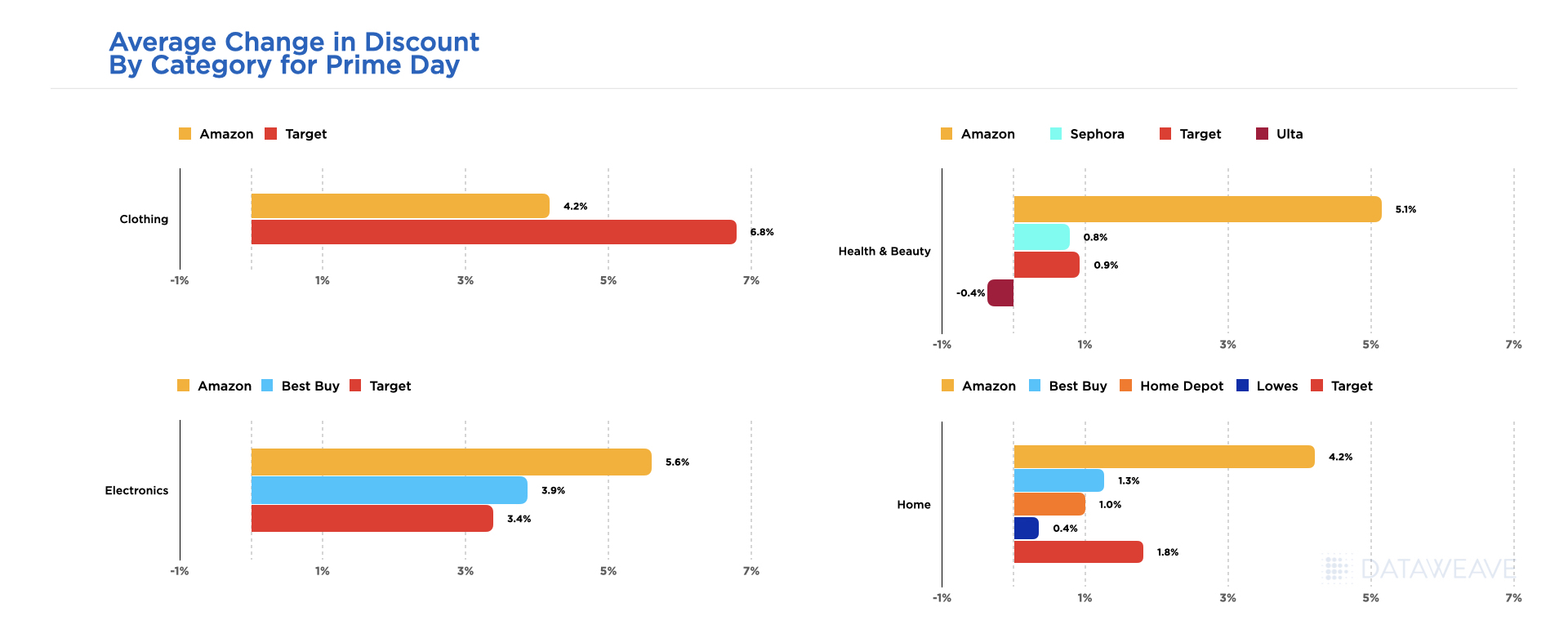
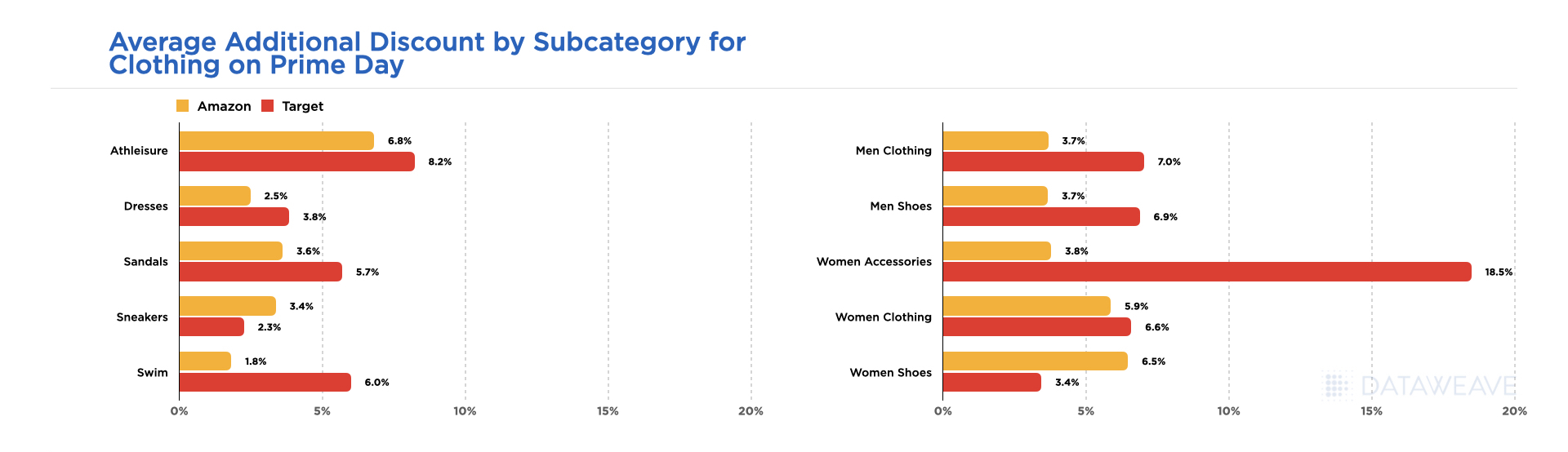
    Amazon offered the greatest average discount enhancements for Electronics at 5.6 percent followed by Health & Beauty items at 5.1 percent, and Home products at 4.2 percent versus pre-Prime Day discounts seen across the categories considered within our analysis. The only category reviewed where average discounts were greater on a competitor’s website was on Target.com within the Clothing category. As seen below, Clothing on Target.com average discounts were 6.8 percent greater than pre-Prime Day offers, which was 2.6 percent higher than the average discounts offered for Clothing on Amazon.

    Target Capitalizes on Growth Opportunity in Clothing Category

    Diving deeper into the details of where Target won within the Clothing category, you can see a majority of their promotional activity took place within Women’s Accessories where discounts offered were 18.5 percent greater than those seen pre-Prime Day 2022, which was almost 15 percent greater than the discount enhancements seen on Amazon for Women’s Accessories. In fact, Women’s Shoes and Sneakers were the only two categories where the average discounts offered were greater on Amazon than on Target.com.

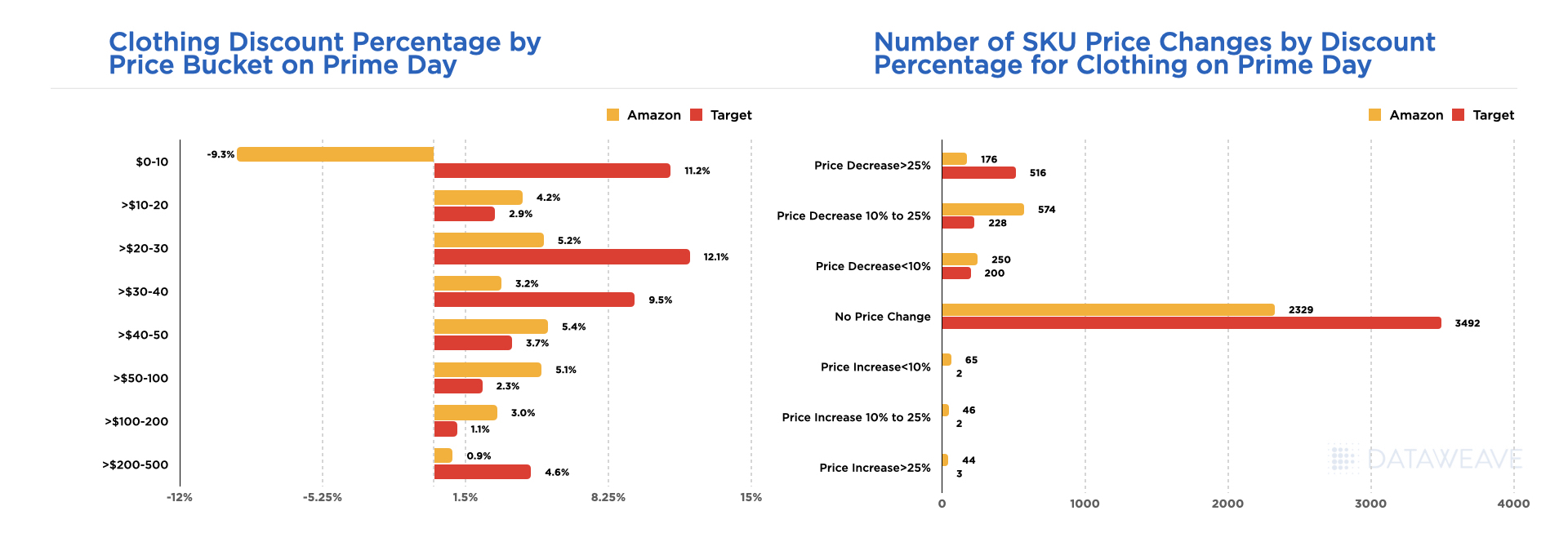
    Overall, the discounts offered on Target.com within the Clothing category were primarily concentrated within items priced $40 and lower, but what was most interesting is that within the $10 and under price bucket, Target offered average discounts of over 11 percent whereas Amazon increased prices for these items on average by over 9 percent.

    While most of the Clothing available on both Amazon and Target.com during Prime Days 2022 were offered without a price change, the greatest discount percentages tracked were within the range of 10-25 percent off on Amazon whereas Target chose to offer the bulk of their promotions at 25 percent off an up.

    Strategic Promotional Strategies Defined at the Electronics Subcategory Level

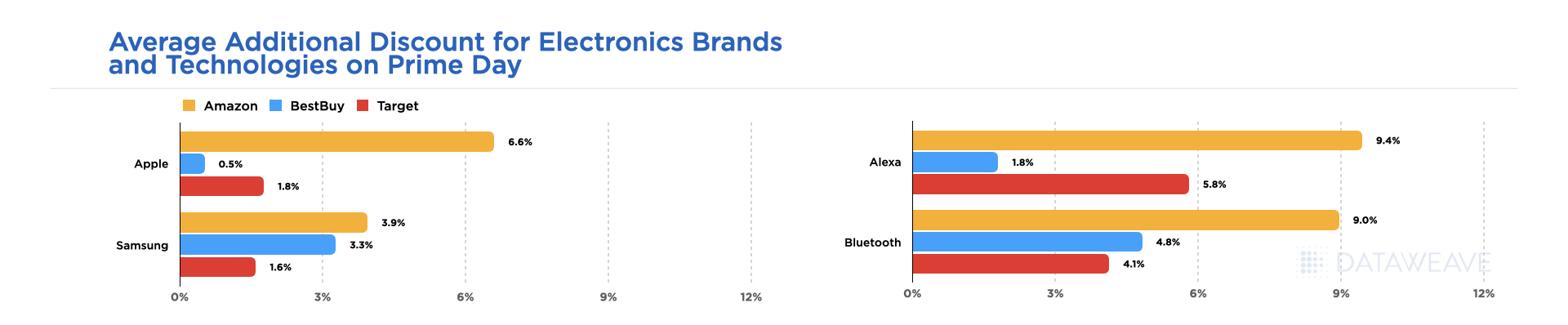
    When it comes to the Electronics category on Prime Day, the big question is always who will win the battle of the brands. Below shows the difference in average pricing and promotions discounts offered between products manufactured by Samsung versus Apple across each retailer platform, noting discounts were almost 3 percent greater on average for Apple versus Samsung products on Amazon, and Apple discounts were almost 5 percent greater on Amazon versus than those seen on Target.com.

    Amazon wasn’t going all in on Apple however, as we saw ‘Alexa’ devices (Amazon products) available on Best Buy and Target websites also, but the discounts were almost 4 percent greater on Amazon versus Target and over 7 percent greater than the discounts seen on BestBuy.com.

    While the average discounts offered within the Electronics category were greatest on Amazon (5.6 percent) versus Best Buy (3.9 percent) and Target (3.4 percent) as noted within the first chart of this blog and across brands and technologies considered above, the discounts offered on Amazon were strategically focused between 10-25 percent as seen below.

    Amazon’s Electronics promotions were also targeted at smaller price points, items priced between $20-500, whereas Best Buy and Target offered greater promotions for electronics priced $500 and up than Amazon.

    Below is a snapshot of price buckets tracked for Electronics available on BestBuy.com, highlighting where most of the promotional activity was targeted at products priced $50 and up during Prime Days 2022, with discounts ranging from 10 percent up to greater than 25 percent greater than pre-Prime day prices.

    The standout categories were TVs on Target.com with discounts averaging nearly 12 percent greater than those seen pre-Prime day, and smartphones on BestBuy.com with discounts averaging just over 11 percent greater than those seen pre-Prime Day. The category with the greatest average discount enhancements seen on Amazon during Prime Days 2022 was for Wireless Headphones with an average discount of 8.7 percent.

    Home is Where Amazon’s Heart Was on Prime Day

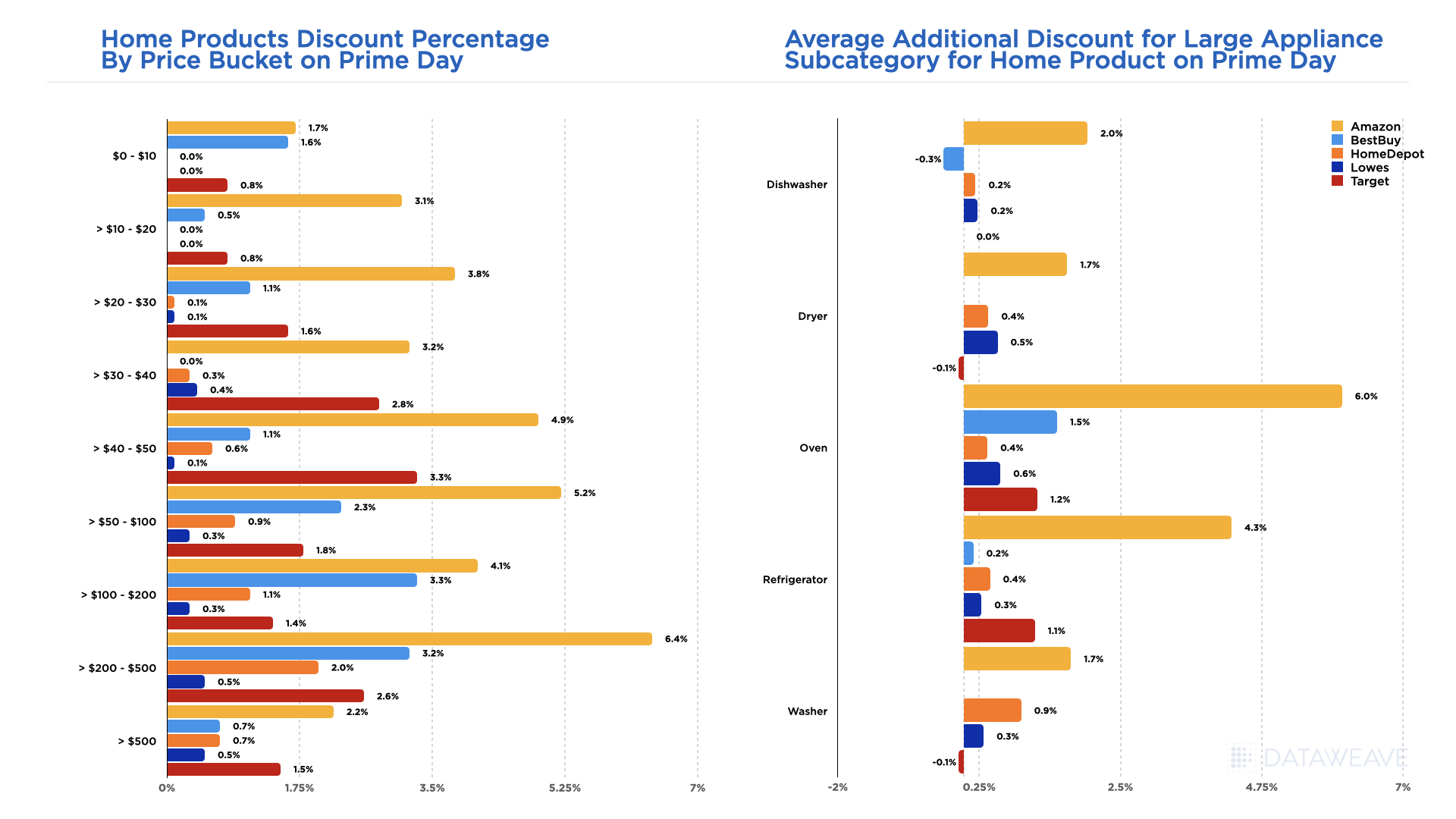
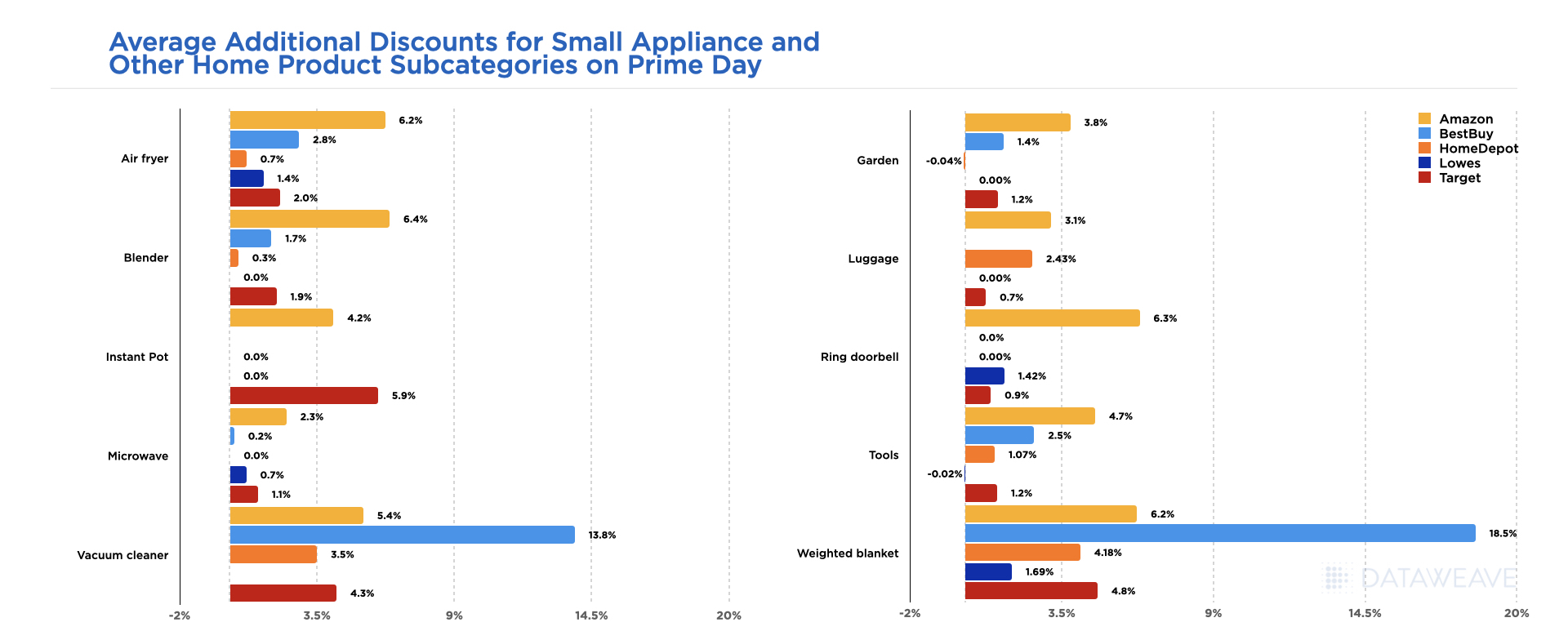
    Amazon dominated offers within the Home categories, especially for products within mid ($40-100) and higher price ranges (items priced $200-500), with the bulk of the discounts offered between 10-25 percent. There was little to no promotional activity seen across all price points on Lowe’s or Home Depot’s websites within the categories we tracked, and most other competitive offers on Home products were seen on BestBuy.com for products priced from $50-500. Even a subcategory like Tools offered deeper average discounts on Amazon (4.7 percent) than discounts seen on HomeDepot.com (1.1 percent) or Lowes.com (0 percent).

    For Large Appliances, Amazon was the only retailer to off any significant discount across each major subcategory with the greatest average discount being on Ovens at 6 percent, followed by Refrigerators at 4 percent. One caveat with this category, when we reviewed Large Appliance prices two weeks prior to Prime Days, we saw average price increases around 16.7 percent occurring on Amazon.

    During Prime Days 2022 however, Amazon also offered top average discounts for small appliances, except for on Instant Pots which appeared to have greater average discounts on Target.com (5.9 percent versus 4.2 percent on Amazon), and Vacuum Cleaners which appeared to have the best promotion of appliances small and large at 13.8 percent average discount on BestBuy.com. Another subcategory deeply discounted on BestBuy.com was weighted blankets, which averaged discounts around 18.5 percent versus Amazon’s average discount at only 6.2 percent.

    Health & Beauty Retailer Pricing Strategies Revealed

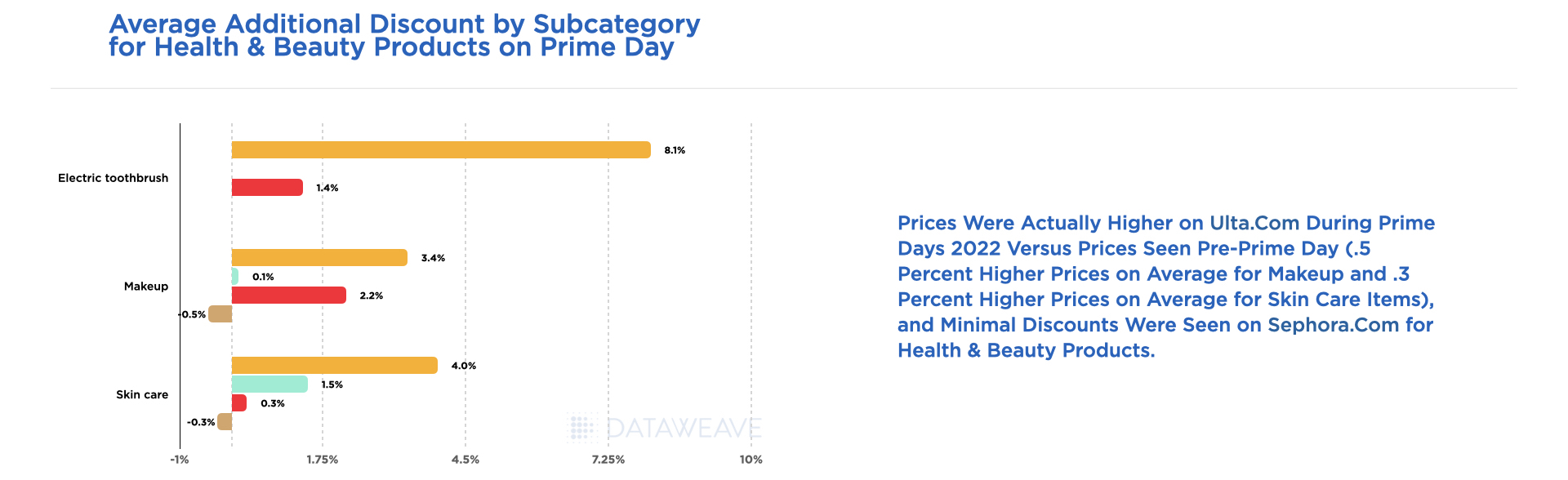
    Given the importance Health & Beauty Brands placed on Prime Day sales last year, we had anticipated to see more offers, especially within pure-play beauty retail channels, than we did for this booming category.

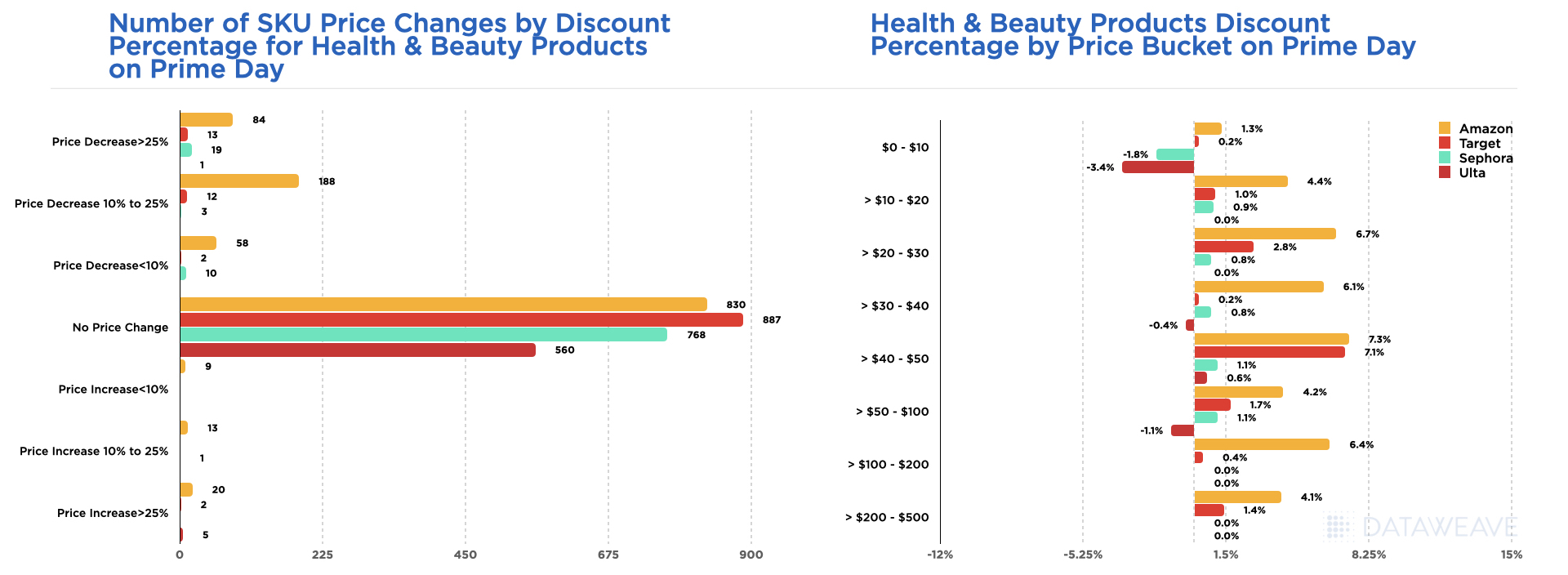
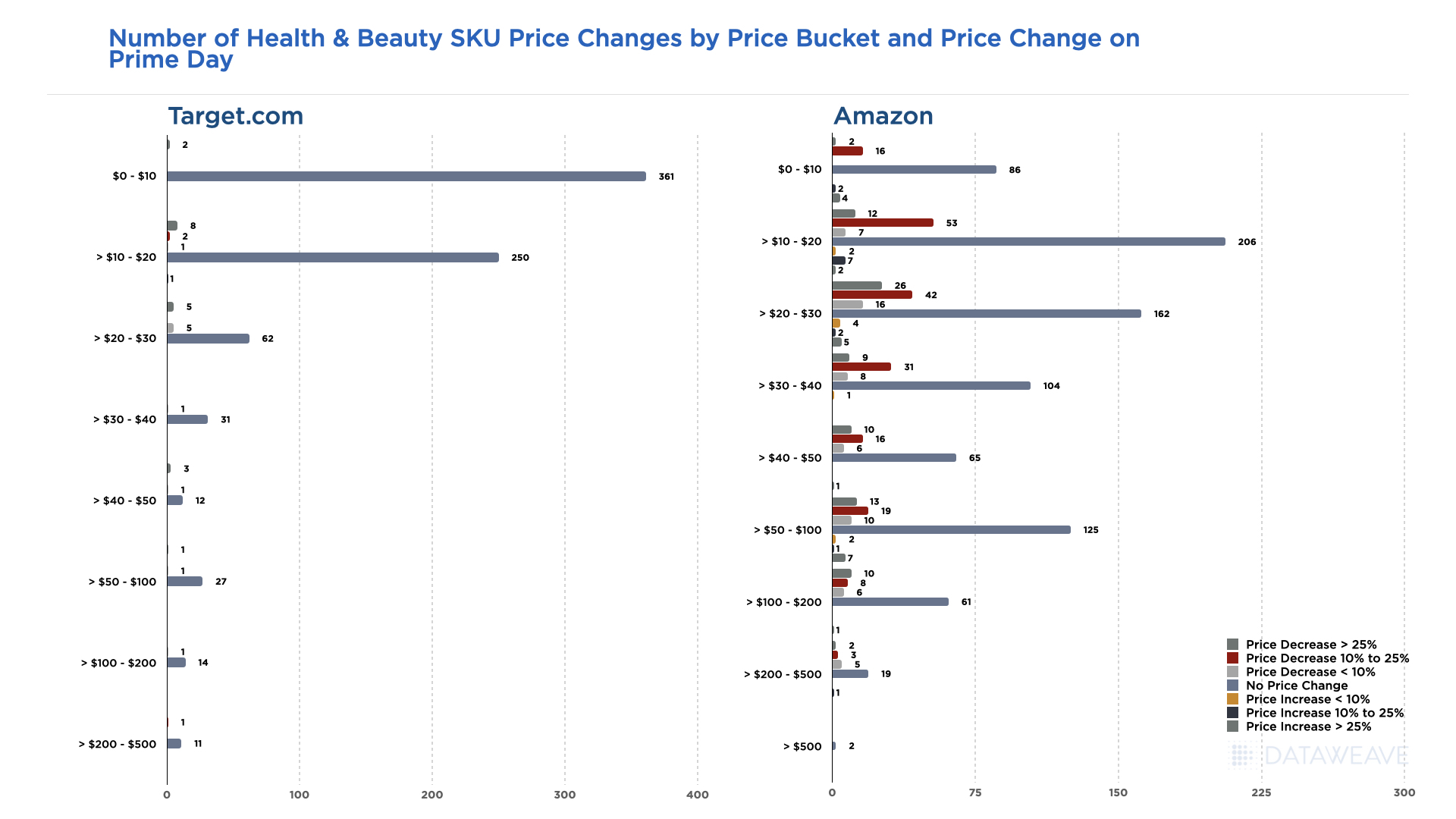
    Amazon drove most of the Health & Beauty offers seen averaging 5.1% discounts versus other retailers only offering less than 1% on average, but discounts were aimed at a targeted group of SKUs on Amazon, bringing the average discount lower overall. Most of the promotions offered on Amazon fell within mid-range price points ($20-50) and were discounted between 10-25 percent versus pre-Prime Day prices.

    Target.com offered the most comparable discounts to Amazon for Health & Beauty products on average, but their strategy primarily focused on items within the $20 and lower price range with discounts ranging primarily between 10-25 percent.

    More 2022 Prime Day Insights Coming Soon

    We know the significance visibility to critical pricing and promotional insights play in enabling retailers and brands to offer the right discounts to stay competitive, especially during promotional periods like Prime Days. While this blog is intended to provide a ‘sneak peek’ into 2022 Prime Day insights for the U.S. market, we will be providing more extensive, global coverage and will proactively share new insights with the marketplace as they become available throughout the month of July.

    Be sure to also check out our Press page for access to the latest media coverage on Prime Day insights and more. Don’t hesitate to reach out to our team if there is any particular category you are interested in seeing in more detail, or for access to more information on our Commerce Intelligence and Digital Shelf solutions.

  • Feminine Hygiene Products Face Supply Chain Shortage and Price Increases

    Feminine Hygiene Products Face Supply Chain Shortage and Price Increases

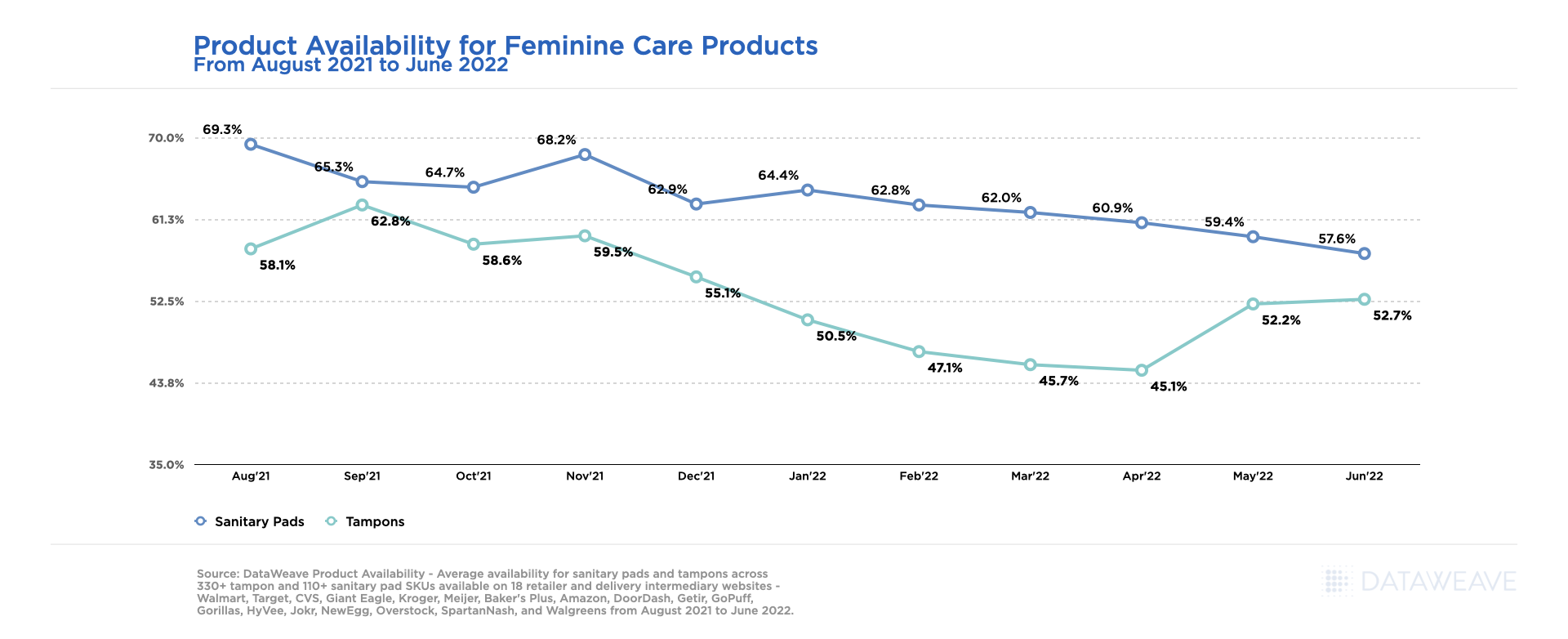
    Last week the DataWeave analytics team identified the states most impacted by the baby formula shortage, only to see feminine hygiene products following similar trends with price increases occurring alongside a supply chain shortage. In this analysis, the team has identified over four hundred feminine hygiene products made available across eighteen retailer and delivery intermediary websites from August 2021 through June 2022, to see how product availability and price changes correlated.

    Within the feminine care products analyzed, both tampons and sanitary pads show to have under 58% availability as of June 2022. For sanitary pads, June 2022 shows the lowest level of product availability at around 58%, which has steadily declined each month from August 2021 where product availability started around 69%. Tampons however, reached their lowest level of availability in April 2022 at 45%, and appear to be slowly recovering each month, now reaching around 53% availability in June 2022.

    Product Availability for Feminine Care Products - June 2022
    Product Availability for Feminine Care Products – June 2022

    The Evolution of the Tampon Shortage by Retailer

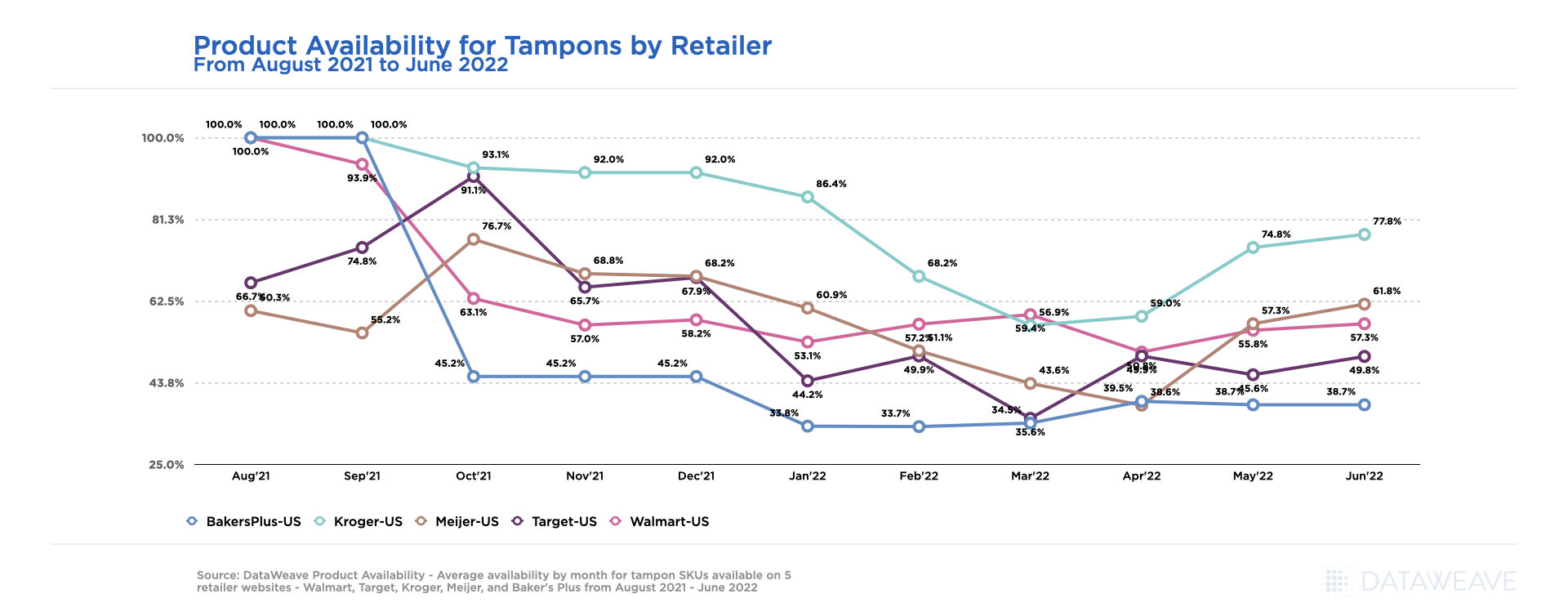
    Looking at tampons in more detail and at a retail level, we can see how much and how often product availability fluctuated from August 2021 through June 2022 across Kroger, Meijer, Baker’s Plus, Target and Walmart websites. Baker’s Plus, for example, shows the lowest product availability, maintaining an average of around 39% from October 2021 through June 2022. Kroger appears to be a notable exception only facing stock availability issues in March and April 2022, achieving nearly 78% availability in June 2022, which is 16% greater than the other retailers analyzed.

    Product Availability for Tampons by Retailer - June 2022
    Product Availability for Tampons by Retailer – June 2022

    Feminine Care Product Price Changes Over Time

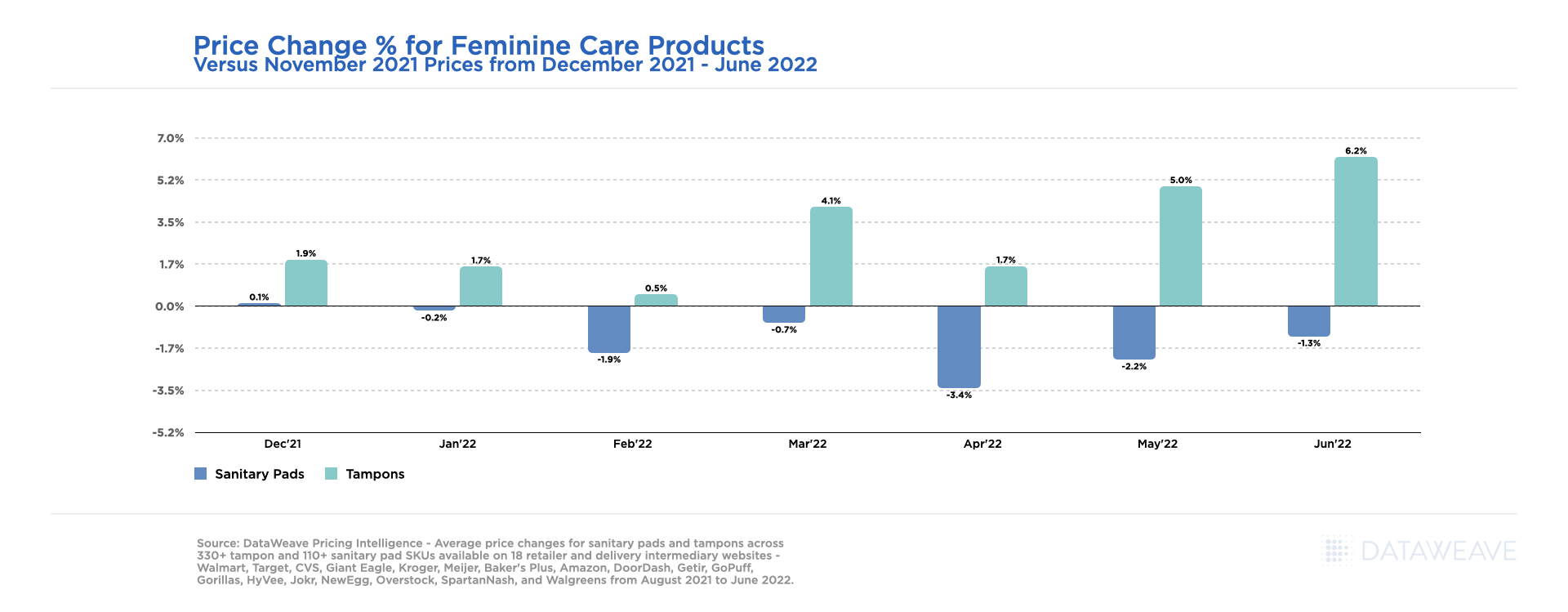
    When looking at Pricing Intelligence insights and average price changes occurring alongside declining product availability for tampons and sanitary pads combined, we see a very different story. Tampons have seen steep price hikes from December 2021 onward, increasing the most in June 2022, up 6% compared to prices seen in November 2021. This steep price increase could be attributed to consistently low availability for tampons that has been seen in recent months.

    To the contrary, sanitary pads have seen a price reduction of around 1.25% as of June 2022 compared to average prices seen in November 2021. While prices are lower in June 2022 for sanitary pads, the percentage by which they are lower is shrinking in recent months, potentially for the same reasons related to decreasing product availability.

    Price Change for Feminine Care Products - June 2022
    Price Change for Feminine Care Products – June 2022

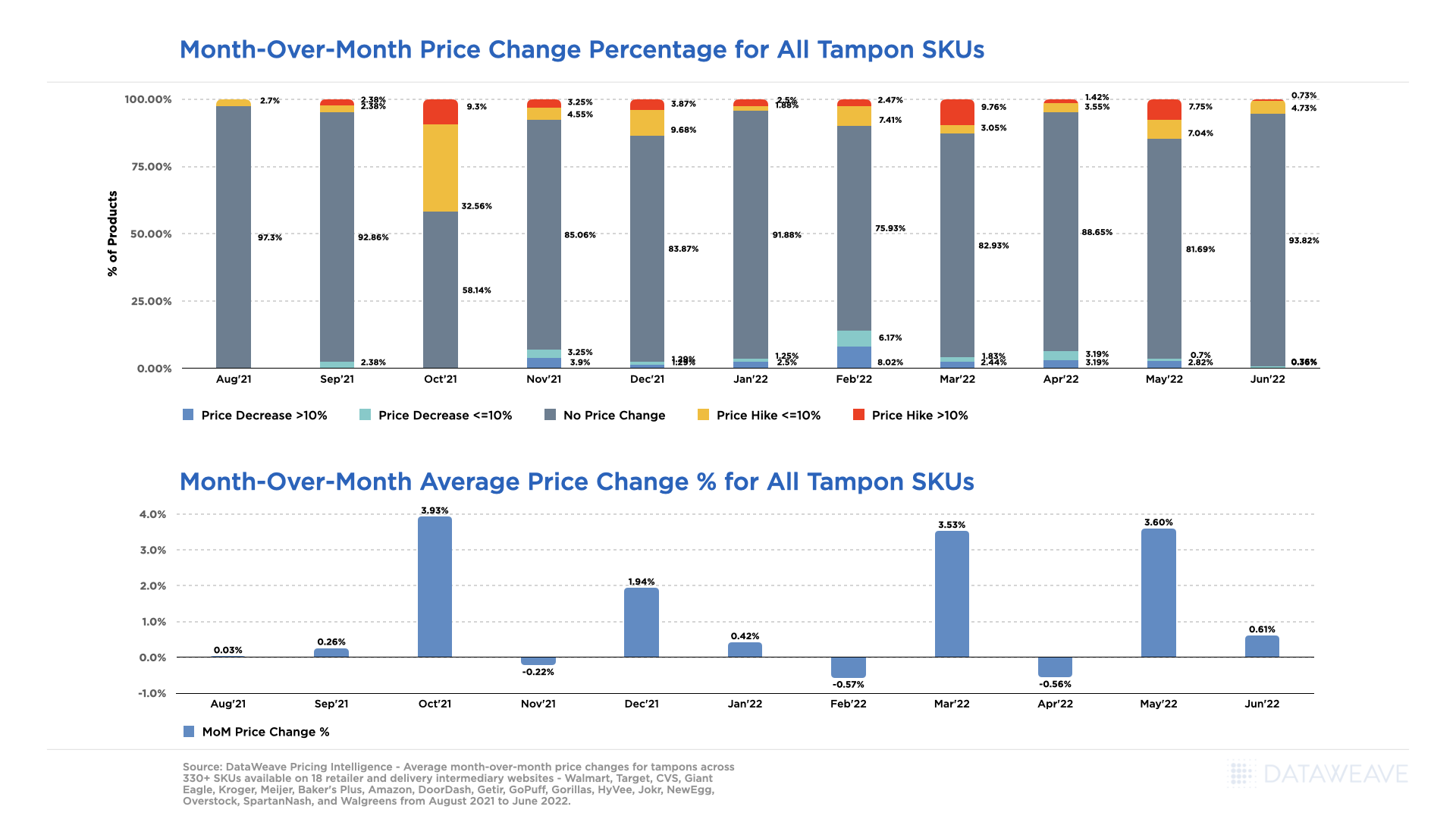
    When looking at month-over-month average price changes for tampons only, we can clearly identify which months had the biggest price changes, noting price hikes that lead to the currently high prices seen in June 2022. In March and May 2022, over 10% of tampons offered had seen a price increase, and around 8% had seen significant price increases of more than 10%.

    Month-Over-Month Price Changes for Tampons - June 2022
    Month-Over-Month Price Changes for Tampons – June 2022

    eCommerce Intelligence Provides Early Visibility to Evolving Trends

    Price increases don’t seem to be stopping anytime soon given there was a 3.6% price hike seen on average in May 2022 versus April, with June seeing yet another .6% increase from May’s prices. That being said, as the market evolves and feminine hygiene products stabilize, our team will continue to provide visibility to critical pricing and product availability changes to enable our clients to stay ahead of the curve.

    From a baby formula shortage to a tampon shortage, what category will be next to follow the supply chain shortage trend? Follow our blog for access to the latest insights and be sure to reach out to our team if there is any particular category you are interested in tracking next, or for access to more information on our Commerce Intelligence and Digital Shelf solutions.

  • Baby Formula Shortage Continues Alongside National Price Increases – June 2022

    Baby Formula Shortage Continues Alongside National Price Increases – June 2022

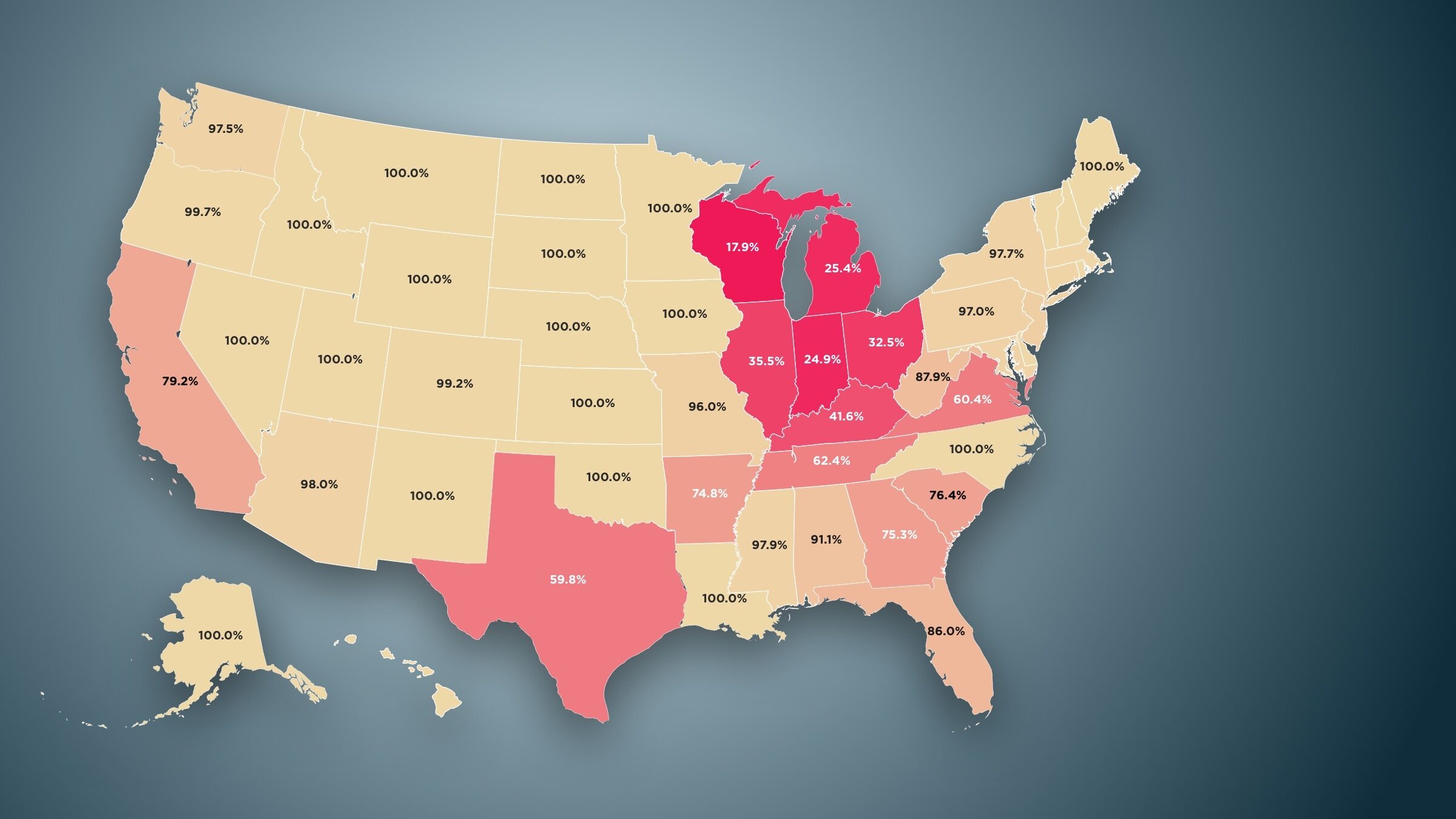
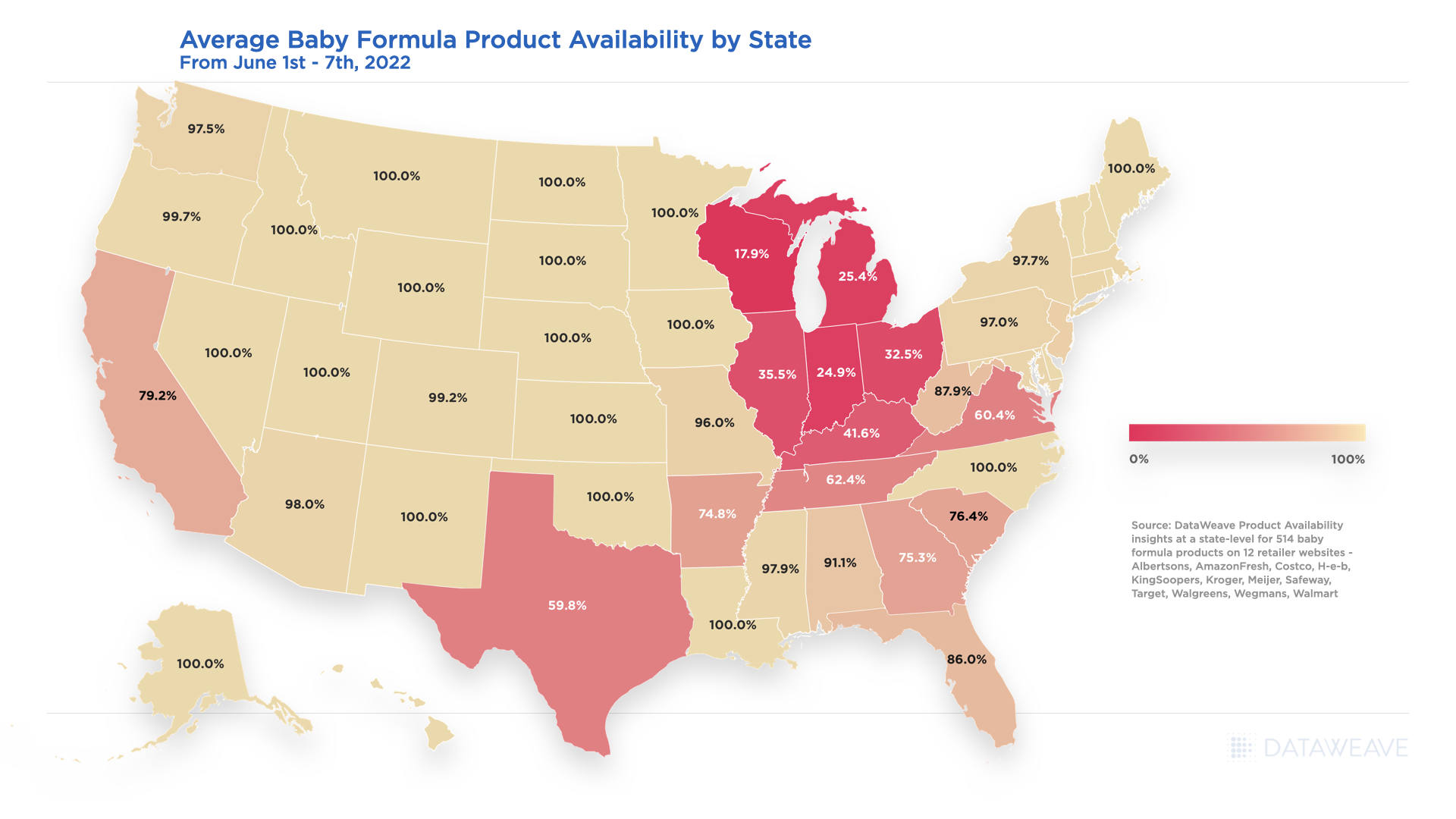
    As the baby formula shortage continues, retailers and brands are working quickly to meet evolving consumer demand, considering supply chain driven headwinds, a baby formula recall, and inflationary-driven impacts. The DataWeave analytics team has actively tracked marketplace changes, alongside reports from the FDA, for the baby formula category at a state-level, and has shared the latest snapshot of product availability through June 7th, 2022, below.

    Average Baby Formula Product Availability by State - June 2022
    Average Baby Formula Product Availability by State – June 2022

    While the U.S. has reached an average of 84% baby formula availability the first week of June 2022, given recent news headlines related to the baby formula shortage, and tracking out of stock encounters by state, we see a continued decline in availability throughout the Midwest versus product availability levels seen in May 2022.

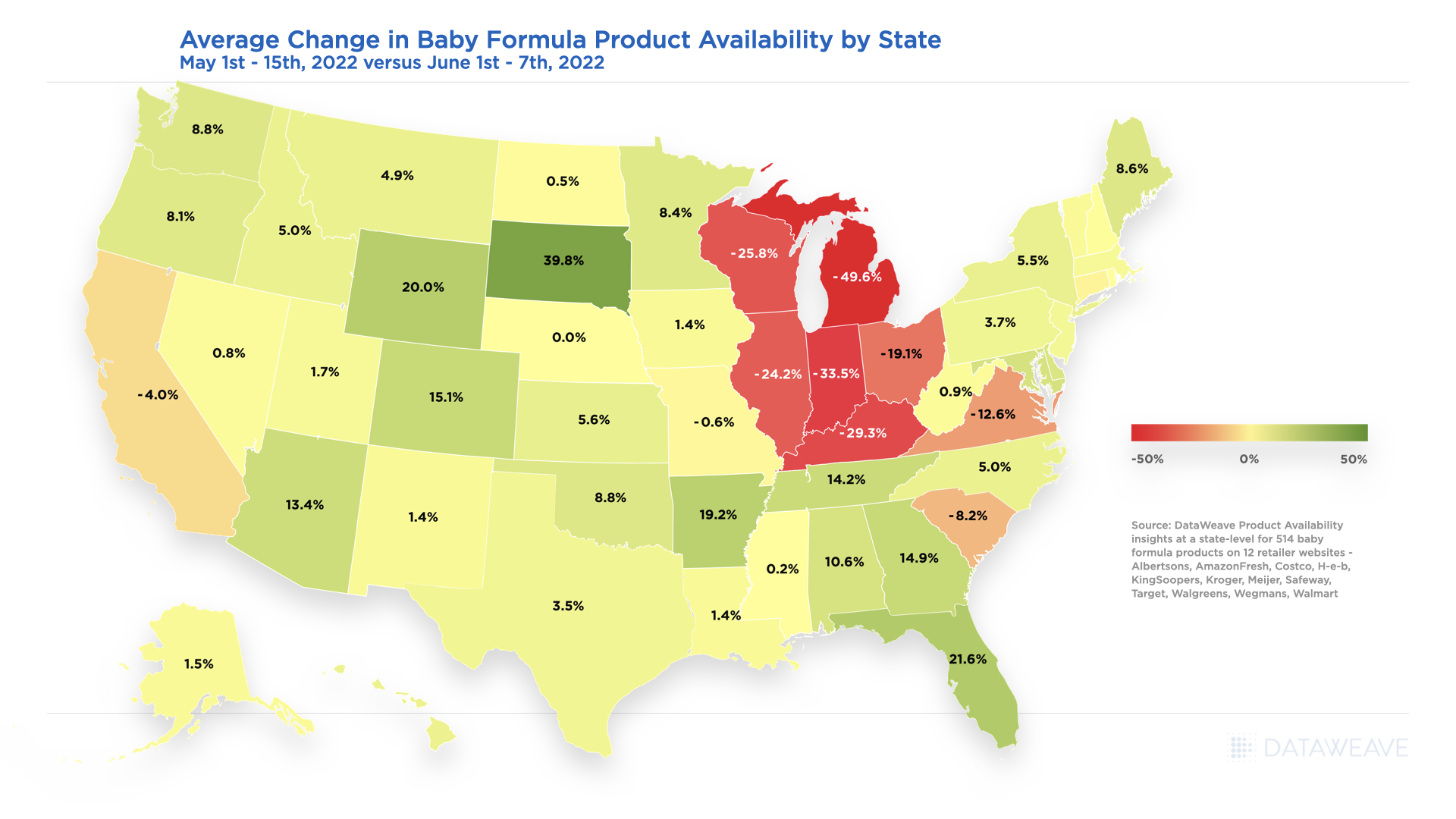
    Wisconsin, Michigan, Illinois, Indiana, Ohio, and Kentucky all show average availability for baby formula to be less than 50%, with Wisconsin being impacted the most at less than 18% average availability. While Texas shows an average availability improvement of 3.5% from the first two weeks of May 2022 to the first week of June 2022 as noted in the below chart, availability is also very low overall at less than 60%.

    Average Change in Baby Formula Product Availability by State: May-June 2022
    Average Change in Baby Formula Product Availability by State – May 2022 to June 2022

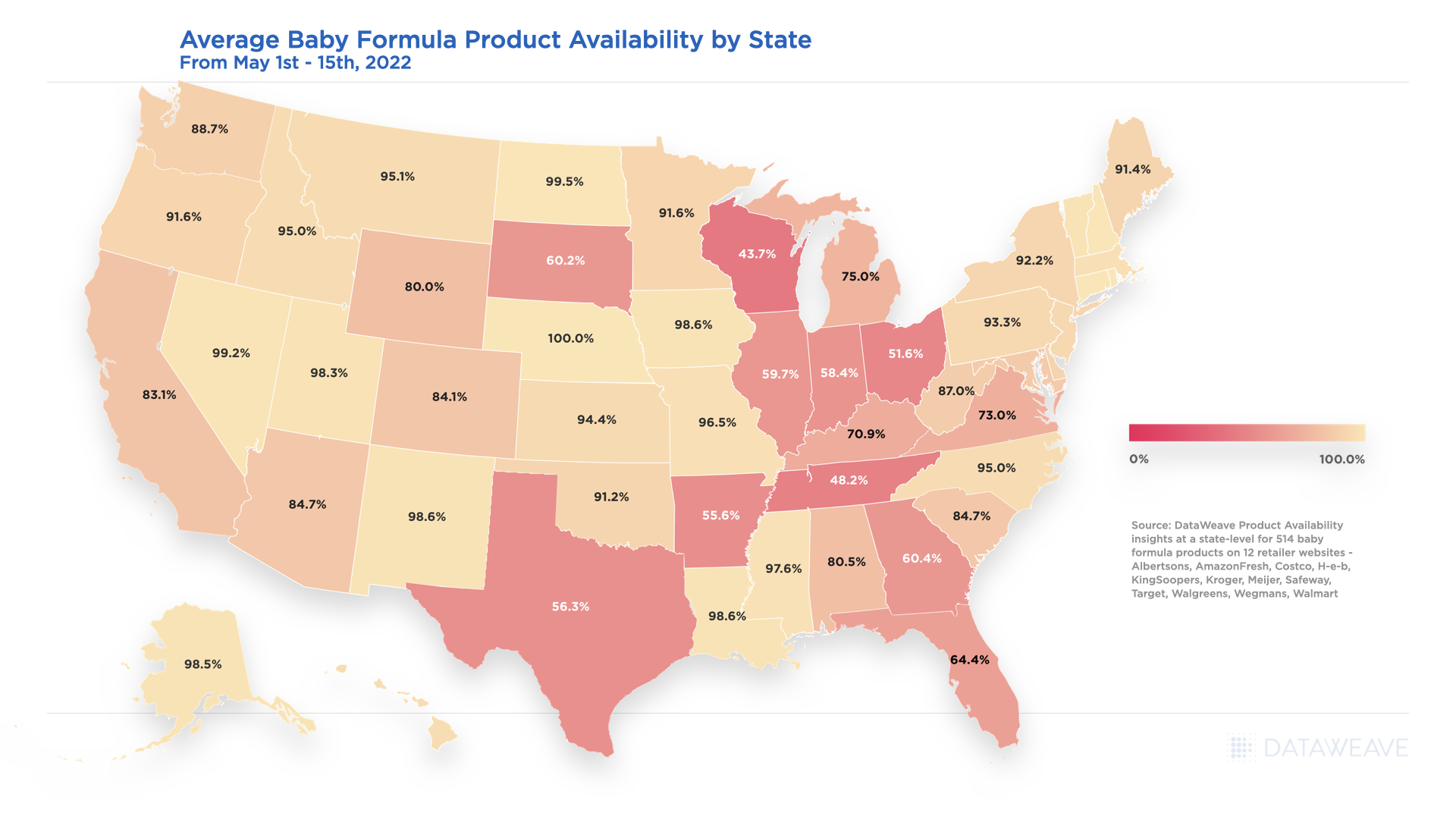
    Outside of the Midwest and Texas, the other states for consumers to be cautious in are California, Virginia, and South Carolina as their month-over-month average change in availability also declined 4%, 12.6% and 8.2% respectively. Below is a snapshot of where the baby formula availability average started as of May 1st through the 15th, 2022.

    Average Baby Formula Product Availability by State - May 2022
    Average Baby Formula Product Availability by State – May 2022

    Baby Formula Product Availability Changes – March 2021 through May 2022

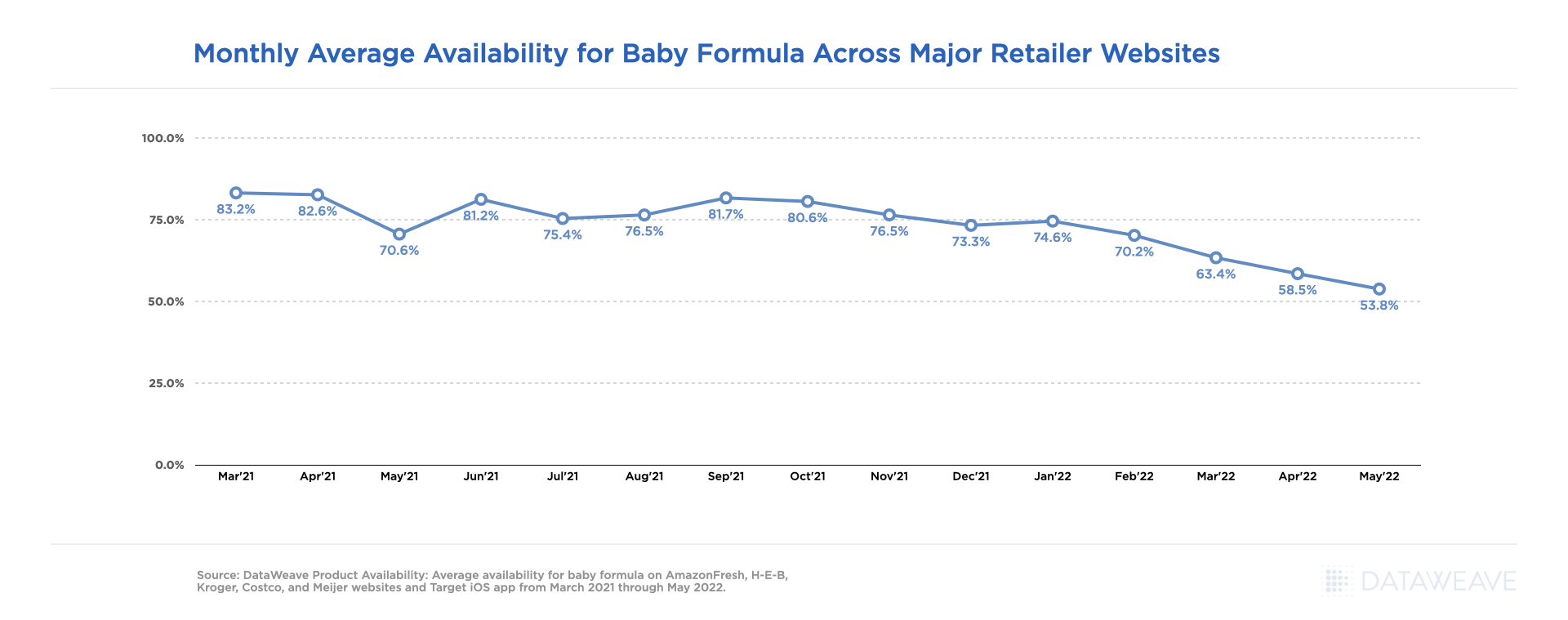
    At an aggregated level overall, the availability for baby formula was relatively stable across all retailers considered within our analysis from March 2021 through September 2021, but has been on a steady decline ever since, starting at 81.7% availability in September and ending at 53.8% availability in May 2022 as noted in the below chart.

    Monthly Average Availability for Baby Formula Across Major Retailer Websites
    Monthly Average Availability for Baby Formula Across Major Retailer Websites

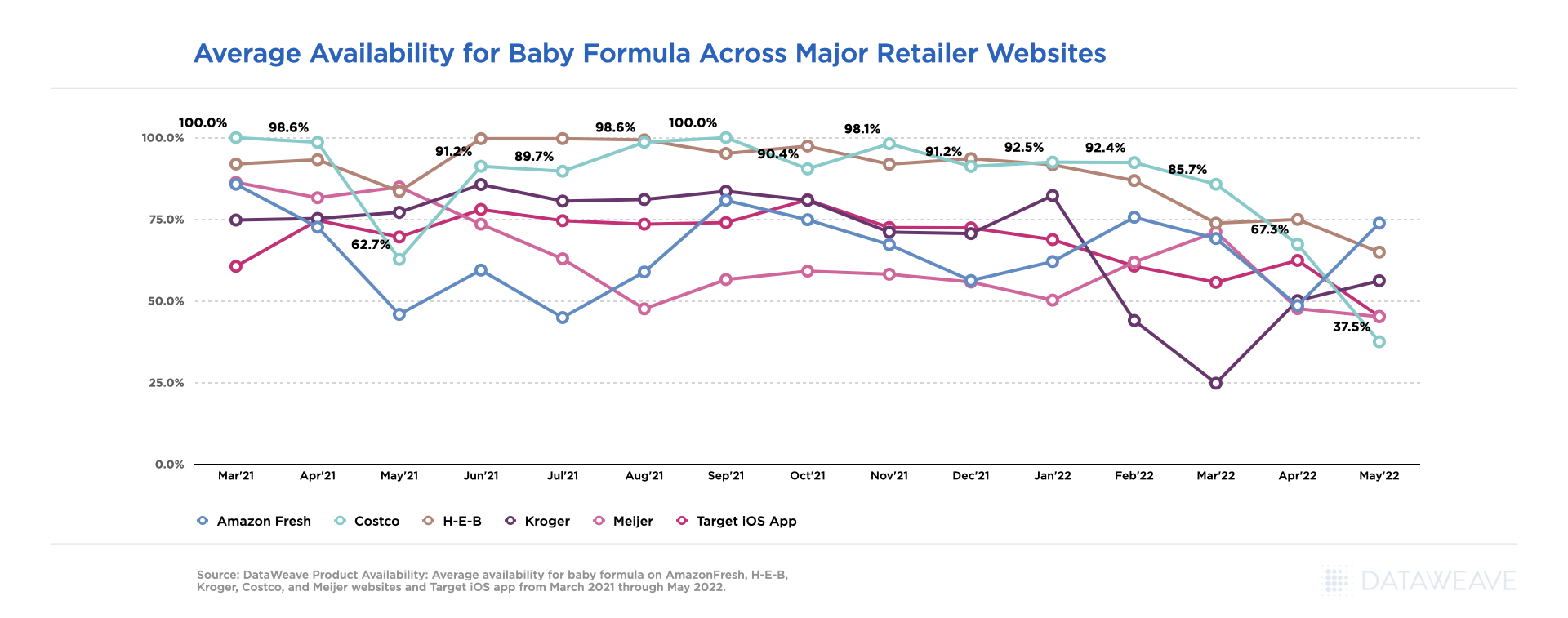
    Looking at baby formula availability at a retail level, we saw yet again not all availability challenges were alike, by month or retailer. Costco.com lead the other retailers within our analysis for greatest average availability from March 2021 through May 2022, but had one of the lowest availability percentages at 62.7% in May 2021, and dropped to the lowest availability of the group in May 2022 at 37.5%.

    Average Availability for Baby Formula Across Major Retailer Websites
    Average Availability for Baby Formula Across Major Retailer Websites

    Baby Formula Prices Increase as Availability Changes

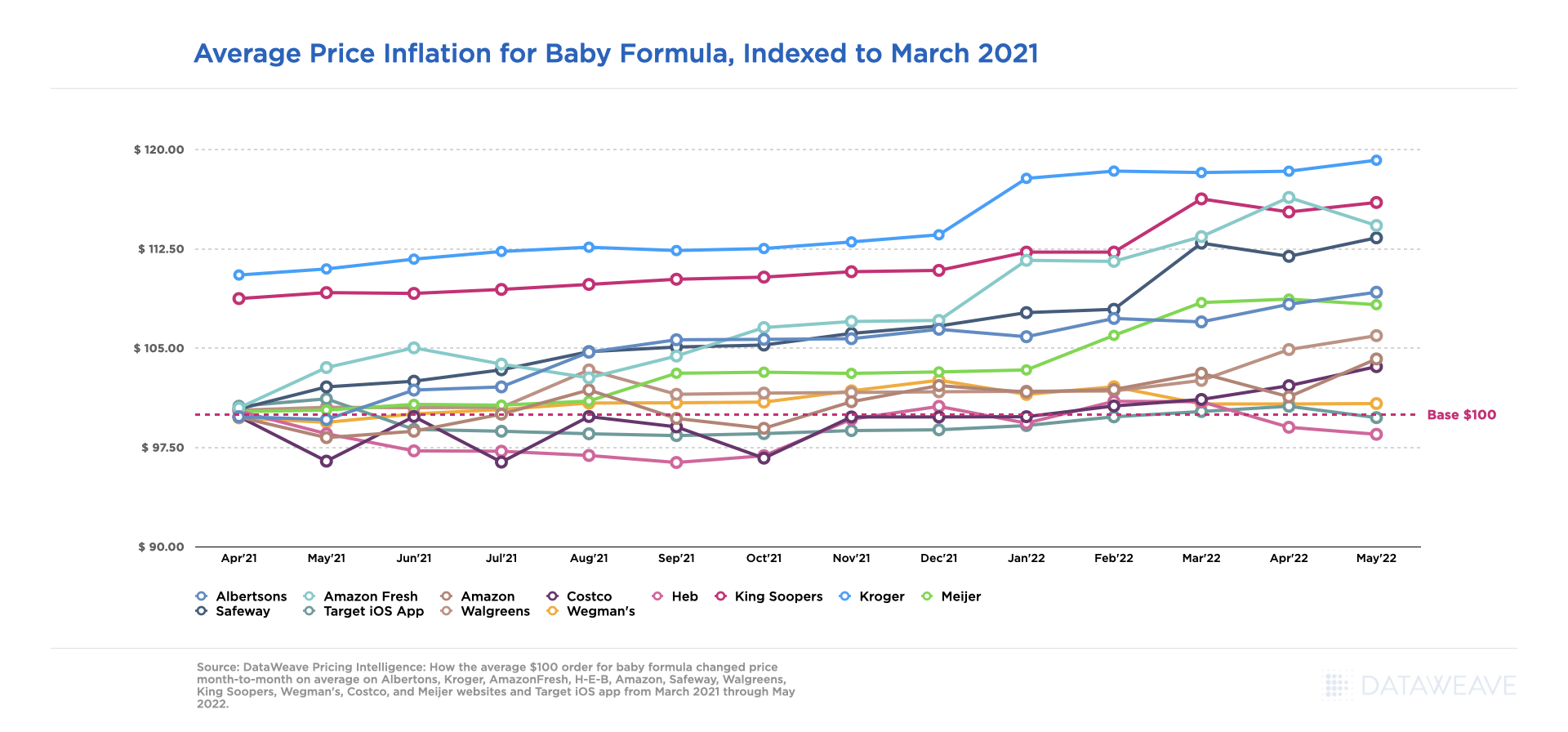
    While unnecessary price gouging is prohibited, price increases are still happening at a slow and steady rate across all the accounts included within our Pricing Intelligence analysis given external market factors outside of baby formula recall related stockout scenarios.

    Kroger.com experienced the greatest average price increases overall, with the peak being in May 2022 at a 19% increase, 8% higher than other retailers on average, versus prices seen in March 2021 for the same baby formula products. The most significant price hike occurred on Kroger.com from December 2021 to January 2022. Other retailers like H-E-B, Target and Wegman’s have had minimal price changes from March 2021 through May 2022. 

    Average Price Inflation for Baby Formula, Indexed to March 2021
    Average Price Inflation for Baby Formula, Indexed to March 2021

    Address the Baby Formula Shortage With eCommerce Intelligence

    As the market continues to evolve and baby formula supply works its way to catching back up to demand, our team will continue providing critical pricing, merchandising, and competitive insights at scale, to enable retailers and brands to develop data-driven growth strategies that directly influence their eCommerce performance, accelerate revenue growth and drive profitability.

    Be sure to reach out to our Retail Analytics experts for access to more details regarding the above analysis, or for more information on our Commerce Intelligence and Digital Shelf solutions, and let us know what other category insights you’d be interested in seeing this year.

  • 11 Reasons why your eCommerce Business is failing

    11 Reasons why your eCommerce Business is failing

    No matter where your eCommerce business sells, there are some fundamentals that brands have to get right to achieve sales targets. Brands need to find the right product/market fit, nail their lead acquisition strategy, and design a qualified sales funnel to turn prospects into leads and eventually returning customers. They will also have to analyze their customer’s buying journey and get insights into competitors’ strategies to understand what works for their business.

    If your eCommerce business is struggling, read this blog to learn about steps you can take to increase sales and keep your business afloat. 

    1. Lack of social proof

    Customers often check for reviews or testimonials before making a purchase. Our decisions are consciously or unconsciously influenced by the opinions, choices, and actions of people around us. Social proof helps brands build customer trust, adds credibility to their business, improves brand presence, and validates customers’ buying decisions. 92% of consumers are more likely to trust user-generated content (UGC) and non-paid recommendations than any other type of advertising. Additionally, brands should also find ways to combat negative reviews since bad reviews can sometimes be extremely damaging. 

    Understanding these reviews or the impact of your brand’s social proof is critical. At DataWeave, we help brands analyze online reviews to understand customer sentiment and adapt to feedback to enhance their experience with your brand. 

    2. Slow site speed

    Site speed of the home page and checkout page on your D2C website can be a roadblock. Slow sections on your site like My Accounts, checkout, and cart are often overlooked when it comes to tracking site speed. Brands should run their checkout process at least once a month to ensure it’s fast, smooth, and bug-free. You can optimize images, strip unused scripts, implement HTTP/2, etc., to improve site speed and performance. 

    3. Poor customer service

    69% of US consumers say customer service is very important when it comes to their loyalty to a brand. Guaranteeing a return customer is important to maintaining customer loyalty. While the focus is on the first purchase for new customers, your brand’s customer service will determine if first-time customers become repeat buyers. Loyal customers are known to spend 67% more on a brand product than new customers, even if they make up only 20% of your audience. 

    Types of customer service
    Types of customer service

    4. Failure to send traffic to popular products

    Be it your own D2C website, or when selling on a marketplace, you should be able to drive traffic to your best-selling products. One of the best ways for sending traffic to popular products on your website is to run paid ad campaigns and reach new audiences with influencer marketing on social media. Brands can also attract customers with organic media such as writing blogs and producing podcasts. 

    If you’re looking at driving traffic to key products on Amazon & other such marketplaces, sponsored ads are the way to go! Sponsored ads help your best-selling products more discoverable & helps shoppers find your brand with ease

    5. Inadequate pricing

    Finding the right pricing strategy for your eCommerce business is crucial for optimizing sales and increasing revenue. The first step is to perform a competitor and historical data analysis to get a general idea of the market and then develop a pricing strategy that is the right fit for your products. Brands also have to ensure that they have dynamic pricing that can adjust according to supply and demand. 

    Our Digital Shelf solution at DataWeave helps brands track pricing for products across different pack sizes & variants across multiple online retailers and marketplaces helping them stay competitive in the market. 

    Optimize the right pricing strategy
    Optimize the right pricing strategy

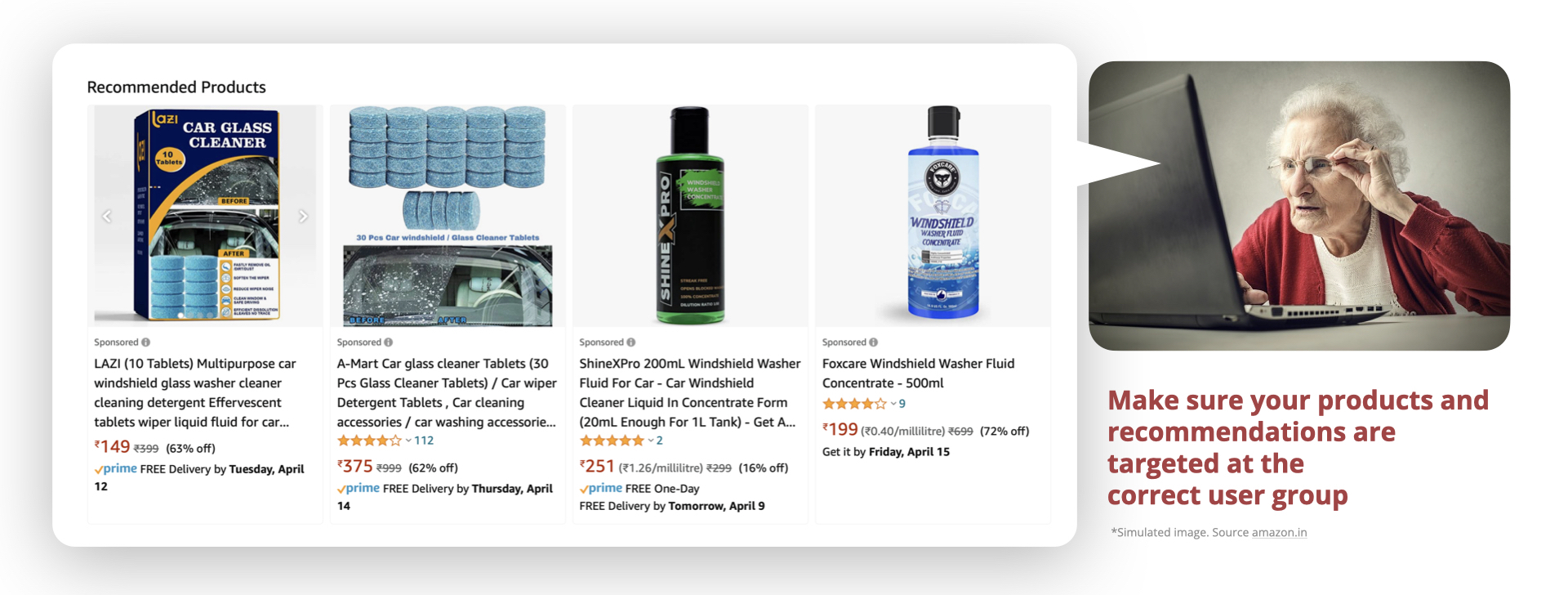
    6. Not targeting the right audience

    One of the biggest mistakes that eCommerce businesses can make is targeting the wrong audience. It’s crucial for brands to define that target audience and then tailor products and marketing toward them. To increase sales as an eCommerce business, brands have to understand their audience, their interests, and how to appeal to their interest. Start by creating ideal buyer personas that represent your ideal customers. Also, segmenting audiences and targeting various groups based on buyer personas for ad campaigns will lead to better sales and revenue. 

    Targeting the right audience
    Targeting the right audience

    7. Poor product descriptions

    One of the major and common mistakes by eCommerce brands is using irrelevant product descriptions that are not optimized for the product. Customers don’t add products to their cart if they have difficulty finding sufficient information relevant to the product. Brands should write attention-grabbing descriptions optimized for SEO that are informative for the users. Here are some tips to optimize content to drive more eCommerce sales.

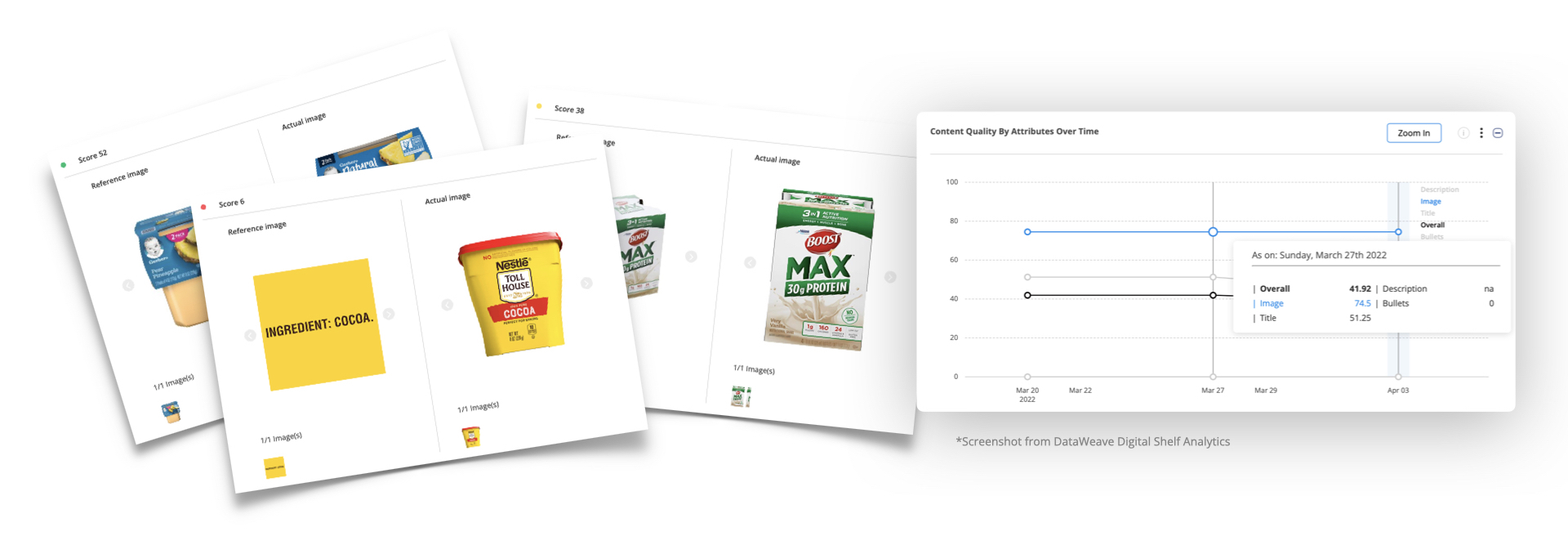
    At DataWeave, our AI-Powered solution helps brands optimize content and visuals across product pages to improve discoverability. 

    8. Not having multiple revenue streams

    Due to COVID-19, many businesses have had to modify or temporarily shut down their daily operations. However, finding new revenue streams can be a great way for eCommerce businesses to make up for the lost income and keep the company afloat. The best solution is to diversify your product offerings by offering commonly purchased products in bundles. 

    9. Low-quality visuals

    Businesses fail to hit their sales targets because of low-quality visuals in product descriptions. High-quality and custom images can improve conversion rates from both marketplaces and image-based channels like social media. Social media users are attracted to exciting, high-quality content that conveys a desirable lifestyle. Brands should use high-resolution, attractive pictures of their products. Brands can also utilize UGC and influencers to help build up their content libraries.

    Low-quality visuals
    Low-quality visuals

    10. Wrong Assortment. Poor Availability

    When your target audience lands on your eCommerce store and cannot find what they’re looking for, it leads to a poor shopping experience, but more importantly a lost sale for your brand! While you cannot have endless inventory, it’s essential to optimize your assortment & product availability to decrease the chances of your customer walking away. Assortment & availability optimization begins with analyzing current and historical inventory trends. If done manually, assortment can be a time-consuming task. A healthy assortment can increase retail sales by creating a positive shopping experience for your customers and encouraging them to return to your store again.

    11. Bad eCommerce UX

    Offering a sub-standard user experience is a common reason why eCommerce businesses find it difficult to increase sales. According to a study, the conversions can fall by up to 7% for every one-second delay in page load time. Businesses can use a countdown clock on their landing page and exit pop-ups to improve conversations. Your landing page and product descriptions should provide information that helps your users make a better and more informed decision. 

    Conclusion

    If your eCommerce’s business sales are tanking, improving site speed, customer service, social proof, and product descriptions are some of the levers you can pull to remedy the situation. Brands should also work on improving online reviews & ratings, availability, assortment, visuals, and website UX to improve customer experience. These steps not only increase loyalty but also improve customer retention. 

    Need help tracking online pricing for your eCommerce business? Or decoding customer sentiment from reviews they’ve left for your products? Or do you need insights into your product assortment and availability? Sign up for a demo with our team to know how DataWeave can help!  

  • What Historical Pricing Data can tell you & how to use it

    What Historical Pricing Data can tell you & how to use it

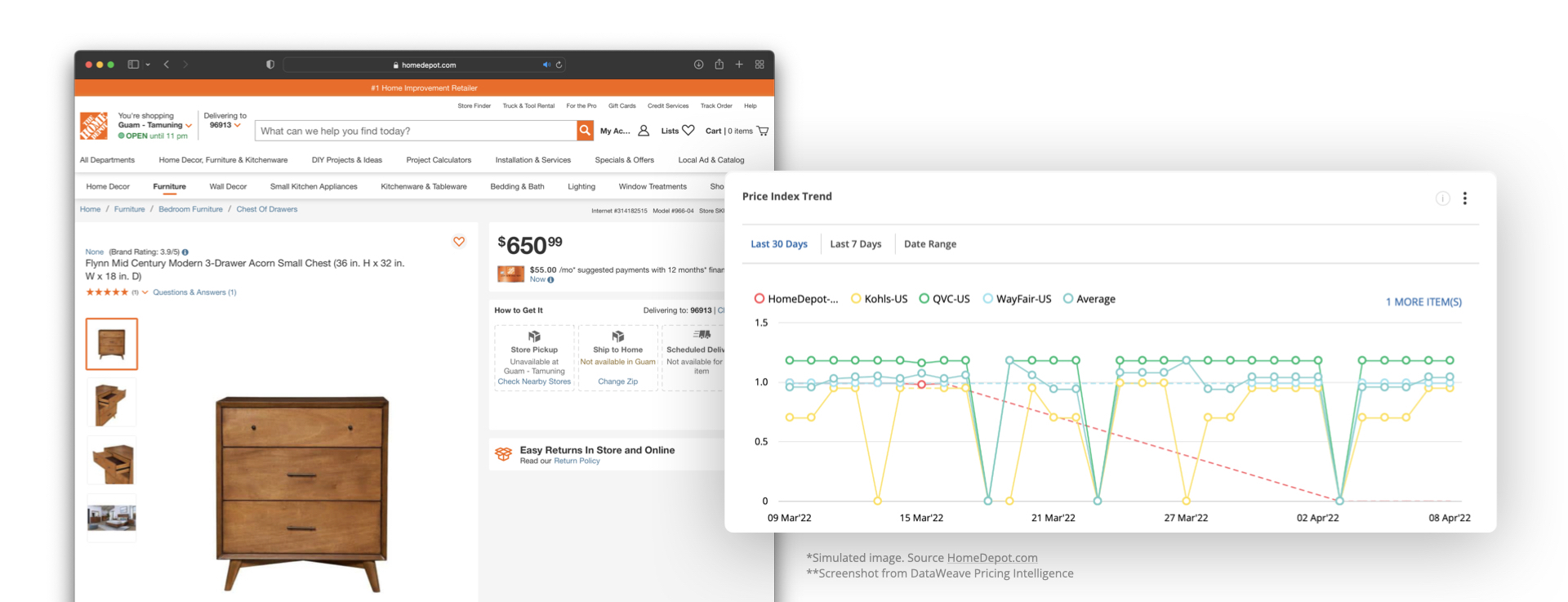
    For many brands, pricing strategy boils down to guesswork — shooting in the dark and hoping consumers are willing and happy to pay. However, the ‘throw it at the wall, and see what sticks’ pricing strategy leads to big pricing mistakes. Pinning down an optimal price for products requires a clear picture of ideal customers, understanding each customer segment’s behavior, a solid grasp of your product’s value, and an analysis of competitors. Pricing analytics can help brands track a wide range of pricing metrics with cutting-edge analytical tools and use insights to get ahead of their competition. This analysis uses historical data to understand how previous pricing and promotion activities affect brand, sales, and customer price perception. It often involves identifying opportunities and weaknesses in competitors’ pricing strategies and exploiting them to improve sales and revenue. 

    Pricing analytics helps brands understand how product pricing and promotions affect profitability and the steps they can take to optimize their pricing structures. Brands can leverage their pricing and consumer data to design appropriate pricing models for achieving their sales goals.

    Here is a brief overview of pricing analytics, its benefits, and ways to improve sales with historical pricing analytics.

    What is historical pricing data analytics?

    historical pricing data analytics
    Historical Pricing Data Analytics

    Pricing analytics uses historical pricing and demand data to understand how pricing activities have affected profitability and overall brand. It also helps to optimize a brands’ pricing strategy for maximum revenue. Manual tracking of pricing for brands with numerous product lines, multiple selling points, different customer tiers, and complex product bundles is a huge challenge. Brands from every sector and industry vertical, manufacturing and distribution to retail and eCommerce, can benefit from pricing analytics.

    There are three types of pricing analysis:

    Descriptive

    Descriptive pricing analytics involves analyzing historical data to evaluate how customers have perceived and reacted to pricing fluctuations in the past. It analyzes metrics such as month-on-month sales growth, average revenue per customer, year-on-year pricing changes, or changes to the number of registrations to a particular service over a specific period. 

    Predictive

    Although brands can’t accurately predict how pricing changes will reflect sales, they can use predictive pricing analytics to get insights into the best possible chance of doing so. Predictive pricing analyzes historical data with statistical algorithms and machine learning to predict the price and trends of products in the future. It also helps brands to optimize their prices with future goals.

    Prescriptive

    Prescriptive pricing analytics is the opposite of descriptive analytics. Unlike descriptive analytics that helps brands explore their historical data to understand customer response after an event, prescriptive analytics help brands design better and more informed strategies. With prescriptive analytics, brands can shape their growth strategies to achieve more sustainable results over the long term.

    Benefits of historical pricing data analytics

    Benefits of historical pricing data analytics
    Benefits of Historical Pricing Data Analytics

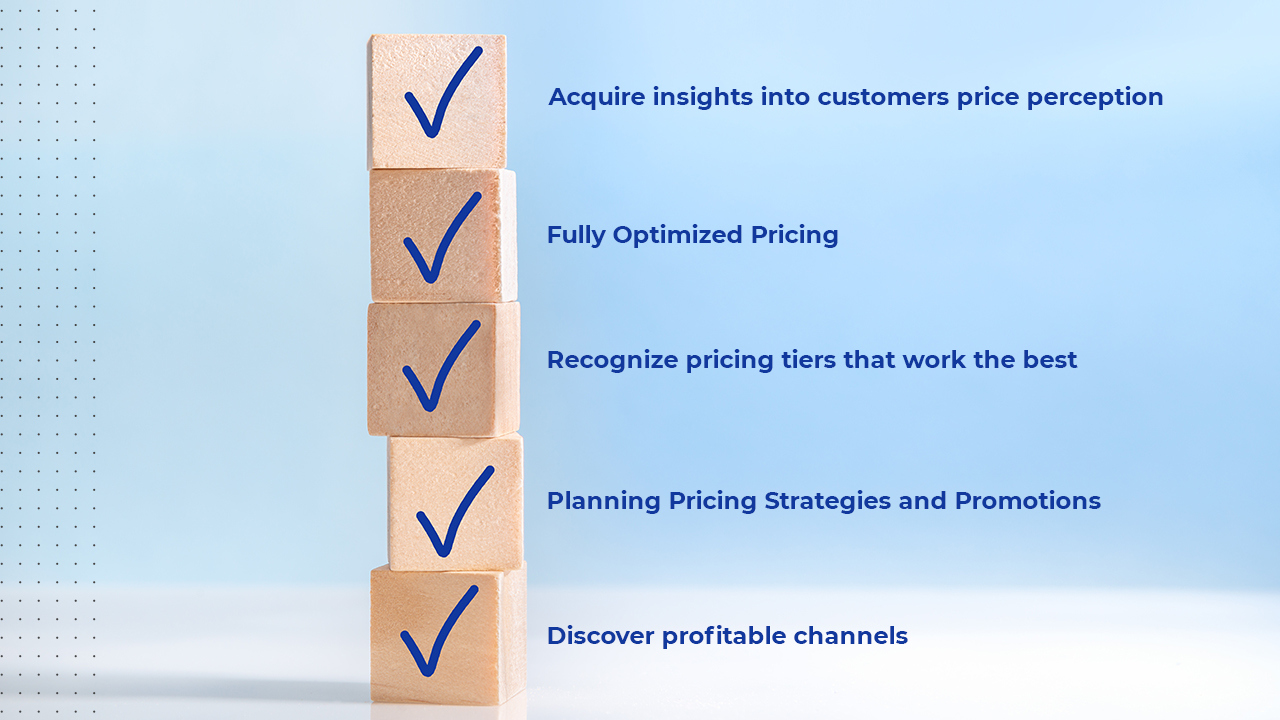
    Acquire insights into customers price perception

    While analyzing the metrics to understand pricing optimization, brands can also gather valuable insights into their customer’s price perception. Pricing analytics helps brands understand which customer segments are the most (and least) profitable and how each segment responds to specific pricing strategies. With historical pricing data analytics, brands can also intelligently link pricing and promotions by first determining customer price sensitivity then gauging the effectiveness of promotions

    Fully Optimized Pricing

    Historical pricing analytics means eliminating guesswork from deciding the optimal pricing for a given product. By analyzing historical pricing data, brands can discover how their past pricing and promotional decisions impact profitability. Based on this historical data, they can also test various pricing strategies like value-based and dynamic pricing. It also allows brands to learn which customer segments are most likely to respond positively to price change. These insights from pricing analytics will drive more effective (and profitable) pricing decisions.

    Recognize pricing tiers that work the best

    Many brands have gaps in their pricing strategy — underpriced or overpriced tiers, pricing leaks, markup errors, or neglected upsell opportunities. Tiered pricing models are prevalent in subscription-based brands where brands offer tiers to meet the needs of diverse customer segments. With historical pricing analytics, brands can improve their pricing tiers and get insight into the right number of tiers and optimal prices for each. Pricing analytics will comb a brand’s historical data to find tier pricing mistakes to improve sales and revenue.

    Planning Pricing Strategies and Promotions

    Promotional pricing decisions are critical for any brand, as pricing perception is directly linked to consumer demand and profits. Brands have to carefully plan promotions that include variables such as list prices, special offers, advertisements, and discounts while ensuring profit margins. With predictive analytics, brands can determine optimal discount levels, keep a close eye on the competition, and announce promotional offers when customers are likely to purchase. Historical pricing analysis also helps predict revenue and determine optimal locations and platforms for promotional ads.

    Discover profitable channels

    Not all sales channels bring equal revenue to your brand. Historical pricing analysis can help you determine the most effective quality, volume, and revenue channels. Brands must understand which marketing and sales channels bring quality leads that convert to paying customers. It also helps to determine which eCommerce channels are most profitable so you can optimize your budget and identify channels you should be investing in as a part of future customer acquisition strategies. 

    Metrics to track

    Metrics to track
    Metrics to Track

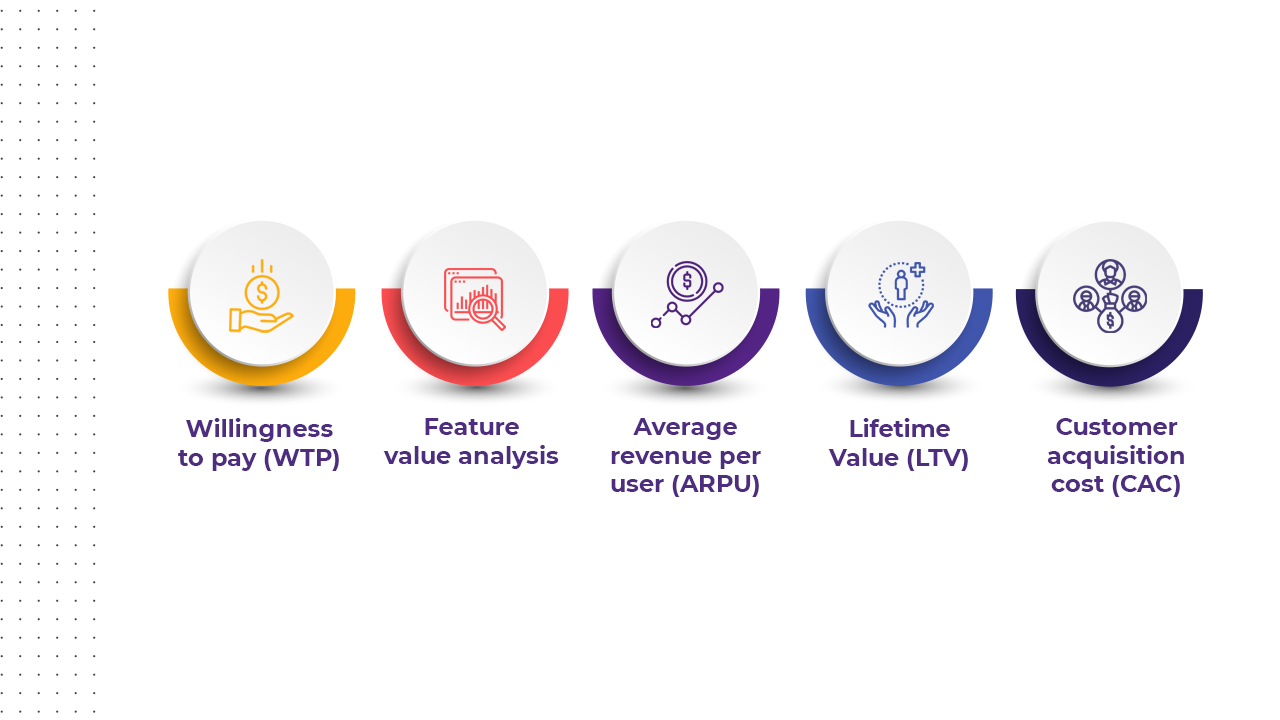
    Here are a few pricing analytics metrics that can help brands to understand customer behavior towards pricing:

    Willingness to Pay (WTP)

    WTP, also known as price sensitivity, is the maximum price your potential customers are willing to pay for your service or product. It is an essential part of pricing strategy since you have no other way of understanding whether your product can yield an augmented product value. Numerous factors are responsible for a customer’s willingness to pay, and it’s not static. Brands must track willingness to pay for all customer segments to ensure that the product is priced competitively and drives maximum profit while staying in line with current market conditions. 

    Feature Value Analysis

    Feature value analysis, also known as relative reference analysis, measures the most important features to customers in relation to other features of a product or service. Analyzing critical features to customer segments will help brands price products based on basic or premium components. It can also help to better bundle your services or products so you can drive the most revenue. 

    Average Revenue per User (ARPU)

    The average revenue per user is the revenue generated from the sum of active users divided by the total number of users in a monthly time frame. Delving deeper into ARPU can help brands compare numbers with rivals and check how all products or customer segments perform. 

    Lifetime Value (LTV)

    Lifetime Value offers a complete picture of a user’s journey and the average revenue that the user will generate throughout their engagement as a customer with your brand. It helps brands determine various economic decisions such as marketing budgets, profitability, forecasting, and resource allocation. 

    Customer Acquisition Cost (CAC)

    A successful and profitable brand needs to balance its customer acquisition cost or CAC. It is about spending the right amount of resources and time to drive new customers without jeopardizing their lifetime value and revenue. Correct calculation of CAC helps brands to quantify their sales funnel and determine the efficiency and profitability of their strategies.

    Conclusion

    Historical pricing analytics is a powerful tool, and it can make a huge difference to a brand’s potential by increasing sales and unlocking incredible profitability in a relatively short time. Historical analysis of pricing and promotions data will help brands get better marketing returns than relying on traditional pricing approaches. 

    Leveraging pricing analytics will prevent brands from blindly reacting to competitor price changes and support solutions for scaling up price transformation efforts. By using historical pricing data, brands can more effectively segment their customers for marketing and promotion strategies. Properly utilizing predictive analytics and past sales data can help cut costs and keep profit margins high by adjusting production and prices according to market trends.
    Need help tracking your competitor prices? Or want historic pricing insights for your own brand? Or need to track the efficacy of your online promotions?
    Sign up for a demo
    with our team to know how DataWeave can help!